Glassing a Powerline Cut at Last Light
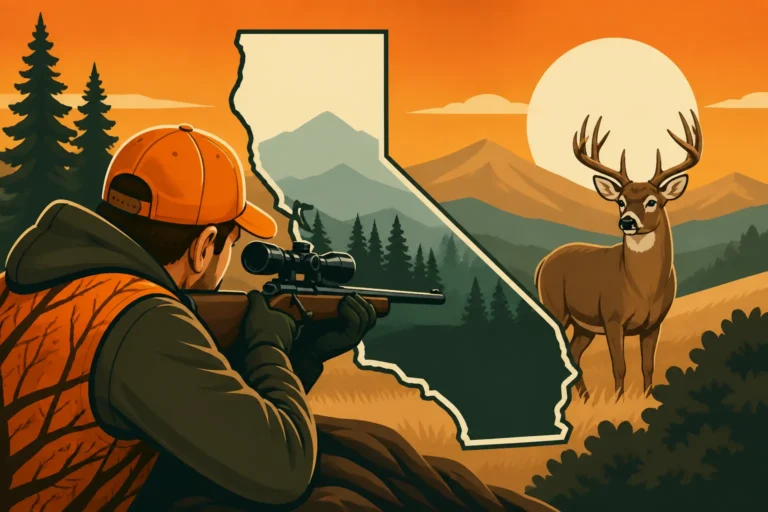
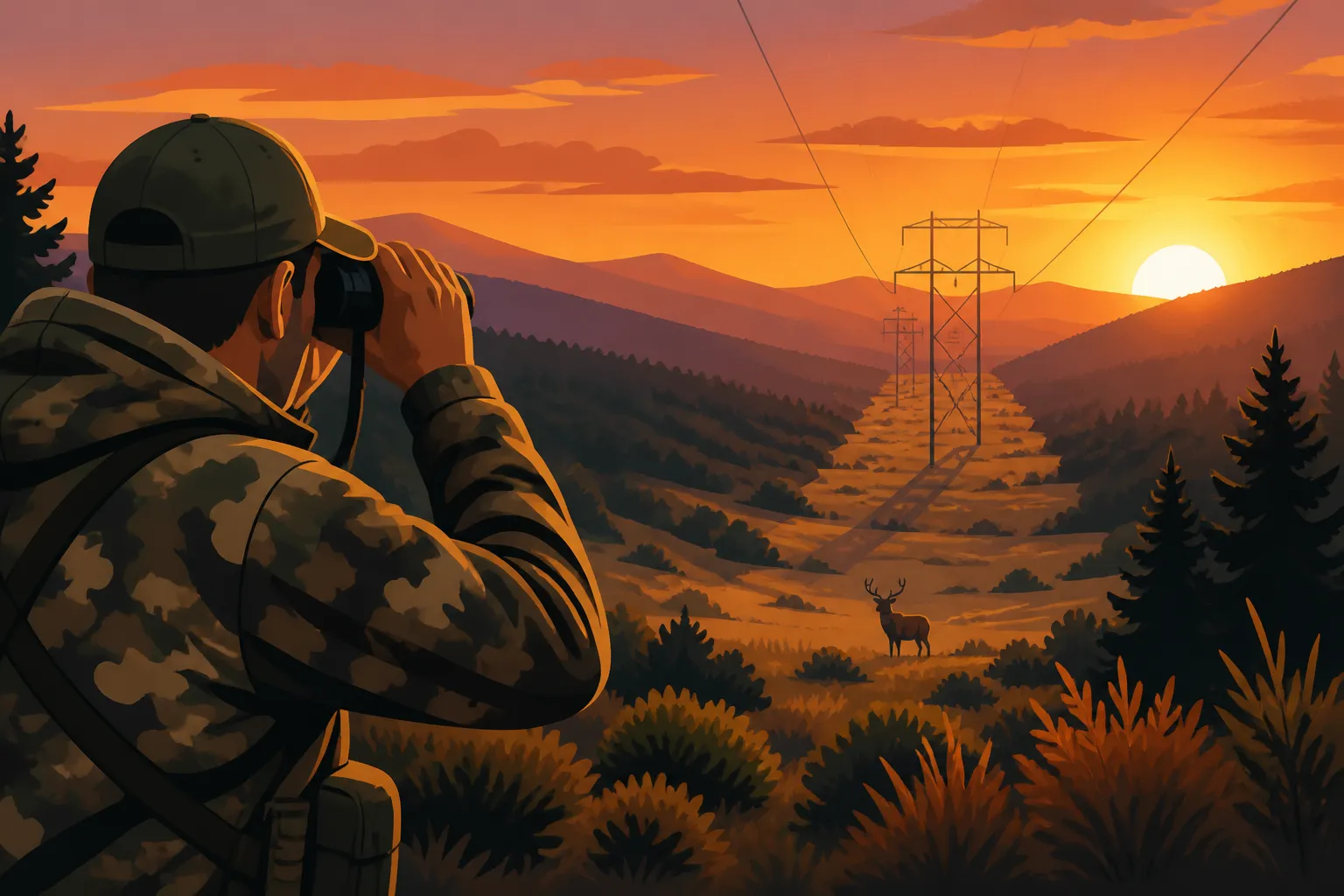
There's nothing quite like that golden hour, the sun dipping below the ridge, casting long shadows across the landscape. For many California deer hunters, this is often the most frustrating time of day; deer can materialize out of nowhere, seemingly impervious to your earlier efforts, only to disappear as quickly as they appeared. This guide focuses on a highly effective strategy for those waning moments: how to master glassing a powerline cut at last light, turning those fleeting deer sightings into genuine opportunities, especially in our diverse California terrain.
Understanding Powerline Cuts as Deer Habitat
Powerline cuts, whether they snake through the steep Sierra Nevada foothills, the dense coastal chaparral, or the rolling oak woodlands, are often overlooked goldmines for deer activity, especially as dusk approaches. These clearings aren't just empty spaces; they create unique ecological niches that deer exploit for survival and movement. Thinking about them purely as "open areas" is missing a huge part of their potential.
The Edge Effect and Thermal Cover
The very nature of a powerline cut creates what biologists call an "edge effect." This is where two different habitat types meet, like a dense forest and an open clearing. This transition zone is incredibly valuable for deer because it offers the best of both worlds: the security of thick cover right next to browse and open sightlines. Deer often feel safer moving along these edges, knowing they can dart back into the timber at a moment's notice if danger arises. As the sun lowers, the shadows lengthen, and these edges become even more pronounced, offering thermal cover and a sense of security that encourages deer to step out.
Imagine a powerline cut running through a dense patch of pines in the D-zones. The trees provide excellent bedding cover during the day. As the sun begins to set, the deer feel more comfortable moving from the shaded, cooler timber out into the cut. The edge acts as a natural buffer, a kind of staging area. They might stand just inside the tree line, browsing on tender shoots that have grown up in the disturbed soil of the cut, slowly working their way further into the opening as darkness draws nearer. This edge also offers protection from the evening chill, as the open ground of the cut radiates heat absorbed during the day.
Food Sources Within the Cut
While the primary forest might offer certain types of forage, powerline cuts themselves often host a completely different array of food sources that are highly attractive to deer. The constant clearing and soil disturbance, combined with increased sunlight penetration, promotes the growth of various grasses, for forbs, and shrubs that might not thrive under a dense forest canopy. These can be prime deer browse.
In many parts of California, particularly the oak woodlands, these cuts can be rife with new growth. Think about the variety of berry bushes, wild grasses, and tender saplings that sprout up where sunlight can finally reach the forest floor. Deer, being opportunistic browsers, will readily seek out these fresh, palatable plants. Even during a poor acorn year, these areas can provide crucial sustenance. Consider a scenario in the coastal range where a powerline cut passes through mixed oak and chaparral. Deer might be browsing the succulent leaves of ceanothus or manzanita that are flourishing in the sun-drenched opening, or perhaps digging for roots in the softer soil. Identifying these specific food sources before the season by Scouting California Public Land Before Season can dramatically increase your last-light success.
Escape and Travel Corridors
Beyond food and cover, powerline cuts also serve as natural travel corridors and escape routes for deer. Picture a buck wanting to move from a bedding area on one ridge to a feeding ground on another, or heading towards a water source. Plodding through dense timber can be noisy, slow, and expose them to ambush predators. A powerline cut offers a more direct, albeit more exposed, path. At last light, when their natural predators (like coyotes or mountain lions) are also becoming more active, deer are keenly aware of efficiency and escape.
These cuts often connect different habitats, funneling deer movement. A powerline cut might run along a ridge top, providing a superhighway for bucks traversing their home range. Or it might drop down into a canyon, offering an easier path than navigating dense undergrowth. Understanding how these cuts function as thoroughfares can help you position yourself strategically. Imagine the path a buck takes after a long day bedded down. It's likely to utilize the path of least resistance. These linear clearings, while offering some exposure, provide an efficient way for deer to travel, especially when they're trying to reach Late-Season Food Sources for California Deer before dark or head back to bed at first light.
Strategic Glassing Techniques for Last Light
Glassing effectively at last light isn't just about pointing your binoculars at the nearest open space. It's a calculated strategy, especially when trying to pick out a deer that blends seamlessly into the fading light and encroaching shadows. This is where patience, technique, and quality optics really shine.
Optimal Vantage Point Selection
Choosing the right vantage point is paramount for last-light glassing. You need an elevated position that offers a clear, expansive view of the powerline cut and its edges, but also provides you with some concealment. Look for a spot that allows you to see into the shadows as they creep across the landscape. The goal is to be above the deer, not at eye level, to maximize your field of view and minimize your silhouette against the skyline.
Consider a rocky outcrop on an opposing hillside, a high point along a logging road, or even a strategically chosen tree stand if you're on private land. The key is to be far enough away that your presence doesn't spook deer, but close enough that your optics can resolve detail. Before season, Reading Aerial Photos for Sierra Deer can help you identify these perfect spots, showing you not only the powerline cuts but also the topography that provides natural overlooks. Don't forget to account for the sun's direction; as it sets, you want it at your back or to your side, not in your eyes. This is also where understanding Wind and Thermals in Steep Sierra Country becomes crucial, as you want your scent to be carried away from the deer, not towards them, especially as the air begins to cool and fall.
Grid Searching and Slow Scans
When the light starts to fade, your eyes naturally want to jump to movement, but effective glassing requires discipline. Adopt a systematic grid searching pattern. Start at one end of the powerline cut, and slowly scan a small section, moving your optics horizontally, then dropping down slightly and scanning back the other way. Repeat this process until you've meticulously covered the entire area. Pay particular attention to every dark spot, every shadow line, every cluster of brush.
The "slow scan" is critical. Don't rush. What might look like a stump at first glance could, with a second or third careful look, reveal itself to be the shoulder of a bedded buck or the flicker of an ear. Deer are masters of camouflage, and they become even harder to spot in low light. When you're glassing, imagine looking for antler tips, the horizontal line of a deer's back, or the tell-tale white of an ear or chin. Utilize quality mapping apps like GoHunt's platform to mark potential bedding areas or travel corridors near the powerline, giving you specific zones to focus your meticulous scans. Even in open country, deer can blend in incredibly well. This technique is similar to how you would approach Glassing Mule Deer in Open California Country, just with an added emphasis on the diminishing light.
Using Light and Shadow to Your Advantage
As the sun dips, shadows become both your friend and your foe. They provide cover for deer, but they can also highlight their outlines if you catch them in the right light. Position yourself so that the last rays of sunlight are either illuminating the areas you're watching or, if the light is behind the deer, creating a distinct silhouette. Often, deer will emerge from dense, dark timber and step into the last pockets of light within the cut. These transition points are prime areas to watch.
The changing light also affects how deer perceive their surroundings. They might feel more confident moving into open areas as the shadows provide them with a sense of security. Pay close attention to north-facing slopes or heavily timbered edges that hold light longer, as deer might move to these areas to catch a few more minutes of feeding time before true darkness. Conversely, south-facing slopes or open areas that lose light quickly might be where deer start to move from as they head towards more secure cover. Understanding how light plays on the landscape is a subtle but powerful skill that will greatly aid your last-light efforts.
Essential Gear and Preparation for Dusk Hunting
Hunting at last light, especially in challenging California terrain, demands more than just sharp eyes and good technique. You need the right gear and a solid plan to ensure both success and safety. The moments just before and after legal shooting light can be the most productive, but they also bring unique challenges, particularly when it comes to shot placement and game recovery.
Optics for Low Light Conditions
Your optics are your most critical tool when glassing powerline cuts at last light. Investing in high-quality binoculars and a spotting scope with excellent low-light performance is non-negotiable. Look for optics with large objective lenses (e.g., 10×42, 12×50, or even 15×56 for binoculars, and 60mm+ for spotting scopes) and high-quality glass. Brands like Vortex, Swarovski, and Leica are renowned for their low-light capabilities, often making the difference between seeing a deer and seeing nothing but shadows.
| Optic Type | Key Features for Low Light | Ideal Use Case |
|---|---|---|
| Binoculars | Large objective lens (42mm, 50mm, 56mm), High-quality glass (HD, ED), Excellent light transmission, Ergonomic design for long glassing | Initial scanning, quickly locating deer in varied terrain, following moving game at closer ranges. |
| Spotting Scope | Large objective lens (60mm, 80mm), Angled eyepiece for comfortable viewing, Fine focus, Tripod mount for stability | Identifying antler points, confirming species and sex at long distances, evaluating trophy potential. |
| Rangefinder | Fast acquisition, Angle compensation, Reflective and non-reflective modes, Good battery life | Precisely measuring distances to ensure ethical shots, especially in varied terrain common in California. |
For detailed analysis of a distant buck, a high-quality spotting scope is essential. This is especially true if you’re trying to judge antler size or confirm a legal animal from a long distance, a skill covered well in guides like Best Spotting Scope for a Blacktail Buck. A steady tripod is also critical; even the steadiest hands will shake after minutes of intense glassing. Don't forget a good rangefinder to accurately gauge distance once you spot an animal, preventing a missed shot or, worse, a wounded animal in fading light. Guides on Optics for California's Open-Country Deer Hunting can provide more in-depth advice on specific models and considerations.
Clothing and Safety Considerations
When hunting at last light, proper clothing isn't just about comfort; it's about blending in and staying safe. Darker camo patterns that disappear into shadows are generally more effective than lighter patterns. Layering is always important in California, where temperatures can drop significantly as the sun sets, especially in the mountains. A quiet, insulated jacket or vest is a good idea.
Safety, however, is paramount. Even if blaze orange isn't strictly required in your specific hunt zone for deer, wearing some during your approach and especially during recovery can be a wise choice, particularly if other hunters are in the area. Always carry a reliable headlamp with fresh batteries, and perhaps a backup. Losing light while tracking a deer or navigating steep, unfamiliar terrain is a dangerous situation no hunter wants to be in. Consider a GPS or a mapping app like GoHunt's with downloaded offline maps, even if you think you know the area. Visibility diminishes rapidly, and what looked clear in daylight can become a maze in the dark.
Post-Shot Strategy and Recovery
The decision to take a shot at last light is a critical one. You must be absolutely confident in your shot placement and your ability to recover the animal. If a deer is hit just as legal shooting light fades, you might be facing a long, cold night. Always have a clear plan for what to do immediately after the shot. Mark the exact spot where the deer was standing, and where it was when you lost sight of it. Mentally note prominent landmarks.
If the shot feels good and the deer shows signs of a solid hit, give it time – at least 30 minutes, sometimes an hour for a gut shot – before you begin tracking. Rushing in can push a wounded animal further into thick cover, making recovery nearly impossible in the dark. If the light is completely gone, it's often best to mark the last known location, secure your gear, and return at first light with fresh eyes and ample illumination. This requires immense discipline but is often the most ethical course of action. Be prepared for the unexpected, like having to quarter an animal and pack it out in sections, especially if you're Recovering a Deer From a Steep Canyon. Even if you hit a deer on a hot day, knowing how to Field Dressing a Deer in Hot Weather can make all the difference in meat quality.
Reading Deer Behavior in Powerline Cuts
Deer are creatures of habit, but their behavior can be influenced by a myriad of factors, especially at the end of the day. Learning to read their typical movements, interpret their sign, and understand external pressures will give you a significant advantage when glassing powerline cuts.
Typical Movement Patterns at Last Light
As evening approaches, deer typically transition from bedding areas to feeding grounds or water sources. Powerline cuts often lie along these routes, serving as convenient paths or temporary feeding spots. Look for deer to emerge from dense cover, often pausing at the edge of the cut to assess their surroundings before stepping out fully. This initial appearance is often subtle—an ear twitch, a horizontal line in the brush, or a flash of white rump.
Their movement during this time is usually deliberate. They might browse slowly, occasionally lifting their heads to scan for danger. Bucks, especially mature ones, tend to be more cautious and may wait until the very last minutes of legal light before revealing themselves. They'll often take paths that keep them close to cover, even if it means moving slightly out of the open. Watch for patterns: do they always enter the cut from a specific draw? Do they move quickly across it, or linger in certain areas? Observing these patterns, perhaps from previous scouting trips, can help you anticipate their appearance. It's often different from Hunting a Ridge-Top Saddle at First Light, where movement might be more hurried as they head to bedding.
Interpreting Deer Sign and Activity
Even if you don't see deer, the sign they leave behind in powerline cuts can tell you a lot about their movements and preferences. Look for fresh tracks in the soft earth, especially where utility vehicles might have churned up the soil. Droppings can indicate recent feeding activity. Fresh browse marks on tender plants within the cut confirm that deer are indeed using the area as a food source.
Rub lines on saplings or trees along the edges of the cut are tell-tale signs of buck activity, particularly as the rut approaches. Scrapes, where a buck has pawed away leaves and urinated, also signal a buck's presence and potential travel routes. While these signs might be harder to spot in the fading light, identifying them during your daylight scouting trips will guide your last-light glassing efforts. GoHunt's advanced mapping tools often allow users to mark these findings directly on their maps, building a valuable historical record of deer activity for your hunting areas. This data can be invaluable for pinpointing exactly where to focus your attention when the sun starts to dip.
The Impact of Pressure and Weather
Deer behavior in powerline cuts, like any other hunting area, is heavily influenced by hunting pressure and weather conditions. If the cut is easily accessible and sees a lot of foot traffic or ATV use, deer will become more nocturnal or utilize the area only when human activity is at its absolute minimum. In heavily pressured areas, deer might only step into the extreme edges of a cut, barely venturing from the safety of the timber, and only in the deepest shadows of last light.
Weather also plays a significant role. After a cold front, deer often become more active, moving to feed more aggressively before or after the weather change. Conversely, during periods of extreme heat, deer might move very little during the day and only emerge at the absolute coolest parts of the evening. Keep an eye on the forecast and adjust your expectations and strategy accordingly. A calm, mild evening might see deer lingering longer in the open, while a windy, blustery evening might keep them tighter to cover. Observing other deer activity, like in areas of Hunting Coastal Range Oak Woodlands, can help you gauge the overall pressure and adjust your expectations.
Disclaimer
Hunting is an inherently dangerous activity. This guide provides general information and strategies, but local conditions, regulations, and personal skill levels vary widely. Always prioritize safety, adhere to all California Department of Fish and Wildlife regulations, and obtain proper licenses and tags. Be aware of your surroundings, practice ethical hunting, and ensure positive target identification before taking any shot. The author and publisher are not responsible for any incidents, accidents, or violations that may occur as a result of using the information contained herein.