California Elk Application Deadline
Ever felt that nagging fear you'll miss a critical deadline for a once-in-a-lifetime hunt opportunity? Applying for a California elk tag can feel like navigating a maze, and missing the application window is a heartbreaking mistake many hunters make. This guide is here to untangle the complexities, ensure you never miss the critical California elk application deadline, and boost your understanding of the entire process to make your dream of hunting these magnificent animals a reality.
The Crucial California Elk Application Deadline
Let's be real, remembering every single hunting season opener and application deadline across various species can feel like a full-time job. California, with its diverse game and complex regulations, adds another layer to that challenge. For elk, it's not just another date on the calendar; it's the date that determines if you even have a chance to draw one of these highly coveted tags. Missing it means your dream of chasing a Tule, Roosevelt, or Rocky Mountain elk in the Golden State is deferred for another year, and nobody wants that.
When Does the Application Period Typically Open and Close?
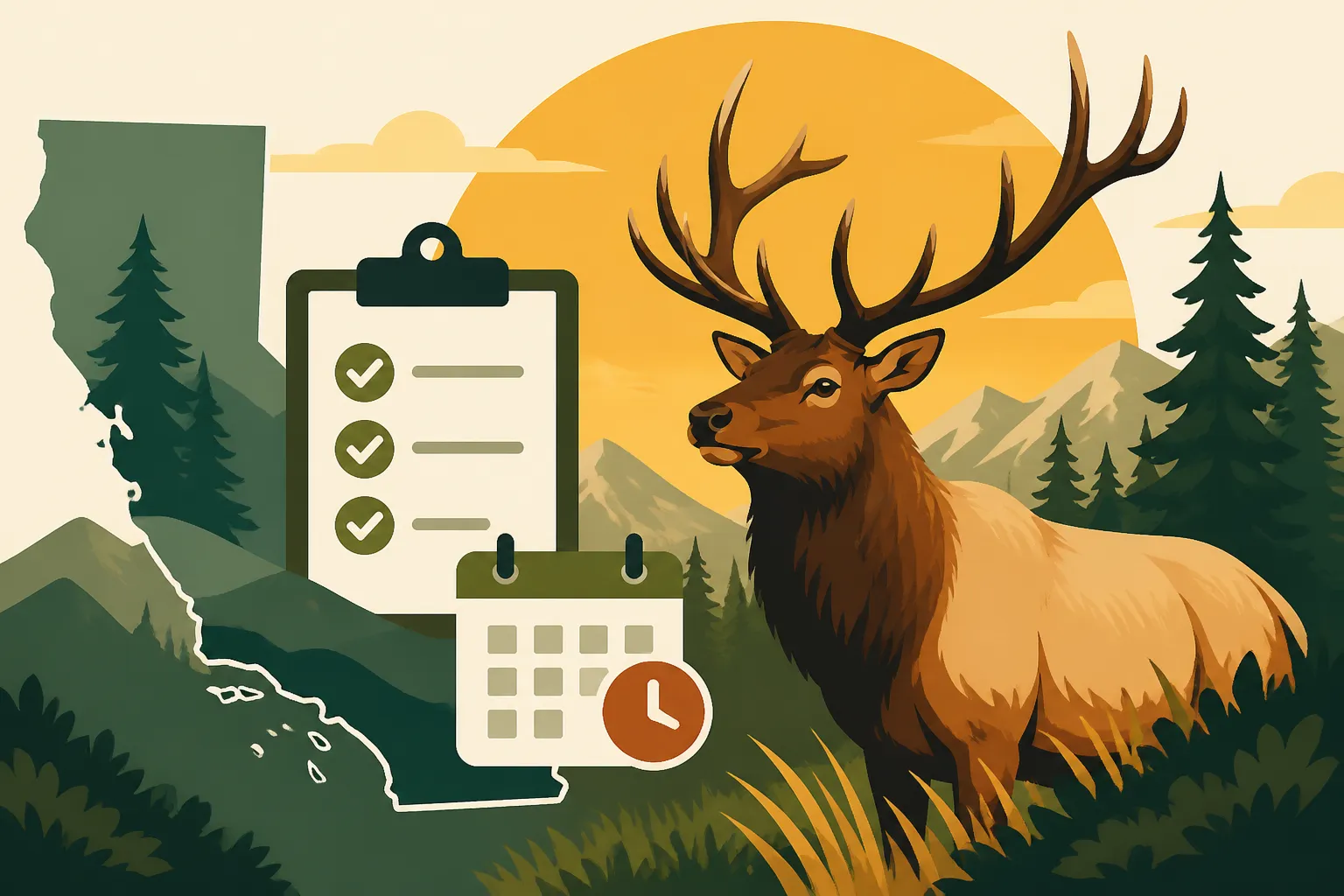
The California Department of Fish and Wildlife (CDFW) manages the annual Big Game Drawing, which includes all elk tags. Historically, the application period for the drawing opens in mid-April and runs through the first Friday in June. This window is fairly consistent year to year, but it's absolutely critical to check the official CDFW hunting regulations booklet or their website each spring for the precise dates. Don't rely on last year's memory or a friend's casual mention; confirm it yourself. That first Friday in June deadline is usually firm, and there's no grace period.
This application period is your single opportunity to throw your hat in the ring for a chance at an elk tag. It's when you decide which specific elk hunt (zone, weapon type, season dates) you're going to apply for, and when you pay the application fee and the tag fee upfront. The money is usually refunded if you don't draw, but the application fee itself is typically non-refundable. It’s a small price to pay for a shot at such an incredible experience, but it adds to the pressure of getting it right the first time.
Many experienced California elk hunters mark this date on multiple calendars and set reminders on their phones to avoid any last-minute scramble. It’s often a good idea to submit your application well before the final day to avoid any technical glitches or unexpected internet issues that might pop up when everyone else is trying to apply at once. I’ve heard countless stories of hunters who waited until the final hours only to be met with website slowness or payment processing errors, effectively costing them a year.
Why Missing the Deadline is a Game-Changer
Missing the application deadline for a California elk tag isn't just a minor inconvenience; it completely takes you out of the running for the entire hunting season. Unlike some other states where you might be able to pick up over-the-counter tags for less popular species, California's elk tags are almost exclusively distributed through this annual drawing. The demand far outstrips the supply, making every single application a precious commodity. You simply can't hunt elk in California without a valid tag, and you can't get a tag without applying on time.
The stakes are even higher when you consider the preference point system. Each year you apply for an elk tag and are unsuccessful, you accrue a preference point (after paying the application fee). These points accumulate and can significantly improve your odds in future drawings, especially for those highly sought-after units or specific types of tags. If you miss a year, you don't just miss a chance at a tag; you also miss out on adding another point to your growing total, effectively setting you back in the long game of elk hunting. This is a big deal for those committed to eventually drawing a premier tag.
Furthermore, California's elk tags are among the most difficult to draw in the nation. With only a limited number of tags available for each of the three species – Tule, Roosevelt, and Rocky Mountain – the competition is fierce. Some of the most popular zones have draw odds well under one percent for residents, and even lower for nonresidents. Missing the application window means you forfeit even that minuscule chance, and for a hunter who has spent years building points and dreaming of an elk hunt, that can be a truly heartbreaking outcome. Ensure you're familiar with the specifics of California Elk Tag Draw Odds by Species to understand the challenge.
Navigating the Big Game Drawing System for Elk
The California Big Game Drawing is where all the magic (or heartbreak) happens for elk hunters. It's a system designed to fairly distribute a very limited resource among a large number of eager hunters. Understanding its nuances is crucial, not just for applying correctly, but for formulating a long-term strategy that could eventually put an elk tag in your hand. It's more than just filling out a form; it's a strategic game of patience and calculated choices.
Understanding the Application Process
Applying for a California elk tag begins with ensuring you have a valid California hunting license for the current license year. This is a foundational step; without it, you cannot apply for any big game tags. Once you have your base license, you'll typically log into your CDFW license and tag online portal. This portal is your primary hub for all things related to applying for big game tags, including elk. It’s a pretty intuitive system, but it does require careful attention to detail.
When you're in the application section for the Big Game Drawing, you'll select the elk species you want to pursue and then the specific hunt choices. This is where researching goes a long way. California offers many different elk hunt options, each with unique zone boundaries, season dates, and weapon restrictions. You’ll typically select up to three choices, ranking them in order of preference. Many hunters spend hours poring over harvest reports, draw odds, and scouting information to make these crucial decisions, often using tools like GoHunt to inform their selections.
The payment process involves paying both the non-refundable application fee and the full tag fee at the time of application. As mentioned earlier, if you are unsuccessful in the drawing, the tag fee portion is automatically refunded to your account or credit card. However, the application fee keeps your preference point alive and covers the administrative costs of the drawing. It's essential to ensure your payment method is valid and has sufficient funds to avoid your application being rejected. Get all the details on The California Big Game Drawing Explained to fully prepare yourself.
Preference Points and How They Work for Elk
California's Big Game Drawing utilizes a preference point system for elk, as well as antelope and bighorn sheep. This system is designed to reward hunters who have been consistently applying over several years without drawing a tag. Here’s how it works: for every year you apply for an elk tag in the Big Game Drawing and are unsuccessful, you accrue one preference point. These points are specific to elk and don't transfer to other species. The more preference points you have, the higher your chances of drawing a tag in subsequent years.
When the draw is conducted, applicants with the highest number of preference points are generally considered first for the available tags. This means that if you've been putting in for an elk tag for five or ten years without success, you'll have a significantly better chance than someone applying for their first time. It's a long game, and patience is definitely a virtue here. Many hunters dedicate years to building points for a specific, highly desirable hunt unit, knowing that their persistence will eventually pay off.
It’s important to note that if you do draw an elk tag, your preference point total resets to zero for that species. This ensures that everyone eventually gets a chance and prevents a small group of hunters from continually drawing tags year after year. For non-drawing applicants, your points continue to accumulate. This system makes missing an application deadline even more painful, as you lose a year of point accumulation, which can be a huge setback in the quest for an elk tag in California.
Strategies for Boosting Your Odds
While the draw is ultimately a lottery, there are definitely strategies you can employ to boost your odds of drawing a California elk tag. The most straightforward strategy is to consistently apply every single year, even if you don't expect to hunt that season, just to keep accumulating those preference points. This long-term commitment is the cornerstone of success for many hunters. Think of it as investing in your future elk hunt.
Another key strategy involves being smart with your hunt choices. Some elk hunt units or species are notoriously difficult to draw due to high demand (e.g., premier Tule Elk units). Researching California Elk Tag Draw Odds by Species will show you that some hunts have significantly lower application numbers, leading to better draw odds, even if they might not be in the most famous locations. You might consider applying for these "sleeper" units as your first or second choice, particularly when your preference point total is still relatively low. This increases your immediate chance of drawing a tag without necessarily requiring a decade of accumulated points.
Finally, consider the weapon types. Archery-only seasons sometimes have slightly fewer applicants than general rifle seasons, simply because archery hunting requires a different skill set and commitment. If you're proficient with a bow, applying for an archery elk hunt might marginally increase your odds. Similarly, some antlerless (cow) tags often have better odds than bull tags, though they are still highly sought after. It’s all about weighing your desired experience against your immediate goal of drawing a tag. Diversifying your choices and being flexible can greatly improve your chances over time.
Types of California Elk Tags and Their Deadlines
California is a unique state in that it offers hunting opportunities for three distinct subspecies of elk: the Tule Elk, Roosevelt Elk, and Rocky Mountain Elk. Each species has its own general distribution, population numbers, and corresponding hunt units, all falling under the umbrella of the same statewide Big Game Drawing application deadline. Understanding these differences is key to making informed application choices.
Tule Elk: The Iconic Central Valley Species
The Tule Elk is truly a California success story, brought back from near extinction in the late 19th and early 20th centuries. Today, healthy herds roam various parts of the state, most notably in the Central Valley, coastal ranges, and even some scattered populations elsewhere. Tule Elk are generally smaller than their Roosevelt or Rocky Mountain cousins, but what they lack in size, they make up for in unique historical significance and challenging hunt environments.
Tags for Tule Elk are highly coveted. Most hunts occur on specific private ranches or state/federal lands within their established range, such as the Carrizo Plain or areas near Cache Creek. Because these tags are so few and the demand is so high, the draw odds can be incredibly low, often in the single digits of a percent. This is where years of accumulating preference points really come into play. If your dream is to harvest one of these iconic California originals, be prepared for a long wait and consistent annual applications. More detailed information can be found in resources like Hunting California's Three Elk Species and Applying for a California Tule Elk Tag in the Big Game Drawing.
Hunts for Tule Elk can range from wide-open, arid plains hunting where glassing is paramount, to more brushy and rolling terrain. The seasons typically run from late summer through the fall, depending on the specific unit. Due to the limited public land access in some Tule Elk areas, many tags are associated with private land, either through landowner tags or through public land hunts adjacent to private holdings. This adds to the challenge and desirability of these unique California opportunities.
Roosevelt Elk: Coastal Giants of the Redwood Forests
Venturing north into California's rugged, dense redwood and coastal forests, you'll find the impressive Roosevelt Elk. These are the largest of North American elk subspecies by body mass, thriving in the damp, lush environments of the state's far northwest. Hunting Roosevelt Elk is an entirely different experience than pursuing Tule Elk, often involving navigating thick timber, steep terrain, and persistent coastal fog.
Roosevelt Elk tags are also exceedingly difficult to draw, largely due to the limited number of animals and the specific habitat they inhabit. Hunts typically take place in units located in Humboldt, Del Norte, and parts of Siskiyou and Trinity counties. The tags are usually for either-sex or bull-only hunts. The seasons often run during the late summer and fall, coinciding with the rut, offering hunters an incredible opportunity to call in a bugling bull within the towering redwood groves.
The challenges of hunting Roosevelt Elk extend beyond just drawing the tag. The dense cover makes glassing difficult, often requiring still-hunting techniques and a deep understanding of elk behavior in such an environment. Expect wet weather, challenging hiking, and possibly encounters with bears or mountain lions. If you’re looking for a true wilderness experience and are willing to put in the time for a tag, researching Applying for a Roosevelt Elk Tag in the Northwest can provide more specific guidance.
Rocky Mountain Elk: High Country Opportunities
Finally, in the northeastern corner of California, primarily in Modoc and parts of Siskiyou counties, you'll find herds of Rocky Mountain Elk. These are genetically similar to the elk found across states like Montana, Wyoming, and Colorado, and they offer a taste of classic Western elk hunting within California's borders. The terrain here is often more open, with expansive sagebrush flats, timbered ridges, and volcanic landscapes.
Rocky Mountain Elk tags, while still very hard to draw, can sometimes offer slightly better odds than the Tule or Roosevelt tags, depending on the specific unit and year. This is partly due to the larger, more dispersed habitat and, in some cases, slightly larger populations compared to the very specific ranges of the other two subspecies. Hunts here typically occur in the fall, from September into October or November, offering varied conditions from warm early-season days to crisp, cold late-season weather.
Hunting Rocky Mountain Elk in California often involves extensive glassing across large landscapes, similar to hunting mule deer in open country. Covering ground, understanding wind thermals, and using optics are paramount. If you're accustomed to or prefer a more open-country style of elk hunting, this might be the subspecies for you to focus your application strategy on. For more details on these particular hunts, look into Applying for a Rocky Mountain Elk Tag Near Oregon.
| Elk Subspecies | Primary Range | Typical Draw Difficulty | Hunting Style | Unique Characteristics |
|---|---|---|---|---|
| Tule Elk | Central Valley, Coastal Hills | Extremely High (0-1%) | Spot-and-Stalk, Ambush | California Endemic, Smaller Size |
| Roosevelt Elk | Northwest Coast (Redwoods) | Extremely High (0-2%) | Still-Hunting, Calling | Largest Body Size, Dense Cover |
| Rocky Mountain Elk | Northeast (Modoc, Siskiyou) | Very High (1-3%) | Glassing, Spot-and-Stalk | Classic Western Elk, Open Country |
Essential Information You Need Before Applying
Applying for an elk tag isn't something you want to rush through at the last minute. There are several foundational pieces of information and preparation steps that are absolutely critical to ensure your application is successful and legitimate. Taking the time to gather these beforehand will save you a lot of headaches and potential heartbreak down the line.
California Hunting License Requirements
Before you can even think about applying for an elk tag, you must possess a valid California hunting license for the current license year. This isn't just a recommendation; it's a non-negotiable legal requirement. The license year in California typically runs from July 1st through June 30th of the following year. So, if you're applying in May for a fall hunt, you'll need the license for the season that starts in July of that year.
Purchasing your hunting license is usually the first step for any California hunter at the start of the new license year. You can do this online through the CDFW's Automated License Data System (ALDS), at a licensed vendor (like sporting goods stores), or through a CDFW office. Be aware of the different license options, particularly if you are a resident versus a nonresident. Nonresidents often pay significantly more for their base license and tags. Make sure you understand California Hunting Licenses and What They Cost well in advance.
Additionally, if you've never held a California hunting license or haven't completed a hunter education course, you'll need to fulfill that requirement first. California mandates hunter education for new hunters to ensure safety and responsible practices. This course must be completed and proof provided before you can purchase your first hunting license. Don't let this be a last-minute scramble that prevents you from applying for your elk tag.
CDFW GoHunt Account Setup and Management
Your GoHunt account, or more accurately, your profile within the CDFW's Automated License Data System (ALDS), is your personal gateway to all hunting and fishing licenses, tags, and drawing applications in California. If you don't have one, you'll need to set it up. If you do, it's crucial to ensure all your information is up to date, including your address, phone number, and email. This is how the CDFW communicates with you regarding successful draws, refunds, and other important notices.
When it comes time to apply for the Big Game Drawing, you'll log into this account. The system is fairly user-friendly, guiding you through the steps of selecting your preferred elk hunt choices. Make sure you meticulously review your selections before finalizing the application. Double-check the hunt code, species, and your ranked choices. A simple typo or misclick could lead to applying for a hunt you didn't intend or, worse, having your application rejected.
This account is also where you'll eventually check your draw results. Typically, draw results are posted online in late June or early July. Being able to log in quickly and easily to see if you drew a tag is a moment of high anticipation for any big game hunter. Utilizing features like GoHunt for analysis of past draw data or accessing other resources can help streamline your planning process, but your official application will always go through the CDFW portal.
Researching Hunt Zones and Opportunities
This is perhaps the most time-consuming, yet rewarding, part of the pre-application process. California has numerous elk hunt zones, each with unique characteristics, terrain, and population densities. Simply applying for "an elk tag" without specific research is like throwing a dart blindfolded. You need to understand which zones offer the best opportunities for the type of hunt you're looking for, whether that's a remote backcountry experience or a more accessible hunt.
Start by delving into the CDFW's hunt regulations booklet, paying close attention to the specific elk hunt unit descriptions, season dates, and weapon restrictions. Look at past harvest reports to see where hunters have been successful and to get an idea of the number of tags issued per unit. Online forums and hunting communities can also be invaluable resources for gaining insights into specific areas, though always take anecdotal information with a grain of salt.
Geographic information systems (GIS) and mapping apps are indispensable tools for this research. Services like onX Hunt or even Google Earth allow you to virtually scout potential hunt areas, identifying public land boundaries, terrain features, water sources, and potential access points. Understanding a zone's topography, vegetation, and proximity to wilderness areas can help you decide if it aligns with your hunting style and physical capabilities. Remember, some hunts require substantial physical exertion, so choose wisely. Don't forget to consider what specific gear you'll need, like appropriate optics for Glassing Mule Deer in Open California Country if hunting open terrain, or durable Boots and Clothing for California's Varied Terrain.
Common Pitfalls and How to Avoid Them
The path to drawing a California elk tag is fraught with potential missteps, especially for those who are new to the process or aren't meticulous with details. Avoiding these common pitfalls can save you from frustration, wasted effort, and most importantly, missing out on your hunting opportunity. A little proactive planning goes a long way.
Last-Minute Application Errors
The classic scenario: you wait until the evening of the application deadline, rush through the online form, and accidentally make a critical error. This could be anything from misentering a hunt code, selecting the wrong hunt choice, or even having a credit card expire or be declined. Any of these issues can invalidate your application, and by the time you realize it, the deadline has passed. The CDFW system doesn't always catch every error, and sometimes applications are only flagged during the processing stage, long after you could have corrected them.
To avoid this, make it a point to apply well in advance of the deadline. Aim for at least a week, preferably two. This gives you ample time to review your application thoroughly, correct any mistakes, and address any technical issues that might arise. Print a copy of your application confirmation or take a screenshot. This documentation can be invaluable if there's ever a dispute or question about your submission. Also, ensure your contact information on your CDFW profile is current so they can reach you if there's an issue with your application.
Another common mistake is applying for the wrong hunt type. California has specific regulations for archery and general seasons. Make sure you're applying for the season that matches your weapon of choice and skill set. If you're an archer, ensure you select an archery-only tag. If you're a rifle hunter, ensure you're applying for a general season tag. Mistakes here can lead to a drawn tag that you can't legally use with your preferred method, which would be a huge disappointment.
Forgetting to Purchase a Nonresident Elk Tag
For our out-of-state hunters, this is a particularly painful pitfall. California has a strict rule: only one elk tag is allocated to nonresidents statewide each year across all elk species. This means if you're an out-of-state hunter, your odds are even slimmer, and your application needs to be flawless. A specific permit for California's Once-a-Year Nonresident Elk Tag must be purchased along with your application. Forgetting to add this crucial element to your application, or misunderstanding the nonresident regulations, can lead to immediate disqualification.
The financial aspect for nonresidents is also substantial. The nonresident hunting license and elk tag fees are considerably higher than for residents. Ensure you have the necessary funds available when you apply. A declined credit card can mean a missed application, just like for residents, but with the added sting of the higher cost and even lower drawing odds. It's an investment, so treat the application process with the utmost seriousness.
If you are a nonresident, also pay close attention to the specific zones you apply for. While certain zones might appeal due to their reputation, your overall goal should be to maximize your (already slim) odds. Researching which zones have any nonresident success in past draws, even if it's very low, can be a more realistic approach than chasing an impossible dream unit. Utilizing a service like GoHunt can provide detailed analytics on these nonresident odds.
Misunderstanding the Quota and Drawing System
California's elk populations are carefully managed, and the number of tags issued each year is based on quotas designed to ensure sustainable populations. Forgetting that there's a finite number of tags, and that thousands of hunters are vying for them, can lead to unrealistic expectations and disappointment. Some zones might only offer a handful of tags, making the draw incredibly competitive regardless of your preference points.
A common misunderstanding involves the preference point system itself. Some hunters mistakenly believe that having, say, 10 preference points guarantees them a tag. While points significantly increase your odds, they never guarantee a draw. It's still a lottery, and sometimes, even with many points, you might just have bad luck in a given year, especially for hunts with extremely few tags. Understanding this helps manage expectations.
Finally, some hunters fail to understand the difference between applying for a tag and receiving a tag. Just because you submitted an application and paid the fees doesn't mean you have an elk tag. You must wait for the draw results. This might seem obvious, but some people jump the gun and start planning trips before results are out, only to find they didn't draw. Patience and understanding the full cycle, including California Elk Application Deadline results announcements, are key.
What Happens After You Apply?
Once you've meticulously submitted your California elk application, the hardest part begins: waiting. The period between the application deadline and the announcement of draw results can feel agonizingly long. But there are still a few things to be aware of and steps to take, whether you draw a tag or not, to prepare for the hunting season ahead.
Monitoring Draw Results
The CDFW typically announces the results of the Big Game Drawing in late June or early July. This date is usually published in the annual regulations booklet and on their website. You won't receive a physical letter in the mail if you didn't draw; notifications for successful applicants are usually sent via email, and the results are posted publicly online through the ALDS portal. This means you'll need to proactively log into your GoHunt or CDFW account to check your status.
When results are posted, it's a mad dash for thousands of hunters to log in, often causing the website to slow down or even crash temporarily. Patience is key here. If you can't get through immediately, try again in a few hours or the next day. Once you log in, your status will be clearly displayed, indicating whether you were successful in drawing any of your preferred elk tags. If you did draw, congratulations! If not, don't despair; you'll have gained another preference point, moving you one step closer for next year.
For those who drew a tag, the full tag fee that was held will now be processed. For those who were unsuccessful, the tag fee will be automatically refunded to the payment method used during the application process. Keep an eye on your bank or credit card statements to ensure the refund is processed correctly, usually within a few weeks of the results being posted.
Understanding Tag Acceptance and Refusal
For the vast majority of California elk tags, drawing means you've secured the tag, and there's no formal "acceptance" process beyond the charge going through. However, it's crucial to understand that if you draw a tag and the fee is processed, that tag is yours. Unlike some other states, California generally does not allow you to return or refuse a drawn big game tag once it's issued. This reinforces the importance of careful planning and making sure your hunt choices are truly what you want before you apply.
If, for some reason, the payment fails after you've been drawn, the CDFW may attempt to contact you to resolve the issue. If it cannot be resolved, your tag could be forfeited. This is another reason to ensure your payment information is current and valid. A forfeited tag would be a devastating outcome after years of building preference points and finally drawing.
Once you have your physical tag in hand (which is usually mailed out shortly after the draw), treat it like gold. It must be carried with you while hunting, and immediately validated (notched or punched) upon harvesting an animal. It’s the legal proof of your right to hunt that specific animal, in that specific zone, during those specific dates. Losing it or damaging it can create a host of legal issues, so keep it safe!
Preparing for Your Elk Hunt
Drawing a California elk tag is just the beginning of your adventure. Now the real work starts: planning and preparing for the hunt itself. This involves a multitude of tasks, from scouting the specific unit you drew, to acquiring the right gear, to getting yourself physically ready for the demands of elk hunting. This is where your dreams start to take concrete shape.
Physical conditioning is paramount, especially for Roosevelt or Rocky Mountain elk hunts which often involve steep, rugged terrain. Start an exercise regimen that includes hiking with a pack, strength training, and cardiovascular workouts. You'll be glad you did when you're packing out quarters of elk meat from a remote canyon. Researching Packs and Gear for a Backcountry Elk Hunt will be invaluable here, as will selecting appropriate Rifles and Calibers for California Big Game for your hunt zone.
Scouting is another critical step. If possible, visit your hunt unit before the season opens to familiarize yourself with the terrain, locate water sources, identify elk sign, and find potential bedding or feeding areas. This pre-season reconnaissance can dramatically increase your chances of success. If a physical scouting trip isn't feasible, use mapping software and satellite imagery to virtually scout and develop a detailed plan for your hunt. Remember, proper preparation isn't just about bagging an animal; it's about having a safe, ethical, and memorable experience in California's incredible wildlands.
Disclaimer
Please remember that hunting regulations, seasons, and application deadlines in California can change annually. While this guide aims to provide accurate and up-to-date information, it is your responsibility as a hunter to consult the most current official California Department of Fish and Wildlife (CDFW) regulations booklet and website before applying for any tags or heading afield. This content is for informational purposes only and should not be considered legal advice.