California Any-Deer Versus Antlerless Tag Rules
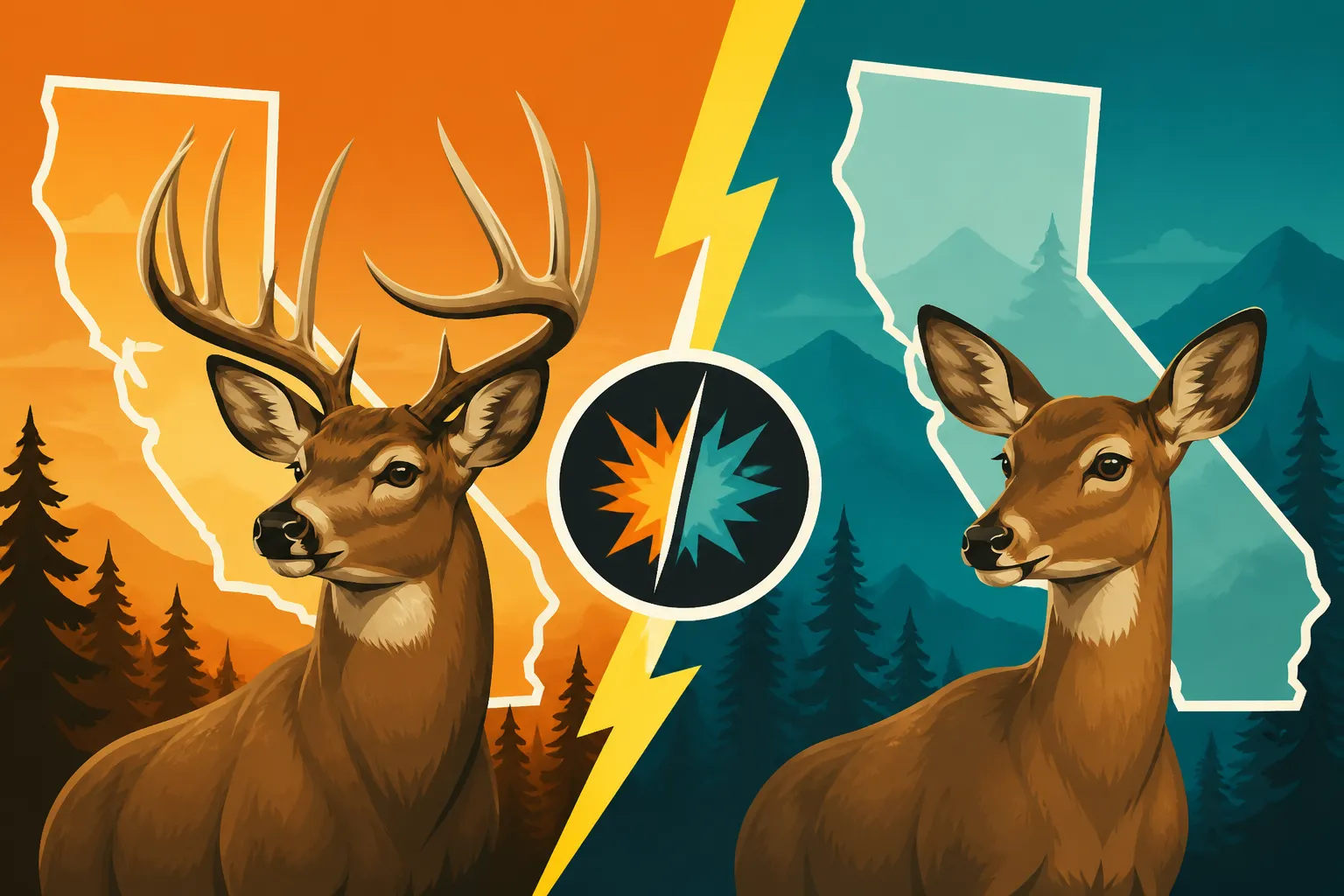
Navigating California's deer hunting regulations can feel like deciphering an ancient scroll, especially when you start looking at the nuances of tag types. Many hunters get understandably confused by terms like "any-deer" and "antlerless," wondering if they can finally pursue a doe for the freezer or if it's strictly a buck game. This guide is here to untangle those rules, clarify what each tag actually means for your hunt, and explain why these distinctions are so important for managing California's diverse deer herds.
Understanding California's Deer Tag System
California's deer hunting system is a complex tapestry woven from specific zones, season dates, and tag types, all designed to manage diverse deer populations across the state. It’s not a one-size-fits-all approach, and understanding the foundation of this system is crucial before diving into the specifics of "any-deer" and "antlerless" tags.
The Basics of Deer Zones and Tags
California is divided into various deer hunting zones, creatively labeled A, B, C, D, and X. Each of these zones, and sometimes subunits within them, has unique characteristics that influence the hunting seasons and tag allocations. For instance, Zone A covers a large portion of the state's coastal range, known for its dense chaparral and timber, and generally offers an earlier opening date for archery hunters. In contrast, the D-zones often encompass a mix of foothills and lower Sierra Nevada elevations, with varying season dates and deer densities. Then there are the X-zones, typically high-country mule deer areas, which are highly sought after and often require drawing a premium tag due to their limited availability and trophy potential. The California Department of Fish and Wildlife (CDFW) uses these zones to tailor hunting pressure and harvest goals to the specific ecological conditions and deer populations in each region. This ensures that a thriving deer population can be maintained across the state's incredibly varied landscapes.
The type of tag you hold is directly linked to these zones. Most hunters start with a general season deer tag, which, depending on the zone, allows them to hunt during a specific window, such as the California Zone A General Season Dates or the California Zone C General Season Dates. These general season tags are the most common and are often referred to as "over-the-counter" in terms of accessibility, though you still need to purchase them through the CDFW's online portal or a licensed vendor. They typically come with certain restrictions that influence what constitutes a "legal deer," which is where the "any-deer" and "antlerless" terminology can become a bit fuzzy for the uninitiated.
What "Any-Deer" Really Means
When you see "any-deer" on a tag description in other states, it often implies you can harvest either a buck or a doe. In California, for the vast majority of general season tags, the term "any-deer" is actually a bit misleading. For most of California's general deer seasons, an "any-deer" tag is effectively a buck-only tag, subject to specific antler point restrictions. This means that while the literal interpretation might suggest "any deer," the legal definition of a "legal deer" for your particular zone and season will almost always specify an antlered buck.
For example, in many D-zones, a legal deer is defined as a "forked-horn or better" buck, meaning the buck must have at least two points on one antler (not including the brow tine) to be legal. Some zones might allow a "spike buck" (a buck with unbranched antlers at least three inches long) to be taken, but this is usually specified. So, when you're hunting with a general "any-deer" tag, your focus is almost entirely on finding a legal buck. It's not about being able to take a doe. This distinction is really important, as mistakenly harvesting a doe with a general season tag can lead to significant penalties. Always double-check the specific regulations for the zone you're hunting, such as the rules for Hunting a D-Zone That Opens in August, to be absolutely certain of what constitutes a legal take.
The Specifics of "Antlerless" Tags
Now, this is where actual doe hunting opportunities come into play, but they are significantly more limited and controlled in California. An "antlerless" tag specifically permits the harvest of a female deer, or a fawn of either sex. These tags are rarely available for general purchase or as part of the standard deer seasons. Instead, they are typically allocated through special hunts, often highly limited drawings, or specific depredation permits. The primary purpose of issuing antlerless tags is for scientific management – to control populations in areas where deer numbers might be too high for the available habitat, to balance buck-to-doe ratios, or to mitigate agricultural damage caused by deer.
These opportunities are distinct from the general season and usually have their own specific application periods, draw odds, and hunt areas. For instance, you might see special antlerless hunts offered in certain X-zones or specific D-zone subunits where CDFW has identified a need to reduce the female deer population. These tags are highly coveted because they offer a unique hunting experience and a different management objective. Hunters who apply for and draw these tags are typically committed to specific conservation goals. Resources like GoHunt can be invaluable for researching these limited-entry opportunities and understanding the odds of drawing one of these rare antlerless tags.
The Purpose Behind Different Tag Types
The seemingly complicated system of "any-deer" (mostly buck) and specialized "antlerless" tags isn't arbitrary. It's a calculated strategy by the California Department of Fish and Wildlife (CDFW) to ensure the long-term health and sustainability of the state's deer populations. Each tag type serves a distinct ecological and management purpose.
Managing Deer Populations and Habitat
The core reason for differentiating between "buck-only" general tags and limited "antlerless" tags is robust population management. The CDFW actively monitors California Deer Population Estimate across all zones, and the harvest limits and tag types are directly influenced by these assessments. By primarily issuing tags for antlered bucks during general seasons, the goal is to protect the breeding stock (does) and allow for a natural age structure within the male deer population. This approach helps maintain a healthy buck-to-doe ratio, which is vital for successful reproduction and genetic diversity within the herd.
Antlerless tags, when issued, are typically a precise tool for fine-tuning population dynamics. If a particular herd's numbers are growing too rapidly, placing undue stress on the available habitat, or if there's an imbalance in the sex ratio, targeted antlerless hunts can help bring the population back into equilibrium. This prevents overgrazing, reduces the spread of disease, and ensures that the deer have sufficient food and cover resources, ultimately leading to a healthier overall ecosystem. Without these specific controls, unchecked population growth could lead to widespread deer starvation and habitat degradation, a scenario no hunter or conservationist wants to see.
Addressing Localized Issues
Beyond broad population control, antlerless tags are frequently deployed to address very specific, localized issues. One of the most common scenarios is agricultural depredation. Deer can cause significant damage to crops, orchards, and vineyards, leading to substantial economic losses for farmers and ranchers. In such cases, the CDFW may issue antlerless depredation permits or special antlerless tags in those specific areas to reduce the deer population and alleviate the pressure on agricultural resources. These are not general season hunts but highly targeted efforts.
Another scenario involves urban or suburban areas where deer populations might become too dense, leading to increased deer-vehicle collisions or landscape damage. While full-scale hunting within city limits is rare, special antlerless permits can be a management tool in carefully defined zones to address these conflicts. This demonstrates how flexible and responsive the CDFW's tag system needs to be to manage deer across California's diverse rural and developed landscapes. The strategic issuance of antlerless tags is a testament to the department's commitment to both wildlife conservation and minimizing human-wildlife conflict.
Hunter Opportunity and Experience
While management is paramount, the CDFW also strives to provide diverse hunter opportunities. The widespread availability of general season buck tags, which are essentially the "any-deer" tags for most hunters, offers a broad chance for individuals to participate in deer hunting each year. These tags are often available over-the-counter, meaning you don't have to enter a draw for them, making them accessible to a large number of hunters seeking to fill their California Buck Bag Limit. This ensures that hunting remains a popular and accessible outdoor pursuit for many Californians.
However, the limited nature of true antlerless tags, often requiring successful navigation of The California Big Game Drawing Explained, also creates a different kind of opportunity. These draw tags offer a more challenging and often more solitary hunting experience, appealing to those seeking a unique management hunt or the chance to contribute directly to specific herd health goals. This two-tiered approach balances widespread general hunting access with specialized, controlled opportunities for managing specific segments of the deer population. It also provides the CDFW with valuable data through California Deer Reporting Requirements, irrespective of the tag type, to continually refine their management strategies.
Navigating the California Big Game Drawing for Tags
For many California deer hunters, the general season "any-deer" (buck-only) tags are the bread and butter. But when it comes to specific, highly sought-after, or true antlerless opportunities, you'll inevitably encounter the California Big Game Drawing. This system is crucial for allocating limited tags and understanding it is key to expanding your hunting horizons.
Applying for Premium and Antlerless Tags
If you're eyeing a specific X-zone known for its trophy potential, or if you've heard whispers of a special antlerless hunt in a particular area, you'll need to participate in the CDFW's Big Game Drawing. This is an annual lottery system where hunters apply for limited-entry tags. Unlike the general season tags, which are often available over-the-counter or with predictable availability, these premium tags, including nearly all antlerless tags, are allocated based on a random draw weighted by a preference point system. You'll submit your applications during a specific window, typically in the spring, and results are usually released in early summer.
The application process requires careful consideration of the zones you wish to hunt. For instance, tags for California X-Zone Season Dates are notoriously difficult to draw due to their prestige and limited numbers. Similarly, any genuine antlerless tags will also be part of this draw system, making them highly competitive. While applying, you'll also be accumulating preference points if you're unsuccessful in drawing your first choice. These points don't guarantee a tag but increase your statistical odds in future draws, making long-term planning essential. Many hunters use tools like those offered by GoHunt to research draw odds, analyze historical data, and strategize their applications for both premium buck tags and the rare antlerless opportunities.
What to Expect When You Draw (or Don't)
Drawing a premium deer tag in California, whether for a highly coveted X-zone buck or a special antlerless permit, is a significant accomplishment and often the culmination of years of accumulating preference points. If you're successful, you'll receive your tag and can begin detailed scouting and preparation for your specific hunt. These tags typically come with very precise hunt dates and locations, so it's vital to read all the instructions carefully. Hunters who secure these specialized tags often have a unique opportunity to hunt areas with less pressure or to participate in specific management objectives.
However, the reality for most applicants is not drawing a premium tag, especially for those highly limited antlerless opportunities. Don't let this discourage you! If you don't draw, you'll receive a preference point for that species, which rolls over to the next year, improving your chances incrementally. In the meantime, you can still purchase a general season deer tag for an over-the-counter zone, such as one of the D-zones. This allows you to hunt annually and keep building those points for a future dream hunt. Even if you don't draw an antlerless tag, you can still enjoy a rich hunting experience with your general "any-deer" (buck) tag.
General Season Over-the-Counter Tags
For the majority of California deer hunters, the most accessible tags are the general season tags. These are the "any-deer" tags we discussed, which, for practical purposes, mean you'll be hunting for a legal buck. These tags are often available for purchase without having to go through the draw system, making them perfect for hunters who want to guarantee a hunt each year or who are newer to the sport. Zones like the extensive A-zone and many D-zones offer these more readily available opportunities.
While these tags don't involve the high drama of the big game drawing, they still require planning and preparation. You'll need to secure your California Resident Deer Tag Cost and purchase your license and tag well in advance of the season. Knowing your chosen zone's specific season dates, legal definitions of a buck, and any special regulations (like the non-lead ammunition requirement) are paramount. Even without drawing a "premium" tag, these general season hunts offer incredible experiences in California's diverse landscapes, from the coastal chaparral to the Sierra foothills.
Practical Considerations and Legalities
Beyond simply acquiring a tag, there are crucial practical and legal considerations every California deer hunter must be intimately familiar with, regardless of whether they hold an "any-deer" (buck) or a rare "antlerless" tag. Adhering to these rules ensures a legal, ethical, and safe hunt.
Legal Deer Definitions by Zone
This is perhaps the most critical section for understanding what you can legally harvest with your tag. As discussed, while most general season tags are technically "any-deer," the specific regulations for each zone define what constitutes a legal deer. For the vast majority of these tags, this means a buck with a minimum antler size. The table below outlines common antler point restrictions by zone type, but always verify with the current year's CDFW regulations booklet for your specific zone.
| California Deer Zone Type | Common Legal Deer Definition (for General Season "Any-Deer" Tag) | Notes |
|---|---|---|
| Zone A (Coastal) | Forked-horn or better (two points on one antler, not including brow tine) | Check for specific subunits, some may have special rules. |
| Zone B (North Coast) | Forked-horn or better | Historically similar to Zone A, but always confirm. |
| Zone C (Central Coast/Sierra) | Forked-horn or better, often with specific subunit nuances like Hunting the Zone C Rifle Season in October | May have varied rules depending on the subunit. |
| Zone D (Sierra Foothills/Central Valley) | Forked-horn or better in most subunits, some allow spike bucks. | Critical to check your specific D-zone's regulations. |
| Zone X (High Country/Mule Deer) | Forked-horn or better, typically 3 points on one side or better, or often specific minimum beam length rules. | These tags are draw-only and have very precise rules. |
| Special Antlerless Hunts | Antlerless deer (doe or fawn). | These are distinct from general tags and have very limited, specific allocations. |
It's important to stress that this table is a generalization. You must consult the current CDFW Big Game Hunting Regulations for your specific zone, subunit, and tag type before heading afield. Misidentifying a deer or misinterpreting the regulations can result in severe penalties, including fines and license revocation. When in doubt, let the deer walk.
Non-Lead Ammunition Requirements
Regardless of whether you're hunting with an "any-deer" buck tag or a special antlerless tag, California's California's Non-Lead Ammunition Requirement is statewide and absolute. This means that all ammunition used for hunting game mammals and non-game animals (like coyotes or ground squirrels) must be certified as non-lead. This regulation was fully phased in by July 1, 2019, and applies across all lands in California, both public and private.
Choosing the right non-lead ammunition is crucial for performance and compliance. Copper bullets are the most common non-lead option for rifles and have excellent terminal ballistics. For shotguns, bismuth or steel shot is required for upland birds and waterfowl, but non-lead slugs are necessary for deer hunting with a shotgun. It's a good practice to sight in your rifle or pattern your shotgun with your chosen non-lead ammunition well before the season opens to ensure accuracy and confidence in your setup. Always carry proof of your non-lead ammunition in the field, such as the original packaging, to avoid any issues with game wardens.
Reporting Your Harvest
Another non-negotiable legal requirement for all deer hunters in California is the mandatory California Deer Reporting Requirements. Whether you harvest a buck with your general "any-deer" tag or a doe with a special antlerless tag, you are legally obligated to report your harvest to the CDFW. This is true even if you don't take a deer; you must still report that you hunted but did not harvest.
The reporting deadline is critical – it's typically within 30 days of the close of the season for the zone you hunted, or by January 31st of the following year if you didn't harvest. You can usually report your harvest online through the CDFW's Automated License Data System (ALDS), via mail, or through the CDFW mobile app. This data is incredibly important for wildlife managers. It helps them track harvest numbers, monitor deer populations, assess hunting pressure, and make informed decisions for future seasons and tag allocations. Accurate reporting from every hunter contributes directly to the effective management of California's deer herds, ensuring hunting opportunities for generations to come.
Common Misconceptions and Troubleshooting
Despite the CDFW's best efforts to clarify regulations, certain aspects of California's deer tag system continue to trip up even experienced hunters. Let's tackle some of the most persistent misconceptions around "any-deer" and "antlerless" tags.
"Any-Deer" Doesn't Always Mean a Doe
This is the biggest hurdle for many hunters, especially those familiar with "any-deer" rules in other states. In places like Texas or some Midwest states, an "any-deer" tag literally means you can harvest a buck or a doe, often to help manage herd numbers and provide more venison for hunters. However, in California, the term "any-deer" on your general season tag is almost universally constrained by a minimum antler point restriction. This means your "any-deer" tag is, for all intents and purposes, a buck-only tag. You are hunting for a legal buck, typically defined as a forked-horn or better, depending on your specific zone.
The confusion stems from the historical use of the term and its interpretation in other regions. It's not uncommon for new California hunters, or those moving from out of state, to assume they can take a doe with their general tag. To reiterate, unless your tag explicitly states "antlerless" and is part of a special hunt permit, you are almost certainly looking for a buck that meets the minimum antler criteria for your zone. Violating this rule, even unknowingly, can lead to serious legal consequences. Always, always check the current year's regulations for your specific tag and zone. If in doubt, contacting the CDFW directly is always a good idea, or consulting reputable hunting resources like GoHunt, which often breaks down these nuanced regulations into digestible formats.
The Scarcity of Antlerless Tags
Another common misconception is that antlerless tags are readily available, perhaps even as a "second tag" option or something you can just pick up over-the-counter. The reality in California is quite the opposite: true antlerless tags are exceptionally rare and highly coveted. They are not part of the standard general deer season offerings. Instead, they are typically limited-entry, draw-only tags issued for very specific management reasons, such as population control in a particular area, reducing agricultural depredation, or specific scientific studies.
The draw odds for these antlerless tags are often very low, sometimes even lower than some of the most premium X-zone buck tags, simply due to the extremely limited number issued. This means that if your primary goal is to harvest a doe for meat, relying on drawing an antlerless tag in California is a long shot. Most California hunters fill their freezers with bucks taken during the general season using their "any-deer" (buck) tags. While it's great to apply for these special antlerless opportunities and contribute to management goals, it's crucial to set realistic expectations and understand that they are not a regular part of most hunters' annual plans. If you're really committed to understanding all your options, digging into the data from the California Big Game Drawing Explained can show you just how tough the odds can be for these unique tags.
Disclaimer
Please remember that hunting regulations are subject to change. This information is intended for general guidance only. Always consult the most current California Department of Fish and Wildlife (CDFW) regulations booklet and official website before planning any hunting trip to ensure compliance with all laws and rules.