California’s Four Mandatory CWD Testing Zones
The news about Chronic Wasting Disease (CWD) arriving in California has certainly sent ripples through the hunting community. It's a frustrating, unsettling development, and for many, it brings a lot of questions about what this means for their upcoming hunts, especially with new mandatory testing requirements. We all want to do our part to protect our incredible deer and elk herds, but navigating new regulations can feel like a maze. This guide is here to break down California's four mandatory CWD testing zones, explain what CWD is, and walk you through your responsibilities as a hunter in these critical times.
Understanding Chronic Wasting Disease and Its Threat to California
For years, California held a special distinction as one of the few states in the West that hadn't detected Chronic Wasting Disease within its borders. That changed in 2024, and now, more than ever, it's crucial for every hunter to grasp what CWD is and why it poses such a significant threat to our cherished wildlife and hunting traditions.
What CWD Is and How It Impacts Deer and Elk
Chronic Wasting Disease is a nasty neurological disease that affects cervids – that’s deer, elk, moose, and caribou. It’s caused by abnormal proteins called prions, which slowly accumulate in the brain and other tissues. Think of it as a very slow-moving, always-fatal illness that essentially wastes away the animal. You might see deer looking incredibly emaciated, exhibiting strange neurological symptoms like stumbling, listlessness, excessive drooling, or a lack of fear of humans. It’s a heartbreaking sight, and sadly, once an animal contracts CWD, there is no cure.
The scariest part? CWD can spread directly from animal to animal through bodily fluids like saliva, urine, and feces. But it also spreads indirectly, and this is where it gets really problematic. The prions can persist in the environment – in soil, plants, and even on surfaces – for years, potentially infecting other animals that come into contact with contaminated areas. This environmental persistence makes CWD incredibly challenging to manage and contain, as the landscape itself can become a reservoir for the disease. The long incubation period, where an animal can be infected and spreading prions for months or even years before showing any symptoms, adds another layer of difficulty to monitoring and control efforts.
The Importance of Proactive Management in a CWD-Free State (Until Recently)
For decades, the California Department of Fish and Wildlife (CDFW) has been diligently monitoring for CWD. They’ve conducted extensive surveillance, testing thousands of deer and elk samples over the years, all with the goal of keeping our state CWD-free. This proactive approach was a monumental effort, recognizing the devastating impact CWD has had on deer and elk populations in other states, leading to significant declines in herd health and, in some cases, dramatic changes to hunting regulations and opportunities. The state's previous CWD status meant hunters didn't have to worry about mandatory testing, but that era has now passed.
The threat of CWD isn't just about deer health; it's about the future of hunting in California. A widespread CWD outbreak could decimate local deer and elk populations, leading to reduced tag allocations, shortened seasons, or even closures in affected areas. It also raises concerns about potential impacts on related ecosystems and other wildlife species. By understanding the gravity of CWD, hunters become vital partners in the state's efforts to mitigate its spread. It's not just about compliance; it's about stewardship and safeguarding the hunting heritage for generations to come.
California's Response: The First Detections and Mandatory Testing Program
The announcement earlier this year marked a somber turning point for wildlife management in California. The detection of CWD was not unexpected, given its presence in neighboring states, but it still came as a blow. The CDFW, however, has swiftly moved to implement a robust response, centering on mandatory testing in newly designated zones.
The Unfortunate Arrival of CWD in Inyo and Mono Counties
In early 2024, the CDFW confirmed the presence of CWD in two wild mule deer in California. These were the first-ever detections within the state, located in Mono and Inyo counties. These counties, nestled in the stunning Eastern Sierra, are iconic deer hunting grounds, and the news sent a wave of concern through the hunting community. It confirmed what many had feared: CWD had finally breached California’s borders. The specific locations of these detections immediately prompted the CDFW to analyze the potential for spread and to identify the areas most at risk, leading directly to the establishment of the new mandatory testing zones.
This wasn't a random occurrence; CWD has been steadily moving west for years. The detections in Mono and Inyo counties mean that now, hunters pursuing deer in these beautiful, rugged landscapes need to be extra vigilant. The discovery underscores the interconnectedness of wildlife populations and the challenges wildlife managers face in containing diseases across vast, wild territories. It's a stark reminder that even in remote, seemingly pristine areas, the threat of disease is very real.
How Mandatory Testing Aims to Protect Our Herds
In response to the confirmed cases, the CDFW immediately established a mandatory CWD testing program for the 2024 hunting season and beyond. This program is a critical component of their CWD management strategy, designed to achieve several key objectives. First and foremost, mandatory testing aims to quickly identify any further spread of the disease. By concentrating testing efforts in specific, high-risk zones, the CDFW hopes to get an accurate picture of the disease's prevalence and distribution. This data is invaluable for making informed management decisions, such as adjusting hunt zones or implementing culling efforts if necessary.
Secondly, mandatory testing provides a mechanism for early detection. The sooner CWD is identified in a new area, the greater the chance of containing it before it becomes widespread. This proactive surveillance is essential for protecting the larger, currently CWD-free deer and elk populations across the state. While it adds a new step to the hunting process, it's a necessary measure to safeguard the health of our game animals and ensure sustainable hunting opportunities for the future. Many hunters are already familiar with the broader efforts of California's Deer and Elk Disease Monitoring programs, and this CWD testing is now a vital part of that larger picture.
The Eastern and Central Coast Mandatory Testing Zones
With the first detections confirmed in the Eastern Sierra, it's no surprise that mandatory testing zones have been established there. But the CDFW has also designated other strategic areas for testing, including a significant portion of the Central Coast, demonstrating a comprehensive approach to monitoring CWD risk across diverse California landscapes.
The Eastern Sierra Zone: Ground Zero and Its Affected Hunt Units
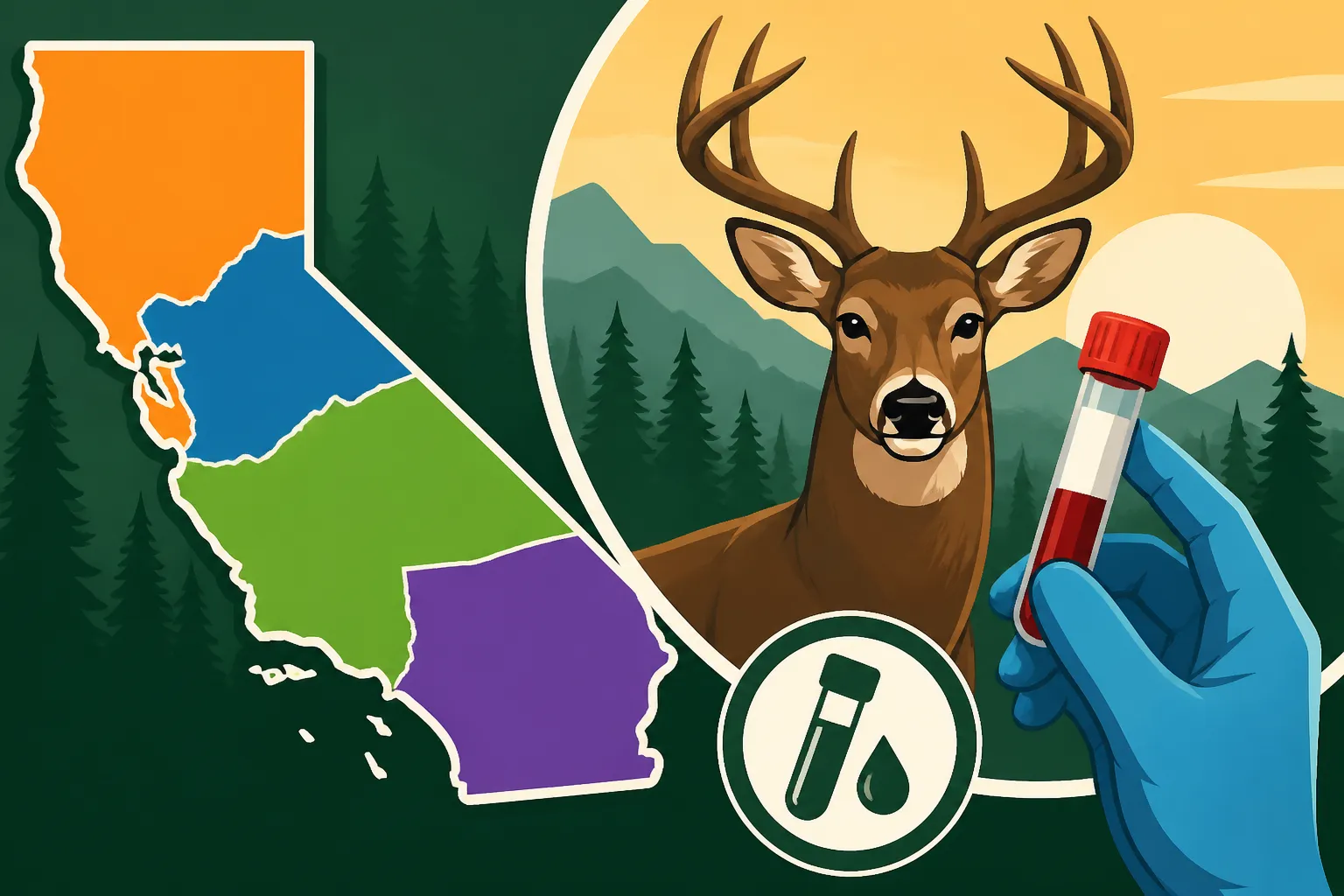
This is the area that immediately comes to mind when we talk about CWD in California, as it’s where the first positive detections were found in wild mule deer. The Eastern Sierra Zone for mandatory CWD testing is extensive, encompassing several well-known deer hunt zones: X8, X9A, X9B, X10, and D7. For those who enjoy Hunting Sierra Nevada High Country, these zones represent some of California’s most iconic and challenging deer hunting experiences, primarily targeting mule deer. Hunters heading into these areas for the upcoming seasons need to be fully aware that their harvested deer will be subject to mandatory testing.
The rationale behind designating such a large area is clear: the detections in Inyo and Mono counties indicate that the prions are present in the environment and could be affecting a broader population. This zone represents the frontline in California’s battle against CWD. The density of deer, their migratory patterns, and the rugged, expansive terrain all contribute to the complexity of monitoring and managing disease spread here. Every hunter who successfully fills a tag in these zones will play a critical role in providing the data needed to understand the true extent of the disease’s presence.
The Central Coast Zone: Strategic Monitoring of Blacktail Country
While CWD was not detected here, the Central Coast Zone has also been designated for mandatory testing, encompassing deer hunt zones D10 and D11. This decision highlights the CDFW’s proactive, risk-based approach to disease management. The Central Coast is home to a robust population of Columbia blacktail deer, and these zones represent key habitats where deer density, geographical features, and potential connectivity to other areas (or past movements of high-risk animals like wild pigs) could make them vulnerable to future CWD introduction or spread.
The mandatory testing here serves as an early warning system. By proactively sampling deer in this region, the CDFW hopes to catch any potential CWD presence before it takes hold. Imagine harvesting a beautiful blacktail buck in the oak woodlands of Monterey or San Benito counties; now, the process will include submitting a sample for testing. This is a crucial step in ensuring the long-term health of our blacktail herds and safeguarding the hunting opportunities in these unique coastal environments. Hunters in these areas, perhaps those interested in Hunting Coastal Range Oak Woodlands or pursuing early season deer, will need to be particularly diligent about checking current regulations.
Expanding the Net: Southern Sierra and Northeastern Mandatory Testing Zones
Beyond the immediate areas of detection and high-risk blacktail habitat, the CDFW has cast a wider net, including significant portions of the Southern Sierra and the entire Northeastern corner of the state in its mandatory CWD testing program. These zones are critical for monitoring disease dynamics across California's diverse deer and elk ranges.
The Southern Sierra Zone: Guarding Against Spread in Iconic Landscapes
The Southern Sierra Zone for mandatory CWD testing covers deer hunt zones D6, D8, and D9. This vast and rugged region extends through parts of counties like Tulare, Kern, and Fresno, encompassing diverse habitats from foothill chaparral to high-elevation wilderness. This area is known for its mule deer populations, and some areas may see hybridization with blacktails, adding another layer of complexity to disease monitoring. While CWD has not yet been detected here, its proximity to the Eastern Sierra detection sites makes it a logical area for enhanced surveillance.
Hunters venturing into the stunning wilderness of the Southern Sierra, perhaps on a multi-day trek for a trophy mule deer, will now be part of this vital monitoring effort. Whether you’re scaling peaks in D6 or navigating the dense timber of D9, every harvested animal contributes valuable data. This proactive measure aims to ensure that California’s iconic deer populations in these regions remain healthy and free from the widespread impacts of CWD. It’s a testament to the CDFW’s commitment to protecting the state’s wildlife heritage, particularly in areas favored by hunters for experiences like Hunting California's Sierra Nevada Backcountry.
The Northeastern Zone: Protecting Key Deer and Elk Populations
Perhaps the most expansive of the newly designated zones is the Northeastern Zone, which includes a vast array of deer hunt units: X1, X2, X3A, X3B, X4, X5A, X5B, X6A, X6B, X7A, and X7B. This massive region spans numerous counties in the far north and northeast of California, bordering Oregon and Nevada—states where CWD has been detected in some areas. This zone is a critical habitat for both mule deer and Rocky Mountain Elk, representing some of the state's most popular and coveted hunting opportunities. The presence of significant elk herds, like those detailed in discussions about Applying for a Rocky Mountain Elk Tag Near Oregon, makes this zone particularly important for CWD surveillance.
The decision to include the entire Northeastern corner, even without direct detections within its boundaries, underscores the CDFW’s strategic foresight. The migratory patterns of deer and elk, combined with the proximity to affected states, create a higher risk of CWD introduction. Mandatory testing here acts as a crucial barrier, an early detection system for potential incursions. For hunters planning trips to these coveted X-zones, perhaps hoping for a coveted buck tag, understanding and complying with the CWD testing requirements will be an integral part of their hunting season. This proactive measure is vital to preserving the health of these herds and maintaining the vibrant hunting economy of the region.
Here's a quick overview of California's Mandatory CWD Testing Zones:
| CWD Testing Zone | Counties Primarily Affected | Deer Hunt Zones Included | Primary Species for Testing | Current CWD Status (as of 2024) |
|---|---|---|---|---|
| Eastern Sierra Zone | Mono, Inyo | X8, X9A, X9B, X10, D7 | Mule Deer | CWD Detected |
| Central Coast Zone | Monterey, San Benito | D10, D11 | Columbia Blacktail | No CWD Detected (Proactive) |
| Southern Sierra Zone | Tulare, Kern, Fresno (parts of) | D6, D8, D9 | Mule Deer | No CWD Detected (Proactive) |
| Northeastern Zone | Lassen, Modoc, Siskiyou, Shasta, Plumas, Sierra (parts of many) | X1, X2, X3A, X3B, X4, X5A, X5B, X6A, X6B, X7A, X7B | Mule Deer, Rocky Mountain Elk | No CWD Detected (Proactive) |
Your Responsibilities as a Hunter in a CWD Zone
Now that we know where the mandatory testing zones are, the big question is what you, as a hunter, need to do. Compliance is key, not just for avoiding penalties, but for actively contributing to the health of California's wildlife.
Mandatory Sample Submission and Carcass Handling
If you are fortunate enough to harvest a deer or elk in any of the four mandatory CWD testing zones, your hunting duties don't end with the field dressing. You are now legally required to submit the head of your animal for CWD testing. This typically means taking the head, with at least four inches of neck attached, to a designated CDFW collection site or participating taxidermist or meat processor within a specific timeframe – usually within 48 hours of harvest, but it’s crucial to check current CDFW guidelines for the exact deadline. You’ll need to ensure your tag is properly validated and attached. The CDFW website, and resources like GoHunt, will have up-to-date maps of collection stations and instructions. It’s a bit of an extra step, but it’s absolutely vital for gathering the data needed to track and manage CWD.
Beyond the head submission, proper carcass handling is paramount to prevent potential environmental contamination. If you process your animal in the field, especially in remote areas like those you might find while Hunting California's Sierra Nevada Backcountry, you should carefully remove and dispose of high-risk tissues such as the brain, spinal cord, eyes, spleen, and lymph nodes. These tissues should be bagged and disposed of in a landfill, not left in the field where prions could persist. For the rest of the carcass, it’s always best practice to double-bag any remains for proper disposal. This mindful approach, combined with the guidance you might find for efficient processing like Field Dressing a Deer in Hot Weather, ensures you’re not inadvertently contributing to the spread of disease.
Understanding Carcass Transport Regulations
Perhaps one of the most significant changes for hunters operating in CWD mandatory testing zones concerns carcass transport. To prevent the inadvertent spread of CWD to unaffected areas, strict regulations are in place regarding what parts of an animal can be moved out of a mandatory testing zone. Generally, whole carcasses are prohibited from leaving these zones. This means you cannot simply load your entire deer or elk into the truck and drive it home if your home is outside a CWD zone.
Instead, animals must be processed to certain specifications before transport. The allowable parts typically include:
- Boned-out meat: This means all meat separated from the bone, spinal cord, and brain tissue.
- Clean skull plates: Skull plates must be completely free of brain and nervous tissue.
- Antlers: Antlers are generally considered low risk.
- Hides: Hides should be cleaned of all tissue.
This ensures that high-risk tissues, which are most likely to contain CWD prions, remain within the testing zone for proper disposal or are processed in a way that eliminates the risk. Failing to comply with these transport regulations can result in significant penalties, so it's absolutely critical to understand the rules. For detailed information on what’s allowed and what’s not, make sure to consult the CDFW’s specific guidelines for Moving a Deer Carcass Out of a Testing Zone before your hunt. It's an adjustment, but a necessary one to protect our wildlife statewide.
Long-Term Outlook: CWD's Future Impact on California Hunting
The arrival of CWD is undoubtedly a game-changer for California hunting. While the current measures are focused on containment and monitoring, the long-term implications could profoundly reshape how and where we pursue game.
How CWD Could Shape Future Regulations and Hunting Opportunities
The presence of CWD in California introduces a new level of complexity to wildlife management, and it's highly probable that this will lead to evolving regulations and shifts in hunting opportunities. Depending on the spread and prevalence of the disease, we might see changes to season lengths, tag allocations, or even the creation of specific management units where disease control efforts are prioritized. For example, if CWD were to become widespread in a particular area, the CDFW might implement targeted culling efforts to reduce deer density, which could affect tag availability in those zones. We might even see changes to specific weapon types or hunting methods, such as those used for Bowhunting California's Zone A Season, if it aids in managing herd numbers or collecting samples more efficiently.
It's also possible that the boundaries of CWD testing zones will expand or contract based on ongoing surveillance results. Hunters might need to adapt to more localized regulations, with varying rules across different deer hunt zones. The CDFW's primary goal will always be to maintain healthy wildlife populations, and all decisions will be guided by the latest scientific data on CWD. This adaptive management approach means hunters should be prepared for potential changes and stay informed through official CDFW channels and reputable hunting information platforms.
The Critical Role of Hunters in CWD Management
More than ever, hunters are on the front lines of CWD management. Your participation, vigilance, and adherence to regulations are not just about compliance; they are absolutely critical to the state's efforts to combat this disease. Hunters are often the first to observe changes in animal behavior or health in the field. If you see a deer or elk exhibiting symptoms consistent with CWD – such as extreme weight loss, lethargy, or neurological issues – it is your responsibility to report it to the CDFW immediately. Do not attempt to harvest such an animal for consumption.
Beyond reporting, staying educated and informed is paramount. Regularly check the CDFW website for the latest updates on CWD, changes to regulations, and new testing zone information. Utilize resources like GoHunt which often provide valuable, up-to-date regulatory information and maps that can help you navigate these new requirements. Engaging with hunter education programs, like the one that covers California Hunter Education Requirements, can also provide deeper insights into wildlife health and disease prevention. By actively participating, hunters become invaluable partners in protecting California’s game animals and ensuring that future generations can continue to enjoy the rich hunting heritage of our state.
Disclaimer
The information provided in this article is for general guidance and informational purposes only. Hunting regulations, especially those related to wildlife diseases like CWD, are subject to change by the California Department of Fish and Wildlife (CDFW). It is the hunter's sole responsibility to consult the most current CDFW regulations, proclamations, and advisories before engaging in any hunting activities.