How Turkeys Were Introduced to California
It's easy to look at the thriving wild turkey populations we have across California today and just assume they've always been here. But the truth is, these magnificent birds weren't always a staple in our state's wildlands. For a long time, California hunters, or those who loved watching wildlife, missed out on the thrill of a gobbler echoing through the oaks. This guide is going to take a deep dive into the fascinating, and sometimes frustrating, journey of how wild turkeys finally found their foothold and flourished in the Golden State.
The Native Absence and Early Attempts
Many people are surprised to learn that wild turkeys, as we know them today, weren't native to California. It's a common misconception, given how well they've adapted and spread throughout our diverse landscapes. But for centuries, before European settlement, the iconic gobble wasn't a sound heard in the California wilderness. This absence meant that early attempts to introduce turkeys were often met with significant challenges, teaching wildlife managers valuable lessons about habitat and subspecies suitability.
Why Turkeys Weren't Originally Here
California boasts an incredible array of ecosystems, from dense redwood forests to arid deserts, and sprawling oak woodlands. One might naturally assume such diverse habitats would be perfect for wild turkeys, especially the oak woodlands which are so vital to their diet and cover needs. However, historical and paleontological records indicate that the three primary subspecies of wild turkey native to North America—Eastern, Rio Grande, and Merriam's—simply didn't extend their natural range this far west. Their historical distribution was primarily in the eastern, central, and southwestern parts of the continent. The vast, often harsh, deserts and formidable mountain ranges acted as natural barriers, preventing them from migrating into what is now California. It wasn't a matter of unsuitable habitat per se, but rather geographical isolation.
Early Introductions and Their Challenges
The idea of bringing wild turkeys to California isn't a new one; it dates back over a century. The very first attempts began as early as the late 1800s and continued into the mid-20th century. These initial efforts, however, largely failed. Most of these early introductions involved releasing pen-raised, often semi-domesticated, turkeys. These birds, raised in captivity, lacked the crucial survival instincts necessary to thrive in the wild. They struggled to forage efficiently, evade predators, and adapt to the fluctuating weather conditions of California. It was a frustrating period for early conservationists and sportsmen who dreamed of establishing a huntable turkey population, as countless releases simply vanished without establishing viable, self-sustaining flocks. It took decades of trial and error, coupled with a growing understanding of wild turkey ecology and genetics, before a more successful strategy could emerge.
Understanding the Wild Turkey Subspecies in California
When we talk about wild turkeys in California, we're primarily talking about two main subspecies: the Rio Grande and the Merriam's, with some hybridizations and very localized Eastern strains also present. The success of today's populations largely hinges on selecting the right bird for the right habitat, a lesson learned through many years of dedicated work by the California Department of Fish and Wildlife (CDFW) and various conservation partners. Each subspecies has its own preferences and characteristics that make it more or less suited to different parts of our state.
The Dominant Rio Grande Subspecies
The Rio Grande wild turkey ( Meleagris gallopavo intermedia) is, without a doubt, the most prevalent and successful subspecies in California. These birds were first introduced in significant numbers starting in the 1950s, primarily from populations in Texas. They thrive in open woodlands, particularly those dominated by oaks, which provide abundant acorns—a critical food source. You'll find them scattered throughout the state, from the coastal foothills to the Sierra Nevada, the Sacramento Valley, and the Central Coast. Their adaptability to diverse habitats, including agricultural edges and riparian corridors, has allowed them to colonize a vast amount of suitable terrain. If you're out Hunting Coastal Range Oak Woodlands or along a river bottom, chances are you'll encounter Rio Grandes. They're known for their robust size and generally vocal nature, making for exciting hunts.
Merriam's and Other Introductions
While Rio Grandes reign supreme, the Merriam's wild turkey ( Meleagris gallopavo merriami) also has a strong presence, particularly in the more mountainous and timbered regions of California, especially near the Oregon border and in parts of the Sierra Nevada. Merriam's turkeys were primarily sourced from states like New Mexico, Arizona, and Colorado, where they are native to ponderosa pine and mixed conifer forests. These birds are distinctively whiter in their feather coloration, especially on the tail tips and rump, compared to the buff-tipped Rio Grandes. They tend to be a bit more elusive, preferring denser cover in higher elevations. While less widespread than the Rio Grandes, they offer a unique hunting experience in California's high-country. Beyond these two, there have been some minor introductions of Eastern wild turkeys ( Meleagris gallopavo silvestris) and a fair amount of hybridization where ranges overlap, leading to some birds displaying mixed characteristics. Understanding which subspecies you're pursuing can be really helpful when planning your Spring Turkey Hunting in California or Archery-Only Fall Turkey Hunting in California strategies, as their behaviors can differ slightly.
The California Department of Fish and Wildlife's Introduction Program
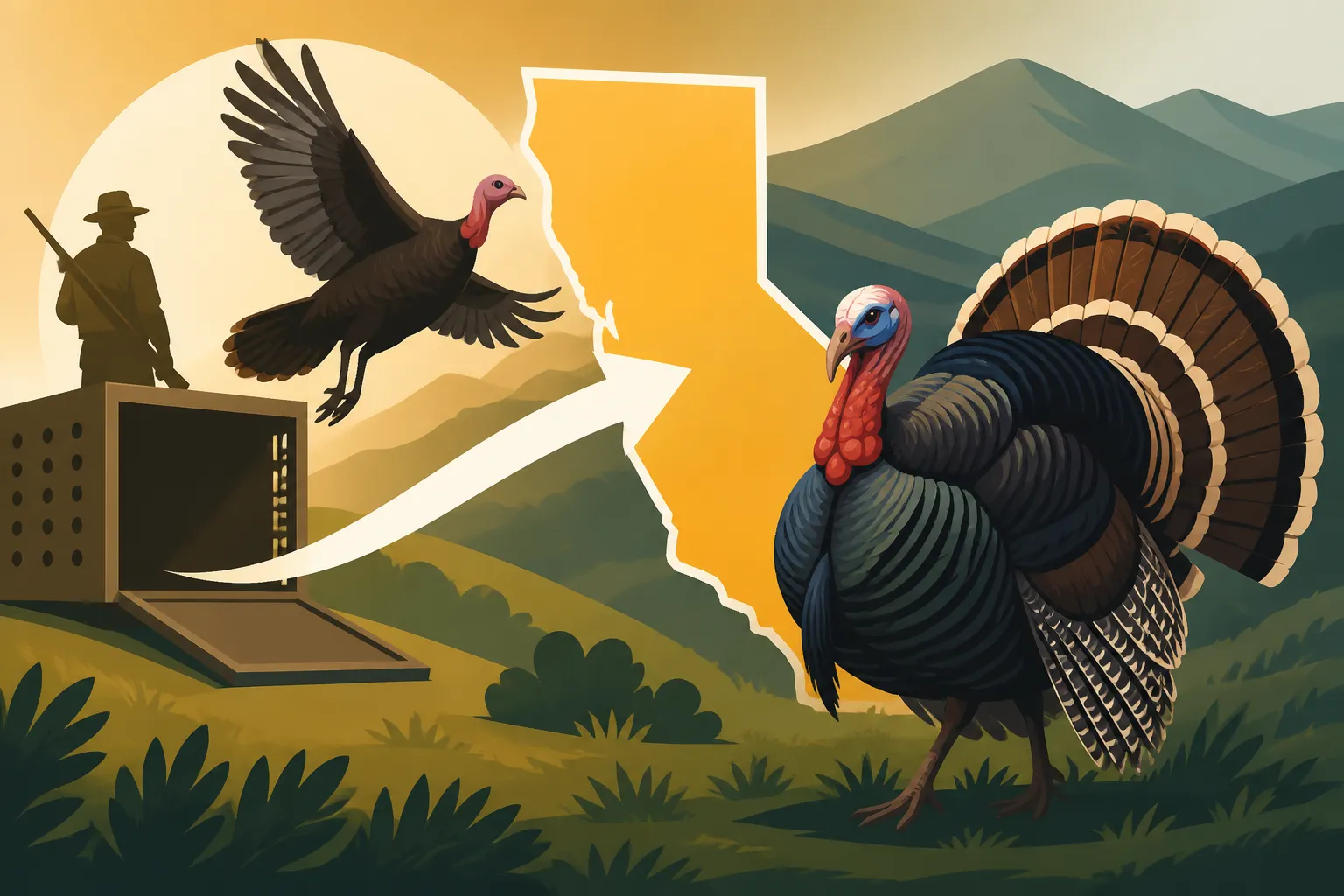
The real turning point for California's wild turkey population came with the concerted efforts of the California Department of Fish and Wildlife (CDFW), along with various national and local conservation groups like the National Wild Turkey Federation (NWTF). They learned from past mistakes and adopted a much more effective strategy: trapping wild turkeys from established populations in other states and relocating them to suitable habitats in California. This method, known as "trap and transfer," proved to be the game-changer.
The Trap and Transfer Success Story
Beginning in the late 1950s and really hitting its stride in the 1960s and 70s, the CDFW initiated an aggressive trap and transfer program. Instead of releasing pen-raised birds, which consistently failed, they focused on acquiring truly wild birds from healthy populations in states like Texas for Rio Grandes, and New Mexico for Merriam's. These wild-trapped turkeys already possessed the natural instincts for survival—they knew how to forage, avoid predators, and reproduce in a wild setting. Birds were captured using specialized cannon nets or rocket nets, carefully transported, and then released into pre-identified, prime habitats across California that offered the necessary food, water, and cover. This strategic approach was meticulously planned, often utilizing data acquired through mapping tools like those available through GoHunt to identify ideal release sites with strong oak woodlands or conifer forests, ensuring the best possible chance of establishment.
The success of these trap and transfer efforts was monumental. Within a few years of release, many of these relocated flocks began to grow and spread, leading to localized populations taking root. It was a slow and steady process, but the results were undeniable. By the 1980s, California's wild turkey numbers had exploded, creating self-sustaining populations in dozens of counties where they had never existed before. This success story stands as one of North America's most impressive wildlife restoration achievements, demonstrating the power of science-based conservation.
Key Release Areas and Their Impact
The CDFW targeted specific regions for turkey releases, focusing on areas with extensive oak woodlands and riparian zones. Some of the earliest and most successful releases occurred in areas like Tehama County in Northern California, Monterey County along the Central Coast, and portions of the Sierra Nevada foothills. These initial footholds became crucial propagation centers, acting as sources for "secondary transfers" where turkeys were later trapped from these thriving California populations and moved to new areas within the state. This snowball effect allowed the turkey population to expand rapidly, filling suitable niches across much of California. The impact was profound: not only did it create new hunting opportunities, but it also restored a missing ecological component to California's landscapes, enhancing biodiversity and providing new prey for native predators. The birds themselves adapted incredibly well, and now, when you're scouting for a flock, knowing the history of these key release areas can help you predict where strong populations still exist.
Habitat Management and Turkey Expansion
The success of wild turkey introductions in California wasn't just about releasing the right birds; it was equally about ensuring they had the right places to live. Habitat management has played a critical role in supporting their expansion and ensuring their long-term survival. Understanding what makes a good turkey habitat is key for both wildlife managers and hunters alike.
The Importance of Oak Woodlands and Riparian Corridors
If there's one habitat feature that defines California's wild turkey success, it's our oak woodlands. These areas, particularly those dominated by live oaks, blue oaks, and black oaks, provide an unparalleled food source in the form of acorns, which are high in protein and fat—essential for turkeys, especially through the fall and winter. Beyond food, oak woodlands offer crucial roosting trees with sturdy branches that provide protection from ground predators, as well as crucial cover for nesting and escape. Riparian corridors, the lush green strips along rivers and streams, are also incredibly important. They offer year-round water, diverse insect populations for poults, and dense understory for nesting hens. When the CDFW was selecting release sites, these areas were prioritized because they offered the best chance for turkeys to not just survive, but to truly thrive and reproduce. That's why you often find turkeys concentrated in river bottoms and rolling oak hills when you're out Scouting California Public Land Before Season.
Factors Supporting Turkey Population Growth
Beyond prime habitat, several other factors contributed to the remarkable growth of California's turkey populations. One significant factor was the establishment of regulated hunting seasons. By managing harvest levels, the CDFW ensures that enough birds survive to reproduce, preventing overhunting in any given area. Early season structures, like the limited spring gobbler seasons, were designed to allow populations to establish firmly. Additionally, the inherent adaptability of the Rio Grande subspecies, their relatively high reproductive rates, and their ability to disperse into new territories quickly, all played a part. The decline of some historical predators in certain areas, combined with proactive conservation efforts and public education, also contributed to a favorable environment for turkeys to multiply. Even private landowners, often guided by resources found on platforms like GoHunt, have played a part by implementing habitat improvements, such as thinning underbrush to create better foraging areas or protecting crucial roost sites. This combination of factors has allowed the California Turkey Population Estimate to reach impressive numbers, offering opportunities across the state.
The Role of Hunters and Conservation
The story of wild turkeys in California isn't just a tale of wildlife management; it's also a testament to the dedication of hunters and conservationists. Their contributions, both financial and hands-on, have been absolutely vital in bringing these birds back and ensuring their continued health. Without the commitment of the hunting community, it's fair to say our turkey opportunities wouldn't be nearly what they are today.
Funding Conservation Through Hunting Licenses and Tags
It might sound counterintuitive to some, but hunters are often the primary funders of wildlife conservation efforts. In California, every time a hunter purchases a California Hunting Licenses and What They Cost or a specific California Spring Turkey Permit Rules or California Fall Turkey Permit Rules, a portion of that revenue directly funds wildlife management programs. This includes the very trap-and-transfer initiatives that introduced turkeys, ongoing habitat restoration projects, scientific research into turkey health and population dynamics, and enforcement of hunting regulations. Organizations like the National Wild Turkey Federation (NWTF) are also powered by hunter memberships and donations, directly contributing to habitat improvement and turkey reintroduction projects. This direct funding model, where those who enjoy the resource also pay for its conservation, is a cornerstone of the North American Model of Wildlife Conservation and has been instrumental in the turkey's comeback.
Ethical Hunting and Species Management
Beyond financial contributions, ethical hunters play a crucial role in species management. By adhering to bag limits, season dates, and fair chase principles, they help maintain healthy turkey populations. The harvest of gobblers during the spring season, for instance, typically has little impact on overall population dynamics, as one dominant tom can breed with many hens. This targeted harvest provides recreational opportunities while allowing the population to continue thriving. Hunters also act as invaluable eyes and ears in the field, often being the first to report unusual wildlife observations or potential issues to the CDFW. Furthermore, the mandatory California Hunter Education Requirements ensure that new hunters understand not just safety, but also the principles of wildlife conservation and their role in sustainable hunting. The passion of hunters, often seen in their dedication to learning skills like Calling a Gobbler in Oak Woodland or using online tools to find public access, reinforces a connection to the land and a desire to protect these incredible birds for future generations.
| Subspecies | Primary Introduction Source States | Primary California Habitat | Key Characteristics | Current Range in CA |
|---|---|---|---|---|
| Rio Grande | Texas, Oklahoma | Oak woodlands, riparian zones, foothills | Buff-tipped tail feathers, adaptable, vocal | Widespread across Central Coast, Sierra Foothills, Central Valley, North Coast |
| Merriam's | New Mexico, Arizona, Colorado | Ponderosa pine, mixed conifer forests | White-tipped tail feathers, more mountainous habitat | Northeast CA, parts of Sierra Nevada, some North Coast counties |
| Eastern (limited) | Missouri, Pennsylvania | Denser hardwood forests | Chestnut-tipped tail feathers, larger, often wary | Very localized pockets, some hybridization with Rio Grande |
Current Status and Future Outlook
Today, California's wild turkey population is considered a resounding success story. From virtually no wild turkeys a century ago, we now boast a robust and widespread population that provides fantastic hunting opportunities and general wildlife viewing pleasure. However, the future is never guaranteed, and ongoing management and adaptation will be necessary to ensure these birds continue to thrive.
Thriving Populations Across the State
Wild turkeys are now firmly established in over 50 of California's 58 counties. The Why Turkeys Thrive in California Oak Woodland is evident in the strong flocks found throughout the Sierra Nevada foothills, the Coast Ranges, and even in many of the agricultural regions of the Central Valley. Hunters enjoy generous seasons, and success rates, while varying year to year due to weather and mast crops, remain respectable. The population is healthy enough to withstand regulated hunting pressure, providing sustainable recreation for thousands of hunters annually. It's a true testament to the power of dedicated conservation efforts and the resilience of these magnificent birds. Walking into a spring morning and hearing the woods come alive with gobbling is a truly unforgettable experience, and one that many thought would never be possible in California.
Ongoing Management and Challenges
Despite the success, challenges remain. Habitat loss and fragmentation due to development, particularly in the ever-expanding urban-wildland interface, pose a long-term threat. Drought conditions, a recurring issue in California, can impact acorn production and water availability, stressing populations in certain years. Additionally, diseases can occasionally affect local flocks, requiring monitoring and management. The CDFW, in collaboration with groups like the NWTF, continues to monitor populations, conduct research, and implement habitat improvement projects to mitigate these challenges. Hunters and outdoor enthusiasts also play a vital role by supporting conservation initiatives, practicing ethical hunting, and reporting their harvests through systems like GoHunt's integrated reporting features, which helps wildlife agencies gather crucial data. The future of California's wild turkeys looks bright, but it will require continued vigilance and dedication from all who appreciate these remarkable birds.
Disclaimer
Please remember that hunting regulations and seasons in California can change. Always consult the latest California Department of Fish and Wildlife (CDFW) regulations and proclamations before planning any hunting trip. This guide is for informational purposes only and should not be considered legal advice.