Copper Bullet Ballistic Coefficient Versus Lead
For California hunters, the transition to non-lead ammunition has introduced a whole new set of questions, especially when it comes to understanding how these modern copper bullets perform downrange compared to the lead projectiles we've used for generations. It’s natural to wonder if your tried-and-true calibers will still deliver the same punch or if you need to rethink your approach. This guide will dive deep into the ballistic coefficient (BC) of copper versus lead bullets, helping you demystify their flight characteristics and how they impact your hunting strategy.
Understanding Ballistic Coefficient (BC)
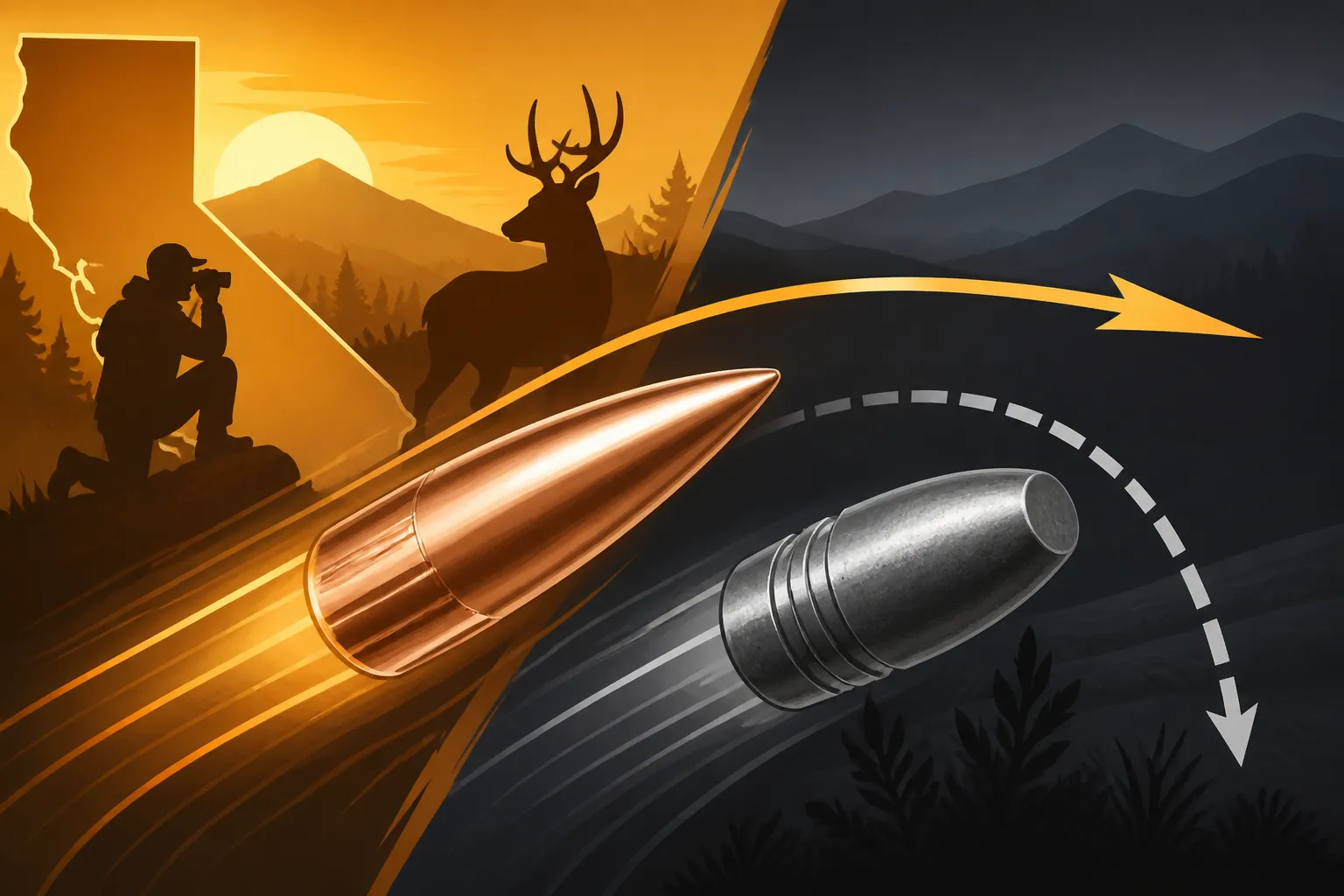
Let's start with the basics. The ballistic coefficient, or BC, is a pretty crucial number for hunters and shooters who care about how their bullet performs after it leaves the barrel. In simple terms, it's a measure of a projectile's ability to overcome air resistance and maintain its velocity. A higher BC number means the bullet is more aerodynamic and will shed less speed and energy over distance, leading to a flatter trajectory and less wind drift.
Think of it like this: imagine trying to throw a brick versus throwing a football. The football, designed to cut through the air, has a much higher "ballistic coefficient" in a practical sense than the brick, which tumbles and slows down quickly. In the world of bullets, things like bullet shape (boat tail vs. flat base), length, and weight all play a significant role in determining its BC. A sleek, long, heavy-for-caliber bullet generally boasts a higher BC than a short, blunt, lighter one. This understanding is key as we start comparing the performance characteristics between copper and lead.
The Science Behind BC and Bullet Design
The ballistic coefficient isn't just a random number; it's derived from complex aerodynamic principles. Bullet manufacturers invest a lot into designing projectiles that are efficient in flight. Factors like the ogive (the curved part of the bullet nose), the meplat (the flat tip, if any), and the presence of a boat tail (a tapered base) all contribute to how smoothly the bullet cuts through the air. A well-designed boat tail, for instance, significantly reduces drag by allowing the air to flow more cleanly past the bullet's base, which is often a source of turbulence and drag for flat-based designs.
When you're looking at different bullet options, you'll often see two common BC types: G1 and G7. The G1 model is more traditional and often used for flat-based, blunt-nosed bullets, while the G7 model is generally considered more accurate for boat-tail spitzer-type bullets, which are common in modern hunting cartridges. For serious long-range shooting, paying attention to whether the BC listed is G1 or G7 and understanding which is more appropriate for your bullet's design can make a real difference in your trajectory calculations. Many online ballistic calculators, like those you might find with a quick search, allow you to input either G1 or G7 values, providing more precise predictions for your specific load.
Why BC Matters to Hunters
For the average hunter pursuing deer in the diverse landscapes of California, BC might seem like an overly technical detail, but it has very real implications in the field. A bullet with a higher BC will not only shoot flatter, meaning less holdover required at longer distances, but it will also retain more energy downrange. This energy retention is critical for ensuring a humane and ethical harvest, as sufficient kinetic energy is needed to create hydrostatic shock and penetrate vital organs effectively.
Consider a scenario where you're Hunting California's Sierra Nevada High Country and have a potential shot at a mule deer across a wide canyon. If your bullet drops significantly or is pushed off course by a crosswind due to a low BC, your margin for error shrinks dramatically. Conversely, a higher BC bullet will be less affected by these environmental factors, giving you a better chance of making a clean shot. While most shots taken in the field are well within typical effective ranges where BC differences might be less pronounced, for those longer-range opportunities or in challenging conditions, understanding and leveraging BC can be a game-changer. It’s about being prepared for whatever the hunt throws at you, which is why many experienced hunters meticulously research their ammunition.
Copper Versus Lead: Ballistic Coefficient Differences
Now, let's get to the heart of the matter: how do non-lead copper bullets stack up against traditional lead-core bullets in terms of ballistic coefficient? It's a common concern, especially since California's California's Non-Lead Ammunition Requirement mandate means many hunters have had to switch. Historically, lead bullets, particularly those with a lead core and copper jacket, could be designed to be quite heavy for their diameter, which often translated to high BCs. Copper, being less dense than lead, presents a unique challenge for bullet manufacturers.
To achieve similar weights to lead bullets, copper bullets often need to be longer. This increased length can be beneficial for BC, but it also means the bullet takes up more space in the cartridge case, potentially limiting powder capacity or requiring different rifling twist rates to stabilize properly. The good news is that bullet technology has come a long way, and modern monolithic copper bullets are incredibly sophisticated in their design, often rivaling or even surpassing the BCs of many traditional lead-core bullets, especially in their ability to retain weight and expand reliably upon impact.
Material Density and Bullet Length
The fundamental difference lies in material density. Lead is much denser than copper. To achieve the same bullet weight, a monolithic copper bullet must be significantly longer than a lead-core bullet of the same diameter. This increased length, while a design challenge, actually works in favor of ballistic coefficient, provided the bullet is designed with an aerodynamic profile. A longer, sleeker bullet generally experiences less drag.
However, this increased length isn't without its trade-offs. A longer bullet requires a faster rifling twist rate in your rifle barrel to stabilize it properly during flight. If your rifle has a slower twist rate designed for shorter, lighter lead bullets, it might struggle to stabilize a longer, heavier-for-caliber copper bullet, leading to poor accuracy. This is a critical consideration when you're selecting Choosing Non-Lead Rifle Ammunition in California for your specific firearm. Always check the manufacturer's recommendations for minimum twist rates for their non-lead bullets, or consult resources like the GoHunt gear guides, which often include this kind of detailed information.
Aerodynamic Design and Manufacturing Innovations
Modern copper bullets are a testament to incredible engineering. Manufacturers like Barnes (with their TTSX and LRX lines) and Hornady (with their GMX and CX bullets) have poured resources into developing non-lead projectiles that are not only California-compliant but also highly effective and ballistically efficient. They employ advanced designs such as boat tails, long ogives, and small meplats to minimize drag. These design elements, combined with the inherent toughness of copper, create bullets that fly true and perform exceptionally well on game.
For example, the deep channels or grooves often seen on monolithic copper bullets aren't just for aesthetics. They serve several purposes: they reduce bearing surface to lower pressure, assist in expansion, and can sometimes be designed to optimize airflow. It's a continuous process of innovation, with each new generation of non-lead bullets striving to improve on the last, often resulting in BCs that are very competitive with their lead counterparts. The advancements mean that hunters don't have to sacrifice performance when making the ethical and legal switch to non-lead ammunition. When you're researching Best Non-Lead Bullets for California Deer-Sized Game, you'll quickly see how many of these innovative designs are tailored for optimal performance.
Comparative Table of Typical BC Ranges
To give you a clearer picture, here's a general comparison of how different bullet types might stack up in terms of ballistic coefficient. Keep in mind these are broad generalizations, and specific bullet designs and weights within each category will vary significantly. Always check the manufacturer's published BC for the exact bullet you plan to use.
| Bullet Type | Typical Caliber Range (.270, .308, 30-06) | General G1 Ballistic Coefficient (BC) Range | Key Characteristics |
|---|---|---|---|
| Traditional Lead-Core | Common hunting calibers | 0.300 – 0.550+ | Good weight retention, effective expansion, diverse designs. |
| Monolithic Copper | Common hunting calibers | 0.320 – 0.580+ | Excellent weight retention, controlled expansion, generally longer for same weight, requires faster twist. |
| Bonded Lead-Core | Common hunting calibers | 0.350 – 0.600+ | High weight retention (similar to copper), good expansion, often high BC due to heavy construction. |
| Match/Target (Lead-Core) | Specialty calibers | 0.500 – 0.700+ | Extremely high BC, optimized for accuracy and long range, but designed for target shooting, not hunting expansion. |
As you can see, modern monolithic copper bullets can hold their own and even exceed the BCs of many traditional lead-core hunting bullets. This table highlights that the material itself isn't the sole determinant; it's the design of the bullet that truly dictates its aerodynamic efficiency.
Practical Implications for California Hunters
Understanding the theoretical differences in ballistic coefficients between copper and lead is one thing, but how does it actually play out when you're Hunting a California BLM Desert Wash for Deer or pursuing a black bear in the Sierra? The practical implications boil down to trajectory, energy delivery, and how well your rifle and chosen ammunition work together. California's non-lead requirement means that hunters here have a unique emphasis on mastering these aspects with copper.
The key takeaway is that you absolutely can achieve excellent downrange performance with non-lead ammunition. It's not about being "less effective" than lead; it's about being different, and those differences need to be accounted for. From zeroing your rifle to understanding how your bullet will perform at various distances, adapting to copper bullets means revisiting some fundamental ballistic principles with a modern perspective. This shift isn't just about compliance; it's an opportunity to become an even more knowledgeable and precise hunter.
Trajectory and Drop Compensation
One of the most immediate impacts of ballistic coefficient is on a bullet's trajectory. A higher BC bullet will have a flatter flight path, meaning it drops less over a given distance compared to a lower BC bullet fired at the same muzzle velocity. For hunters, this translates directly to less guesswork and a greater margin for error, especially when shots extend beyond a couple hundred yards.
When switching from lead to copper, even if the BCs are similar, you'll still need to re-zero your rifle. Different bullet construction means different weights, different bearing surfaces, and different internal ballistics, all of which will alter your point of impact. Ignoring this step is a recipe for missed shots. Take the time to Zeroing a Rifle for Non-Lead Loads thoroughly at the range, confirming your dope at various distances relevant to your hunting style. Tools and apps can assist in calculating precise holdovers once you have an accurate BC for your specific copper bullet, such as those often integrated with mapping systems from companies like GoHunt, which can help overlay ballistics data onto terrain.
Energy Retention and Terminal Performance
Beyond trajectory, a bullet's ability to retain energy downrange is paramount for ethical hunting. Kinetic energy is what creates wound channels and ensures a quick, humane harvest. A higher BC bullet retains more of its initial velocity, and therefore more energy, as it travels. This is particularly important for monolithic copper bullets, which rely on velocity to initiate and achieve their designed expansion.
Unlike some traditional lead-core bullets that fragment significantly, copper bullets are designed for controlled, consistent expansion while retaining almost 100% of their original weight. This weight retention means deeper penetration, often punching through bone and tissue to reach vitals even on larger game. So, while you might be looking at a slightly different wound channel than you're used to with lead, the deep, consistent penetration and massive energy transfer of a well-designed copper bullet is incredibly effective. Understanding the Minimum Bullet Diameter for California Rifles and pairing it with a high-performance non-lead bullet is crucial for successful hunting in the Golden State.
Rifle Twist Rates and Bullet Stabilization
This is where the length of copper bullets really comes into play. As mentioned, longer bullets require faster twist rates to ensure they spin fast enough to remain stable throughout their flight. If a bullet isn't adequately stabilized, it will "wobble" or "tumble" in flight, losing accuracy and energy rapidly. This is known as yaw, and it's something you definitely want to avoid.
Before you invest in a box of shiny new copper bullets, double-check your rifle's twist rate. Most modern hunting rifles come with twist rates capable of stabilizing a wide range of bullet weights and lengths, but older rifles or those designed specifically for very light-for-caliber lead bullets might struggle. If you're unsure, consulting your rifle's manual or a gunsmith can provide clarity. Many bullet manufacturers also list recommended twist rates for their non-lead projectiles, which can be found in detailed specifications or through reputable hunting resources. Choosing the right bullet for your barrel's twist is as important as Sighting In Before Switching to Non-Lead, ensuring that your setup performs optimally when it counts.
Choosing the Right Non-Lead Bullet for Your Hunt
Navigating the world of non-lead ammunition doesn't have to be overwhelming. With a little research and careful consideration, you can select copper bullets that not only meet California's regulations but also enhance your hunting success. The market has matured considerably, offering excellent options for virtually every common hunting caliber and game animal you'll find here, from blacktail deer in the coastal range to elk in the high country.
Remember, the goal isn't just to comply with the law; it's to choose ammunition that gives you confidence in the field. This means finding a bullet that your rifle shoots accurately, performs reliably on game, and delivers sufficient energy at the distances you're likely to shoot. Don't be afraid to experiment a little at the range to find what works best for your specific rifle.
Matching Bullet to Game and Caliber
When selecting your non-lead bullet, consider the type of game you're pursuing and the caliber you're shooting. While a .270 might perform admirably on a blacktail deer with a well-constructed copper bullet, you'll want a different weight and perhaps a different bullet design if you're Hunting California's Three Elk Species. Lighter, faster copper bullets are often excellent for deer-sized game, relying on velocity for rapid expansion. For larger, tougher animals, a heavier-for-caliber copper bullet will offer better penetration, especially through bone.
Look at the bullet's advertised expansion characteristics. Some copper bullets are designed for wider, more rapid expansion, while others are built for deeper penetration through heavier bone and muscle. Companies like Barnes, Hornady, and Nosler offer a range of non-lead options, each with slightly different characteristics optimized for various game animals and velocities. Researching Best Non-Lead Bullet for a .270 or your specific caliber will give you a good starting point.
Accuracy Testing and Range Confidence
There's no substitute for range time. Once you've selected a few potential non-lead bullet options, take them to the range and see how your rifle groups with them. Just because a bullet has a great BC on paper doesn't mean your particular rifle will shoot it accurately. Every rifle is a law unto itself, and finding the "sweet spot" with a specific load is part of the fun (and frustration!) of shooting.
When How Non-Lead Bullets Pattern at Long Range becomes a concern, invest time in shooting at extended distances if your hunting scenarios might require it. Don't just confirm your 100-yard zero; push it out to 200, 300, and even 400 yards to truly understand your bullet's trajectory and wind drift. This range confidence will be invaluable when you're facing a real-world hunting situation. Remember, the investment in range time is an investment in ethical hunting, ensuring you can make a clean shot when the opportunity arises. Tools and resources from platforms like GoHunt can help you track your range data and refine your ballistic profiles for maximum accuracy.
Availability and Cost Considerations
It's no secret that non-lead ammunition can sometimes be a bit more expensive than traditional lead-core options. This is largely due to the manufacturing processes, which can be more complex, and the cost of the raw materials. However, as the demand for non-lead ammunition grows, especially in states like California, Non-Lead Ammo Availability and Cost has generally improved. Many major ammunition manufacturers now offer extensive lines of non-lead hunting loads.
While the upfront cost per box might be higher, consider the value of ethical and legal hunting. Also, remember that you often don't need to shoot hundreds of rounds of premium hunting ammunition. A few boxes to confirm your zero and practice your shooting is usually sufficient. Once you've settled on a load, keep an eye out for sales or buy in bulk when possible. The peace of mind that comes from knowing you're compliant with regulations and using highly effective ammunition is well worth the investment.
Disclaimer
This article is for general informational purposes only and does not constitute professional advice. Laws, prices and regulations vary by location and change over time. Consult a qualified professional for guidance on your specific situation.