Best Rifle Caliber for Tule Elk
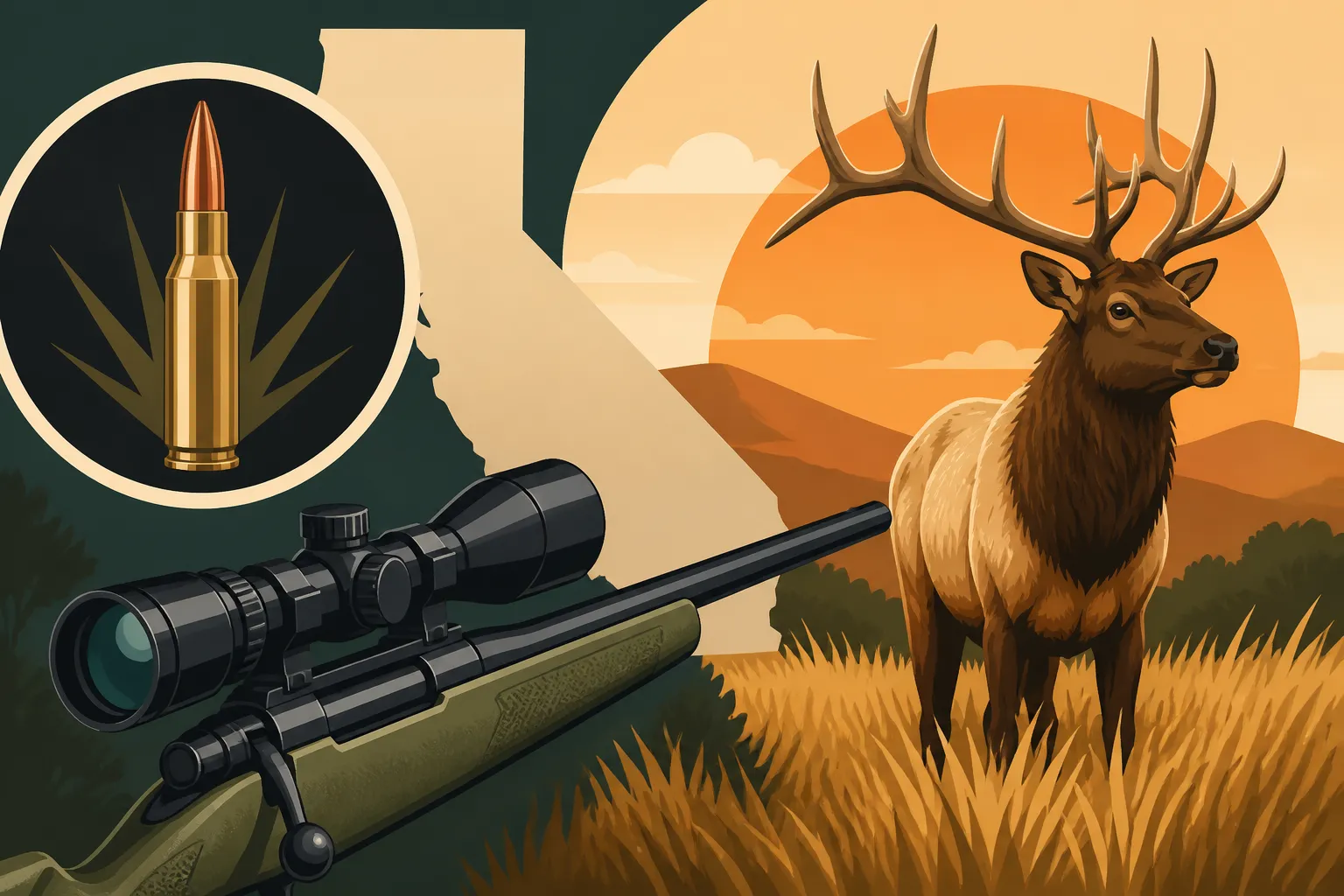
Hunting Tule elk in California is an incredible experience, but it comes with unique challenges that can leave many hunters scratching their heads about the best gear choices. These majestic animals, often found in challenging terrain, require a rifle caliber that delivers both power and precision to ensure an ethical and successful harvest. This guide will walk you through the factors to consider when selecting a rifle caliber specifically for Tule elk, helping you feel confident and prepared for your next big game adventure.
Understanding Tule Elk and Their Habitat
Tule elk are one of California's three elk subspecies, and they present a distinct hunting scenario compared to their larger Roosevelt or Rocky Mountain cousins. While typically smaller in body size than the other elk species, Tule elk can still be substantial animals, often weighing between 400 to 700 pounds for a mature bull. Their antlers can be impressive, creating a broad target area, but their sheer muscle and bone structure demand a bullet that can penetrate deeply and reliably.
The Unique Challenge of Tule Elk Hunting
Unlike the vast, rugged mountains where Rocky Mountain elk roam, or the dense coastal forests of Roosevelt elk, Tule elk often inhabit a mix of open grasslands, oak woodlands, and marshy areas, particularly in California's Central Valley and coastal plains. This varied terrain means shots can range from relatively close quarters in brush to longer distances across open fields or rolling hills. You might find yourself still-hunting through thick riparian zones one moment and then needing to make a precise shot across a wide expanse the next. The conditions can be unpredictable, from hot, dry summer days during early archery seasons to crisp, clear fall mornings during rifle hunts. Because their range is often fragmented by agricultural lands and private property, Tule elk can be highly alert and pressured, requiring careful stalking and often presenting fleeting shot opportunities. Understanding their habits and typical ranges, which you can research through resources like Tule Elk in California's Central Valley, is crucial for success.
Shot Placement and Ethical Harvest
Regardless of the caliber you choose, accurate shot placement is paramount for an ethical harvest. For Tule elk, the vital zone is relatively large, encompassing the heart and lungs, but hitting it consistently under field conditions can be tricky. A well-placed shot with a moderately powerful caliber is always superior to a poorly placed shot with a magnum. We’re talking about an animal that, even when hit well, can cover significant ground before expiring. You want a caliber that delivers enough energy to create a wide wound channel and cause rapid incapacitation, minimizing tracking distances and ensuring the animal doesn't suffer unnecessarily. Consideration of bullet construction, especially with California's non-lead ammunition requirement, becomes critical here.
Key Characteristics of a Good Tule Elk Caliber
When you're trying to decide on the best caliber for Tule elk, it’s not just about the biggest number on the box. Several factors come into play, all contributing to your overall effectiveness and confidence in the field.
Energy and Bullet Performance
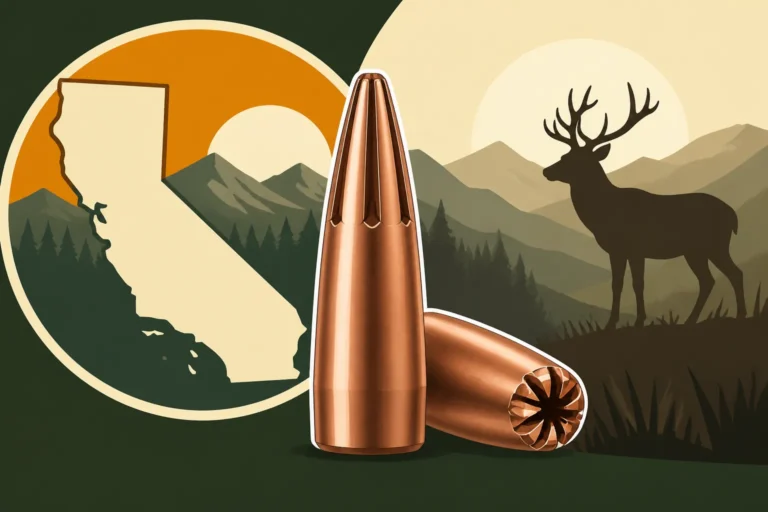
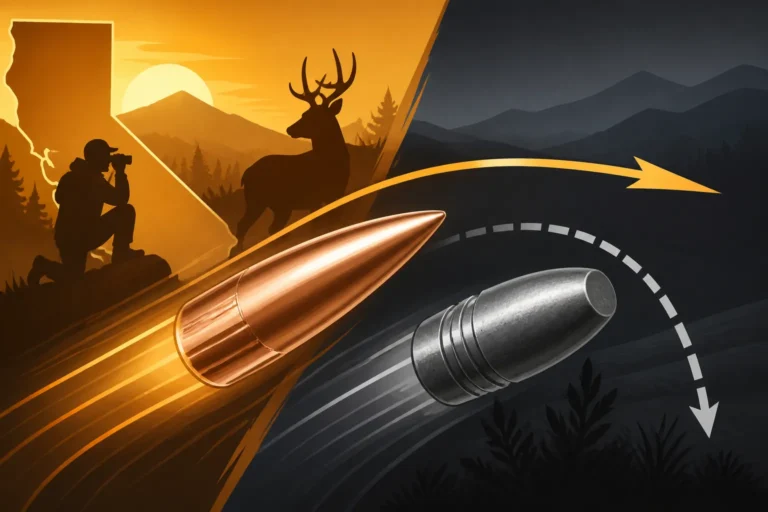
For Tule elk, you'll want a cartridge that can deliver sufficient kinetic energy downrange to penetrate tough hide, muscle, and bone, and disrupt vital organs. Generally, cartridges that produce at least 1,500-2,000 foot-pounds of energy at 200-300 yards are considered appropriate for elk-sized game. But energy alone isn't enough; the bullet itself needs to perform. In California, that means a non-lead projectile, typically made of copper or a copper alloy. These bullets are designed to retain nearly 100% of their weight, expand reliably, and drive deep. You don't want a bullet that fragments too quickly or doesn't penetrate far enough to reach the vitals from various angles. The goal is to create a large enough wound channel to cause significant blood loss and organ damage, ensuring a quick and humane kill. Researching Best Non-Lead Bullets for Elk-Sized Game can give you a head start on options.
When considering bullet performance, think about the cartridge's ability to maintain velocity over distance. Tule elk hunting, as mentioned, can present longer shots across open country. A flat-shooting cartridge reduces the amount of holdover you need to account for, simplifying the shot under pressure. However, this flatness often comes with increased recoil, which leads us to our next point.
Recoil Management for Accurate Shots
Let’s be honest, heavy recoil can make even the most seasoned hunter flinch, leading to inaccurate shots. While a powerful caliber is important for elk, it’s far more crucial to be able to shoot your chosen rifle accurately and consistently. If you’re anticipating a painful kick, you’re less likely to maintain proper form and follow-through. For Tule elk, which often require precision, a flinch can be the difference between a clean kill and a long, difficult track, or worse, a wounded animal.
For many hunters, cartridges in the .30-06 or .300 Winchester Magnum class represent a good balance of power and manageable recoil. Modern rifles often come with effective recoil pads, and muzzle brakes can further reduce felt recoil, though they significantly increase muzzle blast. If you’re sensitive to recoil, or if you’re a smaller-framed shooter, don’t be afraid to step down in power slightly to a cartridge you can shoot comfortably and confidently. Your ability to put a bullet exactly where it needs to go is the most important factor, even more so than an extra few hundred foot-pounds of energy. A confident shot from a .30-06 is far superior to a flinched shot from a .338 Lapua.
Non-Lead Ammunition Considerations
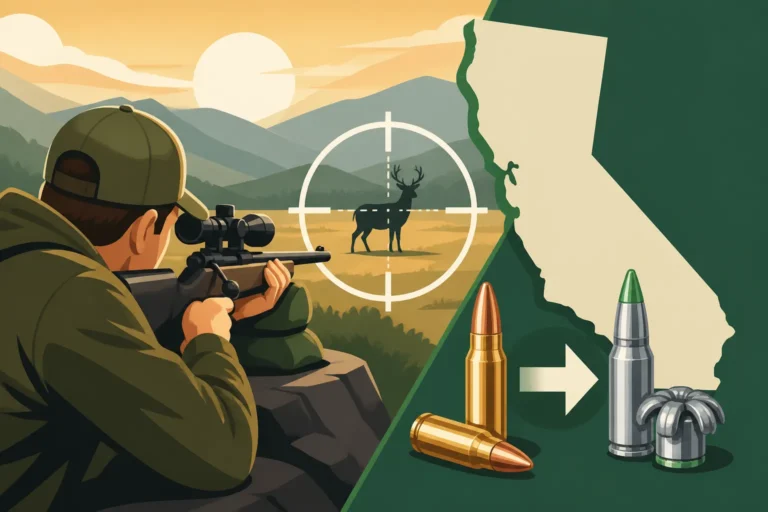
California's statewide non-lead ammunition requirement means that your caliber choice must also come with viable non-lead options. This isn't just a minor detail; it's a fundamental change in how we select ammunition and often, how we sight in our rifles. Non-lead bullets, typically made of copper or a copper alloy, behave differently than traditional lead-core bullets. They tend to be longer for their weight, which can affect barrel twist rate stability, and they often perform best at higher velocities to ensure proper expansion.
When choosing a caliber, make sure there's a good selection of non-lead hunting ammunition available for it. Companies like Barnes, Hornady, and Nosler all produce excellent non-lead projectiles suitable for elk. You'll need to test various brands and bullet weights in your specific rifle to find what shoots most accurately. This might mean dedicating extra range time and potentially trying a few different bullet designs to ensure you're compliant with California's Non-Lead Ammunition Requirement and ready for the field. Don't assume that a rifle that shot well with lead will shoot identically with non-lead; often, a new zeroing process is required.
Top Caliber Recommendations for Tule Elk
Given the considerations for Tule elk hunting in California – particularly their size, habitat, and the non-lead requirement – certain calibers consistently rise to the top as excellent choices. These cartridges offer a blend of power, trajectory, and readily available non-lead ammunition options.
.300 Winchester Magnum: The Workhorse
The .300 Win Mag is arguably one of the most popular elk calibers across North America, and for good reason. It launches heavy .30-caliber bullets (typically 180-200 grains for elk) at impressive velocities, delivering significant energy and a flat trajectory out to considerable distances. For Tule elk, this means it has more than enough power to ensure deep penetration and a quick kill, even on a quartering-away shot.
Many non-lead options are available for the .300 Win Mag, with 165-grain to 180-grain copper bullets being common choices. The added velocity of the .300 Win Mag also helps these non-lead bullets expand reliably. The main drawback is its recoil, which can be stout. If you plan to shoot a .300 Win Mag, ensure you practice extensively, consider a rifle with a good recoil pad, or even a muzzle brake (with hearing protection, of course). It’s a powerful and versatile cartridge that will handle any Tule elk scenario you might encounter.
7mm Remington Magnum: Flat-Shooting and Powerful
Another perennial favorite for elk, the 7mm Rem Mag is a fantastic choice for Tule elk, especially if you prioritize a flatter trajectory and slightly less recoil than the .300 Win Mag. It sends 7mm (.284 diameter) bullets, typically in the 140-175 grain range, at very high velocities. This makes it incredibly effective for those longer shots across open Central Valley fields or coastal rangelands. The 7mm bullets often have excellent ballistic coefficients, meaning they retain energy and resist wind drift very well.
For non-lead options, you’ll find excellent choices from various manufacturers in bullet weights that perform exceptionally well on elk. The 7mm Rem Mag has a reputation for being a very accurate cartridge, which is a huge advantage when precision is key. Its recoil is noticeable but generally more manageable than the .300 Win Mag for many shooters, allowing for better accuracy potential. It’s a superb choice for hunters who want a powerful, flat-shooting caliber without the heaviest magnum recoil.
.30-06 Springfield: A Classic for a Reason
The venerable .30-06 Springfield is often underestimated in the age of super-magnums, but it remains one of the most capable and practical elk calibers ever devised. It’s been taking down North American big game for over a century, and Tule elk are certainly no exception. The .30-06 can launch .30-caliber bullets from 150 to 200 grains at respectable velocities, delivering plenty of energy for Tule elk within typical hunting ranges (out to 300-400 yards with modern loads and good shooting).
The recoil of a .30-06 is stout but generally very manageable for most shooters, especially in a well-fitted rifle. This allows for excellent shot placement. Non-lead ammunition is widely available for the .30-06, with 165-grain and 180-grain copper bullets performing exceptionally well. The .30-06 is also incredibly versatile, and ammunition is generally easier to find and often more affordable than magnum cartridges. If you're looking for a reliable, effective, and less punishing option that has proven itself time and again, the .30-06 Springfield is an outstanding choice for Tule elk.
Newer Cartridges: 6.5 PRC and .300 PRC
The hunting world is always evolving, and newer cartridges are constantly emerging. The 6.5 PRC (Precision Rifle Cartridge) and .300 PRC are two examples that have gained significant traction, especially among precision-minded hunters.
The 6.5 PRC, while a fantastic long-range cartridge for deer and sheep, might be considered on the lighter side for Tule elk. However, with heavy-for-caliber non-lead bullets (e.g., 140-150 grains) and excellent shot placement, it can be effective. Its strengths are its incredibly flat trajectory and very manageable recoil, making it easy to shoot accurately. If you are extremely confident in your shot placement and limit your range, it could work.
The .300 PRC, on the other hand, is a true big-game magnum designed for ultimate long-range performance. It pushes heavy .30-caliber bullets (often 200-225 grains) at blistering velocities, delivering immense energy and a very flat trajectory. It offers a step up in power and long-range capability from the .300 Win Mag, but also comes with increased recoil. If you anticipate extremely long shots or just want the absolute maximum downrange energy for Tule elk, and you can handle the recoil, the .300 PRC is a formidable option. Both PRC cartridges have good non-lead options, though perhaps not as widely distributed as the more established calibers. When looking into tags, services like GoHunt can provide detailed draw odds for various elk hunts, helping you decide where to focus your efforts and match your gear to the specific hunt requirements.
Matching Your Rifle and Caliber to the Hunt
Choosing a caliber is just one piece of the puzzle. The entire rifle system, and your proficiency with it, makes the real difference in the field.
Rifle Weight and Portability
Tule elk hunting can involve a fair bit of walking, especially if you're trying to cover ground on public lands or access remote sections. A heavy rifle might feel stable on the bench, but it can become a real burden after a few miles of hiking through rolling hills or dense brush. Conversely, an ultralight rifle might be easy to carry but can be harder to hold steady for a critical shot, especially after a strenuous stalk or when facing the effects of wind and thermals.
For Tule elk, a rifle that balances portability with shootability is ideal. Many hunters find a rifle in the 7-8 pound range (unscoped) to be a good compromise. Consider the length of the barrel as well; a shorter barrel (20-22 inches) can be handier in thick cover, though it might sacrifice a little velocity compared to a 24-inch barrel. Think about where you'll be hunting – will you be spending more time glassing open country or busting brush? This will influence your ideal rifle weight and length.
Scope and Optics Considerations
Your rifle is only as good as the aiming system on top of it. For Tule elk, especially with potential for longer shots, a quality variable power scope is essential. A 3-9x40mm or 4-12x40mm is a versatile choice, offering a wide field of view for close encounters and enough magnification for reaching out across longer distances. Clarity, light transmission, and durability are key, as you'll be using this optic in varying light conditions and potentially rugged environments.
Beyond the rifle scope, don't forget the importance of good spotting optics. Tule elk can be elusive, and spending time with quality binoculars or a spotting scope to locate them and assess their size before making a move is critical. You might find yourself needing to Glassing a Canyon for a Bedded Buck or an elk, and clear, reliable optics are your best friend here. Brands like Vortex, Leupold, and Zeiss offer excellent options across various price points.
Practice, Practice, Practice
This cannot be stressed enough. The "best" caliber is the one you can shoot most accurately and consistently. It doesn't matter if you have the most powerful, flat-shooting magnum if you can't put the bullet where it needs to go under pressure.
Regular range time is crucial. Practice shooting from various positions – prone, kneeling, sitting, and off shooting sticks – not just from a comfortable bench rest. Simulate field conditions as much as possible. Practice quick target acquisition. Get comfortable with your rifle and its recoil. Understand its capabilities and, more importantly, your capabilities with it. California's diverse terrain and the often challenging nature of Tule elk hunting demand a hunter who is confident and proficient with their chosen firearm. Resources from sites like GoHunt often emphasize the importance of preparation, including shooting practice, as a critical component of hunt success.
Consider the table below for a quick comparison of popular calibers for Tule elk:
| Caliber | Typical Bullet Weight (Non-Lead) | Average Muzzle Velocity (FPS) | Energy at 200 Yards (ft-lbs) | Recoil (Relative) | Trajectory (Relative) | Common Use Case |
|---|---|---|---|---|---|---|
| .30-06 Springfield | 165-180 gr | 2700-2900 | 1800-2200 | Moderate | Good | All-around, dependable |
| 7mm Remington Magnum | 140-160 gr | 3000-3150 | 2000-2400 | Moderate-Heavy | Very Flat | Open country, longer shots |
| .300 Winchester Magnum | 165-180 gr | 3000-3200 | 2200-2600 | Heavy | Very Flat | Maximum power, longer shots |
| 6.5 PRC | 140-150 gr | 2900-3000 | 1600-1900 | Mild-Moderate | Extremely Flat | Precision, ethical within limits on elk |
| .300 PRC | 190-210 gr | 2900-3050 | 2500-3000 | Very Heavy | Extremely Flat | Extreme range, maximum power |
Note: Velocities and energy are approximate and can vary based on specific ammunition, barrel length, and environmental factors. Recoil and trajectory are relative comparisons.
Ultimately, the "best" rifle caliber for Tule elk is the one that allows you to make the most accurate, ethical shot possible under the conditions you'll face. It's a blend of power, trajectory, recoil management, and most importantly, your personal proficiency with the chosen firearm. Taking the time to apply for Applying for a California Tule Elk Tag in the Big Game Drawing and then preparing thoroughly will pay dividends.
Disclaimer
This article is for general informational purposes only and does not constitute professional advice. Laws, prices and regulations vary by location and change over time. Consult a qualified professional for guidance on your specific situation.