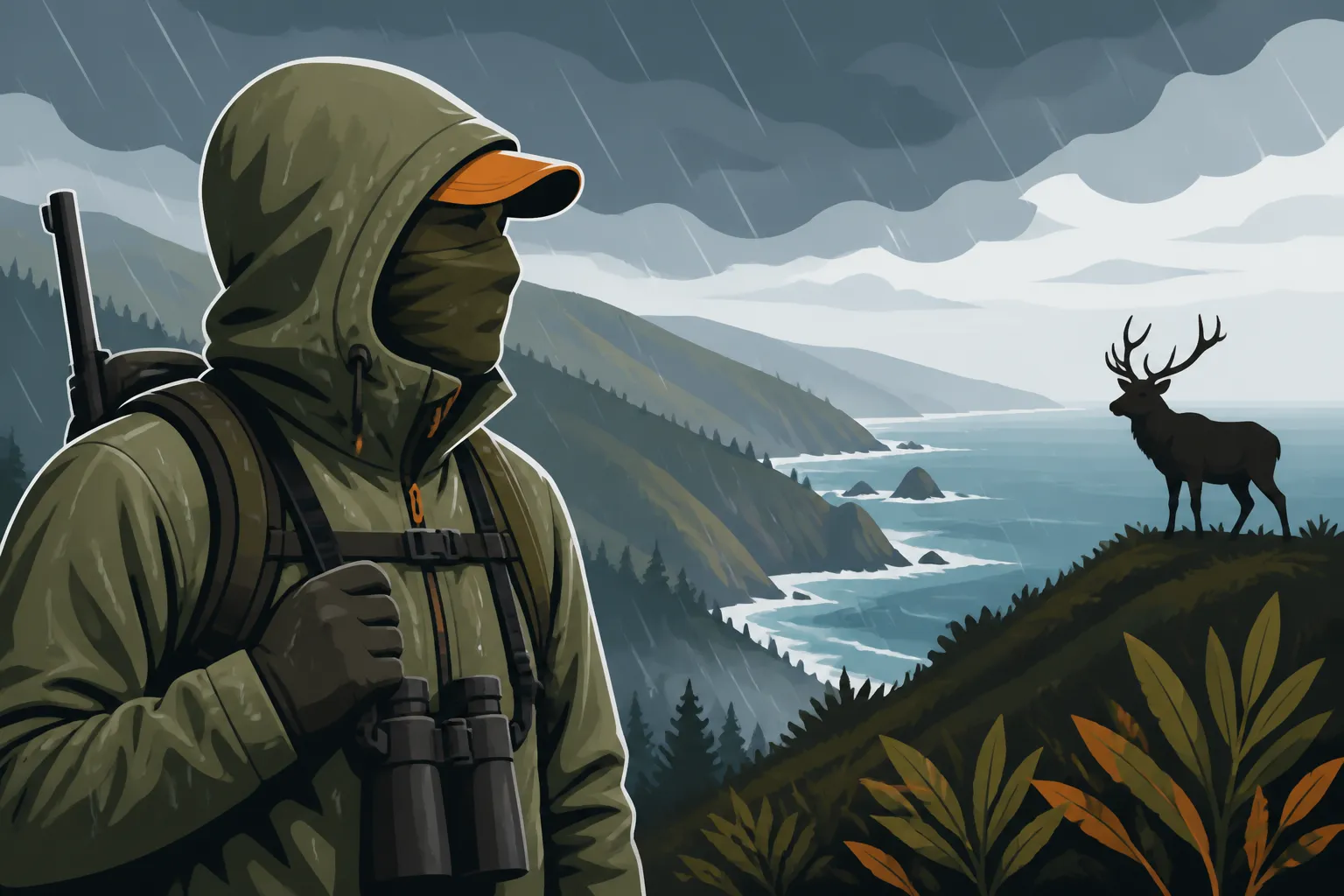
Best Rain Gear for a Coastal Range Hunt
If you've spent any time chasing blacktail deer, wild pigs, or turkeys through California's Coastal Range, you know that the weather can turn on a dime. One moment it's a beautiful, clear morning, and the next, a thick fog rolls in, followed by a persistent drizzle or even a full-blown downpour. Being caught unprepared for this wet weather isn't just uncomfortable; it can be downright miserable and even dangerous, cutting your hunt short. This guide is all about helping you understand what makes truly effective rain gear for these unique conditions and how to choose the best options to keep you dry and comfortable when the skies open up.
Understanding Coastal Range Wet Weather Challenges
Hunting in California's Coastal Range presents a unique set of meteorological challenges that can confound even the most seasoned hunters. It’s not just about a sudden thunderstorm; often, it’s a more nuanced and persistent kind of wetness that seeps into everything if you’re not properly equipped. From the redwood forests of the north to the oak woodlands further south, the conditions demand a particular approach to staying dry.
Persistent Mist and Fog
One of the most common forms of "rain" you'll encounter in the Coastal Range isn't a hard downpour at all, but rather a dense, pervasive fog or mist that just hangs in the air. This moisture is insidious; it doesn't feel like rain, but after a few hours, you'll be soaked to the bone if your outer layers aren't up to snuff. This misty environment is especially prevalent during the early deer seasons, like Hunting California's Zone A July Archery Opener or Hunting the Zone C August-September Archery Window, when temperatures can still be quite warm, leading many hunters to underestimate the need for waterproof gear. You might think a light jacket is enough, but that constant, fine spray settles on everything, and active hiking will quickly saturate cotton or even water-resistant fabrics.
It's a frustrating scenario: you're hiking through a dewy, foggy redwood grove, breathing heavily from the climb, and the moisture on the outside combines with your internal perspiration to leave you feeling clammy and cold. The key here is not just waterproofing, but also breathability. A cheap poncho might keep the external mist out, but it’ll turn into a sauna inside, defeating the purpose. You need a fabric that can shed water from the outside while allowing your body heat and sweat vapor to escape, maintaining that delicate balance of comfort and dryness.
Sudden Downpours and Heavy Rain
While the mist is common, the Coastal Range isn't immune to genuine, heavy rainstorms, especially as you get into the later fall and winter seasons. These can come on quickly, transforming a scenic ridge into a muddy, slippery mess in minutes. A heavy rain event often means not just getting wet from above, but also from below as brush, tall grasses, and even saturated ground splash water upwards. If you're Hunting Coastal Range Oak Woodlands or navigating through dense chaparral, every branch you brush against will dump accumulated water on you.
During these downpours, zippers are tested, seams are stressed, and even the most "water-resistant" gear will fail. Think about a morning spent tracking pigs on Hunting Pigs on Central Coast Oak Ranges when a squall suddenly moves in. Your focus shifts from the hunt to just trying to stay functional. This is where truly waterproof gear, with taped seams and water-resistant zippers, becomes non-negotiable. It's about creating a shell that keeps the deluge out entirely, letting you focus on the hunt, not the impending hypothermia. The duration and intensity of these rains can vary wildly, from brief, intense squalls to all-day soakers, so your gear needs to be ready for anything.
Essential Features of Effective Rain Gear
When you're out in the Coastal Range, your rain gear isn't just a backup plan; it's often your primary defense against the elements. Choosing the right pieces involves looking beyond just the word "waterproof" and understanding the nuances of modern technical fabrics and design.
Material and Membrane Technology
The heart of any good rain gear lies in its material and membrane technology. You'll often hear terms like Gore-Tex, eVent, or various proprietary membranes used by brands. These aren't just fancy marketing terms; they represent the science behind keeping you dry. These membranes are essentially thin layers of expanded PTFE (like Gore-Tex) or other polymers with microscopic pores. These pores are too small for liquid water molecules to pass through, but large enough for water vapor (your sweat) to escape. This is the magic of "breathable waterproofing."
Consider a typical scenario: you're climbing a steep ridge in pursuit of a blacktail buck, your heart rate is up, and you're generating a lot of heat and sweat. If your rain gear isn't breathable, that sweat will condense on the inside, leaving you feeling just as wet as if it had rained through. This clammy feeling is not only uncomfortable but can lead to a dangerous drop in core temperature when you stop moving. Look for fabrics with a high hydrostatic head rating (indicating waterproofness) and a good MVTR (Moisture Vapor Transmission Rate) for breathability. Many hunters use resources like GoHunt to research these specifications when comparing different brands and models. Beyond the membrane, the outer fabric often has a Durable Water Repellent (DWR) coating, which makes water bead up and roll off, preventing the face fabric from becoming saturated and compromising breathability.
Construction and Design Details
Beyond the fabric itself, the construction and design of your rain gear are critical. A waterproof fabric is useless if water can seep in through the seams, zippers, or cuffs.
Seam Sealing and Zippers
Every seam on your rain jacket and pants needs to be fully seam-taped. This means a waterproof tape is applied over the stitching on the inside of the garment, creating an impenetrable barrier. Without taped seams, water will inevitably wick through the needle holes. Just imagine a long day of Still-Hunting California's Sierra Nevada Timber (even though we're talking Coastal Range, the principle applies) where you're constantly brushing against wet branches; any untaped seam is a weak point waiting to fail.
Zippers are another common point of failure. Look for water-resistant or waterproof zippers, often recognizable by their rubberized coating or a storm flap that covers them. YKK AquaGuard zippers are a popular example. A good main zipper should be robust, easy to operate even with cold fingers, and fully sealed to prevent ingress. Pit zips (zippers under the arms) are also incredibly useful for ventilation without having to take off your jacket, especially when you're working hard.
Hoods, Cuffs, and Hem Adjustments
A well-designed hood is essential. It should be adjustable to fit snugly around your face, ideally allowing you to wear a cap underneath, and not restrict your peripheral vision. A stiff brim helps keep rain out of your eyes. Adjustable cuffs, usually with Velcro, allow you to cinch them down over gloves to prevent water from running down your sleeves. An adjustable hem on the jacket and pants keeps wind and rain from blowing up from below. These small details might seem minor, but they significantly impact your comfort and overall dryness in truly nasty weather.
Quietness and Durability
Hunting in the Coastal Range often means navigating dense vegetation, where silence is golden. The last thing you want is rain gear that crackles and swishes with every step, alerting game from hundreds of yards away. Many waterproof fabrics, especially those with a stiffer face fabric, can be quite noisy. Look for rain gear specifically designed for hunting, which often incorporates softer, quieter face fabrics, sometimes with a brushed finish, that minimize sound.
Durability is equally important. You're not just walking on paved trails; you're pushing through thick chaparral, climbing over fallen logs, and probably sliding down muddy slopes. Your gear needs to withstand abrasions, snags, and constant movement. Ripstop fabrics are excellent for this, as they are woven with a reinforced pattern that prevents small tears from becoming large ones. Reinforcements on high-wear areas like elbows, shoulders, knees, and the seat of the pants are also a huge plus. Investing in durable gear means it will last season after season, saving you money in the long run.
Layering Strategies for Wet and Wild Conditions
Wearing the best rain gear is only half the battle; knowing how to layer it effectively underneath is equally crucial for staying comfortable and safe in the Coastal Range’s unpredictable wet conditions. Layering allows you to adapt to temperature fluctuations and exertion levels, preventing both overheating and chilling.
The Importance of a Wicking Base Layer
Your base layer is the first line of defense against moisture, but this time, it's moisture from you. When you’re hiking up a steep incline, even on a chilly, rainy day, your body is generating heat and sweat. A cotton t-shirt, while comfortable when dry, will absorb that sweat and hold it against your skin, making you feel cold and clammy the moment you stop moving. This is a fast track to hypothermia, especially in damp, windy conditions.
Instead, invest in a good quality wicking base layer made from synthetic materials like polyester or merino wool. These fabrics are designed to pull moisture away from your skin and transfer it to the outer layers, where it can evaporate. For a Coastal Range hunt where temperatures can range from cool mornings to warmer midday pushes, a mid-weight merino wool base layer often provides excellent warmth-to-weight ratio and natural odor resistance, which is a huge bonus on multi-day trips. Having a dry base layer against your skin is paramount for comfort and thermal regulation, allowing your technical rain gear to do its job of venting moisture outwards.
Mid-Layers for Insulation and Versatility
The mid-layer is where you dial in your insulation. This is the layer you can add or remove based on the ambient temperature and your activity level. On a warmer, misty day, you might just need a light fleece or a thin puffy jacket. For colder, heavy rain conditions, a thicker fleece or a synthetic insulated jacket becomes essential.
The key with mid-layers is choosing materials that retain their insulating properties even when damp. Synthetic insulation (like Primaloft or Thinsulate) excels here, as it doesn't compress or lose warmth as dramatically as down if it gets a little wet – which can happen if your rain gear's breathability is overwhelmed by extreme exertion, or if you briefly open your jacket. This versatility is critical when Wind and Thermals in Steep Sierra Country are shifting, or you're transitioning from an active stalk to a quiet sit. Always consider how easily a mid-layer can be shed and packed away. Sometimes, you'll start your day with a substantial mid-layer, but quickly shed it once you start hiking, only to pull it back out when you stop for a break or at last light.
Outer Shell: Your Rain Gear's Role
Your rain gear, the outer shell, is the final barrier. Its primary job is to completely block external moisture (rain, mist, snow) while still allowing the moisture vapor from your body to escape. Think of it as the roof of your personal mobile shelter. When selecting your shell for the Coastal Range, remember the nuances discussed earlier: breathability, fully taped seams, water-resistant zippers, and a functional hood are paramount.
When you're actively hunting, like stalking through a draw during a light rain, your shell needs to move with you without restricting your range of motion. For more static hunting, like Using a Ground Blind on BLM Land during a downpour, the focus shifts slightly more towards sheer waterproofing and insulation retention from the layers below. Always ensure your shell is sized to accommodate your mid-layers without feeling restrictive. A shell that's too tight will compress your insulating layers, reducing their effectiveness, and impede your movement. Your rain shell is not meant to provide significant warmth on its own; it's there to protect your insulating layers and keep you dry.
Maintaining Your Rain Gear for Longevity
Investing in quality rain gear for hunting the Coastal Range is a significant decision. To ensure that investment pays off season after season, proper care and maintenance are absolutely crucial. Neglecting your rain gear can quickly lead to diminished performance, leaving you wet and miserable when you least expect it.
Cleaning and Revitalizing DWR
One of the most common reasons rain gear starts to "wet out" (meaning the outer fabric absorbs water instead of beading it up) isn't necessarily a failure of the waterproof membrane, but rather a degradation of the Durable Water Repellent (DWR) coating. Dirt, oils, insect repellent, and even body sweat can clog the DWR finish, preventing it from functioning properly.
The good news is, revitalizing DWR is often quite simple. First, you need to clean your gear. Don't use regular laundry detergents, as they often contain surfactants that can harm the waterproof membrane and DWR. Instead, use a technical wash specifically designed for waterproof breathable fabrics, such as Nikwax Tech Wash or Grangers Performance Wash. Follow the product instructions, typically washing in cold water on a gentle cycle. After washing, you might be able to reactivate the DWR simply by tumble drying on a low heat setting, as heat helps to re-bond the DWR molecules. If the DWR is truly worn out, you can apply a spray-on or wash-in DWR treatment after cleaning. This process should be done regularly, perhaps after every few intense hunts or once a season, depending on how often you expose your gear to harsh conditions.
Proper Storage and Inspection
How you store your rain gear between hunts is more important than you might think. Don't just wad it up and stuff it into the bottom of your pack or a dusty corner of the garage. Proper storage helps maintain the integrity of the fabric, membranes, and taped seams.
Always ensure your rain gear is completely dry before storing it. Hanging it in a well-ventilated area, away from direct sunlight, is ideal. Avoid compressing it tightly for long periods, as this can degrade the membrane and DWR. For long-term storage, a cool, dry place is best. Before each season, and certainly before any major hunt, take the time to inspect your rain gear thoroughly. Look for any signs of wear and tear: fraying seams, small tears in the fabric, failing zippers, or areas where the DWR is clearly no longer functioning. Small tears can often be repaired with specialized patches, and failing DWR can be treated as mentioned above. Catching these issues early can prevent a disastrous day in the field, ensuring your gear is ready to perform when the Coastal Range decides to throw its next wet challenge your way.
Rain Gear Options for the California Coastal Range
When choosing rain gear for hunting in the California Coastal Range, you’ve got a spectrum of options, from lightweight emergency shells to heavy-duty, expedition-grade protection. The "best" choice really comes down to your budget, the specific conditions you anticipate, and your hunting style. Let's break down some common categories and what they offer.
Lightweight and Packable Options
For many Coastal Range hunters, especially during the earlier archery seasons when rain can be intermittent or primarily mist, a lightweight and highly packable rain jacket and pants are often the go-to. These are designed to be carried in your pack almost unnoticed until needed. Think of those long, hot stalks for blacktail deer in August, where a sudden afternoon drizzle can pop up. You don't want to be wearing heavy, insulated rain gear all day.
| Feature | Description | Ideal For | Considerations |
|---|---|---|---|
| Weight | Minimal (often under 1 lb for jacket) | Early season, emergency, unpredictable showers | Durability might be sacrificed for weight |
| Packability | Compresses into a small stuff sack or its own pocket | Stashing in a daypack, traveling light | Can wrinkle, may not offer much protection against heavy brush |
| Breathability | Often high, as fabrics are thinner | High-exertion hunts, warmer temperatures | Can feel flimsy in high winds, less insulation |
| Durability | Generally lower, thin face fabrics | Open country, less dense brush | Prone to snags and tears in thick chaparral or timber |
| Features | Minimalist design, fewer pockets, basic hood adjustments | Simple protection, focus on keeping dry | Less customizable fit, limited storage |
These options are perfect for hunters who prioritize mobility and keeping their pack weight down. Brands like Sitka Gear (e.g., Cloudburst or Dew Point) or Kuiu (e.g., Chugach TR) offer excellent examples of lightweight, technical shells. While they might not be as bomb-proof as heavier options, their performance for their weight is remarkable, offering adequate protection for Hunting Coastal Range Oak Woodlands where you might encounter more open spaces or simply need a quick layer for a passing shower. They're also great for those times you're Scouting California Public Land Before Season and want to stay dry while covering a lot of ground.
Mid-Weight and All-Around Performance
This category represents the sweet spot for many hunters spending significant time in the Coastal Range, offering a balance of protection, durability, and packability. These garments are robust enough to handle more sustained rain and moderate abuse from brush, yet still light enough not to feel cumbersome.
Mid-weight rain gear often features slightly thicker face fabrics, enhancing durability without making the garment too heavy or noisy. They typically include more advanced features like fully adjustable hoods, pit zips for ventilation, multiple pockets, and reinforced high-wear areas. For instance, if you're planning a multi-day trip for wild pigs, where you expect variable weather from misty mornings to potential downpours, this type of gear will serve you well. It provides the confidence of solid protection without the bulk of heavy expedition gear.
The balance of features in this category makes it highly versatile. It’s suitable for general deer seasons in the Coastal Range, where you might experience a wide range of conditions from cold, drizzly mornings to clearer, warmer afternoons. The increased durability means it can stand up to more abuse from pushing through thicker brush, making it a reliable choice for the varied terrain and vegetation types found in areas like Hunting Northern California's Coast Range.
Heavy-Duty and Expedition Grade
When the forecast calls for prolonged, heavy rain, or if you're planning a late-season hunt in truly rugged, remote areas of the Coastal Range where temperatures can drop significantly, then heavy-duty, expedition-grade rain gear might be your best bet. These options prioritize maximum protection and durability above all else.
These garments typically feature the most robust face fabrics, often three-layer constructions, which means the waterproof membrane is sandwiched between a durable outer fabric and a protective inner liner. This makes them exceptionally resistant to punctures and abrasion, perfect for plowing through dense, wet brush all day long. They often have heavier-duty zippers, more extensive reinforcement, and are designed to withstand extreme weather. The trade-off, of course, is weight and packability. They are heavier and bulkier than their lightweight counterparts.
For a serious late-season bear hunt where you anticipate days of relentless rain and cold, or if you find yourself Hunting Black Bear Hunting California's Spot-and-Stalk Season in steep, brushy canyons during a winter storm, this kind of gear offers peace of mind. While not always necessary, having the option for maximum protection can make or break a challenging hunt, allowing you to stay out longer and remain focused on your objective, rather than battling the elements.
Disclaimer
This article is for general informational purposes only and does not constitute professional advice. Laws, prices and regulations vary by location and change over time. Consult a qualified professional for guidance on your specific situation.