Best Chest Waders Versus Hip Waders
For those of us who chase ducks and geese across California's vast and varied wetlands, few pieces of gear are as essential as a good pair of waders. But standing in the sporting goods aisle, or scrolling online, it's easy to feel overwhelmed by the choice: do you really need full chest waders, or will a simpler pair of hip waders get the job done? This guide will break down the differences, pros, and cons of each, helping you decide which style is best for your specific California hunting adventures.
Understanding Wader Basics
Before we dive into the specifics of chest versus hip waders, let's establish why these waterproof garments are so crucial for waterfowl hunters, especially here in California. From the flooded rice fields of the Sacramento Valley to the tidal sloughs of the coast, water is often the key to getting close to the birds. Staying dry and comfortable isn't just about personal preference; it's about enduring long hours in the elements and being able to focus on the hunt.
Why Waders are Essential for California Waterfowling
California offers some truly world-class waterfowl hunting, but much of it involves getting wet. Whether you're slogging through kneedeep mud in a managed public wildlife area or setting decoys in a private flooded field, being insulated and dry is paramount. Without proper waders, you’d be shivering, miserable, and likely calling it a day long before legal shooting light ends.
Think about those crisp, predawn mornings in the Central Valley, when the frost glistens on the tule fog and the temperature hovers just above freezing. You're trying to push through flooded corn stubble to reach your ideal decoy spread location. If your legs get wet and cold, your entire hunt is compromised. Waders provide that critical barrier, keeping your body temperature regulated and allowing you to remain concealed and patient. They're not just about staying dry; they're about staying in the game.
Beyond comfort, waders often offer a measure of protection. Walking through dense cattails or navigating submerged obstacles can lead to scrapes and cuts. A sturdy pair of waders acts as an additional layer against thorns, sharp debris, and even the occasional run-in with unseen branches. For any serious California waterfowler, waders are non-negotiable for safety and success.
Key Components of Wader Design
While the specific features vary, all waders are designed around a few core components: the waterproof material, the boot or stockingfoot design, and the suspension system. The material can range from traditional neoprene to more modern breathable fabrics, each with its own advantages for insulation and mobility.
The bootfoot wader integrates the boot directly into the wader itself, offering convenience and often additional insulation. Stockingfoot waders, on the other hand, have a neoprene "sock" that requires separate wading boots to be worn over them. This allows for better ankle support, a more customizable fit, and often greater comfort for long treks. Finally, the suspension system – typically adjustable suspenders – ensures the waders stay up and distribute weight evenly, which is crucial whether you're trudging through mud or just standing in a blind.
The choice of these components often comes down to the specific conditions you'll face. For instance, in the colder, wetter conditions often found when Waterfowl Hunting California's Central Valley, a well-insulated bootfoot neoprene chest wader might be preferred for warmth and ease of use. However, if you're hiking into more remote public land spots, a breathable stockingfoot wader with supportive wading boots might be better for covering distance.
The Case for Chest Waders
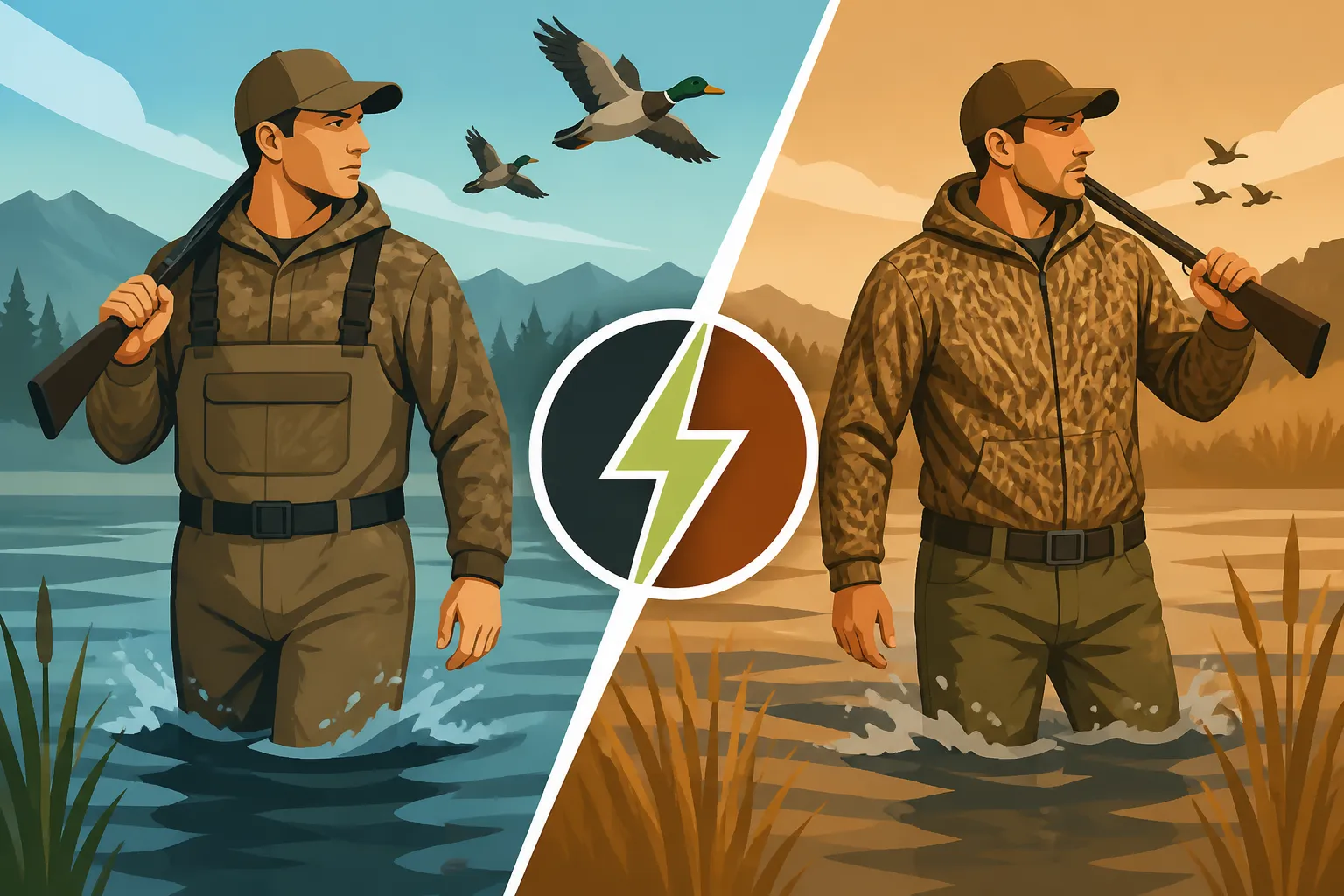
Chest waders are the workhorse of serious waterfowl hunting, offering maximum coverage and protection. They extend from your feet all the way up to your chest, held in place by shoulder straps. This design provides superior waterproofing, insulation, and versatility, making them a popular choice for hunters facing deep water, cold temperatures, or unpredictable conditions.
Unmatched Protection and Versatility
The primary advantage of chest waders is their extensive coverage. They protect not only your legs but also your torso up to your chest, meaning you can comfortably wade through deeper water without worrying about water spilling over the top. This is a game-changer when you're navigating sloughs, crossing flooded ditches, or retrieving downed birds from unexpected depths.
This level of protection also translates to superior warmth. The greater surface area covered means more insulation, which is critical during those brutal late-season hunts when temperatures plummet and you're exposed to biting winds. Many chest waders come with insulated boots, providing an all-in-one solution for warmth and waterproofing. The integrated boots often have cleated soles, which give you excellent traction in slippery mud and across uneven bottoms, helping you maintain your footing when carrying decoys or a shotgun.
The versatility of chest waders also shines when conditions are uncertain. You might start your hunt in shallow water, but then the tide comes in, or you realize the best hide is across a surprisingly deep channel. With chest waders, you have the flexibility to adapt. They are also often equipped with handwarmer pockets, shell loops, and D-rings, offering convenient storage and quick access to essential gear, saving you from rummaging through a blind bag.
Scenarios Where Chest Waders Excel
When you envision classic California duck hunting, particularly in the vast, managed wetlands, you're often picturing scenarios where chest waders are indispensable. Think about setting up a decoy spread in a flooded rice field that's anywhere from ankle-deep to mid-thigh. Trying to carry a bag of decoys and walk through that kind of water with hip waders would be a recipe for disaster and a cold, wet hunt.
Consider a public land hunt at a wildlife area like Gray Lodge or Grizzly Island. You've drawn a good blind, but getting to it might involve crossing an irrigation ditch that's a few feet deep, or wading through a pond edge that's deceptively soft and deep in spots. Chest waders give you the confidence to navigate these areas safely and stay dry. This is especially true when you're Decoying Ducks in California's Central Valley Flooded Rice where the water levels can vary significantly across a single field. Even for those using a layout blind, chest waders are essential for the initial setup and retrieve. Layout Blind Hunting a Flooded Field still requires you to get to that field and set out your gear, often through water.
Another common scenario is retrieving a downed bird that falls into deeper water or gets caught in thick tules. With hip waders, you might have to give up on the bird or risk getting soaked. Chest waders allow you to comfortably venture into those deeper spots, ensuring you recover your game ethically. This peace of mind alone makes chest waders worth their weight in gold for many California hunters.
Potential Drawbacks and Considerations
While chest waders offer superior protection, they do come with a few trade-offs. The most noticeable is their bulk and weight. All that extra material, especially in neoprene models, can feel cumbersome, particularly on longer walks to your hunting spot. This bulk also makes them less breathable, which can be a significant issue in California's warmer early-season hunts or on days when temperatures fluctuate wildly.
Wearing chest waders on a long trek across fields can lead to overheating, especially if you're breaking a sweat. If you're hunting coastal areas or even early season inland spots where the weather can be surprisingly mild, you might find yourself sweating uncomfortably inside your waders. This moisture can then turn cold once you settle into your blind, leading to a chill.
Cost is another factor. Generally, good quality chest waders are more expensive than hip waders due to the increased material and complexity of their construction. They also take up more storage space and can be slower to dry out completely after a hunt. For hunters who only venture into very shallow water or prioritize extreme mobility, these drawbacks might push them towards a different solution.
The Case for Hip Waders
Hip waders, sometimes referred to as 'boot pants' or 'half waders', are a more streamlined, lighter-weight option that extends only to your waist or upper thigh. They fasten to your belt or a specialized wading belt, providing a more minimalist approach to staying dry in shallow water. For specific hunting styles and conditions, they can be an excellent choice.
Lightweight Mobility and Simplicity
The main appeal of hip waders lies in their reduced weight and increased mobility. With less material, they are significantly lighter and less restrictive than chest waders, making them much more comfortable for long walks into your hunting area. If your hunting involves covering significant distances on dry land before reaching the water's edge, hip waders will cause less fatigue.
Their simpler design means less bulk, making them easier to pack, store, and transport. They also tend to be more breathable than chest waders, especially when made from similar materials, because less of your torso is encased. This is a huge benefit on those warmer California days when full chest waders would leave you drenched in sweat and utterly uncomfortable.
For hunters who value agility and stealth, hip waders can be a fantastic option. They allow for a wider range of motion, which can be useful when scrambling over obstacles, moving quickly from cover to cover, or setting up in tight spots. Their unobtrusive nature can make you feel less encumbered, allowing for a more natural movement that can be critical when stalking birds on the edges of sloughs or marshes.
Ideal Situations for Hip Waders
Hip waders truly shine in situations where water depths are consistently shallow, and mobility is a priority. Imagine Hunting a Refuge-Adjacent Field at Dawn where you know the ditches are manageable, and most of your hunting will be done from a dry levee or a very shallow scrape. Or perhaps you're setting up on the edge of a pond where the deepest water you'll encounter is only knee-high. In these scenarios, the bulk and added warmth of chest waders would be overkill.
They are also excellent for hunts that involve significant amounts of walking or even light hiking to reach your hunting spot. If you're accessing a remote slough or a small wetland on public land that requires a mile-long trek, hip waders prevent you from overheating and expending unnecessary energy before you even get to the water. Some hunters even prefer them for early-season dove hunts near water sources, where they might need to retrieve birds from shallow puddles or irrigation canals without needing full coverage.
In general, if your hunting style involves more movement on land and only brief, shallow excursions into water, hip waders provide just enough protection without adding unnecessary weight or thermal burden. They are particularly popular for situations where you might be Reading a Wetland for a Morning Flight from a slightly elevated position and only need to step into very shallow water for a quick adjustment or retrieve.
Limitations and When to Upgrade
The most obvious limitation of hip waders is their restricted coverage. While great for shallow water, any unexpected plunge into deeper sections will result in a wet and cold experience. This can happen easily if you misjudge the depth of a ditch, step into a hidden depression, or simply have a bird fall into a spot just beyond your safe wading depth. A single misstep can ruin a hunt and potentially expose you to hypothermia in cold conditions.
They also offer less overall warmth compared to chest waders, as less of your body is insulated. While this is an advantage on warm days, it becomes a significant drawback during the colder months of California's waterfowl season. If you're planning on hunting late into the fall or winter, or if you frequently encounter freezing temperatures, hip waders simply won't provide the necessary protection to keep you comfortable for hours on end.
Ultimately, if you find yourself consistently pushing the limits of your hip waders, or if you're frequently getting wet because the water is just a little too deep, it’s a clear sign that an upgrade to chest waders is in order. It's far better to be slightly over-prepared with chest waders than under-prepared with hip waders and end up soaked and miserable. For many, hip waders serve as a great entry-level option or a specialized tool for very specific, shallow-water scenarios.
Factors to Consider When Choosing
Making the right wader choice for California hunting isn't a one-size-fits-all decision. It hinges on understanding your specific hunting style, the local conditions you'll encounter, and what material best suits those needs.
Material Matters: Neoprene vs. Breathable
The material of your waders is a crucial factor, impacting warmth, weight, and durability. Neoprene waders are thick, rubber-like, and excellent insulators. They work by trapping a layer of water against your skin, which your body heats up, providing warmth even when submerged. They're incredibly durable and puncture-resistant, making them ideal for busting through thick brush and walking on rough terrain.
However, neoprene's insulating properties can be a double-edged sword. In warmer conditions or during strenuous activity, they can quickly cause you to overheat and sweat profusely. This trapped moisture can then lead to a chill once you stop moving, making you uncomfortable. They are also heavier and bulkier, which can be tiring on long walks. For situations demanding maximum warmth, such as hunting in truly frigid late-season conditions, neoprene is often the top choice.
Breathable waders, typically made from multi-layered nylon or polyester fabrics like Gore-Tex or similar proprietary materials, are designed to wick moisture away from your body while preventing water from entering. This keeps you dry and comfortable, especially during active hunts or in milder weather. They are significantly lighter and less bulky than neoprene, making them far more comfortable for long treks.
The trade-off is often insulation; breathable waders rely on layering clothes underneath for warmth, and they can be more susceptible to punctures or tears if not cared for. They also tend to be more expensive. For the variable conditions often found in California, especially during the early season or when you're covering significant ground, breathable waders offer superior comfort and adaptability. Many hunters will choose a good base layer and insulating mid-layers to pair with their breathable waders to adapt to changing temperatures.
Fit, Features, and Footwear
Regardless of whether you choose chest or hip waders, proper fit is paramount. Waders should be roomy enough to allow for layers of clothing underneath and permit a full range of motion without binding, but not so loose that they bunch up and cause chafing or resistance when walking. Pay close attention to the boot size if opting for bootfoot waders; it should accommodate thick socks without being overly tight. For stockingfoot waders, ensure your wading boots provide ample ankle support and a snug, comfortable fit over the neoprene sock. Using resources like GoHunt to compare sizing charts and read reviews can save you a lot of hassle.
Look for features that enhance your hunting experience. Integrated handwarmer pockets are a blessing on cold mornings, and external storage pockets can keep calls, shells, or snacks readily accessible. Reinforced knees and seat areas add durability, especially important when kneeling or sitting in blinds. Quality buckles and straps that are easy to adjust, even with gloved hands, also make a big difference.
For stockingfoot waders, your choice of wading boots is just as important as the waders themselves. Opt for boots with aggressive traction for navigating muddy bottoms and slick rocks. Consider the weight of the boots if you'll be doing a lot of walking. Good wading boots can be an investment, but they provide crucial support and stability, especially when paired with a comfortable stockingfoot wader for those long days chasing birds.
| Feature | Chest Waders | Hip Waders |
|---|---|---|
| Coverage | Full upper body to chest | Waist/upper thigh |
| Water Depth | Best for deep water (thigh to chest-high) | Best for shallow water (knee-high or less) |
| Warmth | Superior insulation, especially neoprene | Less insulation, prone to cold if water is deep |
| Mobility | More restrictive, heavier, bulkier | Lighter, more flexible, better for long walks |
| Breathability | Lower, prone to sweating in warm weather | Higher, better for warmer conditions or active hunts |
| Cost | Generally higher | Generally lower |
| Scenarios | Decoy setting, deep retrieves, cold weather, unknown depths | Shallow sloughs, dry land walking, warm weather, known depths |
Matching Waders to California's Diverse Waterfowl Habitat
California's waterfowl hunting habitats are incredibly diverse, from the vast, flooded agricultural fields of the Central Valley to the brackish marshes of the San Francisco Bay Delta, and even smaller mountain ponds. Your wader choice should directly reflect the conditions you're most likely to encounter.
If you primarily hunt the flooded rice and corn fields in regions like the Sacramento Valley, where water can fluctuate from ankle to mid-thigh deep, chest waders are almost certainly your best bet. The deep, often silty mud requires solid footing and the ability to wade without fear of water topping your waders. This is particularly true when you're engaged in intensive activities like Decoying Mallards on Flooded Rice Ground where you’re constantly moving through varying depths.
However, if your hunts are often on drier ground, or involve carefully stalking the edges of smaller ponds and sloughs where water depths are consistently low, then hip waders might offer a more comfortable and mobile experience. Imagine hunting along a creek bottom, as might be done when Working a Creek Bottom for Late-Season Deer, only you're after ducks instead. Here, a full chest wader could be cumbersome. For specific, known shallow spots, hip waders reduce bulk. It's also worth thinking about how much walking you do. If you're consistently hiking miles across dry land to reach very specific, shallow water spots, the lighter weight of hip waders could be a game-changer for your stamina and overall comfort. Knowing your hunting grounds and being realistic about the conditions you'll face is key.
Ultimately, many seasoned California waterfowlers end up owning both types of waders. They might grab the breathable chest waders for early season hunts when layering is key, or switch to heavy neoprene chest waders when the deep cold sets in. For those quick, shallow forays, the hip waders become the go-to. Considering California's various hunting zones and conditions, having both options ensures you're prepared for whatever Mother Nature throws your way. Remember to check out the latest California Duck and Goose Bag Limits and ensure you have your California Migratory Bird Certification before heading out on any hunt, regardless of your wader choice.
Disclaimer
This article is for general informational purposes only and does not constitute professional advice. Laws, prices and regulations vary by location and change over time. Consult a qualified professional for guidance on your specific situation.