Applying for a Rocky Mountain Elk Tag Near Oregon
Oh, the Rocky Mountain Elk tag in California, especially for those coveted units up near the Oregon border. It's truly a dream hunt for so many of us, but getting one of these tags can feel like trying to win the lottery with a single ticket. The competition is incredibly fierce, and understanding the ins and outs of the application process, the specific zones, and how to maximize your chances can be downright confusing. This guide is going to walk you through everything you need to know about applying for a Rocky Mountain Elk tag in California, helping you navigate the complexities and put yourself in the best possible position for success.
Understanding Rocky Mountain Elk in California
Let's face it, when most people think of elk hunting, California isn't usually the first state that comes to mind. But we actually have three distinct subspecies of elk thriving here: the Tule, Roosevelt, and the magnificent Rocky Mountain Elk. For those of us living closer to the northern reaches of the state, or those willing to travel, the allure of a Rocky Mountain Elk hunt near the Oregon border is incredibly strong.
Their Range and Population in California
California's Rocky Mountain Elk are primarily found in the northeastern part of the state, particularly in areas like Siskiyou, Lassen, and Modoc counties, extending into the high plateaus and timberlands that butt up against the Oregon border. These elk are descendants of animals reintroduced to the state in the early 20th century, and their populations have steadily grown, though they remain significantly smaller than the herds in states like Colorado or Montana. They thrive in the diverse habitat of pine forests, juniper stands, sagebrush flats, and the occasional agricultural fields, utilizing the rough terrain for cover and feed. If you're hoping to experience a hunt for these majestic animals, you'll be looking at specific hunt units within these counties. The sheer ruggedness of the terrain in places like the Modoc National Forest and the remote corners of the Klamath National Forest makes for a truly wild hunting experience, testing even the most seasoned hunter's resolve and physical limits. It’s this wild character that makes these hunts so appealing, but also contributes to the limited number of tags issued.
Why These Tags Are So Highly Coveted
The demand for Rocky Mountain Elk tags in California far outstrips the supply, making them among the most sought-after big game tags in the state. Several factors contribute to this intense competition. First, the limited number of animals in specific hunt units means the California Department of Fish and Wildlife (CDFW) can only issue a handful of tags each year to maintain healthy herd numbers and sustainable hunting pressure. This scarcity naturally drives up demand. Second, these elk are trophy-class animals. While not as large-bodied as their counterparts in other western states, a mature Rocky Mountain Elk bull from California can still be an impressive animal, sporting a rack that any hunter would be proud to hang on their wall. Third, the experience itself is unparalleled; hunting elk in the remote, rugged landscapes near the Oregon border offers a true wilderness adventure, far from the crowds often associated with hunting in other states. The combination of limited opportunity, trophy potential, and an exceptional hunting experience means that hunters often apply for years, accumulating bonus points, just for a chance at one of these tags. When you consider the draw odds for California Rocky Mountain Elk tags, it truly highlights the challenge and the dream many of us share.
Navigating the California Big Game Drawing System
If you're serious about drawing a Rocky Mountain Elk tag, you absolutely need to understand California's complex Big Game Drawing system. It's not as simple as just putting in for a tag; there are layers of rules, preference systems, and deadlines that can make or break your application.
License and Application Requirements
Before you can even dream of applying for an elk tag, you need to ensure you're squared away with the basic hunting requirements. First and foremost, you must possess a valid California hunting license. This isn't just a formality; it's your entry ticket to the drawing. You can purchase your license through the CDFW's Automated License Data System (ALDS) online portal or at any licensed agent throughout the state. Keep in mind that there are different costs for residents and nonresidents, and additional validations like an Upland Game Bird Validation or a California Duck Validation might be needed for other hunts, but aren't tied to elk. The application period for the Big Game Drawing typically opens in mid-April and closes in early June, so marking your calendar is crucial. Miss that window, and you're out of luck for the year. Each species of elk (Tule, Roosevelt, and Rocky Mountain) has its own set of hunt choices, and you'll need to specify which you're applying for, as well as the specific hunt unit. Remember, California has strict non-lead ammunition requirements, so plan accordingly for any future hunt.
The Bonus Point System Explained
California uses a bonus point system to allocate its highly sought-after big game tags, including those for elk. This system is designed to reward hunters who have been applying for tags over many years without success. Here's how it works: every time you apply for a premium tag (like an elk tag) and are unsuccessful in drawing it, you accrue a bonus point for that specific species. The more bonus points you have, the better your odds of drawing a tag in subsequent years. Your bonus points are essentially squared each year, giving you more "entries" into the draw. So, if you have 5 points, you get 25 entries plus your current year's application. If you draw a tag for a species, your bonus points for that species reset to zero. This means that hunters with many years of accumulated points have a significantly higher chance of drawing a tag than someone applying for the first time. This system is critical to understand, as it influences your strategy – do you apply for the hardest-to-draw, highest-quality hunts from the start to build points, or do you try for easier-to-draw units with lower point totals? Many hunters opt for the long game, consistently applying for the premier Rocky Mountain Elk tags year after year, slowly building up their points for that eventual breakthrough. This is part of why understanding the California Big Game Drawing Explained is so vital for any serious elk hunter.
Researching Rocky Mountain Elk Hunt Zones
Once you understand the application process, the real work begins: researching the specific hunt zones. This isn't just about picking a name off a list; it's about understanding the nuances of each zone, the animal densities, the terrain, and most importantly, your chances of actually drawing a tag.
Key Zones for Rocky Mountain Elk
When you’re looking to apply for a Rocky Mountain Elk tag, you’ll be focused on a select few zones in California. These are primarily located in the northeastern part of the state, often abutting the Oregon border. The most prominent hunt zones for Rocky Mountain Elk include areas like the Northeastern Zone (NE Zone), specifically units within Siskiyou, Modoc, and Lassen counties. These zones offer diverse habitats, from vast sagebrush flats and volcanic flows to dense timber and high-country meadows. For example, some units, like those within the Modoc National Forest, are known for their rugged, remote terrain, providing a true wilderness hunting experience. Other areas might incorporate a mix of public and private lands, requiring careful scouting and potentially gaining landowner permission. It's crucial to examine the CDFW's hunt booklet each year, as specific unit boundaries and tag allocations can shift slightly. Understanding these geographic distinctions is key to deciding where you want to put your limited draw application. These zones represent the primary stronghold for the Rocky Mountain Elk population near Oregon, and as such, are the only places you'll find tags for this subspecies.
Using Online Tools for Research
In today's hunting world, ignoring online research tools is like trying to navigate without a map. Resources like GoHunt are invaluable for delving deep into the statistics and nuances of California's elk drawing. These platforms compile years of draw results, success rates, unit breakdowns, and harvest data, allowing you to make incredibly informed decisions. With GoHunt, you can filter by species, residency, and specific hunt units, seeing exactly how many tags were allocated, how many applicants there were, and the exact bonus point levels at which tags were drawn. This kind of detailed information is gold, especially when trying to understand the California Elk Tag Draw Odds by Species. You can also leverage these tools to explore historical trends, identifying which units consistently offer higher draw odds or better success rates for hunters who do draw a tag. Many hunters use GoHunt to strategize their long-term bonus point accumulation, figuring out which units might be worth applying for year after year to eventually draw that dream tag. Don't just guess; use these powerful tools to build a data-driven application strategy.
Understanding Draw Odds and Success Rates
This is where the rubber meets the road. Knowing the draw odds is paramount, because it directly impacts your strategy. For Rocky Mountain Elk in California, especially the prime units near Oregon, the draw odds are notoriously low – often in the single digits, even for applicants with a significant number of bonus points. This means that for every 100 people applying, only a handful will actually draw a tag. It can be a tough pill to swallow, but it's the reality of hunting a limited resource in a high-demand state. When you're looking at draw odds on a platform like GoHunt, pay close attention to the "points required to draw" data. This will show you the minimum and maximum points that successful applicants had in previous years, giving you a realistic benchmark for your own chances.
Beyond just drawing the tag, consider the success rates of those who actually hunt the unit. A unit might have slightly better draw odds, but if the success rate for harvesting an elk is extremely low, it might indicate very challenging terrain, sparse animals, or difficult access. Conversely, a unit with abysmal draw odds but a very high success rate means that if you do draw, you have an excellent chance of a successful hunt. This information helps you weigh the difficulty of drawing against the quality of the hunting experience if you are successful. It’s a balance between aspiration and realism.
| Rocky Mountain Elk Hunt Zones (Illustrative) | Primary Counties | Terrain Type | Avg. Draw Odds (Rough Estimate) | Typical Hunter Success (If Drawn) | Notes |
|---|---|---|---|---|---|
| Siskiyou High Country | Siskiyou | Timber, Alpine | <3% | 20-30% | Rugged, remote, requires fitness |
| Modoc Plateau North | Modoc | Sagebrush, Timber | 2-5% | 25-35% | Mix of public/private, diverse habitat |
| Lassen Foothills | Lassen | Pine Forest, Volcanic | 3-6% | 20-28% | Challenging access, lower density |
| Klamath River Corridor | Siskiyou | River Breaks, Timber | <2% | 15-25% | Very tough draw, limited animals |
Note: These are illustrative and highly variable; always consult current CDFW regulations and detailed drawing statistics like those found on GoHunt for the most accurate and up-to-date information.
The Application Process: Step-by-Step
Alright, you've done your research, you know which hunt codes you're eyeing, and you're ready to throw your hat in the ring. The actual application process is relatively straightforward once you understand the steps, but a small misstep can cost you a chance at a tag.
Pre-Application Checklist
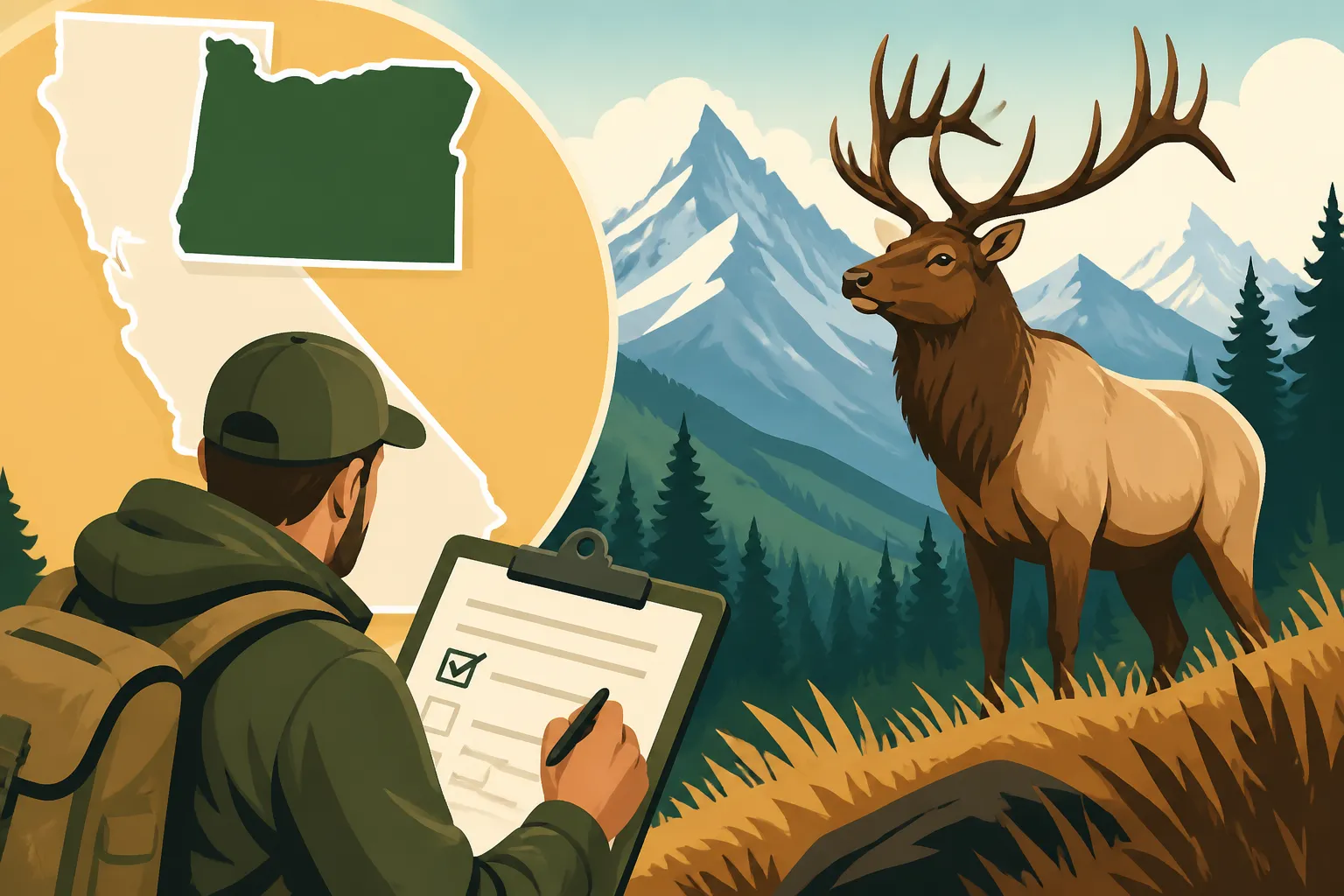
Before you even log into the ALDS system, it’s wise to have a quick checklist to ensure a smooth process. First, make sure your California hunting license is current for the upcoming season. You can't apply for any big game tags without it. Next, have your Customer ID number handy – it's crucial for logging into the ALDS portal. Then, have a clear idea of your top three hunt choices for Rocky Mountain Elk. The system allows you to rank them, so be prepared with your preferred units. Research these extensively, perhaps using tools like GoHunt, to ensure you're making informed decisions about your first, second, and third choices. Finally, have your payment method ready. The application fees are relatively modest, but you don't want to get stuck at the payment screen. It's also a good idea to confirm the exact application deadline – usually in early June – and mark it prominently on your calendar. Missing the deadline by even a day means you'll have to wait another year, losing precious bonus points.
Submitting Your Application Through the CDFW ALDS Portal
The CDFW's Automated License Data System (ALDS) is your gateway to applying for an elk tag. Once you're logged in with your Customer ID, navigate to the "Big Game Drawing" section. From there, you'll select the "Elk" category. The system will then prompt you to choose your hunt choices. You'll typically be able to select up to three distinct elk hunts. This is where your research pays off. Carefully enter the hunt codes for your desired Rocky Mountain Elk units near Oregon. Double-check everything, from the hunt unit numbers to the season dates. The ALDS system will automatically apply your existing bonus points to your application. After selecting your choices, you'll proceed to the payment screen to cover the application fees. Once payment is confirmed, you'll receive a confirmation number. This confirmation is vital; save it! It's your proof of application and what you'll use to check draw results later. For those new to the system, it can feel a bit clunky, but take your time and review each step carefully before finalizing.
Common Mistakes to Avoid
Applying for a big game tag can be stressful, and it's easy to make small errors that can have big consequences. One of the most common mistakes is simply missing the application deadline. Seriously, set multiple reminders! Another frequent error is incorrectly entering hunt codes. Double-check that three-digit code against the official CDFW regulations or your research on GoHunt. An incorrect code can lead to your application being rejected or placed into a hunt unit you didn't intend. Forgetting to purchase your annual hunting license before applying for tags is another easy trap; without a valid license, your tag application is invalid. Some hunters also mistakenly apply for the wrong subspecies of elk; if you're set on Rocky Mountain Elk, make sure you're not accidentally selecting Tule or Roosevelt tags. Lastly, not understanding the bonus point system can lead to poor strategy. Don't apply for a unit where the minimum points drawn are significantly higher than yours unless you're purely trying to accumulate points. Focus on making an informed decision, especially if you have an opportunity at a coveted tag. Every year, hunters fall victim to these common pitfalls, and it's a gut-wrenching feeling to realize you've jeopardized your chances due to a preventable error.
Post-Application Strategy and What Comes Next
You've submitted your application, the waiting game has begun. This period can feel like an eternity, but it's also a time for smart planning, whether you draw a tag or not.
Checking Draw Results and What to Expect
The draw results for California's Big Game Drawing are typically released in late June or early July. The CDFW usually posts an announcement on their website and sends out email notifications to applicants. You'll log back into your ALDS account using your Customer ID and confirmation number to see if you were successful. The moment of truth can be exhilarating or heartbreaking. If you drew a Rocky Mountain Elk tag, congratulations! You've achieved what many hunters spend years trying to do. Your tag will then be mailed to you, so ensure your mailing address on file is up to date. If you weren't successful, don't despair. This is where the bonus point system truly shows its value. You'll automatically be awarded another bonus point for Rocky Mountain Elk, increasing your odds for next year's draw. It’s part of the journey for most of us applying for these premier tags. Be prepared for either outcome, and try to manage your expectations throughout the waiting period.
If You Don't Draw: Building Points and Future Strategies
For most applicants, not drawing a Rocky Mountain Elk tag is the more likely outcome. But this isn't the end of the road; it's simply another step in the process. The immediate benefit is that you've earned another bonus point, which significantly improves your chances in future draws. Now is the time to review the draw results. Go back to your research tools like GoHunt and analyze the point creep or decrease in the units you applied for, as well as others. Did the points needed to draw increase dramatically? Did any new trends emerge? This information helps refine your strategy for next year. Many hunters will continue to apply for the same highly desirable Rocky Mountain Elk zones, slowly but surely building their points. It's a long-term investment. Others might consider applying for less competitive elk zones (perhaps Tule or Roosevelt) in future years if their goal is simply to hunt elk, rather than specifically Rocky Mountain Elk. This might involve applying for a California Tule Elk Tag in the Big Game Drawing or even a Roosevelt Elk Tag in the Northwest. The key is consistency. Keep buying your hunting license and keep applying each year to keep accumulating those bonus points. Remember, that one-tag-per-nonresident elk rule means it's especially crucial for out-of-state hunters to be strategic, as they have fewer opportunities.
Preparing for a Successful Rocky Mountain Elk Hunt (If You Draw)
Okay, you beat the odds! You've got that coveted Rocky Mountain Elk tag in your hands. Now the real work (and fun!) begins: preparing for what will likely be one of the most challenging and rewarding hunts of your life. These are not easy hunts, and proper preparation is critical for success.
Scouting the Terrain Near Oregon
Drawing a tag is only the first hurdle; the actual hunt requires extensive preparation. Rocky Mountain Elk in California primarily inhabit rugged, high-country terrain, often characterized by dense timber, steep canyons, and challenging access roads in areas like the Modoc National Forest or the high desert fringe country. If you drew a tag for one of these units, the first step is intense scouting. This means hitting the ground, preferably months before the season opens, to learn the lay of the land. Focus on identifying traditional elk travel corridors, water sources, bedding areas, and feeding grounds. Look for fresh sign: tracks, scat, rubs, and wallows. Use tools like GPS units with satellite imagery, like those found on GoHunt, to identify potential pinch points, secluded basins, and access routes that might go unnoticed by others. Pay close attention to wind and thermals in steep Sierra country, as these will dictate your approach during the hunt. Scouting will help you understand game movement patterns and identify potential ambush points. If an in-person scout isn't feasible, spend countless hours on topographical maps and aerial photos, virtually exploring every ridge and drainage. This kind of diligent pre-season work can make all the difference when it's crunch time.
Gear Considerations for Northern California Elk
Hunting Rocky Mountain Elk in Northern California, especially near the Oregon border, demands a specific gear list that can stand up to the region's diverse and often extreme conditions. Your boots, for example, need to be rugged, waterproof, and provide excellent ankle support for navigating steep, uneven terrain. Think about a durable, insulated pair if you're hunting in late fall, or lighter, breathable boots for warmer early-season hunts. Layering is key for clothing, as temperatures can swing dramatically from cold mornings to warm afternoons. Merino wool base layers, a fleece mid-layer, and a waterproof/windproof outer shell are standard.
For optics, a high-quality pair of binoculars (10×42 or 12×50) is essential for glassing expansive country and locating elk. A spotting scope on a tripod can be invaluable for field judging distant animals, helping you confirm if that's the bull you've been searching for. Don't forget a reliable rangefinder for accurate shot placement. When it comes to firearms, a powerful yet accurate rifle chambered in a caliber suitable for elk is necessary. Many hunters opt for cartridges like the .300 Win Mag, .30-06, or 7mm Rem Mag. Remember, California has a statewide non-lead ammunition requirement, so you'll need to choose certified copper or other non-lead projectiles. Be sure to check out guides on choosing a caliber for California Elk and choosing non-lead rifle ammunition in California.
Finally, a sturdy pack capable of carrying all your gear for a multi-day trip, and strong enough to pack out meat, is non-negotiable. Consider a pack with an external frame or a strong meat shelf, as elk are large animals, and you'll likely be quartering and packing them out piece by piece. Game bags, a sharp knife, a first-aid kit, a water filter, and a satellite communication device for emergencies round out the essential gear list for a safe and successful backcountry elk hunt.
Disclaimer
Please note that hunting regulations, season dates, and tag application procedures are subject to change annually by the California Department of Fish and Wildlife (CDFW). While every effort has been made to provide accurate and up-to-date information, it is the hunter's responsibility to consult the most current official CDFW regulations before applying for any tags or heading into the field. This guide is for informational purposes only and does not constitute legal advice.