Tuning a Bow for Broadhead Flight
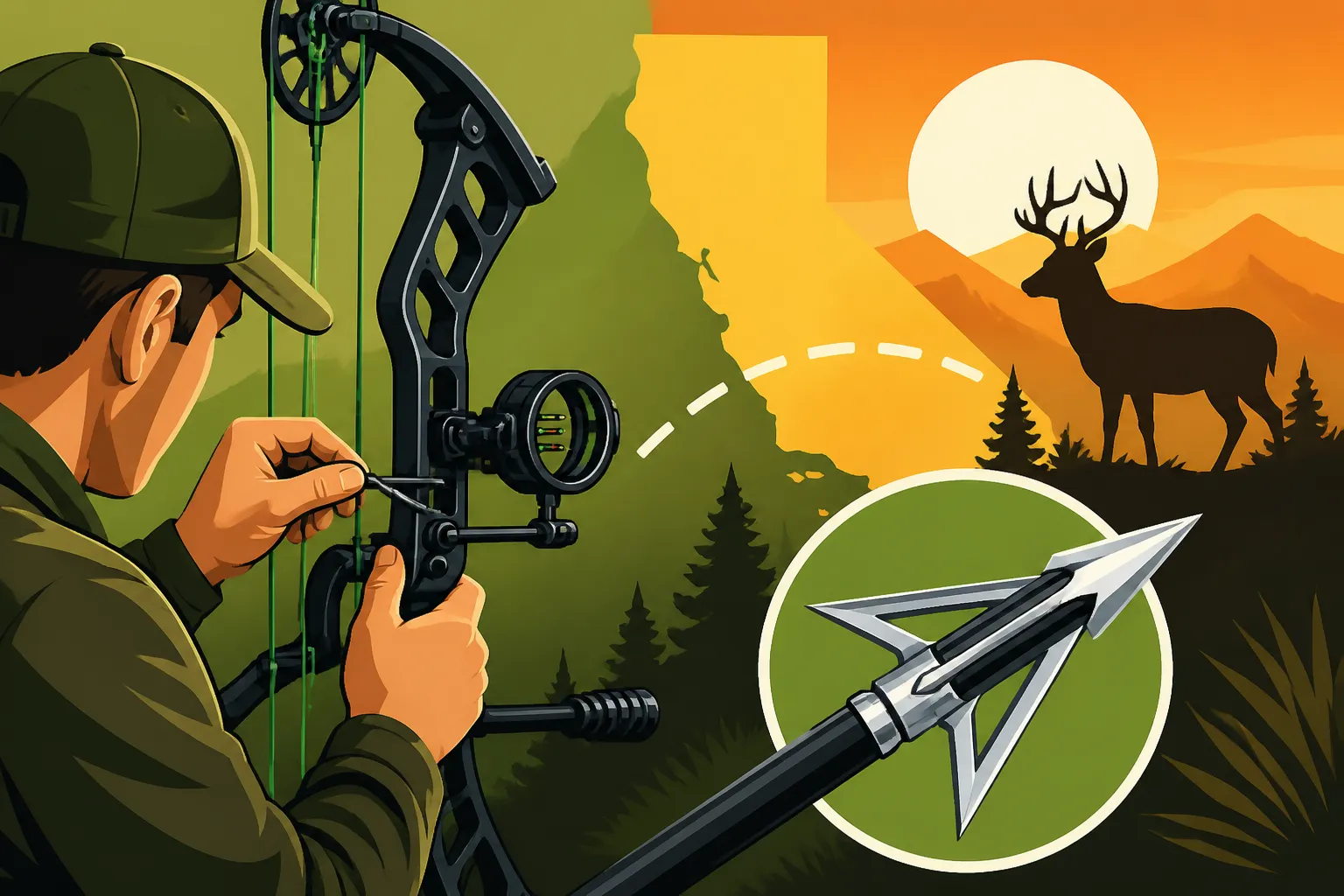
There's nothing quite like the excitement of archery season in California, is there? You spend months practicing, your field points are stacking perfectly, and your confidence is soaring. Then, you screw on a broadhead, take a shot, and suddenly your arrow looks like it's got a mind of its own, flying completely differently. This frustrating shift in arrow flight is a common headache for archers, and it can really shake your confidence when you're preparing for a critical moment in the field. This guide is all about demystifying broadhead flight, walking you through the practical steps to tune your bow so those hunting arrows fly just as true as your practice points.
Why Broadheads Don't Fly Like Field Points (And Why It Matters)
It's a tale as old as archery season itself: your field points group beautifully, but the moment you thread on a broadhead, your meticulously crafted accuracy goes out the window. This isn't just bad luck; it's a fundamental aerodynamic reality that every bowhunter eventually confronts. Understanding why this happens is the first step toward fixing it and regaining that crucial confidence.
Understanding Aerodynamic Differences
Think about the difference between a sleek, bullet-shaped field point and a broadhead. A field point is designed to be as aerodynamically neutral as possible. It's typically conical or bullet-nosed, offering minimal drag and no real surfaces for air to catch, making it incredibly forgiving of minor inconsistencies in your bow's setup or your shooting form. Its purpose is simply to penetrate a target without influencing arrow flight.
Now, consider a broadhead. Whether it's a fixed-blade, mechanical, or hybrid design, it introduces significant surfaces that interact with the air stream. Those sharp blades, designed for maximum cutting and penetration on an animal, act like tiny wings or rudders. Even the smallest amount of air pressure on these surfaces can exert torque or lift on the arrow, forcing it off its intended path. This effect is magnified the farther the arrow travels, turning a minor deviation at 20 yards into a complete miss at 40 or 50. It’s like the difference between throwing a dart (field point) and throwing a dart with small fins on the front (broadhead) – those fins are going to catch the air and make the flight path less predictable unless everything else is absolutely perfect.
The Importance of Consistent Flight
For any hunter, ethical shot placement is paramount. A broadhead that doesn't fly true means an increased risk of wounding an animal rather than achieving a clean, humane kill. When you're out in the Hunting Coastal Range Oak Woodlands chasing blacktail deer, or even further afield in the Hunting California's Sierra Nevada Backcountry for mule deer, you need absolute faith that where you aim is where your arrow will hit. There's no room for "close enough" when it comes to shot placement on game.
Beyond the ethical considerations, consistent broadhead flight builds confidence. Imagine drawing back on a mature buck or a wary wild pig, knowing without a shadow of a doubt that your setup is perfectly tuned and your shot will go exactly where you want it. That mental edge can make all the difference in a high-pressure hunting situation. Conversely, doubt in your equipment leads to hesitation, poor shot execution, and ultimately, missed opportunities or worse. Every serious archer knows that confidence is key, and it all starts with a perfectly tuned bow and arrow system. Tuning a Bow for Broadhead Flight ensures that the months of practice don't go to waste when the moment of truth arrives.
Pre-Tuning Checklist: Getting Your Bow Ready
Before you even think about nocking an arrow with a broadhead, you need to ensure your bow and all its components are in prime condition. Trying to tune a bow that has underlying issues is like trying to build a house on a shifting foundation – it’s just not going to work, and you’ll end up chasing your tail. This pre-tuning checklist is a non-negotiable step for achieving reliable broadhead flight.
Inspecting Your Equipment Thoroughly
Start with a top-to-bottom inspection of your bow. Check the limbs for any cracks, splinters, or delamination. Look at your cams – are they perfectly synchronized? Roll the string and cables between your fingers, feeling for any frayed strands or nicks. Small imperfections here can throw off your entire setup. Next, move to your accessories. Ensure your arrow rest is firmly attached, with no wobble, and that its launcher arm is free of obstruction. Tighten every screw on your sight, stabilizer, and quiver. Even a tiny bit of play in any of these components can introduce inconsistencies in your shot.
Then, turn your attention to your arrows. Flex each shaft to check for straightness – any visible bend means it's a practice arrow, not a hunting arrow. Inspect your fletchings: are they all securely attached, with no rips or creases? Damaged fletching is a major culprit for erratic broadhead flight. Finally, check your nocks; they should fit snugly on the string but release cleanly. Regularly going through this inspection process not only preps your bow for tuning but also helps prevent equipment failures in the field. When you're out there, relying on your gear, you need to know it's going to perform. You might even find some great tips for routine maintenance on the GoHunt platform.
Paper Tuning for Initial Setup
Paper tuning is often the first real step in broadhead tuning, even though you typically use field points for this stage. It’s essentially a diagnostic tool that reveals how your arrow is leaving the bowstring. The goal is for the arrow to pass cleanly through a sheet of paper, leaving a perfect bullet hole, indicating that the arrow is flying perfectly straight out of the bow. Any tears – up, down, left, or right – tell you exactly what adjustments you need to make.
To do this, set up a large sheet of paper (butcher paper works great) about 5-10 feet in front of your target. Shoot a field-tipped arrow through the center. If you see a perfect bullet hole, great! If the paper tears high, your nocking point might be too low, or your rest is too high. A low tear means the opposite. A left tear for a right-handed shooter often indicates the rest is too far to the left, or you're torquing the bow. A right tear suggests the rest is too far right, or you have a weak arrow spine. Make small adjustments to your arrow rest (horizontally for left/right tears, vertically for up/down tears by adjusting the nocking point or rest height) and keep shooting until you get that coveted bullet hole. This process gets the arrow flying as straight as possible before you introduce the broadhead's wind-catching blades. Think of it as laying the groundwork for precise broadhead flight.
The Broadhead Tuning Process: Walking it In
Once your bow is paper tuned with field points, it's time to introduce the broadheads to the equation. This is where the rubber meets the road, and you'll really start to see how those blades interact with your arrow's flight. The "walking it in" method is a classic and effective way to achieve harmonious flight between your field points and your broadheads.
The Walk-Back Tuning Method
The walk-back tuning method is a tried-and-true technique for making sure your broadheads and field points hit the same spot. To begin, shoot a field-tipped arrow and a broadhead-tipped arrow at a target from 20 yards. Aim for the exact same spot. If your field point hits one spot and your broadhead another, you’ll need to adjust your sight. Move your sight pins until both arrows are grouping together, even if they aren't in the bullseye yet. The key here is consistency between the two types of points.
Once they are grouping together at 20 yards, walk back to 30 yards, then 40, and even 50 yards if your range allows and your hunting will involve those distances. Continue to shoot both broadhead and field-point arrows. If your broadheads start to drift horizontally away from your field points as you move back (e.g., broadheads consistently hit left or right of field points), you'll need to make tiny micro-adjustments to your arrow rest. If broadheads are hitting left for a right-handed shooter, move your rest slightly to the left. If they're hitting right, move the rest slightly right. The goal is to get both types of arrows to consistently hit the same horizontal plane at all distances. Vertical differences are generally compensated for with sight adjustments as you practice at different ranges, but horizontal drift is almost always a rest or bow tuning issue. Remember, patience is key here; these are often minute adjustments, but they make all the difference when you're Glassing a Canyon for a Bedded Buck and need that shot to count.
Testing with Fixed Blade vs. Mechanical Broadheads
Not all broadheads are created equal when it comes to tuning. Fixed-blade broadheads, with their unyielding, exposed cutting surfaces, are typically the most challenging to get flying perfectly with field points. Those blades act as larger airfoils, amplifying any slight imperfection in your bow setup or shooting form. This means that if you're planning on using fixed blades, your bow's tune needs to be absolutely spot-on. It's often recommended to start your tuning process with fixed blades, as they will highlight any issues more readily. Once fixed blades are flying true, mechanicals will often follow suit with minimal fuss.
Mechanical broadheads, on the other hand, are designed to fly more like field points due to their collapsed blades during flight. While they are generally more forgiving and easier to tune, it's a critical mistake to assume they don't need to be tested. You must shoot your actual hunting mechanical broadheads to confirm their flight. Sometimes, even with their compact design, the forces of launch can cause minor blade deployment or subtle shifts that alter flight patterns compared to field points. Plus, testing ensures they're deploying properly. Always, always, always shoot the exact broadheads you plan to hunt with. Don't just rely on field points and hope for the best. For those considering Best Broadhead for California Blacktail or Fixed Versus Mechanical Broadheads in Brush, knowing the flight characteristics of each is vital.
Advanced Broadhead Tuning & Troubleshooting
Sometimes, despite your best efforts with paper tuning and walk-back tuning, those broadheads just won't cooperate. This is where you might need to dive into more advanced techniques or systematically troubleshoot persistent issues. Don't get discouraged; even seasoned archers occasionally hit a wall, especially when dealing with the nuances of Best Arrow Weight for a Tule Elk Bull or a similar challenging setup.
Bare Shaft Tuning (for the dedicated archer)
Bare shaft tuning takes the concept of paper tuning a step further by removing the stabilizing influence of your fletchings. Without fletchings, any inconsistency in how the arrow leaves the bow will be wildly exaggerated, making it an incredibly precise diagnostic tool. It strips away all variables except the arrow's spine, the bow's tune, and your form. This method is not for the faint of heart or the impatient, but it can reveal deep-seated issues that fletched arrows might mask.
To bare shaft tune, you'll need an arrow without fletchings (a "bare shaft") that matches your hunting arrows in length and spine. Shoot this bare shaft at a target from 10-20 yards alongside a fletched arrow. The bare shaft should impact the target in roughly the same spot as the fletched arrow, with minimal horizontal deviation. Vertical differences can be addressed with rest height/nocking point. If your bare shaft impacts significantly left or right, it points to a serious issue with arrow spine (too stiff or too weak), rest position, or your shooting form (like torque). This method demands perfect form and a perfectly tuned bow, and it’s a brilliant way to fine-tune your setup to an almost obsessive degree. Many experienced bowhunters who use services like GoHunt for their gear research eventually turn to bare shaft tuning for that ultimate precision.
Addressing Persistent Flight Issues
If you're still battling erratic broadhead flight after all these steps, it's time for some serious troubleshooting. First, meticulously re-evaluate your form. Are you gripping the bow too tightly? Is your release consistent? Any bow torque can wreak havoc on broadhead flight. Videoing yourself can be incredibly helpful here. Next, go back to your equipment. Check for fletching contact – are your fletchings hitting the arrow rest or cable guard? A simple powder spray test on your fletchings or launcher arm will reveal any contact points, which can cause erratic flight.
Another common culprit is arrow spine. If your arrow is too stiff or too weak for your bow's draw weight and length, it will flex improperly, leading to poor flight. This often shows up as persistent horizontal tears in paper tuning or bare shaft impacts far to the left or right. Consulting an arrow spine chart and ensuring your arrows are appropriately spined for your setup is crucial. If you've exhausted all these options, don't be afraid to take your bow to a reputable pro shop. They have specialized tools like a bow press, tuning jigs, and chronographs, and their experienced eye can often diagnose issues you might miss. Sometimes, an experienced tech can spot limb twist, cam timing issues, or a subtly misaligned rest that you simply can't detect at home. Getting your Bowhunting California's Zone A Season gear dialed in is worth the extra effort.
| Issue | Symptom (Broadhead vs. Field Point) | Common Cause(s) | Solution |
|---|---|---|---|
| Horizontal Drift | Broadheads consistently left/right | Rest position, arrow spine, bow torque | Adjust arrow rest (micro-movements), check arrow spine, refine grip/form |
| Vertical Drift | Broadheads consistently high/low | Nocking point height, rest height, shooter form | Adjust nocking point, adjust rest height, ensure consistent anchor |
| Erratic, Inconsistent Flight | Random impacts, no clear pattern | Fletching contact, damaged fletching, worn string | Inspect fletchings, check rest clearance, inspect bow string/cables |
| "Porpoising" (Up & Down Wave) | Arrow oscillates vertically in flight | Nocking point too high/low | Adjust nocking point in small increments |
| "Fish-tailing" (Side-to-Side Wave) | Arrow oscillates horizontally in flight | Rest position, arrow spine, bow torque | Adjust rest, check arrow spine, improve shooting form |
| Mechanicals Don't Group | Mechanicals inconsistent, but field points good | Blade deployment issues, broadhead quality | Inspect broadheads, try different brand, ensure proper assembly |
Disclaimer
This article is for general informational purposes only and does not constitute professional advice. Laws, prices and regulations vary by location and change over time. Consult a qualified professional for guidance on your specific situation.