Hunting a National Forest Burn Scar
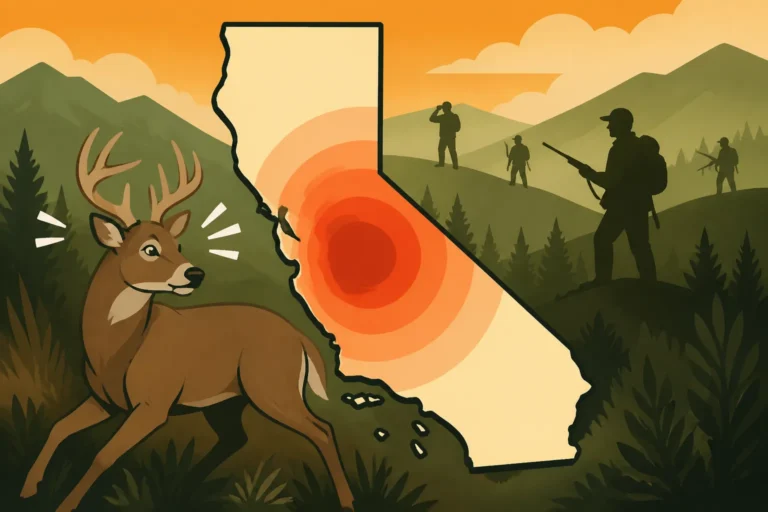
Hunting a national forest burn scar in California can feel like stepping onto a different planet. The landscape is radically transformed, often leaving hunters wondering how to even begin to adapt their tactics. What was once dense timber or thick chaparral might now be an open expanse of ash and skeletal trees, or a carpet of vibrant new growth. This guide will walk you through the unique challenges and incredible opportunities that these fire-altered landscapes present, from understanding the ecological shifts to implementing effective hunting strategies and staying safe in these dynamic environments.
Understanding Burn Scar Ecology for Hunters
When a wildfire tears through a national forest, it doesn't just destroy; it reshapes the entire ecosystem. For hunters, this isn't just a grim reminder of destruction, but a critical lesson in how dynamic California's wild spaces truly are. Burn scars, especially those a few years old, become vibrant new feeding grounds, drawing in game with an abundance of fresh forage. But understanding why and how this happens is key to finding success.
Immediate Post-Fire Changes: Ash, Nutrient Flush, Reduced Cover
In the immediate aftermath of a fire, the landscape looks bleak. The ground is covered in ash, and the air often still smells of smoke. Trees are scorched, and much of the understory is gone. This initial phase, while seemingly barren, sets the stage for a burst of new life. The ash, though appearing sterile, acts as a nutrient-rich fertilizer, returning vital minerals to the soil. Rain washes these nutrients deeper, priming the ground for rapid vegetation growth.
However, the lack of cover is a significant factor. Deer, bear, and other game animals rely on thick brush and timber for concealment from predators and hunters. In heavily burned areas, this cover is dramatically reduced, often forcing animals to retreat to unburned pockets, riparian zones, or adjacent areas. This makes travel between feeding and bedding areas much riskier for them, and understanding these remaining "islands" of cover becomes paramount for a hunter. You might find game holding tight to a small patch of green timber that somehow escaped the flames, or using the deeper canyons and drainages where the fire didn't burn as intensely.
Regrowth and Forage Development: Grasses, Forbs, Browse
Within a year, sometimes even just months after the initial burn, the forest floor transforms. The nutrient-rich ash, combined with increased sunlight penetration due to the removed canopy, triggers an explosion of pioneer plant species. You'll see lush annual grasses, a wide variety of herbaceous forbs (broad-leafed plants), and early successional browse species like ceanothus, manzanita, and various oak sprouts.
This new growth is incredibly palatable and nutritious for deer and elk, often more so than the mature, tougher forage in unburned areas. Deer will flock to these areas to gorge on the tender shoots. For black bears, the regrowth might mean new patches of berries like huckleberries or blackberries thriving in the sun-drenched soil. This bounty doesn't last forever, though. After a few years, as shrubs mature and young trees start to grow, the dense understory returns, and the most palatable forage might become harder to access or less abundant. Understanding this regrowth cycle helps you target the "sweet spot" years after a fire.
Long-Term Habitat Shifts: Shrub Fields, Timber Regeneration
As the burn scar matures, the habitat continues to evolve. What might have been an open, grassy feeding area three years post-fire could, a decade later, become a dense, impenetrable thicket of chaparral or young conifer regeneration. These long-term shifts create new challenges and opportunities. Dense shrub fields, while providing incredible cover, can be extremely difficult to navigate and hunt effectively. They often become bedding havens, but finding a clear shot can be a nightmare.
Timber regeneration is a slower process, but as young pines and firs grow, they begin to shade out the understory once more, reducing the availability of preferred browse. However, these younger timber stands can also create new travel corridors and thermal cover, particularly during harsh weather. The key here is not just knowing where a fire occurred, but when it occurred and how many years have passed. A three-year-old burn will hunt completely differently than a ten-year-old burn. Learning to "read" these stages of recovery is a skill that separates successful burn scar hunters from those who just see a barren landscape.
Scouting Burn Scars: Pre-Season and In-Season
Scouting is always crucial for hunting success, but it becomes absolutely non-negotiable when you're targeting a burn scar. These landscapes are dynamic, and what was true last year might not be true this year. With the sheer scale of some California wildfires, just finding a promising area can be a daunting task.
Identifying Promising Burn Areas: Satellite Imagery, Forest Service Reports
Before you ever put boots on the ground, your scouting begins with maps and data. Start by looking at satellite imagery. Tools like Google Earth, Gaia GPS, or specialized hunting apps like GoHunt offer incredible detail and often have recent imagery updates. You can clearly see the distinct boundaries of a burn, and sometimes even discern different burn severities within the scar. Look for areas where the fire created a mosaic pattern – patches of unburned timber, fingers of green extending into the burn, or areas where the fire jumped or flared up. These "edge effects" are often where game will concentrate.
Beyond satellite images, consult official sources. The U.S. Forest Service and California Department of Forestry and Fire Protection (CAL FIRE) often publish burn maps, post-fire assessments, and regeneration plans for national forests. These can provide invaluable insights into fire dates, intensity, and even anticipated plant recovery, helping you identify burns that are in that prime 2-5 year regrowth window. Don't forget to check for closures; some areas might be temporarily closed for public safety or restoration.
Interpreting Burn Severity: Patchwork Burns, Heavy Burns
Not all burns are created equal. Understanding burn severity is critical.
- Light or Patchwork Burns: These are goldmines. The fire moved quickly or was less intense, leaving a mix of scorched earth and untouched pockets. This creates an immediate "edge habitat" effect, where animals can quickly access new forage while retaining cover nearby. Deer often gravitate to these areas very quickly.
- Moderate Burns: These areas might have a more uniform burn, but still retain some standing timber, though often dead. The understory will be largely consumed, leading to excellent forage growth in subsequent years. This is where you might find expansive feeding areas as regrowth establishes.
- Heavy or Stand-Replacing Burns: These are the most dramatic, where virtually everything, including mature trees, was incinerated. While they eventually produce amazing forage, the initial lack of cover can deter game for longer. Hunting these areas often requires focusing on the very fringes where they meet unburned country, or identifying deeper drainages and north-facing slopes that might have provided a slight refuge from the intense heat.
Look for these variations on your maps. The boundaries between different burn severities, or between a burn and untouched forest, are often your best bets for finding game. This kind of detailed map scouting, especially with tools that let you layer in land ownership like those offered by GoHunt, is invaluable for planning your approach.
On-the-Ground Reconnaissance: Locating Game Trails, Bedding, Water
Once you've identified promising areas on a map, it's time for boots on the ground. A burn scar changes the landscape so drastically that old game trails might be gone, or new ones might have formed. Look for fresh game trails leading into and out of the burn, especially from unburned timber or thickets. These will often funnel animals to specific feeding areas. Pay close attention to trails along the edges of the burn and leading down to riparian zones.
Bedding areas will shift significantly. In heavy burns, deer will seek out any remaining cover – a small patch of unburnt trees, a dense finger of chaparral on a steep north slope, or even just a subtle dip in the terrain that offers a bit of concealment from above. In moderate to light burns, fresh, thick regrowth can provide excellent bedding within the burn itself. Look for rubs, scrapes, and droppings to confirm recent animal activity.
Water sources are always crucial, and even more so in a burn. Springs and seeps might be more exposed, or new ones might emerge due to changes in drainage. During hot periods, these will be magnets for game. Spend time investigating these features. Remember that Scouting California Public Land Before Season isn't just about finding game, but understanding their patterns in this altered environment.
Strategies for Hunting Burn Scars
Hunting burn scars requires a complete overhaul of traditional strategies. The openness of many burn areas means you can't rely on stealth in dense timber, but the abundance of new growth means animals will be there. The trick is adapting your approach to the unique visibility and cover dynamics.
Glassing Expansive Burn Areas: Using Optics to Find Game
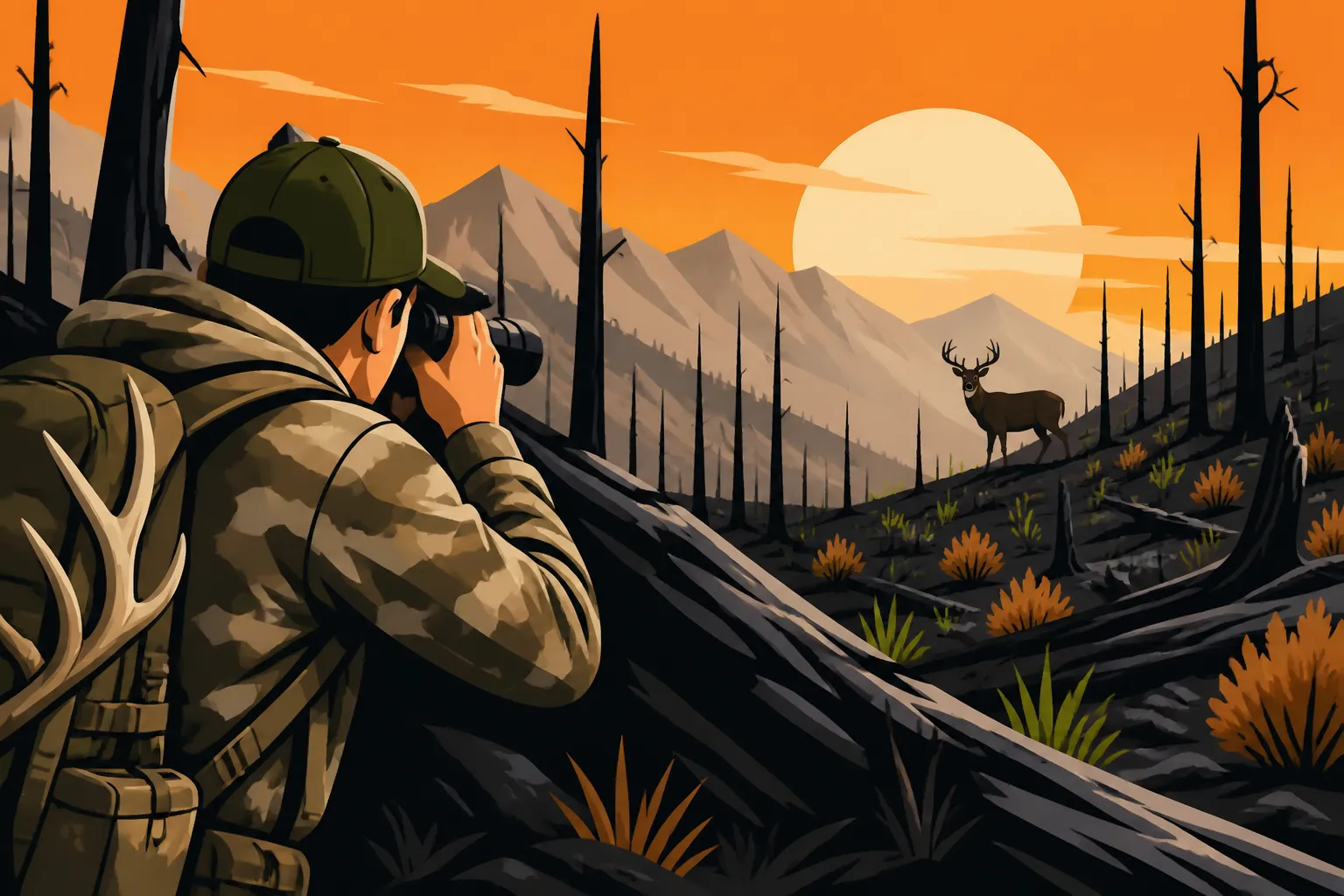
With the canopy removed, many burn scars offer incredible long-range visibility – a stark contrast to the thick timber of much of California's national forests. This makes glassing an incredibly effective strategy. Find a high vantage point that overlooks a large section of the burn, especially one with varying terrain and aspects. Set up with a good spotting scope and binoculars, and systematically pick apart the landscape.
Focus your glassing on:
- Edges: The transition zones where the burn meets unburned timber or chaparral. Animals will often move along these lines.
- Regrowth Patches: Lush green areas where forbs and browse are thriving. Deer, in particular, will be feeding here, often in the early morning and late evening.
- North-facing Slopes/Canyons: These areas often retain more moisture and cooler temperatures, making them attractive for bedding during hot days and providing more lush regrowth.
- Isolated Pockets of Cover: Any small patch of unburned timber or dense brush within the burn will be a magnet for bedding animals.
Take your time. Good glassing means sitting for extended periods, letting your eyes adjust, and looking for subtle movements or unnatural shapes. A successful Glassing a Canyon for a Bedded Buck often involves hours of patient observation. Use a tripod for your binoculars and spotting scope to minimize fatigue and maximize stability, allowing you to pick out the smallest details.
Still-Hunting Transition Zones: Edges, Unburnt Pockets
While long-range glassing is powerful, eventually you'll need to move in. Still-hunting becomes an art form in these dynamic environments. Focus your efforts on the transition zones – the edges where the burn scar meets untouched forest, or the fingers of unburnt timber that protrude into the burned area. These "fringe" areas offer game the best of both worlds: abundant new forage just steps away from dense cover.
Move slowly, taking a few steps then stopping for several minutes to observe and listen. The ash-covered ground can be surprisingly quiet in places, but also very crunchy with burnt debris in others. Pay attention to the wind, as scent is easily carried in open burn areas. Target draws, saddles, and ridge lines that act as natural travel corridors between feeding and bedding. In areas with significant standing dead timber (snags), be mindful of falling branches, especially on windy days. You might find that Still-Hunting California's Sierra Nevada Timber is a completely different experience when that timber is largely dead and open.
Ambush Points Near New Growth: Water Sources, Travel Corridors
Once you've identified consistent game movement through glassing or scouting, setting up an ambush can be incredibly effective. Animals will follow predictable patterns as they access new food sources, water, and bedding. Look for obvious funnels – narrow strips of cover, pinch points between steep terrain, or established game trails leading to water.
Water sources, especially during early archery seasons or hot rifle openers, are prime ambush locations. Seeps, springs, and even cattle troughs in remote areas can concentrate game. Set up downwind and with good cover, giving yourself clear shooting lanes. If hunting over a feeding area, consider setting up on a ridge overlooking it, allowing you to spot animals moving in and then plan a stalk or an intercept. Remember that animals in burn scars, especially those with reduced cover, tend to be warier. Approach your ambush spot well before first light, or stay until well after dark.
Gear and Safety Considerations in Burn Scars
Hunting burn scars isn't just about tactics; it's also about equipping yourself properly and prioritizing safety. The post-fire landscape presents unique challenges that can turn a great hunt into a dangerous ordeal if you're not prepared.
Navigating Hazards: Snags, Ash Pits, Unstable Ground
Burn scars are inherently dangerous places. The most immediate and often overlooked hazard is snags – standing dead trees. These trees, compromised by fire, can fall at any moment, especially on windy days or after heavy rains. Always be aware of your surroundings, and avoid setting up camp or spending extended periods under large snags. Listen for creaking and groaning sounds from the trees.
Ash pits are another serious danger. In areas where large logs or stumps burned deep into the ground, they can leave hidden pockets of superheated ash and embers beneath a seemingly solid surface. Stepping into one can cause severe burns. Test suspicious areas with a trekking pole.
The ground itself can be unstable. Slopes may be prone to erosion and rockslides, especially after rain. Roots that once held soil in place are now gone. Trails might be obliterated or covered in loose debris, making travel difficult and increasing the risk of falls. Always use trekking poles for stability, especially on steep terrain. Be extra cautious crossing streams or drainages, as banks might be undercut and unstable.
Essential Gear for Burn Scar Hunts: Boots, Navigation, Safety Kit
Your gear choices become even more critical in a burn scar.
- Boots: Invest in high-quality, sturdy boots with excellent ankle support and a stiff sole. The uneven terrain, loose ash, and hidden hazards demand superior protection. Boots designed for Best Boots for Steep Wet-Season Sierra Trails or rugged mountain hunting are ideal. Look for models like the Zamberlan Vioz GT or the Kenetrek Mountain Extreme.
- Navigation: While you might have better visibility, navigating the featureless expanse of a heavily burned area can be disorienting. A reliable GPS unit or a smartphone with a robust mapping app (like Gaia GPS or the GoHunt mapping platform) is essential. Download offline maps before you go, as cell service will likely be nonexistent. A physical map and compass are also crucial backups.
- First Aid Kit: A comprehensive first aid kit is non-negotiable. Burns, deep cuts from sharp debris, sprains, and dehydration are all real possibilities. Know how to use everything in your kit.
- Water: Pack more water than you think you'll need, especially during early season hunts in exposed burns. The intense sun reflection off scorched earth can quickly lead to dehydration. A water filter or purification tablets are also wise additions.
- Layered Clothing: Even with the openness, temperatures can swing wildly. Layered clothing allows you to adapt to warm days and surprisingly cold nights.
- Trekking Poles: As mentioned, these are invaluable for stability, testing ground conditions, and easing the strain on your knees.
Weather and Fire Risk: Awareness, Escape Routes
The weather plays a huge role in burn scar safety. Strong winds increase the risk of falling snags. Heavy rains can cause flash flooding in steep drainages and increase erosion. Always check the weather forecast before and during your hunt.
Perhaps the most critical safety consideration is ongoing fire risk. Burn scars are highly susceptible to re-burns, especially during dry seasons. A small spark from a campfire, a vehicle, or even a discarded cigarette could ignite a new blaze. Be acutely aware of fire restrictions and follow them rigorously. Have an escape plan. Know multiple routes out of the area and continuously scan the horizon for any signs of smoke, especially if winds pick up. If you see smoke, don't hesitate – prioritize your safety and evacuate. California's fire season is long, and vigilance is always necessary.
Species-Specific Approaches to Burn Scars
While burn scars offer general benefits, different game species will utilize them in distinct ways. Tailoring your approach to the specific animal you're pursuing will significantly increase your odds.
Deer Movement in Burn Scars: Bedding, Feeding Patterns
Deer, particularly Columbia blacktail and mule deer, are often the primary draw to burn scars in California. They are rapid colonizers of newly regenerated areas, drawn to the explosion of palatable forbs and browse.
- Feeding: Deer will actively feed in the open, lush areas of a burn, often favoring south-facing slopes in the early morning and late afternoon when the sun warms the new growth. In the middle of the day, they'll retreat to cooler, shaded areas. Look for fresh tracks and droppings in these areas.
- Bedding: Bedding will occur in any remaining cover: unburned islands of timber, dense patches of regenerating chaparral within the burn, or the shaded, thick areas of north-facing slopes and deep canyons. They'll also use subtle terrain features to break up their silhouette, even in seemingly open country. When Hunting a Ridge-Top Saddle at First Light, consider how the burn has altered traditional deer movement patterns and funneling.
- Travel: Deer will use the path of least resistance. Look for game trails running along the edges of burns, through saddles, or along ridge lines that offer cover on one side and feeding on the other. Water sources, even small seeps, will be key travel magnets.
Remember that deer in open burn scars are incredibly wary. Their primary defense is their eyesight, and with less cover, they'll be on high alert. Long-range glassing followed by a careful stalk is often the most effective method. Focus on taking advantage of terrain features, shadows, and the wind to close the distance undetected.
Bear Activity in Berry Patches: Early Season Foraging
California black bears are opportunistic omnivores, and burn scars offer them an incredible bounty, especially during the early seasons. As new plant growth emerges, so do berry-producing shrubs and forbs.
- Foraging: Bears will key in on areas with abundant berry crops like huckleberries, manzanita berries, and wild grapes that thrive with increased sunlight. They'll also dig for roots and grubs that might be easier to access in the softened soil. Look for overturned rocks, scat filled with berry seeds, and flattened patches of grass where bears have been feeding.
- Cover: While feeding in open berry patches, bears will typically stay close to dense cover for quick escapes. This might be a nearby patch of unburned timber or a thicket of brush that grew back quickly.
- Water: Like all game, bears need water. They'll frequent springs, creeks, and stock ponds within or adjacent to the burn.
Spot-and-Stalk California Bear Hunting Before the Quota Closes can be particularly productive in burn scars during the early archery or general season. Glass large, open berry patches at dawn and dusk, looking for the tell-tale black shape of a feeding bear. Be patient, as bears can spend hours in a good patch. Always be aware of the wind, and plan your stalk carefully to avoid detection. Given their keen sense of smell, approaching downwind is paramount.
Wild Pig Rooting in Regenerated Areas: Food Sources
Wild pigs are highly adaptable and will readily move into burn scars, especially those with good soil moisture and new plant growth. They are powerful excavators, and the softened ground after a fire makes rooting much easier for them.
- Food Sources: Pigs will root extensively for roots, tubers, grubs, and fungi that flourish in the post-fire environment. They'll also feed on the lush new grasses and forbs, particularly if acorn crops are low elsewhere. Look for large areas of disturbed soil (rooting) as a clear sign of their presence.
- Walllows: Puddles, seeps, or low-lying areas that collect water will often be used by pigs for wallowing, especially in hot weather. These wallows help them regulate body temperature and get rid of parasites.
- Cover: While they will feed in open areas, pigs prefer to bed in very dense cover. This might be in unburned pockets of chaparral or timber, or in the thickest regeneration within the burn scar.
- Travel: Pigs will create distinct trails as they move between feeding areas, water, and bedding. These trails are often deeply worn and easy to follow. Hunting Pigs Without a Closed Season in these areas can be productive year-round, as their dietary needs are consistently met.
Hunting pigs in burn scars often involves locating fresh rooting, then still-hunting into the wind towards suspected bedding areas, or setting up an ambush near known travel corridors or water sources. Their keen sense of smell makes wind direction critical, just like with bears.
Post-Fire Habitat Recovery and Long-Term Hunting
The story of a burn scar doesn't end after a few years of great hunting. It's an ongoing narrative of ecological succession, and understanding these long-term changes is crucial for sustainable hunting success. As the decades pass, the habitat will continue to evolve, offering new challenges and requiring different strategies.
The Cycle of Regeneration: From Pioneer Plants to Mature Forest
The journey of a burn scar from scorched earth to mature forest is a fascinating ecological cycle. It typically follows these stages:
- Early Succession (1-5 years post-fire): This is often the prime hunting window. Nutrient-rich ash fuels an explosion of annual grasses, wildflowers (forbs), and fast-growing pioneer shrubs like ceanothus and manzanita. Sunlight penetrates deep, making these areas incredibly productive for deer, elk, and bears. Visibility is often excellent, favoring glassing and long-range shooting.
- Mid-Succession (5-20 years post-fire): Shrubs mature and become dense, forming thick, often impenetrable stands. Young trees, like pines and firs, begin to establish and grow taller. This phase can be challenging to hunt. While it provides excellent cover and continued browse, the density makes movement and visibility difficult. Animals might use these areas more for bedding and escape cover. Hunting shifts to focusing on the edges of these thickets or finding game trails through them.
- Late Succession (20+ years post-fire): The forest begins to re-establish. The tree canopy closes, shading out much of the understory that thrived in the early years. The dominant forage shifts from abundant grasses and shrubs to less nutritious, older growth. Hunting in these areas might resemble traditional timber hunting, focusing on mast crops (like acorns), small openings, and riparian zones.
Understanding this cycle helps you predict where game will be concentrated at different stages. A burn that was a deer magnet five years ago might be a thick, brushy bear haven today, or a slowly recovering timber stand in another ten years. This dynamic nature means that successful burn scar hunters are always learning and adapting.
How Different Fires Impact Long-Term Hunting Opportunities
Not all fires are the same, and their intensity and footprint directly influence the long-term hunting prospects.
- High-Severity, Stand-Replacing Fires: These are catastrophic events that kill most trees and consume all ground vegetation. While they offer an initial flush of growth, the long-term recovery to a mature forest can take many decades, even centuries. These areas might remain shrub-dominated for extended periods, favoring species like blacktail deer that thrive in chaparral, or potentially reducing habitat for deep timber dwellers. Hunting these areas will require navigating dense brush fields for a very long time, such as when Hunting Coastal Range Oak Woodlands after a significant fire event.
- Low to Moderate Severity, Patchwork Fires: These fires are more natural and beneficial for the ecosystem. They create a mosaic of burned and unburned areas, promoting biodiversity and maintaining a mix of open and covered habitat. These are often the most consistently productive burns for hunting over the long term, as they maintain varied forage and cover. Animals can easily move between the two. These fires also often lead to healthier forests more resilient to future high-intensity fires.
- Prescribed Burns: These are intentionally set fires managed by agencies like the Forest Service or CDFW to reduce fuel loads and improve habitat. They are designed to mimic natural low-intensity fires and often create ideal hunting conditions by clearing out underbrush and promoting new growth. Keep an eye on forest service maps for planned burns, as these can create fantastic future hunting grounds.
The size of the burn also matters. A smaller, isolated burn might be productive for a few years, but a massive, landscape-altering fire can shift animal populations and hunting patterns for generations. Staying informed about fire history in your preferred hunting areas is a critical part of being a successful and ethical California hunter.
Adaptations for Future Seasons: Monitoring Regrowth and Population Shifts
As a hunter, your work doesn't stop after the season closes. To continue finding success in burn scars, you need to become a student of the landscape.
- Ongoing Satellite Monitoring: Periodically check satellite imagery for the burns you hunt. You can observe the progression of regrowth, identify areas where shrubs are thickening, or where young timber is starting to shade out the understory.
- Forest Service Updates: Stay in touch with your local national forest ranger district. They can provide updates on forest health, road conditions, and any new prescribed burns or ecological restoration projects.
- Game Population Trends: Over time, if a burn scar drastically changes the habitat, it can lead to shifts in game populations. A long-term shrub field might favor blacktail deer, while a regenerating conifer forest might see a return of more mule deer. Pay attention to harvest reports and any biological surveys from CDFW, especially concerning California Deer Population Estimate in affected zones.
- Personal Observation: Nothing beats direct observation. Even if you're not hunting, take scouting trips to your burn scars throughout the year. Watch how the vegetation changes, where new trails emerge, and how animals are using the evolving landscape. This firsthand knowledge is irreplaceable.
By continuously adapting your scouting and hunting strategies to the changing nature of burn scars, you can unlock incredible opportunities in California's unique and dynamic hunting environments.
Disclaimer
Please remember that hunting regulations, seasons, and access can change. Always consult the latest California Department of Fish and Wildlife (CDFW) regulations and specific national forest rules before planning any hunt. Safety is paramount when hunting in burn scars; be aware of your surroundings, potential hazards, and fire danger.