Hunting a Late-Opening High-Country Zone
The California high country in late fall can be an incredibly rewarding place to hunt, but it presents a unique set of challenges compared to those earlier, warmer seasons. If you're holding a tag for a zone that opens later in the year, or even extends into November, you're looking at a completely different landscape, different deer behavior, and definitely different weather. This guide will walk you through what to expect and how to prepare for a successful hunt when the mountains are showing their true colors, tackling the specific demands of these late-opening high-country opportunities.
Understanding Late-Opening High-Country Zones in California
Hunting deer in California's high country is a time-honored tradition, but when the season stretches into late October or even November, the game changes dramatically. These later seasons, often found in specific D-zones and X-zones, coincide with the onset of winter weather and, crucially, the beginning of deer migration from their high-elevation summer ranges to lower, more sheltered wintering grounds. This timing can be both a blessing and a curse, offering opportunities to intercept moving deer but also demanding far more preparation and grit from the hunter.
The Shifting Landscape and Deer Behavior
As autumn progresses, the high country transforms from lush summer feeding grounds into a harsh, unforgiving landscape. The vibrant greens give way to the golden hues of aspens and oaks, quickly followed by barren rock and snow-dusted peaks. This change in scenery is a direct result of plummeting temperatures and the increased likelihood of early snowstorms. For deer, especially California's mule deer and high-country blacktails, this signals a critical shift in their annual cycle: the migration. They begin to move from their isolated, high-elevation summer areas down into more accessible, lower-elevation winter ranges where food and shelter are more abundant. This mass movement, often triggered by significant cold fronts or heavy snowfall, concentrates deer into predictable corridors, offering a unique opportunity for hunters positioned correctly. Understanding this natural phenomenon is key to successfully Hunting California's High-Country X-Zones or any late-season mountain tag.
Identifying Your Zone's Specific Challenges
Not all late-opening zones are created equal, and it's vital to research the specific characteristics of your tag area. Some zones, particularly those in the Eastern Sierra or parts of the northern D-zones, are much higher in elevation and susceptible to early, heavy snowfall, which can push deer down quickly. Other zones might be slightly lower, experiencing cold but less dramatic weather, leading to a more gradual migration. Regulations can also differ, with some late-opening tags being highly sought-after draw tags (like certain X-zones) while others might be over-the-counter D-zone tags that extend into late fall. Knowing whether your zone is prone to a sudden, dramatic "snow event" migration or a more subtle, trickle-down movement will inform your scouting and hunting strategies. Using resources like the CDFW hunting app or online mapping tools can help identify the typical elevation bands and access points for your specific California's Multi-Zone Deer Season System unit.
Pre-Season Scouting and Preparation for High-Country Hunts
Successful late-season high-country hunting starts long before opening day. Unlike earlier seasons where deer might be spread out, the late season requires a more focused approach, anticipating where deer will be when the weather turns. This means a heavy emphasis on digital scouting, intelligence gathering, and rigorous physical preparation.
Digital Scouting and Intelligence Gathering
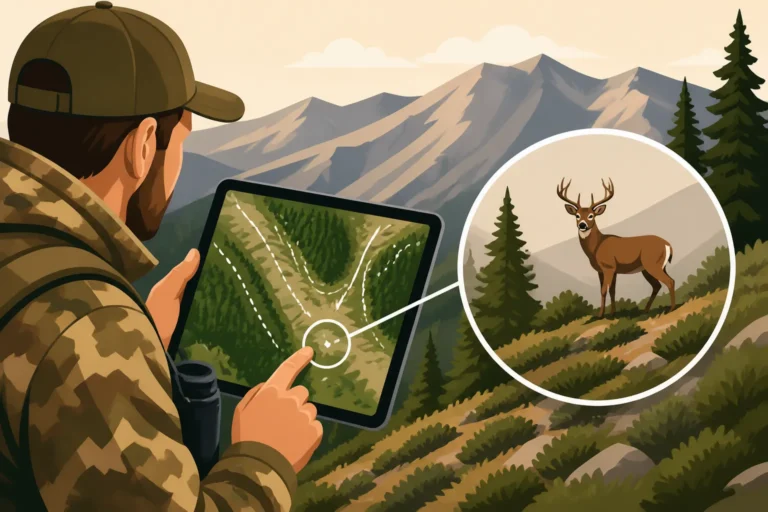
The beauty of modern technology allows us to scout vast areas from the comfort of our homes, a crucial advantage when tackling remote, high-country terrain. Utilizing mapping applications like onX Hunt or GoHunt becomes indispensable. These platforms allow you to analyze topography, identify potential migration corridors, locate traditional wintering grounds, pinpoint south-facing slopes (which shed snow faster and get more sun), and mark potential glassing knobs or pinch points. You can overlay public land boundaries, historical burn scars (Hunting a National Forest Burn Scar can be productive), and even examine past weather patterns to predict when deer might be forced down.
It's not just about looking at maps, though. GoHunt offers valuable draw odds and detailed unit breakdowns, often providing insights into typical deer movement within specific zones, including migration timing. Studying historical weather data for your hunting area can give you an idea of when to expect significant snowfall that might trigger a major migration event. Pay attention to forums and local reports, but always cross-reference information with your own map reconnaissance. Identifying potential "escape routes" or "staging areas" for deer as they descend from higher elevations is paramount. This type of detailed map work helps you understand where to position yourself once the season arrives, especially when Reading Aerial Photos for Sierra Deer to pick out subtle terrain features that might funnel game.
Physical Conditioning and Route Planning
Hunting the high country in late fall is physically demanding, perhaps more so than any other type of deer hunting in California. You'll be dealing with higher altitudes, potentially freezing temperatures, strong winds, and the added resistance of snow or mud underfoot. Simply put, if you're not in excellent physical condition, you'll struggle to cover ground effectively and safely. Start a rigorous training regimen months in advance, focusing on cardio, leg strength, and endurance. Simulating hunting conditions with a weighted pack on steep inclines is an excellent way to prepare.
Beyond physical conditioning, meticulous route planning is essential. Consider ingress and egress points, potential bail-out routes in case of sudden, severe weather, and sources of water (which might be frozen). Having multiple plans for different weather scenarios is critical. What if an unexpected foot of snow falls overnight? Do you have an alternative route to get out, or to access lower-elevation staging areas? Mark emergency shelters, defensible positions, and possible glassing points on your maps. Think about where you'll stage your camp, whether it's a spike camp in a remote basin or a vehicle-accessible base camp lower down. A well-thought-out plan, combined with peak physical fitness, will significantly increase your chances of success and, more importantly, your safety.
Effective Hunting Strategies for November High-Country Deer
Once you've done your homework and gotten in shape, it's time to talk tactics. Hunting late-opening high-country zones requires a flexible strategy that can adapt to rapidly changing conditions and capitalize on deer movement. The key is understanding why deer are moving and being in the right place at the right time.
Adapting to Migration Patterns
The single most critical factor in late-season high-country hunting is understanding and adapting to deer migration. Deer move primarily for two reasons in late fall: food availability and weather. As the high country gets buried under snow, food sources become scarce, forcing deer to lower elevations where forage like bitterbrush, mahogany, and residual acorns might still be accessible. Focus your scouting on these Late-Season Food Sources for California Deer at the edge of the winter range. Furthermore, a significant cold front or heavy snowfall will trigger an immediate push downslope.
Your strategy should revolve around intercepting these migrating deer. Focus on natural funnels: saddles between ridges, low-elevation passes, drainages, and areas where open country gives way to timber. These are the highways deer use to travel from summer to winter range. Spend time on high vantage points glassing these corridors, especially during the first few days after a major weather event. Deer are often single-minded during migration, making them less wary if you can position yourself ahead of their movement. Be mindful of Wind and Thermals in Steep Sierra Country, as these play an even more critical role when deer are traveling through specific funnels. They will use the wind to their advantage, and so should you.
Glassing and Still-Hunting in Cold Conditions
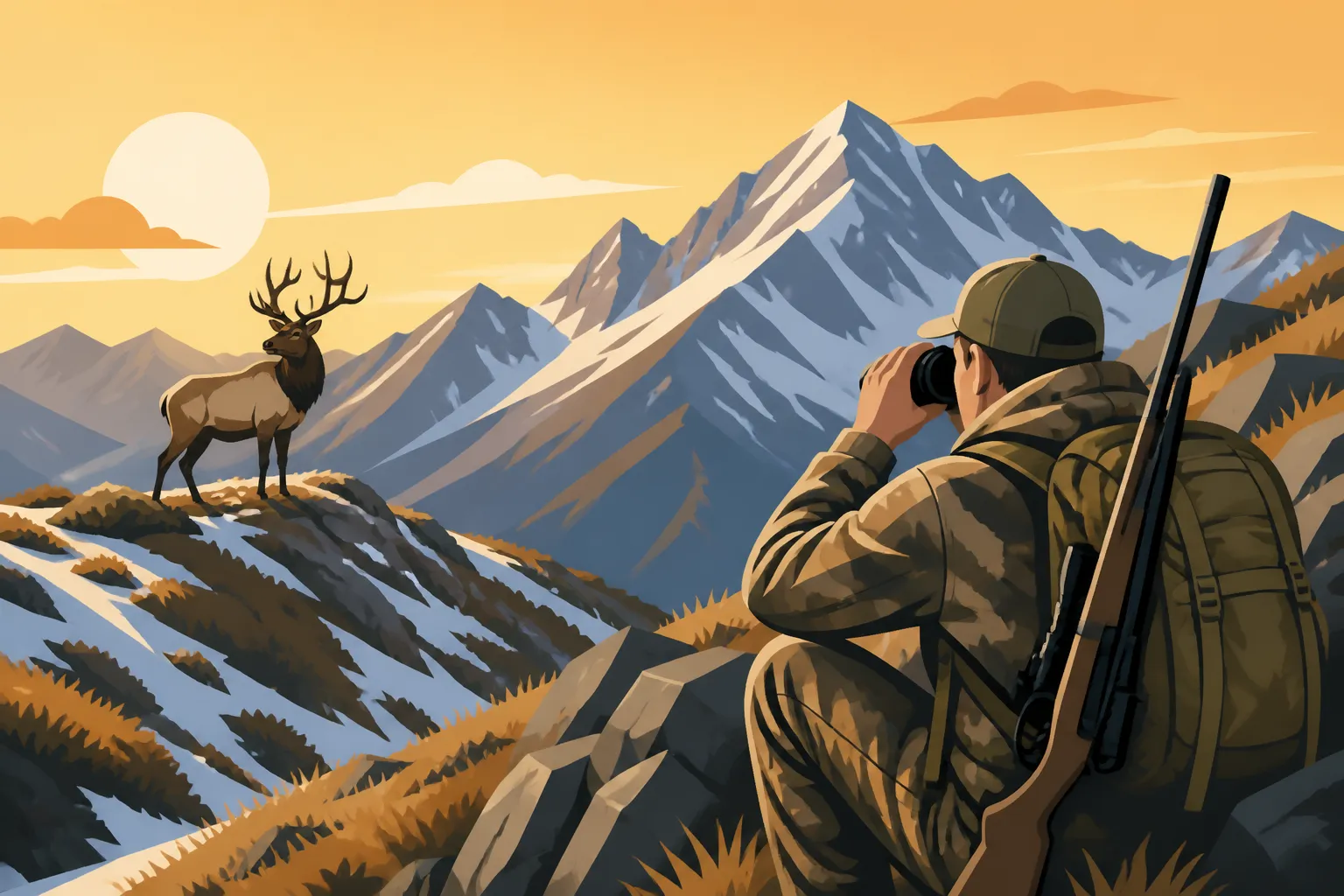
Glassing remains a dominant and highly effective strategy in the high country, especially as deer begin to move. Find a commanding vantage point that overlooks migration corridors, south-facing slopes, and areas with dense pockets of cover that deer might use for bedding or staging. Early mornings and late evenings are prime times, as deer will be most active, but migrating deer can be on the move all day. Utilize high-quality binoculars and spotting scopes for Glassing Mule Deer in Open California Country, methodically picking apart every bit of cover. Pay close attention to subtle movements, the flick of an ear, or a patch of hide that looks out of place. After a cold front, deer will often seek the first available sun, making these sunny slopes excellent spots to glass.
When conditions don't favor long-range glassing, or when you're hunting timbered migration routes, still-hunting becomes incredibly effective. Move slowly, taking one or two steps, then pausing for several minutes to scan for deer. This deliberate pace allows you to pick up subtle sign, anticipate deer movement, and react to any sudden sightings. The quiet of a snow-dusted forest or a crisp, cold morning can amplify sounds, but it also allows you to move with less noise. Focus on walking into the wind, especially when Hunting a Deer After a Cold Front, as deer will often be seeking shelter from the elements. Remember that deer will often move with greater urgency in late season, meaning they might present themselves for a shorter window than in early fall. When Hunting Into a Late-November Zone Close, the pressure can be high, and deer will be extra cautious, making slow, methodical movement even more important.
Gear and Logistics for Cold Weather, High Elevation Hunts
The gear you choose for a late-opening high-country hunt can literally make or break your trip. This isn't the time for lightweight, fair-weather equipment. You need reliable, robust gear designed to keep you warm, dry, and safe in potentially extreme conditions.
Essential Cold Weather Gear and Layering
Layering is not just a suggestion; it's a survival imperative in the high country when temperatures can swing wildly from below freezing to mild, or drop precipitously with the wind. Start with a moisture-wicking base layer (merino wool or synthetic, never cotton) to pull sweat away from your skin. Next, add insulating mid-layers like fleece or puffy down/synthetic jackets. For your outer shell, invest in a high-quality waterproof and windproof jacket and pants (GORE-TEX or similar). These will be your primary defense against rain, snow, and bitter winds. Don't forget extremities: a warm wool or synthetic hat, a balaclava, insulated gloves, and warm, waterproof boots are critical. Your boots should be broken in, insulated, and capable of handling snow and ice. Consider gaiters to keep snow out of your boots and off your pant legs. When it comes to Layering for a Cold Sierra Morning, always plan for colder conditions than forecast; it's easier to shed a layer than to conjure one.
| Gear Category | Early Season (August-Sept) | Late Season (Oct-Nov) |
|---|---|---|
| Outerwear | Lightweight, breathable softshell/rain jacket | Heavy duty waterproof/windproof shell (GORE-TEX) |
| Insulation | Light fleece or vest | Puffy down/synthetic jacket, heavy fleece |
| Base Layers | Lightweight, moisture-wicking | Mid-to-heavyweight merino wool/synthetic |
| Footwear | Uninsulated hiking boots | Insulated, waterproof hunting boots, gaiters |
| Headwear | Ball cap, wide-brim hat | Insulated beanie, balaclava, neck gaiter |
| Gloves | Light shooting gloves | Insulated, waterproof gloves/mittens, liner gloves |
| Sleeping Bag | 30-40°F rated | 0-15°F rated (or colder, depending on elevation) |
| Tent | 3-season | 4-season (or robust 3-season) |
Optics, Weapons, and Safety Considerations
Your optics need to be top-notch for late-season high-country hunting. Bright, clear binoculars (10×42 or 12×50) are essential for long glassing sessions. A quality spotting scope (15-45x or 20-60x) will help you evaluate deer from a distance, crucial for judging legality and minimizing unnecessary stalk attempts. A reliable rangefinder is also a must-have, especially when making difficult shots across canyons; consider one optimized for Best Rangefinder for Sierra Canyon Shots. Ensure all optics are waterproof and fog proof.
For your weapon, California's non-lead ammunition requirement is non-negotiable. Practice with your chosen non-lead load, ensuring your rifle is accurately zeroed, as copper bullets can sometimes have different ballistic characteristics than traditional lead. Understanding the Best Non-Lead Bullet Weight for Mule Deer will optimize terminal performance. Your rifle should be reliable in cold and wet conditions.
Safety is paramount. Carry a fully charged GPS device or a reliable mapping app like onX Hunt on your phone, along with a portable charger. A satellite communicator (Garmin inReach, Zoleo) is a non-negotiable item for remote areas where cell service is non-existent; it's your lifeline in an emergency. Always pack a comprehensive first-aid kit, fire-starting materials, and extra food and water. If you're going deep, a sturdy pack frame is critical for packing out meat. Consider durable, high-volume models, possibly similar to Packs for a Multi-Day California Backcountry Elk Hunt, as a quartered deer will be heavy and awkward. Always tell someone your exact hunting plans and expected return time. The high country in late fall is stunning, but it demands respect and thorough preparation.
Disclaimer
The information provided in this guide is for general informational purposes only. Hunting regulations and conditions can change rapidly. Always consult the latest California Department of Fish and Wildlife (CDFW) regulations, check for emergency closures, and prioritize safety above all else when planning and executing your hunt.