Hunting the Thirty-Day Fall Archery Turkey Season
The California fall archery turkey season can feel like a completely different animal compared to the boisterous spring hunts. Gone are the days of aggressive gobbling and easy-to-locate birds. Instead, you're faced with flocked-up, wary turkeys whose priorities have shifted from breeding to survival and feeding. This guide will meticulously walk you through the unique challenges and rewarding opportunities of California's thirty-day fall archery turkey season, helping you develop effective tactics, understand distinct bird behavior, and dial in your gear for success in this often-overlooked pursuit.
Understanding the Fall Archery Opportunity
California offers a fantastic window for archers to pursue turkeys long after the spring excitement fades. This isn't just a consolation prize; it's a distinct hunting experience that rewards different skills and a deeper understanding of turkey ecology. For many, it's a chance to extend their season and tackle a truly challenging game animal with traditional methods.
Season Dates and Specific Archery Regulations
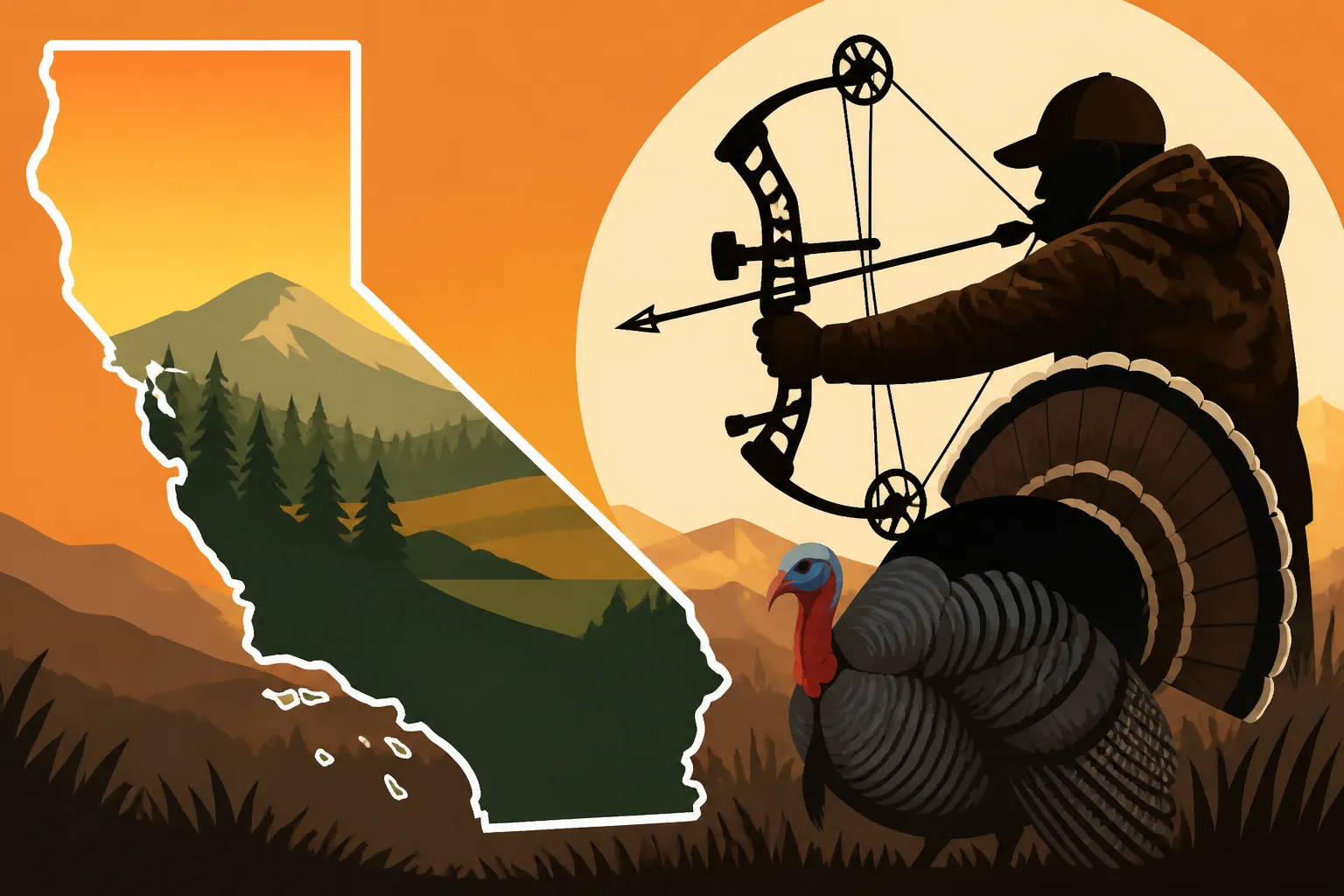
California's fall archery-only turkey season typically kicks off in late August or early September and runs for a continuous thirty days. The exact dates can shift slightly each year, so always check the latest California Department of Fish and Wildlife (CDFW) regulations. Unlike the general fall season which might allow shotguns, this specific period is strictly for archery equipment. That means bows, crossbows, and arrows, and no firearms are permitted for taking turkeys. This restriction forces hunters to get incredibly close to their quarry, elevating the challenge and the satisfaction of a successful harvest. It’s critical to remember that legal archery equipment rules apply, which means specific draw weights and broadhead requirements. For a complete rundown, refer to the official California Turkey Season Rules and details on Archery-Only Fall Turkey Hunting in California.
The bag limit during the fall season is usually one bird per day, and up to two birds for the entire fall season. However, unlike the spring season where specific rules might apply to bearded birds only, in the fall, you can typically harvest any legal turkey, including hens. This opens up different strategic possibilities, especially when dealing with large, mixed-sex flocks. Always confirm these details in the current hunting regulations before heading afield, as rules can occasionally be updated.
Contrasting Fall Archery with Spring Hunts
If you’re primarily a spring turkey hunter, approaching the fall season requires a complete mindset shift. In spring, turkeys are driven by breeding instincts. Gobblers are vocal, strutting, and actively seeking hens, making them somewhat predictable to locate and call in. Hunters often rely on shock gobbling and aggressive calling to bring birds into range. It’s an exciting, fast-paced game of communication and deception.
Fall turkeys, however, are a different beast. The breeding season is long over, and their primary motivations are food, water, and safety. Birds are often flocked up, sometimes in massive groups of hens and poults, or in smaller, secretive bachelor groups of toms. These flocks can be incredibly wary and quiet, making them much harder to locate by sound alone. Instead of vocalizations, hunters must now rely heavily on scouting, keen observation, and understanding the birds' daily routines. The challenge shifts from luring an amorous gobbler to breaking up a flock and calling individual birds back to reassemble. It's a game of patience and subtlety, demanding a different set of skills from the archery hunter. The sheer quietness of fall birds compared to the boisterous spring is a key distinction, as is the opportunity to potentially harvest a hen, which is generally not allowed in spring. This fundamental difference in behavior is why a different approach is absolutely necessary for success.
Decoding Fall Turkey Behavior
Success in the fall archery turkey season hinges on a deep understanding of how turkeys behave once the mating rituals are done. Their motivations, their daily patterns, and their responses to calls are all dramatically different. Forget what you know about chasing spring gobblers; it's time to learn the fall playbook.
Post-Breeding Season Dynamics: Flocking and Social Structures
Once late summer rolls around and the breeding season is a distant memory, turkeys revert to their highly social, flocking nature. You'll typically encounter two main types of groups. The most common are the hen and poult flocks, which can sometimes number in the dozens, or even hundreds, moving across the landscape together. These groups are generally led by one or more experienced hens, and the young poults from various broods will have combined, forming these large, often chaotic, but incredibly wary mobs. They are constantly looking for food and maintaining security, making them very difficult to approach undetected.
Then you have the bachelor groups of toms. These are generally smaller, consisting of two to ten adult or jake gobblers who have regrouped after the spring. They tend to be even more cautious and nomadic than hen flocks, often sticking to thicker cover or higher ground, though they will come down to feed. Unlike the spring when toms are vocal and boastful, these fall bachelor groups are typically silent, focused purely on finding calories and avoiding predators. Understanding these distinct social structures is critical because your tactics will vary greatly depending on whether you encounter a hen-poult flock or a group of silent toms. Recognizing these social dynamics is also important when considering When California Gobblers Go Quiet in Late Spring as a comparison point to fully grasp the change in their behavior.
Food Sources and Roosting Patterns
In the fall, turkeys are calorie-driven machines. Their primary goal is to pack on fat reserves for the coming winter. This means their movements are almost entirely dictated by available food and water. Acorns are king in California's oak woodlands, so finding active oak flats with a good mast crop is often the key to locating birds. If it's been a poor acorn year, they might shift to other food sources like wild grapes, grass seeds, insects, or even agricultural fields such as cut grain or alfalfa. Understanding the local forage availability is paramount.
Turkeys will also follow a fairly predictable routine: roosting in tall trees at dusk, flying down at dawn to feed, often hitting water sources mid-morning, loafing in midday shade, and then feeding heavily again in the late afternoon before returning to their roosts. Their roosting sites are typically mature trees near a water source or on a ridge line, offering safety and good visibility. Scouting these patterns and finding their preferred feeding areas are far more productive than just randomly calling. Using a mapping app like GoHunt can be invaluable here, allowing you to identify oak groves, water sources, and potential travel corridors from aerial photos before you even step foot in the woods. Pay close attention to droppings, scratch marks in the leaves, and dusting bowls – these are all indicators of active turkey use.
The Art of Breaking Flocks
This is arguably the most effective and classic fall turkey hunting tactic. When you encounter a large flock, the goal isn't necessarily to call them in as a group, but to scatter them first. Turkeys, being highly social animals, have an innate drive to regroup once separated. The louder and more dramatically you can break them up, the better. This usually involves charging directly into a feeding or loafing flock, yelling, waving your arms, and making as much noise as possible. The aim is to send them flying or running in every direction, ideally forcing them to lose sight and sound of each other.
Once the dust settles, wait patiently – often 30 minutes to an hour. Then, begin with soft, reassuring "assembly" calls: a series of lost hen yelps, kee-kees (especially effective for scattered poults), and clucks. These calls tap into their instinct to find their flock mates. The trick is to sound like an individual turkey trying to regroup, not a whole flock. Set up in the area where you scattered them, ideally with good visibility and clear shooting lanes for your bow. The most desperate birds, usually the younger poults or a lonely hen, will often be the first to respond and come cautiously to your calls, offering a shot opportunity. This tactic takes guts and patience, but it is incredibly effective for fall archery.
Archery-Specific Tactics for Fall Turkeys
Archery hunting for fall turkeys adds another layer of challenge. Your shot range is limited, demanding closer encounters and precise shot placement. This means your approach, setup, and calling must be even more refined than with a shotgun.
Ambush Strategies Near Food and Water
Since fall turkeys are so food-driven, ambushing them along their daily routes is a highly effective archery tactic. After thorough scouting, identify their preferred feeding areas, water sources, and the travel corridors they use to move between them. These corridors might be natural funnels, faint game trails, or open edges between different cover types. Setting up an ambush involves finding a location with good cover that offers clear, close-range shooting lanes.
Consider areas where oak trees are actively dropping acorns, or where turkeys are scratching for insects. Water holes or seeps, especially in dry California conditions, are also magnets for birds. A pop-up blind can be incredibly useful for concealing your movement and allowing for precise shot execution, especially when you need to draw your bow. Setting up against a natural backdrop like a large oak tree or dense brush, just off their anticipated travel path, allows you to remain hidden. Patiently waiting for them to walk into your bow range, often without calling, can be a deadly strategy. This kind of thoughtful setup is crucial whether you're deer hunting or chasing turkeys, drawing parallels to tactics like Setting Up Against a Big Valley Oak.
Decoying in Fall Situations
Decoys can still play a role in fall turkey hunting, but their application is different from spring. You're not trying to entice a strutting gobbler to fight a rival. Instead, you're trying to provide a visual reassurance to a bird that is trying to regroup or simply a natural-looking target to distract a wary flock. A single hen decoy or a lost poult decoy can be very effective, especially after scattering a flock. Place it within your bow range, angled slightly away from your expected approach direction of the birds, so their attention is on the decoy, not you.
Avoid aggressive gobbler decoys unless you're specifically targeting a bachelor group that you believe might be looking for dominance, which is less common in the fall. Sometimes, no decoy is better than the wrong decoy. If you've scattered a flock and are using lost-poult calls, a simple hen decoy can provide a visual anchor for any responding birds. Experiment with placement and numbers; sometimes just one or two decoys are enough. Always consider the sun's angle to prevent glare on your decoy, and review tips on Decoy Placement for Pressured California Birds for general advice that applies to any season.
Mastering the "Lost Poult" Call
The kee-kee run is the quintessential fall turkey call. It imitates the plaintive whistle of a lost young turkey trying to find its flock. This call, often followed by a few soft clucks or yelps, can be irresistible to scattered birds, particularly hens and poults. To make a kee-kee run, you typically use a diaphragm call, producing a series of high-pitched, clear whistles that rise and fall in volume. Practice this call until it sounds natural and desperate.
After scattering a flock, position yourself in the scatter zone and remain quiet for 20-30 minutes. Then, start with a few soft kee-kees, waiting patiently for a response. If nothing, increase the volume slightly. This call taps into the turkeys' strong social instinct to reassemble. When a bird responds, match its intensity and timing. Sometimes they will come in silent, so constant vigilance is key. Other calls like soft clucks and purrs can also be useful for reassuring a bird that is close but hesitant. Don't be afraid to try some soft Grunt Calls in Coastal Oak Timber if you believe there are some toms or jakes in the area, adapting the principle to turkey behavior.
Spot-and-Stalk Considerations
While often associated with deer or elk, spot-and-stalk can be surprisingly effective for fall turkeys, particularly if you encounter small, silent bachelor groups of toms, or if you find a flock feeding in open terrain. The key is to use terrain features, dense cover, and the wind to your advantage to close the distance. This is where a good pair of binoculars and a spotting scope become indispensable.
Spend time glassing from a distance, trying to pinpoint the direction of travel, feeding patterns, and any potential obstacles. Once you have a plan, move slowly and deliberately, staying low and using every bit of available cover. Check your wind constantly; turkeys have an incredible sense of smell, though not as acute as a deer, and will bust you if they catch your scent. The biggest challenge is their eyesight – a turkey’s vision is legendary. Any sudden movement, even at long range, can send them scurrying. If they spot you, freeze. Often, they will only identify movement, not a specific shape. This is a tactic that requires extreme patience and precision, aiming to get within 20-30 yards for a clean archery shot.
Essential Gear and Pre-Season Prep
Being prepared is half the battle, especially when you're relying on archery equipment in the demanding fall turkey woods. Your gear needs to be reliable, and your scouting efforts must be thorough to maximize your chances.
Archery Equipment Check-Up
Before hitting the woods, give your archery setup a thorough inspection. Ensure your bow is properly tuned, your arrows are straight, and your broadheads are razor-sharp. For turkeys, shot placement is absolutely critical due to their small vital zone. A sharp, well-flying broadhead designed for maximum cutting diameter can make all the difference in achieving a clean, ethical harvest. Expandable broadheads are popular for turkeys because they create a large wound channel and can be very forgiving on marginal hits, though fixed-blade broadheads are equally effective with precise placement. Make sure your broadheads are compatible with your arrow and bow setup, and practice with them extensively to confirm flight accuracy. Consider what is recommended for Broadhead Choices for California Blacktail as a good starting point for general broadhead knowledge, and apply the principles to turkey.
Also, check your bowstring, cables, and all accessories for wear and tear. A squeaky rest or a loose sight pin can ruin an otherwise perfect setup. Lubricate any moving parts that might make noise. Remember, quietness is paramount in archery hunting, especially for wary turkeys.
Optics and Scouting Tools
In the fall, your ears won't do much good for locating silent turkeys. This is where quality optics become your best friend. A good pair of 10×42 binoculars are essential for long-range glassing, helping you identify flocks, observe their movements, and pick out individual birds from afar. If you're hunting more open country or want to scrutinize birds at extreme distances, a spotting scope can be incredibly helpful for identifying specific food sources they're using or confirming a tom from a hen.
Beyond physical optics, digital scouting tools are non-negotiable. Mapping apps like GoHunt offer invaluable features for pre-season scouting and in-field navigation. Using the advanced satellite imagery on GoHunt, you can identify potential roosting areas, oak flats, water sources, and natural funnels without ever leaving your home. You can mark waypoints for promising locations, measure distances, and understand terrain features that will influence bird movement. This kind of detailed planning, much like Scouting California Public Land Before Season for deer, is critical for pinpointing where turkeys are likely to be found when the season opens. Having these maps downloaded for offline use is also crucial, as cell service can be spotty in remote California hunting areas.
Clothing and Concealment
Turkeys have incredible eyesight, with a nearly 360-degree field of view and excellent color perception. This means your clothing and concealment need to be top-notch. Full camouflage is essential, covering every exposed bit of skin, including your face and hands. A face mask or face paint, along with gloves, will break up your human outline. Choose camo patterns that match the predominant vegetation of your hunting area in the fall – often a mix of tans, browns, and muted greens for oak woodlands or chaparral. Consider the advice for Best Camo for Oak Woodland in August which aligns perfectly with fall turkey season.
Layering is also important, as fall mornings can be cool, but midday temperatures can rise significantly, especially in California. Being able to shed or add layers quietly is a huge advantage. Opt for quiet, brush-resistant fabrics that won't rustle as you move or draw your bow. Finally, remember that movement is a turkey's biggest detector. Once you're set up, minimize all motion, especially when birds are within sight. Practice drawing your bow slowly and silently, ensuring no part of your clothing snags or makes noise.
Fall Turkey Hunting Comparison
Here's a quick comparison to highlight the key differences between spring and fall turkey hunting in California.
| Feature | Spring Turkey Hunting | Fall Turkey Hunting |
|---|---|---|
| Bird Behavior | Gobblers actively seeking hens; breeding focus. | Flocked-up (hens/poults, bachelor toms); food/survival focus. |
| Calling Strategy | Aggressive gobbler calls, hen yelps to attract toms. | "Lost poult" kee-kees, soft assembly yelps after scattering. |
| Primary Goal | Lure gobbler into range with breeding calls. | Scatter flock, then call individuals back. |
| Vocalization | High gobbling activity, easier to locate birds. | Generally quiet, difficult to locate by sound. |
| Harvestable Bird | Typically bearded birds only. | Any legal turkey (tom, hen, jake, poult). |
| Key Tactic | Calling, decoying strutting toms. | Scouting food sources, ambushing, flock scattering. |
| Scouting Focus | Roosts, gobbling locations. | Food sources (acorns), water, travel corridors. |
Disclaimer
Hunting involves inherent risks, and conditions can change rapidly. Always prioritize safety, adhere to all local, state, and federal regulations, and practice ethical hunting principles. The information provided here is for educational purposes and should not replace official CDFW regulations or professional guide advice. It is your responsibility to know and follow all current laws and ensure you possess the necessary licenses and tags before heading afield.