Running a Trapline in Rural California
Running a trapline in rural California can feel like navigating a maze, especially with the state's intricate regulations and diverse landscapes. It's not like the trapping you might see on TV in other states; here, you've got specific rules, limited legal species, and often challenging terrain. This guide is designed to cut through the confusion and provide you with a realistic, in-depth look at what it truly takes to successfully and legally run a trapline in the Golden State, from understanding the permits to mastering the art of the set.
Understanding California's Trapping Regulations
Before you even think about setting your first trap, you absolutely must wrap your head around California's trapping laws. This isn't a state where you can just buy a few traps and head into the woods. The rules are strict, and ignorance is definitely not bliss when it comes to potential fines or legal trouble. It's frustrating, I know, but taking the time to understand these nuances is the most critical step.
License and Permits Required
First and foremost, anyone engaging in commercial trapping activities in California needs a specific trapping license. This isn't covered by a general hunting license. You’ll need to apply directly through the California Department of Fish and Wildlife (CDFW). The application process involves demonstrating knowledge of trapping laws and techniques, often through a written exam. This ensures that trappers understand their responsibilities and the humane treatment of animals, which is a major focus of California wildlife management. Beyond the base license, if you plan to trap specific furbearers like bobcats or foxes, there might be additional permits or reporting requirements. For instance, bobcats require a special tag, and their harvest is meticulously tracked. You can find detailed information on the official CDFW website about the specific requirements for a California Trapping License. Keep in mind that these requirements can change, so always check the most current regulations before the season.
Legal Species and Seasons
This is where California trapping differs significantly from many other states. The list of legal furbearers you can trap for commercial purposes is relatively short and specific, primarily focusing on species that aren't considered threatened or endangered and whose populations can sustain regulated harvest. Generally, you’re looking at species like beaver, muskrat, gray fox, raccoon, opossum, coyote, and skunk. Bobcat trapping is also allowed but comes with very tight regulations and a limited season. What you cannot trap are species like river otter, fisher, marten, red fox, or badger, which are protected. The seasons for these legal species are also strictly defined and vary by animal. For example, the season for beaver and muskrat might be quite different from that for gray fox. It’s absolutely essential to consult the current CDFW Furbearer Trapping Regulations every single year to ensure you are targeting legal species within their designated seasons. Don't rely on information from previous years or what someone told you at the hardware store; the law is the only source that matters.
Device Restrictions and Setbacks
California has some of the most stringent restrictions on trapping devices in the entire country, which often catches new trappers by surprise. The use of body-grip traps (like Conibear-style traps) is heavily regulated and often prohibited in certain areas or for certain species, particularly on public lands. Foothold traps are generally allowed but must meet strict size, jaw spread, and tension requirements, and they often need to be modified with padded jaws or offset jaws to minimize injury. Snare traps are also restricted, typically requiring break-away features and being limited to specific furbearers and circumstances.
Crucially, there are strict setback requirements. You cannot set traps within certain distances of public roads, trails, or occupied dwellings without written permission. These setbacks are designed to prevent unintended catches of domestic animals or pets and to ensure public safety. For example, traps often cannot be set within 150 yards of a public road or 500 feet of a dwelling. These specific distances are crucial, and it’s your responsibility to know and abide by them. Using mapping tools like those offered by GoHunt, which can show property lines and public land boundaries, can be incredibly useful here. This digital scouting can help you identify legal areas and ensure your sets are compliant. Furthermore, all traps, regardless of type, must be clearly tagged with your name and trapper ID number.
Scouting and Location Selection for Your Trapline
Once you've got your head around the regulations, the next big hurdle is finding where to actually set your traps. This isn't just about picking a pretty spot; it's about meticulous observation, understanding animal behavior, and strategic planning. Effective scouting is often the difference between a successful trapline and a lot of wasted effort.
Reading the Landscape for Furbearer Sign
Learning to "read" the landscape for furbearer sign is an art form that develops with experience. You’re not just looking for paw prints; you’re looking for a mosaic of clues that tell a story about animal movement, feeding habits, and denning locations. For beaver and muskrat, you'll be looking along waterways for chewed saplings, dam constructions, lodges, or slide marks where they enter and exit the water. For land animals like foxes, raccoons, and coyotes, look for scat, rubs on trees, dug-up areas where they've been foraging, and worn trails or "runs" through tall grass or brush. Creek crossings, old logging roads, and fence lines are natural travel corridors where animals frequently pass. Muddy banks along rivers or ponds are excellent places to find clear tracks. Don't forget to look up too; some furbearers, like raccoons, will often use den sites in hollow trees. Knowing what signs to look for will guide your trap placement significantly. If you're hunting in the desert, you might be looking for signs of activity in a wash, similar to how one might go about hunting a BLM desert wash for deer.
Identifying Productive Habitats
Different furbearers prefer different habitats, and understanding these preferences is key to choosing productive areas.
- Beaver and Muskrat: These are almost exclusively found in or around water – rivers, streams, ponds, lakes, and irrigation canals. Look for slow-moving water with abundant vegetation, especially willows, cottonwoods, and aspens, which are their primary food source.
- Raccoon and Opossum: These adaptable creatures thrive in diverse habitats but are often found near water sources and areas with mixed woodlands, agricultural fields, and even urban fringes where food is plentiful. River bottomlands, oak woodlands, and areas with old barns or culverts are prime spots.
- Gray Fox and Coyote: Gray foxes often prefer dense brush, chaparral, and rocky areas, especially in the foothills and coastal ranges. They're excellent climbers! Coyotes, on the other hand, are more generalists, found in open grasslands, deserts, forests, and agricultural areas. They are highly adaptable and widespread, with their populations and ranges well-documented, as covered in our guide on California coyote range and density.
- Bobcat: These elusive predators favor dense cover, rocky outcrops, and riparian areas in varied terrain, from chaparral to mixed forest. Finding good bobcat habitat often means getting away from heavy human activity.
When exploring potential trapline areas, tools like satellite imagery and topographical maps, such as those available through a GoHunt subscription, can give you a bird's-eye view of habitat types and potential travel corridors. This helps narrow down your on-the-ground scouting considerably.
Planning Your Route and Access
A well-planned trapline is efficient and safe. This means not just finding spots, but thinking about how you’ll access them, how frequently you can check them, and ensuring you’re on legal ground.
- Private vs. Public Land: California has extensive public lands, including National Forests, BLM land, and some Wildlife Areas, but access rules for trapping can vary. It’s absolutely critical to confirm land ownership and specific regulations for each parcel. For private land, you must obtain explicit written permission from the landowner, as detailed in our guide on California trespass and permission law. Don't just assume; always ask! This is where mapping software really shines, helping you clearly define property boundaries and avoid accidental trespass.
- Route Efficiency: Consider how you'll travel your line. Can you drive to most sets, or will some require significant hiking? Traps must be checked daily (within 24 hours), so a manageable route is essential. A line that's too spread out or difficult to access will quickly become a burden.
- Safety and Visibility: Choose locations that are relatively secluded from casual public traffic to avoid tampering or theft, while still being accessible for your daily checks. Be mindful of potential encounters with hikers, dog walkers, or other outdoor enthusiasts, especially on multi-use public lands. Placing traps discreetly and away from obvious trails helps.
Planning your trapline effectively involves a blend of pre-season research and on-the-ground exploration. It's a continuous learning process, with each season offering new insights into animal behavior and optimal locations.
Essential Trapping Gear and Setup Techniques
Once you've done your homework on regulations and scouted your areas, it's time to talk gear. Having the right tools for the job is non-negotiable, and knowing how to use them effectively is what separates a novice from a seasoned trapper.
Choosing the Right Traps and Tools
California's strict regulations on trap types mean you need to be very deliberate in your choices.
- Foothold Traps: For most land-based furbearers like fox, coyote, raccoon, and opossum, foothold traps (also known as leg-hold traps) are common. However, they must be modified to meet California standards. This typically means using "padded" or "offset" jaws to reduce injury to the animal. Trap sizes are also regulated, so make sure the jaw spread is legal for the species you're targeting. Popular sizes include #1.5 to #2 for fox and raccoon, and #3 or #4 for coyotes.
- Snare Traps: Snares are legal for certain species (like coyotes and wild pigs) in specific contexts, but they must be equipped with a "break-away" device and a "stop" to prevent the loop from closing too tightly. These are often used for coyotes in open areas or along fence lines. Learn more about trapping a sounder on private land for wild pigs, though specific rules apply to those.
- Body-Grip Traps (Conibears): While widely used in other states for beaver and muskrat, body-grip traps are heavily restricted in California. They are generally not permitted for land sets. For water sets, they might be allowed in very specific circumstances, often fully submerged and with stringent requirements to prevent non-target catches. Always double-check current regulations for specific water sets.
- Cage/Live Traps: These are an excellent option for areas sensitive to non-target catches, especially if you're trapping near residential zones or where domestic animals are present. They are primarily used for raccoons and opossums. While effective, they require more frequent checks due to the stress on live-captured animals.
- Essential Tools: Beyond the traps themselves, you'll need a trap setter (especially for larger foothold or body-grip traps), a sifter for dirt, a digging tool, a hammer, gloves (preferably clean, scent-free trapping gloves), wire, pliers, and a reliable means to dispatch an animal humanely and safely, such as a .22 caliber firearm. A reliable knife for skinning and basic field care is also a must.
Bait, Lures, and Attractants
The right attractant can make all the difference. This is where you leverage an animal's natural curiosity, hunger, or territorial instincts.
- Baits: These are typically edible items that appeal to an animal's appetite. For raccoons and opossums, sweet items like marshmallows, fruit, or cat food work well. For coyotes and foxes, meat scraps, roadkill, or commercially prepared predator baits are effective.
- Lures: Lures are scents designed to mimic a target animal's glands, urine, or other animals. Gland lures appeal to territorial instincts, while food-based lures are meant to smell like a desirable meal. For example, a potent skunk essence or beaver castor lure can be very effective. There are many reputable lure makers, and finding what works best in your specific area often involves experimentation.
- Visual Attractants: Sometimes, a visual cue can draw an animal in. A bit of wool, a feather, or a piece of Mylar fluttering gently can pique a coyote or fox's curiosity, drawing their attention to your set.
When using baits and lures, remember that they can also attract non-target animals. It's crucial to place them strategically to minimize the chance of catching something you don't intend to. For example, burying strong-smelling bait deep for coyotes can prevent birds or smaller, non-target mammals from getting to it.
Setting and Blending Your Traps Effectively
The art of trapping truly comes alive in the set itself. You need to present the trap in a way that the target animal will interact with it, while completely camouflaging its presence.
- Location is Key: Place your traps in natural travel lanes, pinch points, or near obvious animal sign. For instance, a beaver set should be in a run leading to their lodge or feeding area. A coyote set should be on a worn trail, at a fence crossing, or near a prominent landmark they might investigate.
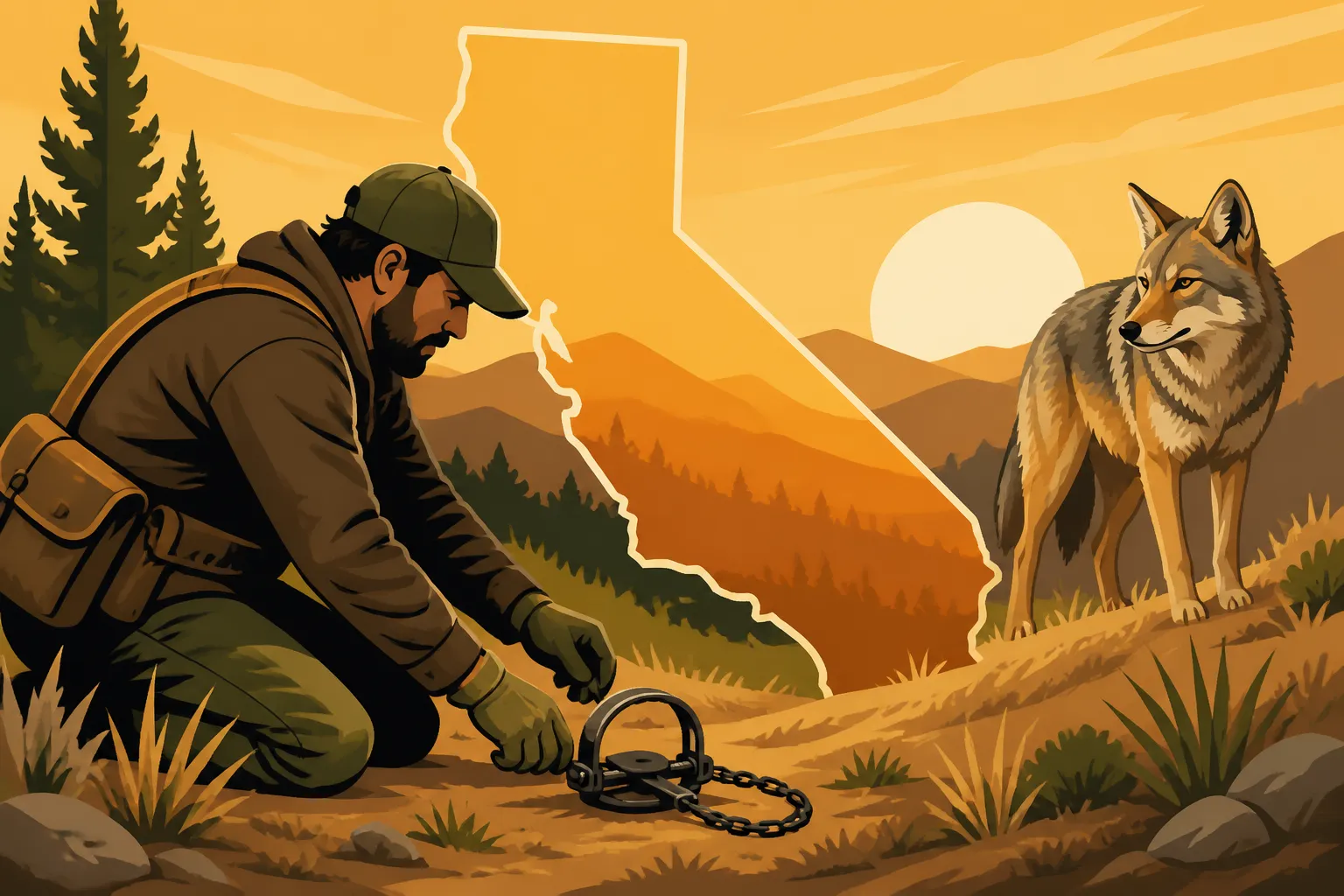
- The Dirt Hole Set: This is a classic for land predators like coyotes and foxes. It involves digging a small, angled hole (resembling an animal's den or a cache of food) and placing bait/lure deep inside. The trap is then bedded (made stable and flat) in front of the hole, perfectly level with the surrounding ground, and camouflaged.
- Flat Set/Scent Post: Another effective land set, the flat set, uses a prominent object like a clump of grass, a log, or a rock as a "scent post." Lure is applied to the post, and the trap is bedded subtly nearby. Animals will naturally approach such objects to investigate or mark them.
- Water Sets (for beaver/muskrat): These involve placing traps in water, often completely submerged. Foothold traps can be set on submerged ledges, runs, or den entrances. Body-grip traps (if legal for your specific water type/location) are often set in channels or at slides.
- Blending: This is arguably the most important part of any set. After the trap is bedded, it must be completely concealed. Use a sifter to cover the trap with fine dirt from the immediate area, ensuring no metal or foreign objects are visible. Use natural debris like leaves, pine needles, or grass to blend the trap into its surroundings. The goal is for the trap to be invisible to the approaching animal, making it feel completely natural and safe. Scent control is also paramount; wear clean gloves, and avoid leaving human scent at the trap site as much as possible.
Managing and Maintaining Your Trapline
Running a successful trapline isn't just about the initial setup; it's an ongoing commitment to management, ethical practices, and constant adaptation. This is where your diligence really pays off.
Regular Check Schedules
California law mandates that all traps must be checked at least once every 24 hours. This isn't just a suggestion; it's a legal requirement designed for the humane treatment of trapped animals. Ignoring this rule can lead to severe penalties and is an ethical failure.
- Daily Routine: Your daily routine will typically involve waking up early, often before dawn, to run your trapline. This allows you to check traps while animals are still most active and before the heat of the day, which can stress trapped animals.
- Efficient Routing: If your trapline is extensive, you'll want to plan your route to be as efficient as possible. Grouping sets in clusters and planning a logical sequence of stops can save valuable time. For longer lines, using a GPS device or mapping apps (like GoHunt, which allows for route planning and marking specific trap locations) is indispensable.
- Documentation: Keeping a log of your sets—where they are, what you're targeting, and when you checked them—can be helpful, especially if you're running multiple traps across a large area. This also helps you track what's working and what isn't.
Handling Catches Ethically and Safely
Humane treatment is a cornerstone of ethical trapping. When you approach a trap with an animal in it, always prioritize safety for yourself and the animal.
- Dispatching: The primary goal is to dispatch the animal quickly and humanely. A well-placed shot from a .22 caliber firearm to the brain is the most common and effective method. Always be absolutely certain of your shot and the backdrop to ensure safety. For smaller animals or in specific situations, other methods may be employed, but speed and humane execution are critical.
- Safety First: Wild animals, especially when trapped, are stressed and can be dangerous. Coyotes, foxes, and raccoons can bite or scratch severely. Approach cautiously, always from the rear or side, and never put yourself in a position where you could be injured. Wearing appropriate gloves and having a catch pole or restraining device can be wise for handling live animals, especially in cage traps, before dispatch.
- Processing: Once dispatched, process the animal promptly. This involves skinning, gutting, and cooling the carcass to preserve the fur and meat. Having proper knives, a clean working surface, and game bags is essential. Remember to record your harvest, as required by California law, through the Automated License Data System (ALDS) for specific species like bobcats. This is similar to how you would report a pig harvest through ALDS.
Adjusting for Weather and Pressure
A good trapper is constantly adapting to changing conditions. The environment is dynamic, and your trapline needs to be flexible.
- Weather Impacts: Rain can wash away scent, freeze traps, or make access difficult. Extreme cold can make animals less active. High winds can shift debris and expose traps. After a significant weather event, you might need to re-lure sets, adjust pan tension, or even move traps to more sheltered locations. Snow, while rare in many trapping zones, can also provide fresh tracking opportunities but make trap concealment challenging.
- Animal Behavior: Animals' activity patterns can change throughout the season due to food availability, breeding cycles, or hunting pressure. Pay attention to what you're catching (or not catching) and adjust your sets accordingly. If you're consistently catching one species but not another, re-evaluate your set type, lure, or location.
- Pressure Management: If an area gets too much trapping pressure, animals can become trap-shy. Sometimes, it's better to pull sets from a productive area and let it "rest" for a while, or move your line to less-pressured ground. Understanding hunting pressure on California public land provides valuable insight into how animals react to human presence, which directly applies to trapping success. Tools like those from GoHunt can help you identify areas that might see less general outdoor activity.
- End of Season: At the end of the trapping season, all traps must be removed from the field. Thoroughly clean and maintain your equipment, storing it properly for the next season. This attention to detail ensures your gear lasts and performs well year after year.
| Furbearer Species | Primary Habitat | Common Trap Types (CA Legal) | Key Sign to Look For |
|---|---|---|---|
| Beaver | Rivers, Streams, Ponds | Foothold (submerged), Cage | Chewed trees, dams, lodges, slides |
| Muskrat | Marshes, Ponds, Slow-moving water | Foothold (submerged), Cage | Push-ups, runs, small lodges |
| Gray Fox | Dense chaparral, Oak woodlands | Foothold (padded/offset), Cage | Scat, tracks, rubs, den sites in rocky areas |
| Raccoon | Riparian areas, Woodlands, Agriculture | Foothold (padded/offset), Cage | Tracks, scat, overturned rocks, den trees |
| Opossum | Diverse, often near human areas | Foothold (padded/offset), Cage | Tracks, scavenged food, denning in brush piles |
| Coyote | Open grasslands, Forests, Desert | Foothold (padded/offset), Snare (break-away) | Tracks, scat, urine posts, howls |
Disclaimer
Always consult the current California Department of Fish and Wildlife (CDFW) regulations before engaging in any trapping activities. Laws can change annually, and it is the individual trapper's responsibility to know and adhere to all local, state, and federal regulations. This guide is for informational purposes only and not a substitute for official legal guidance.