Reading California Mud for Fresh Deer Movement
One of the most frustrating things for any deer hunter in California is spending precious time on sign that’s days, or even weeks, old. You find what looks like a promising trail, get set up, and then realize the deer haven't been through that spot since the last rain. Understanding how to accurately read fresh deer movement in the mud can transform your scouting and hunting success, ensuring you're always in the right place at the right time. This guide will walk you through the nuances of interpreting California's diverse mud conditions to pinpoint exactly where deer are moving now.
The Unbeatable Advantage of Mud for Pinpointing Fresh Deer Activity
California's landscapes are incredibly varied, from the arid desert washes to the damp coastal redwood forests and the often-snowy Sierra Nevada high country. What unites these disparate environments, however, is the magic of mud. When the ground is soft and pliable, it captures a perfect, undeniable record of recent activity that dry, hard earth simply can't. This isn't just about seeing a track; it's about discerning the story that track tells, and when that story unfolded.
Why California's Mud is Your Most Reliable Informant
On hard-packed soil, a deer track might linger for weeks, wind-blown and sun-baked, giving you absolutely no clue as to its age. It’s a ghost of activity, not a real-time report. But mud? Mud is different. It’s perishable. A track pressed into moist earth will begin to degrade within hours or a day, depending on sun, wind, and temperature. This rapid decay is precisely what makes mud so valuable. If you find a crisp, clear track in the mud, you know a deer has been through very recently.
Imagine hiking through a creek bottom in the foothills after a rainstorm. You're looking for signs of deer, hoping to cut a fresh trail. If the ground is dry, you might see old, dusty impressions from last week. You’d never know if deer are still using that path. But if the ground is still damp and you find tracks with sharp edges, indicating they haven't had time to dry out or be eroded by wind and subsequent light rain, you've hit the jackpot. This immediate feedback helps you adjust your strategy, whether that means setting up a stand nearby, planning a stalk, or focusing your trail camera efforts. It cuts down on wasted time and keeps you focused on active areas. For instance, in areas where deer funnel through, like a narrow passage between two oak ridges, fresh mud tracks will confirm active usage and help you plan your approach.
Understanding California's Diverse Mud Conditions and Their Influence
California's geology and climate create a fascinating array of mud types, each offering its own set of clues and challenges. Knowing what to expect from the mud in your specific hunting area will sharpen your interpretative skills.
In the rich agricultural lands of the Central Valley or parts of the coastal ranges, you might encounter heavy clay soils. When wet, these soils hold tracks with incredible detail, almost like a mold. However, they can also become sticky and deep, making travel difficult for both deer and hunters. The tracks here will often be deep, with strong displacement of mud around the edges. In contrast, the sandy loam soils common in oak woodlands or chaparral regions, especially after a moderate rain, create a more granular mud. Tracks here might not be as perfectly defined as in clay, but they are still distinct. The edges might be slightly softer, and the print might appear shallower. These areas often drain faster, so tracks may dry and begin to degrade more quickly.
Then you have the high-country areas, where rocky, silty mud can be found near alpine meadows, seeps, and spring-fed creeks. This type of mud, often mixed with small pebbles, can make tracks appear somewhat broken or less uniform. The key here is looking for the disturbance in the otherwise undisturbed ground. Similarly, in the dry expanse of California's desert BLM land, a rare rain can turn a dusty wash into a muddy highway. Here, the tracks might be less defined, blending into the loose, sandy consistency, but the distinct wetness and freshness of the disturbed sand are undeniable indicators. Each soil type leaves a unique signature, and the more time you spend observing, the better you'll become at discerning fresh from old in any given environment.
Decoding Fresh Deer Tracks in California Mud
So, you're out there, boots on the ground, and you've found some tracks in the mud. How do you know if they're fresh enough to matter for your hunt today? It comes down to a careful, almost forensic examination of the print itself and its immediate surroundings.
Key Indicators of a Recent Track
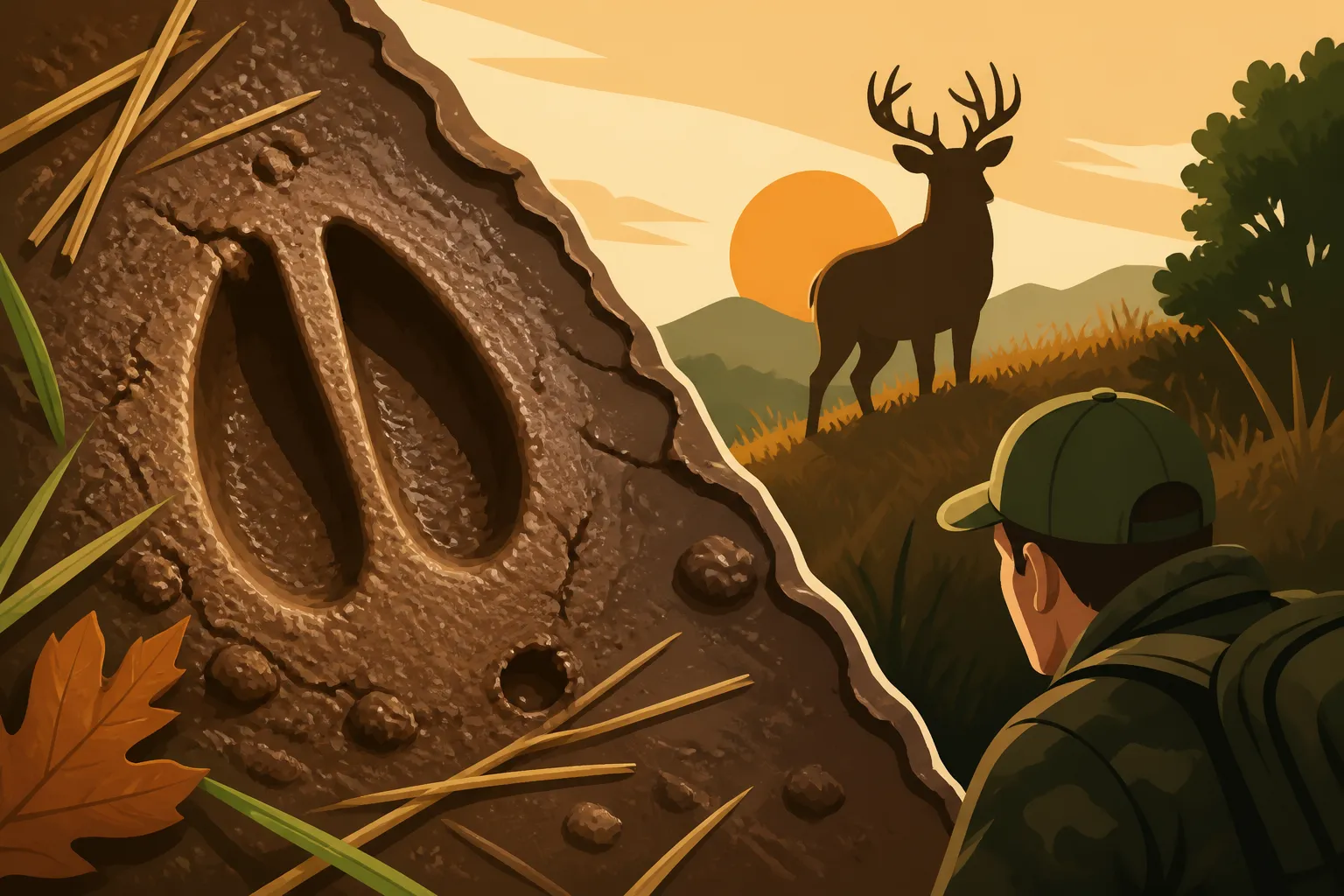
The first thing you want to look for is the crispness of the edges. A truly fresh track, laid down hours ago or even within the last day, will have sharp, well-defined edges. There won't be any crumbling, rounding, or erosion from wind or water. If you see a thin, dry crust forming around the edges or in the bottom of the track, you know it's probably older than 24 hours, depending on humidity and sun exposure.
Next, consider the moisture level within the print. If the bottom of the track still looks damp and matches the surrounding undisturbed mud, you're on a hot trail. If it's noticeably drier or has a different texture than the mud right next to it, the track has had time to dry out. Also, check for mud displacement. When a deer steps, it pushes mud outwards. Fresh tracks will show this displaced mud still standing proud, often with a glossy sheen if it's truly wet. Older tracks will have this displaced mud flattened or dried.
Finally, don't just look at the track itself. Look at the surrounding vegetation. Was a blade of grass bent or broken by the hoof? If so, has it sprung back up? If it's still bent or broken and shows no signs of drying, that's a good indicator. Similarly, keep an eye out for fresh scat or urine nearby. A warm, moist pile of droppings or a wet patch of urine next to tracks confirms very recent activity. If the scat is dry and crumbly or the urine patch has a crust, the deer has long since moved on. This combination of visual cues is your strongest ally in determining the freshness of the sign.
Distinguishing Deer from Other Hooves
California is home to a variety of hoofed animals, and not all tracks belong to your target deer. Knowing the subtle differences can save you from barking up the wrong tree. Primarily, you're looking for tracks from Columbia Blacktail and Mule Deer in California, but you might also encounter wild pigs, elk, or even domestic livestock like cattle or horses, especially near ranch lands.
- Deer Tracks: Deer tracks typically have two pointed, heart-shaped hooves. The two halves (dewclaws) are usually quite close together, and the overall print is narrower and more pointed than a domestic animal. Mule deer tracks tend to be larger and slightly rounder than blacktail tracks, reflecting their larger body size. If the deer is running or moving quickly on soft ground, you might see impressions from their dewclaws behind the main hooves. These are usually small, sharp imprints.
- Wild Pig Tracks: Wild pig tracks are often wider, rounder, and less pointed than deer tracks. The key giveaway is often the dewclaw impressions, which are typically wider and splayed further apart than a deer's, particularly on heavier pigs. Pigs also have a distinct, often erratic travel pattern, root up the ground extensively, and their tracks might be accompanied by obvious rooting sign.
- Elk Tracks: Elk tracks are significantly larger than deer tracks – imagine a deer track, but considerably scaled up. They are still pointed but much broader and longer. If you're hunting in areas known for California's Three Elk Species, you'll quickly learn to differentiate these massive prints.
- Domestic Livestock: Cattle tracks are very large, very rounded, and blunt. Horse tracks are unmistakable, typically showing a U-shape outline of a horseshoe (if shod) or a large, round, unbroken print.
By paying attention to the size, shape, and dewclaw impressions, you can confidently identify deer tracks. Don't forget to look at the stride length, too. Deer, especially bucks, often have a longer, more deliberate stride than smaller or domestic animals.
Interpreting Deer Movement Patterns from Mud Sign
Once you've confirmed that the tracks are indeed fresh deer sign, the real detective work begins. These prints aren't just isolated marks; they're sentences in a larger story about deer behavior. You can learn about their direction of travel, their demeanor, and even their preferred corridors.
Direction, Speed, and Gait: Unpacking the Details
A single track tells you little, but a series of tracks reveals a lot about how that deer was moving.
- Direction of Travel: This is usually straightforward. Look at the pointed end of the track; that's the direction the deer was headed. Also, observe the displaced mud; it often piles up in the direction of travel, with the sharper edge of the print indicating the front.
- Speed and Gait: The spacing between tracks indicates speed. If the tracks are close together and deep, the deer was likely walking slowly or browsing. Longer strides and shallower prints suggest a quicker pace, perhaps a trot. If the prints are very far apart, uneven, and show deep gouges or splayed dewclaws, the deer was likely running, spooked by something.
- Buck vs. Doe (sometimes): While not foolproof, mature bucks often have larger, broader tracks than does, and their stride might be longer and more deliberate. Does often leave daintier, more narrowly spaced tracks. However, a large doe can leave a track similar to a smaller buck, so always combine this with other clues if possible. A good rule of thumb is to look for consistency in the size of the prints over a distance.
Remember that California's terrain can be extremely steep and varied. A deer moving uphill will often leave deeper, more splayed tracks as it digs in for traction, especially in the Sierra Nevada high country. Conversely, going downhill, tracks might appear shallower or show more sliding. Observing these nuances in context is key.
Pinpointing Feeding, Bedding, and Travel Corridors
Fresh mud tracks are your roadmap to understanding where deer are spending their time. Deer have three primary needs: food, water, and cover for bedding and security. Tracks help you connect these dots.
- Feeding Areas: Look for concentrations of fresh tracks, especially smaller, wandering tracks, in areas known for deer forage. This could be near acorn-producing oak trees, tender browse, or even agricultural fields like alfalfa. A heavy volume of fresh tracks radiating into and out of such an area indicates it's a current food source. This intel is invaluable for setting up an ambush or planning a still-hunt. You can correlate this with knowledge of Late-Season Food Sources for California Deer or even Hunting Coastal Range Oak Woodlands where acorns are a primary food source.
- Bedding Areas: While deer rarely bed in mud, fresh tracks leading consistently into thick cover, especially on a ridge-top saddle or a secluded hillside, suggest a bedding area. Look for trails that disappear into dense chaparral, brushy draws, or standing timber. Deer often bed with the wind at their back, facing downwind, so considering Wind and Thermals in Steep Sierra Country when evaluating potential bedding locations is critical. Knowing Where California Blacktail Bucks Bed can give you a significant advantage.
- Travel Corridors: Fresh tracks along well-worn game trails, creek bottoms, saddlebacks, or natural funnels confirm active travel routes. These are often the best places to intercept deer moving between feeding and bedding areas, or between different parts of their range. Using mapping tools like GoHunt can help you visualize these funnels and corridors, and then your mud-reading skills confirm their current use. For example, a track line moving consistently through a pinch point like a natural funnel between two oak ridges is a prime ambush location.
Reading Multiple Tracks and Herd Dynamics
Don't just look for a single deer. Observing multiple fresh tracks can give you insights into herd dynamics. Are there several deer traveling together? Is a larger track (likely a buck) following smaller tracks (does)? This tells you about breeding activity (especially during the rut) or family groups.
If you find a cluster of fresh tracks from different-sized deer, it suggests a small group feeding or watering together. If you see a consistent, larger track following smaller tracks in a string, you might have a buck trailing a doe in estrus. This kind of nuanced observation helps you understand what the deer are doing in that specific moment, allowing you to react accordingly. It’s about building a narrative from the evidence on the ground.
Integrating Mud Reading with Modern Scouting Tools
In today's hunting world, traditional woodsmanship and high-tech tools aren't mutually exclusive; they're a powerful combination. Integrating your mud-reading skills with modern scouting resources can exponentially increase your efficiency and success rate.
Combining with Mapping Apps and Aerial Photos
Before you even step foot out there, mapping tools like GoHunt are invaluable for pre-scouting. You can use aerial photos to identify potential travel corridors, water sources, natural pinch points, and different habitat types where mud might offer clues. For example, you might spot a spring or a low-lying area that would hold moisture longer after rain. Or, perhaps a natural bench on a hillside that deer would use as a consistent travel route.
Once you’ve identified these promising areas virtually, you can head out and use your mud-reading skills to confirm active use. An app like GoHunt can also overlay public land boundaries and topography, helping you navigate while simultaneously evaluating ground conditions. You can mark the location of fresh tracks directly on your map, creating a real-time record of deer movement. This blend of Reading Aerial Photos for Sierra Deer and boots-on-the-ground confirmation helps you refine your hunting spots much faster. Knowing how to use an app for Using an App for California BLM Land Status can help you scout and navigate large areas efficiently, then confirm deer activity via mud sign.
Using Trail Cameras to Confirm Movement
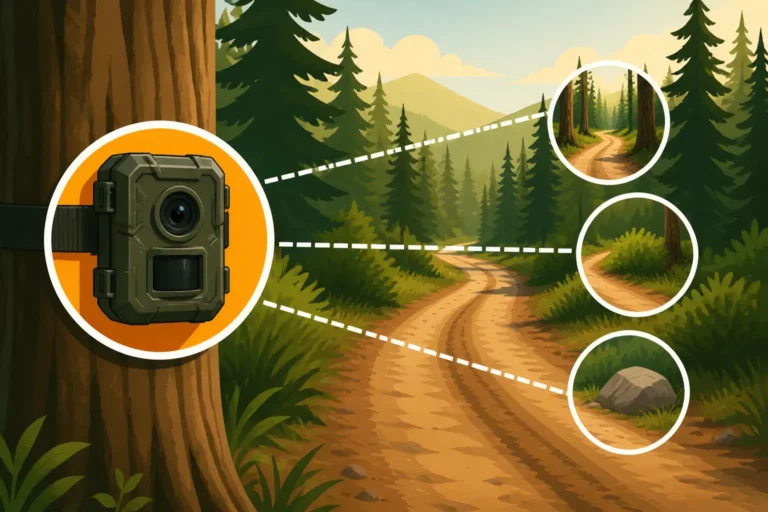
Trail cameras are another fantastic complement to mud scouting. Once you've identified a promising area with fresh tracks, particularly a well-used trail or a consistent water source, deploying a trail camera can provide invaluable confirmation. Set your camera overlooking the fresh sign.
The camera will tell you when the deer are using that area, not just that they have used it. You might find fresh tracks in the morning, set a camera, and then discover through the pictures that the deer are passing through consistently at dawn and dusk. This allows you to fine-tune your hunt timing. For strategic placement, consider areas where deer are likely to pause, such as water crossings, subtle changes in terrain, or tight funnels confirmed by mud. Learn about effective Trail Camera Placement on Public Land to maximize your chances of capturing the action. If you've found exceptional fresh mud sign in a remote spot, a cellular trail camera could even give you real-time updates, allowing you to adjust your strategy without having to constantly hike back in.
By combining the immediate, undeniable evidence of fresh tracks in the mud with the long-term data collection of trail cameras and the strategic overview provided by mapping apps, you’ll develop a comprehensive understanding of deer movement in your hunting area. It’s all about creating a picture of current deer behavior, minimizing guesswork, and ultimately, Finding Ground Others Walk Past that holds game. This comprehensive approach to Scouting California Public Land Before Season will undoubtedly put more deer in front of your optics.
Disclaimer
The information provided in this guide is for educational and informational purposes only and is not intended as legal advice. Hunting regulations in California are complex and subject to change. Always consult the latest California Department of Fish and Wildlife (CDFW) regulations and local ordinances before engaging in any hunting activities. Adherence to all laws and ethical hunting practices is the responsibility of the individual hunter.