California Tule Elk Draw Odds
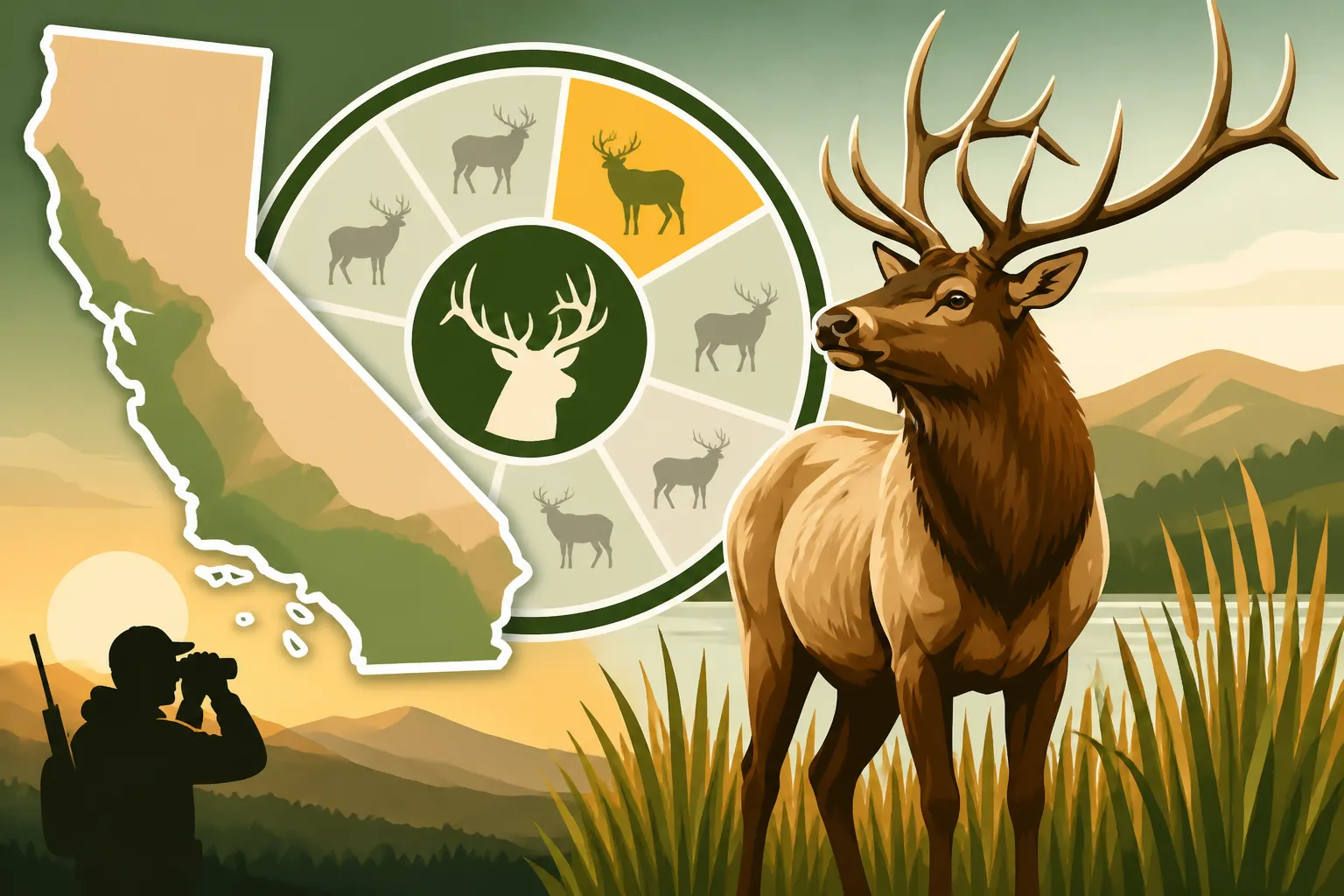
If you've spent any time dreaming of chasing a Tule elk across California's landscapes, you know the reality: actually drawing one of those coveted tags can feel like winning the lottery. The sheer difficulty often leaves hopeful hunters frustrated and wondering if their efforts are even worth it. This guide is here to break down the complex world of California's Tule elk draw odds, helping you understand the system, analyze your chances, and strategize for future success.
Understanding California's Tule Elk Drawing System
California's big game drawing system, particularly for premium species like Tule elk, is notoriously competitive. It's a combination of preference points and random chance, designed to give everyone a shot while also rewarding persistence. If you're new to the game, it can feel like trying to decipher an ancient scroll, but once you get the hang of it, you can make more informed decisions about your applications.
The Preference Point System Explained
At the heart of California's big game drawing for species like Tule elk and deer is the preference point system. Essentially, every year you apply for an elk tag and are unsuccessful, you accrue one "preference point." These points don't guarantee you a tag, but they increase your chances in subsequent years. The more points you have, the higher your odds of drawing a premium tag, but it's not a simple one-to-one exchange. Each year, a portion of the available tags is allocated to the highest point holders, while the remaining tags are distributed through a random draw among all applicants, with preference point holders getting additional entries or a higher weighting. It's a system designed to reward those who consistently apply, but it still keeps a flicker of hope alive for first-time applicants. Understanding the nuances of the California Preference Point System Explained is crucial for any serious elk hunter.
You can also simply purchase a point each year without applying for a tag, which is a smart move if you're not ready to hunt but want to build your standing. These points are specific to each species, so your deer points don't count towards elk, and vice-versa. It truly is a long game, often requiring years, if not decades, of consistent application to reach a point where your odds become genuinely favorable for the most sought-after units.
How Tule Elk Tags Are Allocated
The California Department of Fish and Wildlife (CDFW) meticulously manages the Tule elk population, which is a remarkable conservation success story, especially given the Tule Elk Population Recovery From Near-Extinction. Because these herds are precious and their numbers are carefully controlled, only a very limited number of tags are issued each year. These tags are typically divided into specific hunting zones or units, each with its own set of rules and a predetermined number of available tags. The number of tags can vary slightly year to year based on population surveys, habitat conditions, and management goals.
Tags are allocated through the annual California Big Game Drawing Explained, which opens in the spring. There are tags specifically for bulls and sometimes for cows, and the number of each is incredibly small. For instance, a particular zone might only offer one or two bull tags to residents, making the competition fierce. Non-residents face even steeper odds, as only a single California's Once-a-Year Nonresident Elk Tag is offered across the entire state for all elk species combined. This scarcity is precisely why the draw odds are so challenging and why planning your application strategy carefully is paramount.
Why Draw Odds Are So Low
Let's not sugarcoat it: Tule elk draw odds are brutally low. We're talking percentages that often hover around 1% or even less for prime units. Why is this the case? It boils down to a classic supply and demand problem. On the supply side, as mentioned, Tule elk populations are carefully managed, leading to a very limited number of tags. These are some of the most unique and exciting big game animals in North America, and California wants to ensure their long-term health.
On the demand side, there are thousands upon thousands of passionate hunters, both resident and non-resident, vying for these few tags every single year. The dream of harvesting a majestic Tule elk in its native habitat drives intense competition. When you have, say, 10,000 applicants for 10 tags, the math speaks for itself. Add to that the cumulative effect of the preference point system, where long-time applicants with dozens of points often scoop up the highest-value tags, and the odds for newer applicants can feel almost insurmountable. It's a situation where What Draw Odds Under One Percent Mean becomes a stark reality for many.
Analyzing Historical Tule Elk Draw Odds
Understanding past draw odds is perhaps the single most important tool in formulating your application strategy. The CDFW publishes draw results annually, and dedicated platforms like GoHunt compile and analyze this data, making it much more digestible for the average hunter. By looking at historical trends, you can identify patterns, gauge the popularity of certain zones, and make more informed decisions about where to apply.
Resident Versus Non-Resident Chances
This is where the rubber truly meets the road. For California residents, the odds, while still slim, are significantly better than for non-residents. Residents have access to all available Tule elk tags within the drawing, albeit in incredibly competitive pools. You're still going up against thousands of fellow Californians, many with decades of preference points. However, at least the numbers are in the dozens or low hundreds for residents, depending on the unit.
For non-residents, the situation is far more challenging. California reserves almost all its big game tags for residents. For elk, specifically, there's only one single non-resident elk tag available across all three elk species (Tule, Roosevelt, and Rocky Mountain) in the entire state each year. This means thousands of non-resident hunters are all applying for that one tag. Your odds as a non-resident are infinitesimally small, often in the realm of 0.01% or less. This stark reality means non-residents often have to play an even longer game or explore alternative avenues like landowner tags, which we'll discuss shortly.
Draw Odds for Different Tule Elk Zones
Not all Tule elk zones are created equal when it comes to draw odds. Some zones are widely known for producing larger bulls, offering more accessible terrain, or simply having a higher profile among hunters. These "premium" zones, such as those within areas like Grizzly Island Wildlife Area or the La Panza Cooperative Hunt Area, typically have the lowest draw odds and require the most preference points. Conversely, there might be units that are more remote, have tougher terrain, or are simply less publicized, which might offer slightly (and I mean slightly) better odds.
When you're looking at the data, pay close attention to the number of tags offered in each unit, the number of applicants, and the point totals of the successful applicants. For instance, you might see that a unit like Cache Creek or San Luis Reservoir has historically lower point requirements for successful draws compared to the top-tier units. While all Tule elk tags are highly desirable, focusing on these slightly less competitive units could theoretically shave a few years off your wait time. Tools provided by services like GoHunt are invaluable for drilling down into the specific California Tule Elk Draw Odds for each individual hunt code.
| Tule Elk Zone (Example) | Tags Available (Est.) | Resident Applicants (Est.) | Resident Draw Odds (Est.) | Non-Resident Applicants (Est.) | Non-Resident Draw Odds (Est.) |
|---|---|---|---|---|---|
| Grizzly Island (Bull) | 2 | 8,000 | < 0.05% | 2,000 | < 0.01% (for THE single tag) |
| La Panza (Bull) | 3 | 7,500 | < 0.05% | 2,000 | < 0.01% (for THE single tag) |
| Cache Creek (Bull) | 5 | 6,000 | ~ 0.08% | 2,000 | < 0.01% (for THE single tag) |
| Owens Valley (Bull) | 10 | 9,000 | ~ 0.11% | 2,000 | < 0.01% (for THE single tag) |
| Fort Hunter Liggett | 4 | 5,500 | ~ 0.07% | 2,000 | < 0.01% (for THE single tag) |
Note: These are hypothetical estimates for illustrative purposes only. Actual numbers vary annually.
Understanding GoHunt's Role in Data Analysis
For serious Western big game hunters, platforms like GoHunt have become indispensable tools for deciphering draw odds. While the CDFW provides the raw data, GoHunt takes it a step further by compiling it, creating user-friendly interfaces, and offering advanced filtering and analysis capabilities. They often have proprietary algorithms that estimate future draw odds based on past trends, applicant numbers, and point creep.
Many hunters use GoHunt's "Insider" service to analyze the draw odds for specific Tule elk hunts, allowing them to see what the minimum and maximum points were for successful applicants in previous years, how many tags were offered, and how many applicants applied. This granular data helps in making an informed decision about which specific hunt codes to apply for, rather than just blindly throwing darts at the map. It's a powerful resource for anyone trying to navigate the complexities of applying for a California Tule Elk Tag in the Big Game Drawing and understanding the true competition.
Strategies to Improve Your Tule Elk Draw Chances
Given the long odds, you might feel like giving up before you even start. But don't despair! While there's no magic bullet, there are strategic approaches you can take to incrementally improve your chances over time. It's all about playing the long game and making smart decisions each application cycle.
Maximizing Your Preference Points
The most fundamental strategy for drawing a Tule elk tag is to maximize your preference points. This means consistently applying every single year, even if you don't plan to hunt that season. If you skip a year, you lose the opportunity to gain a point, effectively pushing your potential draw date further into the future. For the relatively small California Elk Application Fee, securing a point each year is a minimal investment for a potentially massive payoff down the road.
Beyond just applying annually, consider whether you want to "burn" your points on a lower-odds unit or if you're committed to holding out for a premier hunt. Some hunters choose to apply for the toughest units year after year, knowing it might take 20+ years, but that when they draw, it will be a truly world-class hunt. Others prefer to apply for units with slightly better odds, hoping to draw sooner, even if the trophy potential might be a bit lower. There's no right or wrong answer; it depends entirely on your personal hunting goals and patience levels. Just remember, once you draw a Tule elk tag, your preference points for that species reset to zero, and the accumulation starts all over again.
Applying for Less Popular Zones
While everyone dreams of those legendary Tule elk units, sometimes the smartest play is to look for the hidden gems. As we discussed, some zones consistently have lower applicant numbers or slightly higher success rates for lower point totals. These "less popular" zones might not be as glamorous, or they might involve more challenging access or tougher hunting conditions, but they offer a more realistic path to drawing a tag sooner.
To identify these units, you'll need to dive deep into the historical draw data. Look for units where the successful applicants had fewer preference points, or where the "point creep" (the annual increase in points needed to draw) is less aggressive. For example, some of the more remote units that require significant hiking to access might see fewer applicants. Or perhaps a unit with a late-season hunt that coincides with harsh weather might deter some hunters. It's all about doing your homework and finding those statistical edges. This could mean adjusting your expectations and being prepared to hunt in less-than-ideal conditions, but the reward of a Tule elk tag could make it all worthwhile. Remember, even in these less popular units, Where California's Tule Elk Herds Range still offers incredible experiences.
Considering Landowner Tags
For those with the financial means and a strong desire to hunt Tule elk without waiting through decades of draws, Buying a Tule Elk Landowner Tag is a viable alternative. California's landowner tag program allows property owners whose land supports significant game populations to receive a limited number of tags for specific species, including Tule elk. These tags are then sold directly by the landowner, often through outfitters or brokers, at a premium price.
The cost of a Tule elk landowner tag can range from tens of thousands of dollars to upwards of $50,000 or more, depending on the quality of the hunting experience, the reputation of the ranch, and the size of the elk typically harvested. While this is a significant investment, it guarantees you a tag without having to go through the public draw. It's a way for non-residents, in particular, to bypass the near-impossible draw odds for the single statewide non-resident tag. These hunts are often fully guided and offer a high-quality experience, though they certainly aren't for every hunter's budget.
What to Do After the Draw Results Are Announced
The moment of truth arrives when the draw results are finally announced. It's a mix of anxiety and excitement, often followed by either elation or disappointment. Knowing what steps to take, regardless of the outcome, can help you manage your expectations and plan your next moves.
If You Draw a Coveted Tag
If you're one of the incredibly fortunate few to draw a Tule elk tag, congratulations! This is the culmination of years of patience and persistence. Your first step should be to immediately confirm your tag and ensure all paperwork is in order. You'll want to review the specific regulations for your drawn unit, including season dates, legal weapons, and any special access requirements. Many units require lead-free ammunition, a statewide rule for big game in California, so confirm your Choosing Non-Lead Rifle Ammunition in California well in advance.
Next, it's time to dive into serious scouting. Whether it's pouring over maps, using satellite imagery, or making physical trips to the unit, understanding the terrain, elk movements, and potential hunting areas is critical. If you've been building points for a long time, you've likely already done some preliminary research, but now it's time to get detailed. If you're planning a DIY hunt, start planning your logistics: gear, camping, and recovery strategies. For those looking to Hunting Tule Elk in the Central Valley or other specific regions, local knowledge and past hunt reports will be your best friends. This is an incredible opportunity, so make sure you're fully prepared to make the most of it!
If You Don't Draw a Tag (Again)
For the vast majority of applicants, the draw results will bring the familiar sting of disappointment. It's tough, especially when you've been building points for years. The most important thing is not to get discouraged. Remember, this is part of the game when pursuing premium tags in California.
If you didn't draw, your first step is to verify that you received your preference point for the year. This ensures your investment in the long game continues. Then, take some time to review the draw statistics for the current year. Did the point requirements increase significantly? Were there any surprises in terms of tags allocated or applicant numbers? This information is crucial for refining your strategy for next year. Consider whether you want to stick with your current strategy or adjust it based on the new data. Perhaps it's time to consider applying for slightly less competitive units, or maybe you're willing to commit to an even longer wait for that dream tag. Don't forget that California offers a multitude of other hunting opportunities, from Wild Pig Hunting California Year-Round to Spring Turkey Hunting in California, which can keep you afield while you continue your quest for a Tule elk.
Disclaimer
The information provided in this guide is for general informational purposes only and does not constitute legal advice. Hunting regulations, season dates, tag allocations, and draw odds are subject to change annually by the California Department of Fish and Wildlife (CDFW). Always consult the most current official CDFW hunting regulations booklet and website before applying for any tags or engaging in hunting activities. It is the hunter's responsibility to know and comply with all applicable laws and regulations.