California Fox and Bobcat Trapping Season
It's easy to feel a bit lost when you're trying to understand the ins and outs of furbearer management in California, especially when it comes to species like fox and bobcat. Many folks recall a time when trapping seasons were a regular part of the outdoor calendar, and it can be frustrating to navigate the ever-changing regulations. This guide is here to cut through the confusion, explaining the current legal status of fox and bobcat trapping in the Golden State and outlining the very specific circumstances under which such activities are now permitted.
The Evolving Landscape of Furbearer Trapping in California
California's approach to furbearer management, especially trapping, has undergone significant changes in recent years. What was once a regulated activity for commercial and recreational purposes has been severely curtailed, making it crucial for anyone interested in these species to understand the current legal framework. The old ways of thinking about "trapping season" for fur simply don't apply anymore, and getting caught unaware can lead to serious legal trouble.
The 2019 Ban and Its Impact on Fox and Bobcat Trapping
Let's be upfront: if you're looking for a general, statewide trapping season for foxes and bobcats to harvest their fur, that era ended in California. Assembly Bill 273, signed into law in 2019 and effective January 1, 2020, completely banned commercial and recreational fur trapping throughout the state. This legislative change was a monumental shift, driven by concerns over animal welfare and the ethical implications of fur harvesting. For many who grew up with regulated trapping as a part of their outdoor heritage, this ban was a significant and often disheartening loss, closing off a traditional pursuit that connected them to the land and its wildlife. It means that the days of setting traps for bobcats or foxes with the intent of selling their pelts or even keeping them for personal use outside of very specific, non-recreational contexts are firmly in the past. Understanding California furbearer trapping trends helps put this significant change into perspective, highlighting how public sentiment and conservation priorities have reshaped wildlife management.
Depredation Permits: An Exception for Nuisance Animals
While the general fur trapping season is gone, there are still extremely narrow circumstances under which trapping of furbearers like foxes and bobcats might occur: depredation. If a fox or bobcat is causing documented damage to agricultural crops, livestock, or property, a landowner can apply for a depredation permit from the California Department of Fish and Wildlife (CDFW). This isn't a recreational activity, nor is it about harvesting fur. Instead, it's strictly about managing specific animals that are actively causing harm. The process is rigorous: you need to demonstrate proof of damage, show that non-lethal methods have been tried and failed, and agree to specific conditions for trapping and dispatching the animal. The goal is to remove the problem animal as humanely and efficiently as possible, not to provide a hunting or trapping opportunity. It’s a very practical, problem-solving approach to wildlife conflict, not a reintroduction of a trapping season. When seeking to manage wildlife on your land, understanding California Trespass and Permission Law is also crucial, especially if you need to engage professional wildlife services who might need access.
Scientific and Research Trapping: A Different Purpose
Beyond depredation, the only other legal avenue for trapping foxes and bobcats in California is for scientific research, educational, or wildlife management purposes. These activities are carried out by licensed researchers, biologists, or government agencies under highly specialized permits. Think of studies tracking animal populations, monitoring disease, or relocating animals for conservation efforts. In these scenarios, the animals are almost always live-captured, examined, tagged, and then released, or in some cases, humanely dispatched for necropsy or specimen collection as part of research. These permits are granted with strict conditions to ensure ethical treatment, data collection, and minimal impact on the local wildlife population. This is a far cry from a public trapping season and requires extensive training, specific scientific objectives, and direct approval from the CDFW. If you're interested in wildlife management but can't participate in traditional trapping, studying California Gray Fox and Bobcat Populations can offer valuable insights into these species.
Legal Methods and Equipment if Trapping Under Permit
Even under the limited circumstances of depredation or scientific permits, the methods and equipment used for trapping foxes and bobcats in California are highly regulated. The emphasis is on humane, live-capture techniques, reflecting the state's stringent animal welfare standards. Gone are the days of foot-hold traps or snares for these species.
Permitted Trap Types for Live Capture
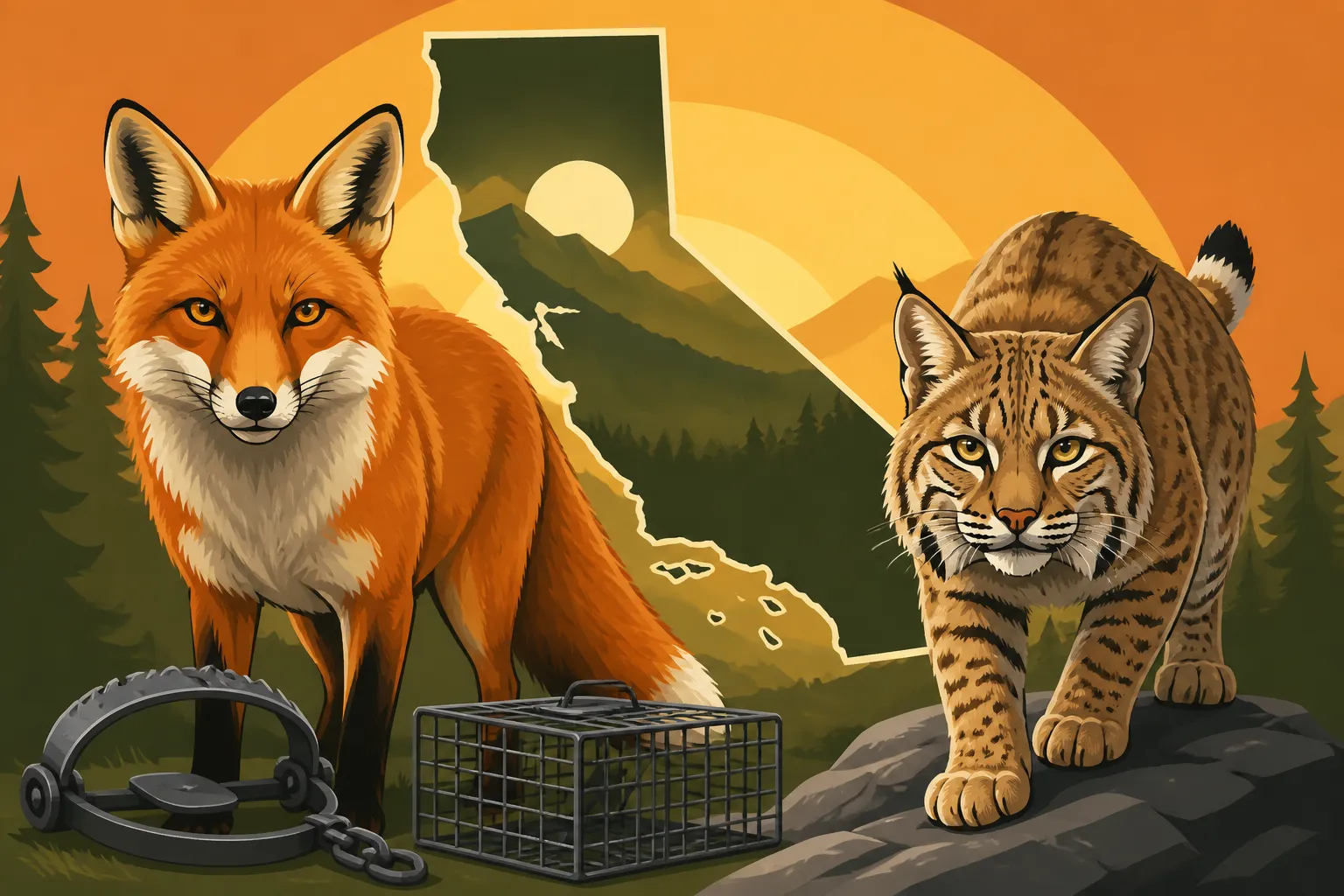
For any legal trapping of foxes and bobcats in California, you are almost exclusively limited to live-capture cage or box traps. These traps are designed to enclose the animal without causing injury, allowing for identification, assessment, and either release or humane dispatch if the animal is the target of a depredation permit. These aren't just any old cages; they need to be robustly constructed to prevent escape and injury to the animal. A common example would be a wire mesh cage trap, typically ranging from 30 to 48 inches long, with a spring-loaded or gravity-activated door that triggers when the animal enters and steps on a pan.
The key here is live capture, which means the trap must be designed and deployed in a way that minimizes stress and physical harm. Trappers (or permit holders) must also ensure the trap is appropriately sized for the target animal – too small, and the animal might get injured trying to enter or escape; too large, and it might allow for easier escape or non-target captures. For those who used to rely on traditional fur trapping methods, this shift to live-capture only represents a significant change in technique and philosophy, demanding a different skill set and a much greater focus on the immediate welfare of the captured animal.
Attractants and Scents for Specific Furbearers
Even with live traps, you still need to entice the animals into them. For foxes and bobcats, attractants fall into a few general categories: food-based baits, curiosity lures, and gland lures.
- Food-Based Baits: Small pieces of meat (like chicken scraps, fish, or even commercially prepared trapping baits) are often effective. The scent needs to be strong enough to draw the animal in but not so overwhelming that it makes them wary. Placement is key; a small amount of bait inside the trap, with a little scattered leading up to it, can create a scent trail.
- Curiosity Lures: These are designed to pique an animal's natural inquisitiveness. Often containing ingredients with unusual or pungent odors, they make the animal want to investigate the source. Some commercial lures blend skunk essence, beaver castor, or other strong, natural scents.
- Gland Lures: Derived from the scent glands of the target animal or a competing species, these lures tap into territorial instincts or breeding drives. For bobcats, specific bobcat gland lures can be very effective, especially during certain times of the year.
When using any attractant, remember that cleanliness and minimizing human scent are always important. Gloves should be used, and the lure applied subtly. While GoHunt might be a resource for general hunting and outdoor gear, when it comes to highly specialized trapping lures and scents, you'll want to seek out dedicated trapping supply vendors who understand the nuances of these products for specific furbearers. Always ensure any attractant used is legal and doesn't pose a risk to non-target animals, particularly domestic pets.
Essential Gear for Safe Handling and Transport
If you are trapping under a depredation or scientific permit, safely handling and transporting a live fox or bobcat is paramount. These are wild animals, and even when seemingly calm in a cage, they can inflict serious bites and scratches.
- Heavy-Duty Gloves: Leather or Kevlar-reinforced gloves are non-negotiable for protection.
- Catch Pole/Snare Pole: This allows you to safely control the animal's head and body if it needs to be transferred or if the trap needs adjustment, keeping you at a safe distance.
- Transport Crates: If relocation or transport is required (which is rare for depredation, but common for scientific studies), sturdy, secure pet carriers or custom-built wildlife crates are necessary. They should be well-ventilated and large enough for the animal to stand and turn around comfortably.
- Tarps or Covers: To reduce stress, a dark tarp or blanket can be placed over a live trap during transport. This calms the animal by making it feel more secure and less exposed.
- Field First Aid: Both for yourself and potentially for the animal, a basic first aid kit should always be on hand.
The focus is always on minimizing stress and ensuring the safety of both the animal and the handler. Improper handling can lead to injuries for the animal or severe consequences for the person involved. Trappers must demonstrate proficiency in these techniques as part of their permit application and training. California Trapping License Requirements covers some of these foundational rules for handling furbearers in general, though specific permits will have additional stipulations.
Locating Furbearers: Scouting and Sign for Foxes and Bobcats
Even without a general trapping season, understanding where foxes and bobcats live and how to identify their presence remains a critical skill, whether you're a landowner dealing with depredation or just an avid outdoorsperson keen on observing these elusive creatures. Scouting is the foundation of any successful interaction with wildlife, from hunting deer to managing nuisance predators.
Reading the Habitat: Where Foxes and Bobcats Live
Both foxes (primarily gray foxes and red foxes, though red foxes are often non-native or found in urban fringes) and bobcats are adaptable, but they do have preferred habitats in California.
- Bobcats: These elusive felines are masters of camouflage and often prefer areas with a mix of dense cover for hiding and open spaces for hunting. You'll frequently find them in:
- Oak Woodlands: The Sierra Nevada foothills and coastal ranges, with their mosaic of oaks, chaparral, and rocky outcrops, provide excellent bobcat habitat. The varied terrain offers plenty of denning sites and a rich food source of rodents, rabbits, and birds.
- Chaparral and Brushland: Thick, thorny brush offers impenetrable cover and ideal ambush points.
- Riparian Corridors: Areas along rivers and creeks, even in otherwise dry country, provide water and denser vegetation, attracting prey and predators alike.
- Gray Foxes: California's native fox, the gray fox, is incredibly versatile and can be found in a wider range of habitats than bobcats, often overlapping with them.
- Forests and Woodlands: They thrive in mixed forests, oak woodlands, and riparian zones.
- Foothills and Deserts: They're comfortable in rugged, rocky terrain, often using rocky crevices for dens.
- Agricultural Areas: Near farms and ranches, they can find abundant food, particularly rodents.
- They are known for their ability to climb trees, a unique trait among canids, often using it to escape predators or hunt.
Understanding these habitat preferences is your first step. Instead of blindly placing traps, you're looking for areas that scream "fox" or "bobcat," increasing your chances of success, whether for a depredation permit or simply for wildlife photography. Resources like GoHunt, while primarily focused on big game hunting, still offer valuable mapping tools that can help identify these types of terrain features across public lands.
Identifying Tracks, Scat, and Other Activity
Once you've identified promising habitat, it's time to get on the ground and look for sign. This is where your detective skills come in.
- Tracks:
- Bobcat Tracks: Typically round, with four toes showing (claws are usually retracted, so they don't show in the print), and a distinct "M" or "W" shape in the heel pad. They tend to walk in a straight line, placing their hind feet in the prints of their front feet (direct registering).
- Fox Tracks: More oval-shaped than a bobcat's, with all four toes and usually visible claw marks. The heel pad is smaller than a bobcat's and often has a distinct "X" shape if you draw lines between the toes and the heel. Fox tracks often zig-zag more than a bobcat's.
- Look for tracks in soft mud near water sources, dusty trails, or fresh snow.
- Scat (Droppings):
- Bobcat Scat: Usually segmented, often containing fur, bone fragments, or feathers from their prey. It's typically tubular and often left uncovered.
- Fox Scat: Similar in appearance but often smaller and more pointed at the ends. It also contains fur, feathers, or berries, depending on their omnivorous diet. Foxes often leave scat on prominent objects (rocks, logs) as a territorial marker.
- Dens: Look for openings under rocky outcrops, in hollow logs, or beneath dense brush. Bobcat dens are often well-hidden. Fox dens might have multiple entrances.
- Scratch Marks/Rubbing: Bobcats may leave scratch marks on trees or logs, similar to domestic cats.
- Prey Remains: Discovering partially eaten carcasses, especially small mammals or birds, can indicate a furbearer's hunting grounds.
Learning to differentiate these signs is crucial. For instance, knowing the difference between a bobcat track and a domestic cat track can save you a lot of wasted effort. This detailed scouting is what makes a permit-based trapping effort targeted and effective, ensuring you're focusing on the actual nuisance animal or research subject.
Using Technology for Scouting and Land Access
In today's world, technology has revolutionized scouting. Even for specific purposes like depredation trapping, having the right digital tools can be a game-changer.
- Mapping Apps: Apps like onX Hunt, and the general mapping capabilities offered by platforms like GoHunt, provide invaluable layers for understanding terrain. You can identify potential travel corridors, pinch points, water sources, and areas with dense cover that might hold foxes or bobcats. This is especially useful when assessing private land for a depredation permit or scouting the edges of public land.
- Satellite Imagery: High-resolution satellite views allow you to spot subtle changes in vegetation, rocky areas, and even old logging roads or game trails that might indicate furbearer activity. You can often see historical burn scars where prey might be regenerating, which can attract predators.
- Public vs. Private Land Boundaries: Perhaps most critically for California, mapping apps clearly delineate public and private land boundaries. This is essential for ensuring you have legal access. For depredation, you'll be on private land, but understanding the surrounding landscape can inform your strategy. For any public land activity (like Coyote Calling California Ranch Land or other predator hunting, which is legal), knowing where you stand legally is non-negotiable. Using an App for California BLM Land Status can literally save you from accidentally trespassing.
- Historical Data: Some apps or state resources might provide overlays for historical wildlife sightings or habitat data, giving you clues where to focus your efforts.
While a map on your phone won't replace boots on the ground, it significantly streamlines the pre-scouting phase, allowing you to narrow down promising areas before you even step foot outside. This efficiency is critical, especially when dealing with the urgency of a depredation scenario.
Responsible Practices and Reporting
Even when trapping under the very specific and limited permits allowed in California, the emphasis on responsible practices and mandatory reporting remains incredibly high. This isn't just about following the law; it's about ethical wildlife management and contributing to the scientific data that helps inform future conservation efforts.
Daily Trap Checks and Humane Protocols
For any live trap set for foxes or bobcats under a depredation or scientific permit, daily trap checks are a non-negotiable legal requirement in California. This isn't just a suggestion; it's the law, and failing to comply can lead to severe penalties. The primary purpose of this strict rule is to ensure the humane treatment of any captured animal. An animal left in a trap for an extended period can experience extreme stress, dehydration, exposure, and potential injury as it tries to escape.
When you check your traps daily (and often, twice a day for sensitive species or in extreme weather), you are:
- Minimizing Stress: Reducing the time an animal spends in confinement.
- Preventing Injury: Identifying and addressing any potential issues with the trap or the animal's condition promptly.
- Providing Basic Needs: In some cases, and depending on permit stipulations, providing water or shelter from extreme elements might be required, though careful trap placement often mitigates this.
- Identifying Non-Target Catches: Allowing for the immediate release of any unintended species.
These checks must be conducted in person, usually within a specific timeframe (e.g., within 24 hours of sunrise). This dedication to the welfare of the captured animal is a cornerstone of California's approach, reflecting a strong ethical stance on trapping practices.
Managing Incidental Catches and Releasing Non-Target Species
One of the challenges of any trapping effort, even with the best intentions, is the possibility of catching a non-target animal. This could be anything from a domestic cat or dog to a raccoon, opossum, or even a different species of fox than the one you're permitted to address. California law is very clear on how to handle these situations:
- Immediate Release: Any non-target animal must be immediately and humanely released at the site of capture. You cannot relocate it, take it home, or harm it.
- Careful Handling: Releasing a stressed wild animal requires caution and proper technique to ensure safety for both the animal and the handler. Using appropriate handling tools like a catch pole or heavy gloves is essential.
- Documentation: For scientific permits, documenting incidental catches is part of the data collection. For depredation, it's about proving due diligence.
If non-target catches are frequent, it’s a sign that your trap placement, bait, or lure might need adjustment to be more selective for the intended species. The goal is always to minimize these incidents. Understanding the habitat and behavior of the target animal and tailoring your setup accordingly is key to reducing incidental captures. This is part of the ongoing learning process for any responsible trapper operating under permit. If you encounter any illegal trapping activities or injured wildlife, knowing Reporting a Poacher in California can make a significant difference.
Mandatory Reporting for Permitted Takes
For any fox or bobcat legally taken under a depredation permit or collected for scientific purposes, mandatory reporting to the CDFW is a critical step. California maintains a detailed database of wildlife take through its Automated License Data System (ALDS). This isn't just bureaucratic red tape; it's how wildlife managers track populations, assess the impact of depredation, and ensure that takes remain within sustainable limits.
The reporting requirements typically include:
- Date and location of take.
- Species and sex of the animal.
- Method of take (e.g., trapped, shot).
- Permit number.
- Any additional information required by the specific permit.
This data is vital for sound wildlife management. It helps the CDFW monitor California Gray Fox and Bobcat Populations, understand conflict hotspots, and make informed decisions about future regulations and conservation strategies. Failing to report a legally permitted take can lead to serious consequences, including fines and the revocation of future permits. It underscores the responsibility that comes with any interaction involving wildlife, especially when it results in the removal of an animal from the population. Even for general hunting, like Applying for a California Tule Elk Tag in the Big Game Drawing, similar reporting mechanisms are in place, highlighting their importance across all wildlife management activities.
Here's a quick reference table summarizing the current state of fox and bobcat trapping in California:
| Feature | Current California Regulation (Effective Jan 1, 2020) |
|---|---|
| Commercial/Recreational Fur Trapping | Banned (AB 273). No general "season" for public fur trapping. |
| Depredation Trapping | Permitted for landowners with a valid CDFW depredation permit, only for animals causing documented damage. Not for recreational purposes. |
| Scientific Trapping | Permitted for licensed researchers/agencies with valid CDFW scientific collection permits. Strict protocols apply. |
| Legal Trap Types | Primarily live-capture cage or box traps for these species. Snares, leg-hold, and body-grip traps are generally prohibited for these species. |
| Trap Check Frequency | Mandatory daily checks (often within a specified morning timeframe) to ensure humane treatment of captured animals. |
| Non-Target Catches | Must be immediately and humanely released at the site of capture. |
| Reporting Requirements | Mandatory reporting to CDFW (e.g., via ALDS) for all permitted takes (depredation or scientific). |
| Licenses Needed | General California Trapping License Requirements still exist for some species and activities, but special depredation/scientific permits are paramount for fox/bobcat. |
| Relevant Information | California Hunter Education Requirements provides general safety and ethical guidelines relevant to all wildlife interactions. |
Disclaimer
This article is intended for informational purposes only and does not constitute legal advice. Wildlife regulations in California are complex and subject to change. Always consult the most current California Department of Fish and Wildlife (CDFW) regulations, statutes, and codes before engaging in any hunting or trapping activities. It is your responsibility to know and obey all applicable laws.