California Deer Vehicle Collisions
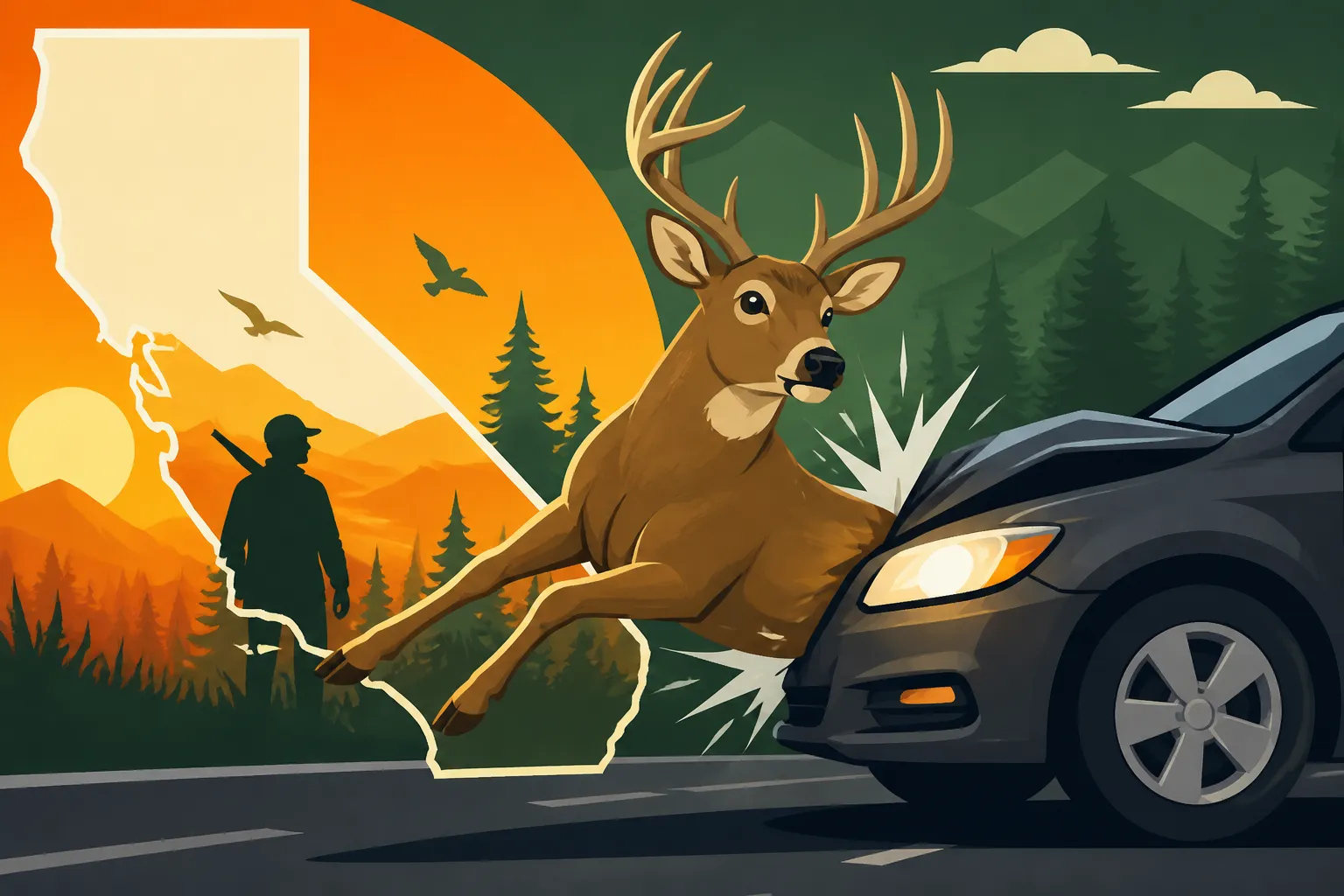
Let's face it, driving through California's stunning landscapes is often a joy, but there's a unique kind of dread that many of us who spend time on country roads or near the foothills know all too well: the sudden appearance of a deer in the headlights. Deer vehicle collisions are a real, often devastating, and shockingly common issue across our state, impacting drivers, vehicles, and of course, the deer themselves. This guide isn't about scaring you, but equipping you with a deeper understanding of why these incidents happen, how you can minimize your risk, and what steps to take if the worst unfortunately occurs.
Unpacking the Reasons Behind Deer Vehicle Collisions in California
It's easy to just think, "deer are everywhere," but understanding the specific forces that bring deer and vehicles into conflict can actually help us anticipate and potentially avoid these dangerous encounters. It's a complex interplay of biology, geography, and human development.
Seasonal Rhythms and Habitat Crossovers
Deer in California aren't just wandering aimlessly; their movements are dictated by powerful biological and environmental cues. The most notorious time for deer vehicle collisions is often autumn, specifically during the rut. This is when bucks, with their minds on breeding, become less cautious and more active, covering significant ground in search of does. Does, too, are on the move, and their fawns are increasingly independent, sometimes venturing into unfamiliar territory. If you've ever wondered When the California Rut Peaks by Zone, you'll know that this period can vary slightly, but it generally puts a lot more deer on the move at unpredictable times.
Beyond the rut, deer have seasonal migrations. In many parts of California, particularly in the Sierra Nevada foothills or along the Coast Range, deer move from higher elevations in summer to lower, snow-free areas in winter in search of food and milder conditions. These California Deer Migration Corridors often cross major highways and rural roads, creating predictable collision hotspots during spring and fall. Think about how many roads carve right through prime Hunting Coastal Range Oak Woodlands or the edges of agricultural fields – these are exactly the places deer need to access for forage, water, or bedding, and our roads unfortunately cut right through them. As human development expands, these natural pathways are increasingly intersected by our infrastructure, forcing deer into more frequent, and often fatal, encounters with vehicles.
Peak Activity Times and Geographic Hotspots
If you're driving in California, it's not just when in the year you're driving, but when in the day, and where specifically, that dictates your risk. Deer are crepuscular creatures, meaning they are most active during dawn and dusk. This is when they move from bedding areas to feeding grounds, and vice versa. It also happens to coincide with many people's commutes, a dangerous overlap. Picture driving through a winding, tree-lined road just as the sun is dipping below the horizon, or before it's fully risen – this low-light condition is exactly when deer are most on the move and hardest to spot.
Beyond the time of day, certain geographic areas in California are notorious for deer vehicle incidents. Stretches of Highway 101, especially through areas like the rolling hills of San Luis Obispo County or parts of Mendocino County, can see significant deer activity. Portions of Interstate 5, where it skirts the western edge of the Sierra Nevada foothills, are also well-known for deer crossings. Even mountain highways, like sections of Highway 50 or Highway 80 as they ascend into the Sierra, are critical corridors where deer often attempt to cross, particularly during migration seasons. Factors like dense fog in the Central Valley, or heavy rain that reduces visibility and makes roads slick, only exacerbate the danger in these already high-risk zones. It's not just the big highways either; countless rural roads cutting through ranch land or national forests have their own significant rates of deer encounters, especially where cover is thick right up to the road edge.
Strategies to Proactively Avoid Deer Encounters on California's Roads
Knowing why and when deer collisions happen is the first step; the next is empowering yourself with strategies to avoid becoming a statistic. It’s about more than just "being careful"; it’s about active, informed defensive driving.
Mastering Defensive Driving Techniques
Defensive driving in deer country isn't passive; it's an engaged, active process. First and foremost, resist the urge to drive on cruise control through known deer habitats, especially during those peak dawn and dusk hours. Keep your foot ready to brake. You should be constantly scanning not just the road immediately ahead, but the shoulders and beyond, looking for any movement or reflective "eyes" that indicate a deer. Deer eyes can glow in the beam of your headlights, often appearing as two distinct points of light.
When using high beams, which is a great tactic for spotting deer from a distance in safe conditions, be aware that the sudden brightness can sometimes cause deer to freeze rather than flee. If you spot a deer, dim your lights quickly to see if it helps them move. And always, always remember the golden rule: deer rarely travel alone. If you see one deer cross the road, slow down significantly and be prepared for a second, or even a third, to follow right behind. Swerving is often more dangerous than hitting the deer, as it can lead to losing control, hitting oncoming traffic, or colliding with a fixed object. The safest approach, if a collision is unavoidable, is often to brake firmly and maintain control of your vehicle, striking the animal head-on if necessary. This minimizes the risk to human occupants, though it's a terrible choice to have to make.
Deciphering Deer Behavior Near Roadways
Deer behavior, while generally predictable in its patterns, can be incredibly erratic and unpredictable when confronted with a fast-moving vehicle. They might dart out from dense cover without warning, stand frozen in the middle of the road, or even turn back and run directly into your path after initially seeming to move away. This is why anticipating their presence is so crucial. A deer that bounds into your headlights might just as easily freeze, captivated by the light, rather than continuing its escape.
Their movements can be influenced by many factors. Perhaps a fence line prevents an easy escape, or another deer behind them pushes them forward. New construction, logging activity, or even an increase in human presence can alter established deer paths, pushing them into less predictable areas closer to roadways. Understanding this erratic element of their behavior means that even if you see a deer and think it's moving away, you still need to be prepared for it to suddenly change direction. It’s a constant, dynamic threat assessment when driving through their territory.
Leveraging Technology and Local Knowledge
In this day and age, we have tools at our disposal that can enhance our awareness of deer activity. Many mapping applications, like those used for navigation or even by hunters using resources like GoHunt, offer detailed topographic maps that can reveal natural funnels, dense cover, and traditional game trails that might cross roadways. While GoHunt is typically a valuable resource for hunters looking for insights into Columbia Blacktail and Mule Deer in California movements or planning Hunting California's High-Country X-Zones, its data on deer distribution and habitat can also serve as an informal alert system for drivers. If you know a road cuts through a major deer corridor identified by such tools, you can approach that section with heightened vigilance.
Additionally, don't underestimate the power of local knowledge. Talk to residents, farmers, or even game wardens in rural areas. They often know specific stretches of road where deer are particularly prevalent. Local community forums or social media groups can sometimes provide real-time alerts on deer sightings or recent incidents. While you won't get a "deer alert" on your dashboard in most vehicles, combining common sense, defensive driving, and an informed awareness of deer habits – perhaps even gleaned from hunter-focused insights on California Deer Population Estimate or regional movements – can significantly reduce your risk.
Navigating the Aftermath: What to Do Post-Collision in California
Despite all precautions, sometimes a collision is unavoidable. When it happens, the moments immediately following can be disorienting and dangerous. Knowing what to do in California can make a huge difference for your safety, legal standing, and even the welfare of the animal.
Prioritizing Safety and Immediate Actions
Your first priority, always, is the safety of yourself and any passengers. If you've hit a deer, try to remain calm. Immediately pull your vehicle over to the safest possible location, ideally off the main roadway, and activate your hazard lights. If it's safe to do so, briefly assess if anyone in your vehicle is injured. Even a seemingly minor impact can cause whiplash or other injuries.
Do not, under any circumstances, approach an injured deer. A wounded animal, even one that appears docile, can be incredibly dangerous and unpredictable. It might kick, bite, or thrash, causing serious injury to you. If the deer is still alive and suffering, it's a tragic situation, but your safety is paramount. Leave the animal alone and wait for trained professionals to respond. If you're on a busy highway, assess whether it's safe to even exit your vehicle. Sometimes, staying inside with your hazards on until law enforcement arrives is the safest choice.
Reporting and Legal Responsibilities
Once you've ensured your immediate safety, the next step is to report the incident. In California, it's generally recommended to contact local law enforcement, whether that's the California Highway Patrol (CHP) if on a state highway, or the local sheriff's department on county roads. They can assist with traffic control, document the accident, and if necessary, dispatch animal control or CDFW (California Department of Fish and Wildlife) to handle the deer.
Regarding the deer itself, the rules for salvaging roadkill in California are specific and often misunderstood. While it might seem like a waste, you generally cannot just take a deer you've hit. You need to contact CDFW and obtain a salvage permit before moving the animal. The specific guidelines can change, and you'll want to be absolutely clear on the current regulations regarding Reporting a Deer Through California's App or other methods, and if a permit is even available for deer hit in a vehicle collision. It’s also crucial to remember that if the collision occurs in one of California's Two CWD Testing Zones, there will be specific regulations about handling the carcass to prevent potential disease spread, even if you do get a salvage permit. Ignoring these rules can lead to fines or other legal issues, so always check with CDFW directly.
Dealing with Vehicle Damage and Insurance
After the immediate danger has passed and law enforcement has been contacted, turn your attention to your vehicle. Document any damage with photos from multiple angles, including the deer if it's still safely visible. This documentation will be crucial for your insurance claim. If another vehicle was involved (for example, if you swerved and hit another car, which is why avoiding swerving is generally advised), be sure to exchange information with those drivers as well.
Contact your insurance company as soon as you can. Most deer collisions are covered under the comprehensive portion of your auto insurance policy, which typically covers damage from events like falling objects, fire, theft, and animal strikes. This is usually different from collision coverage, which applies when you hit another vehicle or object. Understanding your specific policy will help you navigate the repair process and potential costs. Be prepared for your vehicle to be towed if the damage is significant, which is often the case with deer impacts.
The Wider Repercussions of Deer-Vehicle Incidents
While the immediate concern of a deer collision is the direct impact on drivers and deer, these incidents have a much broader ecological, economic, and societal footprint across California.
Impact on California's Deer Populations and Ecosystems
Deer vehicle collisions are a significant source of mortality for California's deer populations. While it's a tragic end for many individual animals, it's also a constant pressure on the overall California Deer Herd Size and genetic diversity. These collisions highlight a critical issue in wildlife management: habitat fragmentation. As our roads, towns, and agricultural lands expand, they often cut through established deer habitats and migration routes, essentially trapping deer or forcing them into dangerous crossings. This fragmentation isolates populations, disrupts natural breeding patterns, and can limit access to vital resources.
Wildlife agencies, including CDFW, constantly monitor these incidents. They use data from reported collisions to identify hotspots and inform mitigation strategies. This can include anything from improved signage and public awareness campaigns to more ambitious projects like building wildlife crossings – bridges or underpasses specifically designed to allow animals to safely cross busy roads. These crossings are expensive but incredibly effective in reducing collisions and maintaining ecosystem connectivity, allowing deer and other wildlife to move freely across their natural range.
Economic and Community Burdens
The financial toll of deer vehicle collisions is staggering, extending far beyond the immediate repair bill for a damaged car. Vehicle repair costs, even for minor damage, can quickly run into thousands of dollars. For more severe impacts, vehicles can be totaled, leading to the expense of replacement. These costs are often borne by individuals through insurance deductibles and potentially higher premiums, or by insurance companies, which then pass those costs on to all policyholders.
Beyond vehicle damage, there are significant medical costs associated with human injuries sustained in collisions, ranging from minor scrapes to severe trauma. Emergency services, including paramedics, fire departments, and law enforcement, also expend considerable resources responding to these incidents. Traffic delays caused by collision clean-up, lost work hours for affected drivers, and the general disruption to daily life all add up to a substantial economic burden on communities throughout California.
Human Safety Concerns
Finally, and perhaps most importantly, deer vehicle collisions pose a direct and serious threat to human safety. While most collisions result in vehicle damage and unfortunate outcomes for the deer, serious human injuries and even fatalities do occur. The sudden impact, the potential for a loss of vehicle control, and the possibility of secondary collisions with other vehicles or fixed objects make these incidents incredibly dangerous. Drivers often instinctively swerve to avoid a deer, and this evasive maneuver can lead to far worse outcomes than a direct impact with the animal itself. Hitting a tree, another car, or rolling a vehicle can be catastrophic.
This is why hunter education courses, like those required for a California Hunter Education Requirements certificate, often cover responsible driving practices in wildlife areas. It reinforces the idea that understanding wildlife, even when not actively hunting, is a critical component of safety for everyone who shares the landscape. The goal is to drive with an awareness that keeps both humans and wildlife as safe as possible on our shared California roads.
Disclaimer
This article is for general informational purposes only and does not constitute professional advice. Laws, prices and regulations vary by location and change over time. Consult a qualified professional for guidance on your specific situation.