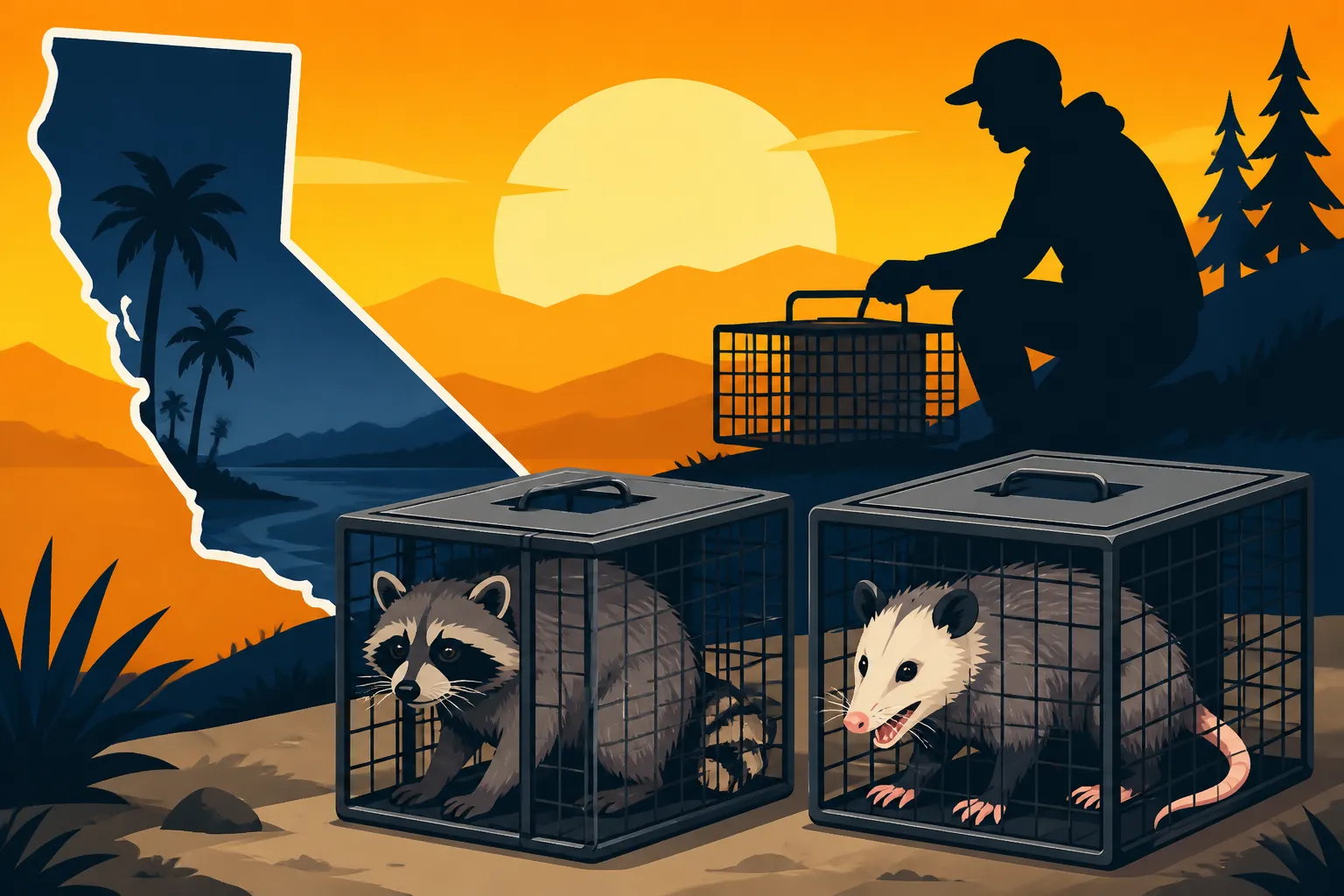
California Raccoon and Opossum Trapping
Dealing with raccoons and opossums in California can be a real headache, whether they're raiding your chicken coop, tipping over trash cans, or just generally making a nuisance of themselves around your property. For many, trapping offers a practical and often necessary solution for managing these prolific creatures. This guide is designed to walk you through the ins and outs of California's regulations and effective methods for trapping raccoons and opossums, helping you do so responsibly and successfully.
Understanding California's Regulations for Raccoon and Opossum Trapping
Navigating the rules and regulations around trapping in California can feel like trying to untangle a ball of fishing line after a big bite. It's often complex, with specific requirements that vary based on the species, location, and even the type of trap you're using. Raccoons and opossums, while often considered pests, are also classified as furbearers in California, which means specific regulations govern their take. Understanding these nuances is your first, and most crucial, step towards a legal and ethical trapping season.
Furbearer vs. Nuisance Animal Status
In California, both raccoons and opossums are legally classified as "furbearing mammals." This designation is important because it places them under a specific set of regulations separate from general wildlife. While they can certainly be a nuisance, and many landowners experience direct damage from them, you can't just indiscriminately trap them without adhering to furbearer laws. This means that if your primary intent is to harvest fur or to manage populations, you'll need a specific trapping license.
However, the state also recognizes that these animals can cause damage to property or crops. If they're actively damaging your property, such as destroying gardens, preying on poultry, or denning in your attic, they can be removed under depredation rules. This often involves contacting the California Department of Fish and Wildlife (CDFW) for a depredation permit or following specific guidelines for nuisance animal removal, which may allow for different methods or seasons than furbearer trapping. It’s a subtle but significant distinction: are you trapping as a furbearer harvester, or are you removing an animal actively causing damage? The answer impacts your legal path. For those looking to manage them as furbearers, the full trapping regulations apply.
General Trapping Season and Licensing
To legally trap furbearing mammals like raccoons and opossums in California, you absolutely must possess a valid California trapping license. This isn't just a suggestion; it's a hard and fast rule. This license is separate from a general hunting license, so even if you're an experienced hunter, you'll need this specific permit. The trapping season for furbearers typically runs from late fall into early spring, though exact dates can shift slightly year to year. You'll need to check the current Furbearing Mammal Regulations booklet, usually available through the CDFW website or at license vendors, for the precise dates. Don't rely on old information; always verify the current year's regulations.
The application process for a trapping license usually involves demonstrating an understanding of trapping laws and ethical practices, sometimes through an exam or a certified course. It’s a commitment, but a necessary one to ensure you're operating within legal bounds. Once you have your license, you'll also need to consider where you're planning to set your traps. Public lands have varying rules, and private land always requires explicit permission. California Trapping License Requirements provides a great overview of what you'll need to get started on the right foot.
Legal Trap Types and Setback Rules
California has some of the strictest trap regulations in the nation, particularly concerning trap types and where they can be set. For raccoons and opossums, body-grip traps (like Conibears) are highly restricted and cannot be used in areas where there's a significant risk of catching non-target animals, including pets or protected wildlife. Foothold traps, once a staple, are now heavily restricted, with many common sets now illegal or only permissible in very specific, remote circumstances. Instead, cage traps, often referred to as live traps, are generally the most widely accepted and legal method for trapping these species.
When using cage traps, there are still rules to follow. Traps must be checked regularly, typically at least once every 24 hours, to prevent undue suffering to any captured animal. There are also setback requirements from roads, trails, and dwellings. For instance, you can't just set a trap right next to a public walking path. These rules are in place to ensure public safety and minimize accidental catches. Always consult the current regulations booklet for exact distances and specific trap construction requirements. Understanding these rules is crucial, and failure to comply can lead to significant penalties. California Wildlife Violation Penalties outlines some of the serious consequences for breaking these laws, emphasizing the need for diligent adherence.
| Trap Type | Legality for Raccoons/Opossums (General) | Primary Use Case | Pros | Cons |
|---|---|---|---|---|
| Cage Traps | Generally legal (live-catch) | Nuisance removal, relocation | Humane, low risk to non-targets, reusable | Bulky, requires frequent checks, animal can be stressed |
| Body-Grip Traps | Highly restricted, specific conditions | Quick dispatch | Efficient, compact | High risk to non-targets, strict usage rules, dispatch required |
| Foothold Traps | Highly restricted, specific conditions | Catch and hold | Can be versatile | Injury risk, strict usage rules, dispatch required |
Note: The legality of body-grip and foothold traps is highly nuanced and location-dependent in California. Always consult current CDFW regulations for specific details and limitations before considering their use.
Effective Trapping Methods for Raccoons and Opossums
Once you’ve got your head wrapped around the regulations and acquired your license, it's time to think about strategy. Raccoons and opossums are opportunistic and intelligent creatures, and successful trapping isn't just about setting a trap; it's about understanding their habits, movements, and what motivates them. A thoughtful approach to your trap placement, baiting, and type of trap can make all the difference between an empty trap and a successful catch.
Cage Traps and Live Trapping Strategies
Cage traps are the bread and butter for many California trappers targeting raccoons and opossums, primarily due to their legality and humane nature. These traps are designed to capture an animal alive and unharmed, allowing for identification and ethical handling. When deploying cage traps, location is paramount. Raccoons and opossums are often found near water sources, dense cover, and, unfortunately, human habitation where food is readily available. Think about areas like the edges of a garden, near a chicken coop, along a fence line they might be traveling, or under a porch. Look for signs of their presence: tracks in soft mud, overturned trash cans, or disturbed bird feeders.
Pre-baiting can significantly increase your success rate. For a few nights before setting the trap, place bait near the trap but not inside it, allowing the animals to get accustomed to the food source without fear of the trap. Once they're regularly visiting, set the trap with the same bait inside. Camouflaging the trap with natural materials like branches or leaves can also help, making it appear less threatening to wary animals. Ensure the trap is stable and won't tip or rock, which could spook a curious critter. Remember, frequent checks are critical – ideally every morning – to minimize stress on the captured animal and to comply with regulations.
Body-Grip and Foothold Traps and Their Restrictions
While cage traps are the most common and often the only legal option for most situations in California, it’s worth understanding the restrictions around body-grip (e.g., Conibear) and foothold traps, as these types are still permitted under very limited circumstances. California has largely moved away from widespread use of these traps for furbearers, especially in areas with potential non-target interactions. If you're considering these types of traps, you must be absolutely certain of the legality in your specific location and situation.
Generally, body-grip traps are only permissible if set entirely submerged in water, or in very specific boxes or cubbies that prevent non-target animals from entering. This severely limits their use for land-based raccoons and opossums. Foothold traps face similar stringent rules, often only allowed in extremely remote areas or with specialized modifications that further reduce the risk to non-targets. The intent behind these restrictions is clear: to protect domestic animals and non-furbearing wildlife. If you're thinking about using these more restrictive trap types, extensive research into the current CDFW regulations is non-negotiable, and specialized training is highly recommended. Running a Trapline in Rural California might touch upon broader trapping strategies that sometimes incorporate these tools in other contexts, but for raccoons and opossums in California, the emphasis is heavily on live traps.
Best Baits and Lures for Success
Raccoons and opossums are not picky eaters, which can be both a blessing and a curse when it comes to baiting. They are attracted to strong smells and sweet or oily foods. For raccoons, some of the most effective baits include marshmallows, cat food (especially fish-flavored), canned tuna, pieces of fruit, and sweet pastries. Their sweet tooth is undeniable, making marshmallows a perennial favorite among trappers. Opossums are true omnivores and will go for almost anything. They respond well to overripe fruit, vegetables, meat scraps, and once again, cat food. A mixture of strong-smelling, varied baits can often attract both species.
Beyond food baits, commercial lures can also be highly effective, especially those with musky, sweet, or curiosity-inducing scents. These lures are designed to draw animals into the trap area from a distance. A dab of a good curiosity lure placed on a nearby branch or slightly outside the trap entrance can pique an animal's interest and encourage them to investigate the trap. When placing bait, ensure it's positioned deep enough inside the trap that the animal must fully enter to reach it, triggering the trap mechanism. Avoid placing it too close to the entrance where they might snatch it without getting caught. This careful bait placement is key to consistent success.
Handling and Processing Trapped Animals Ethically
Trapping is a responsibility that extends beyond the catch itself. Once an animal is in your trap, you have a duty to handle it ethically, humanely, and in accordance with all state laws. This includes considerations for dispatch, if that's your intent, as well as proper handling of the carcass or fur. Respect for the animal and the environment should always guide your actions after a successful trap.
Responsible Animal Dispatch and Relocation Considerations
When an animal is caught in a live trap, you have a few options, dictated by law and your intentions. If your goal is population control or fur harvest, humane dispatch is often the chosen path. California law requires that any furbearer taken must be dispatched humanely. This generally means a quick, clean kill that minimizes suffering. Common methods include a well-placed shot from a small-caliber firearm or air rifle, or a sharp blow to the head for smaller animals. If you are uncertain about humane dispatch methods, seek guidance from experienced trappers or relevant educational resources.
Relocation is another option for live-trapped animals, but it comes with its own set of legal and ethical considerations in California. It is generally illegal to relocate wildlife without specific permits. The concern is that moving animals can spread diseases to new populations, introduce genetic imbalances, or simply move the problem from one area to another. Furthermore, relocated animals often have a low survival rate as they are unfamiliar with the new territory and food sources. If you've caught a nuisance animal on your property, your best bet is to contact local animal control or CDFW for guidance on legal and appropriate disposal or dispatch if you do not possess a trapping license yourself. For licensed trappers, understanding the legality around possession and transportation is crucial.
Fur Handling and Carcass Disposal
If you're trapping raccoons or opossums for their fur, proper hide preparation is essential to maximize the value and ensure the fur is preserved. Once dispatched, the animal should be skinned as quickly as possible, ideally while the body is still warm, to make the process easier. The hide then needs to be properly fleshed (removing all meat and fat) and stretched onto a drying board. Air drying in a cool, well-ventilated area is critical to prevent spoilage and ensure the fur is prime. A properly handled hide will be supple and free of grease, ready for sale to a fur buyer or for personal use.
For carcasses, whether from fur harvest or nuisance removal, responsible disposal is important. You cannot simply leave carcasses in public view or dump them where they might attract other nuisance animals or scavengers. Proper disposal often involves burying the carcass deeply enough to prevent scavenging, burning (where legal and safe), or taking it to an approved waste facility. Always consider local regulations and environmental impact. For those interested in tracking broader trends, even discarded carcasses provide data points that feed into reports like Reading a California Harvest Report, which helps wildlife managers understand populations.
Safety and Disease Prevention
Trapping, like any outdoor activity involving wildlife, carries inherent risks, particularly concerning animal-borne diseases. Raccoons and opossums can carry a variety of pathogens that are transmissible to humans and pets, including rabies, leptospirosis, roundworm (especially raccoon roundworm, Baylisascaris procyonis), and tularemia. Always wear sturdy gloves when handling trapped animals, living or dead, and when cleaning traps. Avoid direct contact with feces, urine, or saliva.
After handling animals or traps, thoroughly wash your hands with soap and hot water. It’s also wise to disinfect your traps regularly, especially if you're catching multiple animals or suspect a sick individual. If an animal appears ill or behaves unusually, exercise extreme caution and consider notifying local animal control or wildlife authorities. Vaccinating your pets against common wildlife diseases is also a wise preventative measure. Being proactive about safety not only protects you but also helps prevent the spread of diseases within the wildlife population and to domestic animals.
Common Challenges and Troubleshooting in California Trapping
Trapping can be a rewarding endeavor, but it's rarely without its challenges. California's diverse landscapes and dense populations, both human and wildlife, mean that trappers face unique hurdles. From avoiding unintended catches to understanding complex land access rules, being prepared for these issues will contribute greatly to your success and peace of mind.
Dealing with Non-Target Catches
One of the most frustrating aspects of trapping, especially with species as opportunistic as raccoons and opossums, is the potential for non-target catches. You might set a trap for a raccoon only to find a domestic cat, a skunk, or even a protected species like a gray fox or bobcat inside. This is where the choice of trap and bait becomes critical. Cage traps offer a significant advantage here, allowing for the safe release of non-target animals. If you catch a domestic pet, the best course of action is to safely release it, ideally after checking for identification tags and attempting to contact the owner.
For wild non-targets, especially protected species, immediate and safe release is paramount. Always be prepared with a sturdy pair of leather gloves and a blanket or tarp to help manage the animal during release. Skunks are a common non-target; a blanket thrown over the trap can often calm them, allowing for a quiet release without getting sprayed. If you suspect you’ve caught a protected species, consult your regulations or contact CDFW immediately for guidance. The risk of non-target catches reinforces the importance of using legal and humane trap types, checking traps frequently, and being knowledgeable about the local wildlife population.
Minimizing Impact on Other Wildlife and Pets
To minimize the impact on other wildlife and domestic animals, thoughtful trap placement and bait selection are key. Avoid setting traps in areas heavily frequented by pets, such as common walking paths or residential areas where cats roam freely. If you must trap in such areas, consider setting traps during daylight hours only, when pets are typically more active, and securing them overnight if you can't check them frequently. Using enclosed bait stations or cubbies can help ensure only the target animal can reach the bait, reducing the chances of attracting larger non-targets.
Consider the time of year and the activity of other species. For example, during deer fawning season, avoid areas where fawns might be bedded down. If you're using visual attractants, be aware of what other animals might investigate. The goal is to be as selective as possible in your trapping efforts. Utilizing mapping tools, like those offered by GoHunt, can sometimes help you identify areas with high potential for your target species while also showing land features that might indicate higher non-target traffic, helping you plan your sets more strategically.
Navigating Public vs. Private Land Restrictions
California boasts a substantial amount of public land, including national forests, BLM land, and state wildlife areas, but accessing these for trapping comes with its own set of rules. On many public lands, trapping may be prohibited entirely, or only allowed with specific permits beyond a general trapping license. For example, some wildlife areas have very restrictive rules or may require special drawings for access. Other areas, like certain National Forests, might be open to trapping but have specific regulations regarding trap placement, marking, and checking. It’s imperative to consult the managing agency (CDFW, US Forest Service, BLM) for the specific area you intend to trap before setting a single trap. Scouting California Public Land Before Season is a great resource for understanding general scouting principles, which definitely apply to trapping.
Private land, on the other hand, often offers more flexibility, but it comes with the non-negotiable requirement of landowner permission. You absolutely must obtain explicit, preferably written, permission from the landowner before trapping on their property. Even if you know the landowner, a quick conversation can prevent misunderstandings. Trespassing laws are strict in California, and trapping without permission can lead to serious legal repercussions. A good relationship with landowners is golden for any trapper looking for reliable access. Getting Private Land Permission in California delves deeper into the courtesies and legalities of accessing private property for outdoor pursuits, which is highly relevant to responsible trapping.
Disclaimer
This article is for general informational purposes only and does not constitute professional advice. Laws, prices and regulations vary by location and change over time. Consult a qualified professional for guidance on your specific situation.