Best Ammo Case for a Multi-Zone Hunt
If you've ever found yourself staring at a pile of ammunition on your workbench, trying to figure out how to safely and efficiently transport it for a multi-zone California hunting adventure, you know the struggle is real. Different zones, different species, and the state's unique lead-free requirements can turn what should be simple into a logistical headache. This guide is all about helping you cut through that confusion to choose the best ammo case for your diverse hunting needs, ensuring your rounds are protected, organized, and compliant no matter where your next pursuit takes you.
The Critical Need for a Smart Multi-Zone Ammo System
California's hunting landscape is incredibly varied, stretching from the dense redwood forests of the north coast to the vast, open deserts of the south, and climbing into the rugged Sierra Nevada high country. With this diversity comes a patchwork of hunting zones, specific regulations, and diverse game animals, each often requiring different ammunition considerations. Just grabbing a random box of rounds for a week-long trip can lead to frustration, or worse, compliance issues. A dedicated and well-thought-out ammo case system isn't just about convenience; it's about preparation, safety, and ultimately, success in the field.
Navigating California's Diverse Hunting Regulations
One of the biggest hurdles for any hunter in California is understanding and adhering to the state's comprehensive lead-free ammunition requirement. This isn't a suggestion; it's the law for all hunting statewide. What this means for your ammo case is that you'll likely be carrying specific non-lead loads for big game, small game, and maybe even predator hunting, all needing to be clearly separated and identifiable. You might have your .308 copper solids for a deer tag in Zone D10, but also need some non-lead shotgun shells for a California Valley Quail hunt planned for the following weekend in a different area.
Adding to this complexity, different zones, and even specific public lands like national forests, can have additional rules regarding ammunition types, magazine capacity, or even caliber restrictions for certain game. Imagine arriving at your hunting spot, only to realize you accidentally mixed up your .243 non-lead deer rounds with your lead-core varmint loads because they were all in the same generic box. Not only is that a potential citation waiting to happen, but it completely derails your hunt. An organized ammo case allows you to separate and clearly label everything, giving you peace of mind that you're always in compliance, whether you're heading to Hunting California's Sierra Nevada Backcountry or Hunting Coastal Range Oak Woodlands.
Protecting Your Investment from the Elements and Travel Bumps
Ammunition isn't cheap, especially quality non-lead rounds. Leaving boxes loose in your truck bed or tossing them into a soft duffel bag is an open invitation for damage. California weather can be notoriously unpredictable – a sunny morning in the high desert can turn into a torrential downpour by afternoon, or a crisp Sierra dawn can give way to heavy fog. Moisture is the enemy of ammunition, potentially compromising primers and powder, leading to misfires or inconsistent performance.
Beyond the weather, hunting trips involve rough roads, bumps, drops, and general wear and tear on your gear. A sturdy ammo case provides a crucial layer of protection, preventing dents, dings, and deformation of your cartridges. This physical safeguard not only extends the life of your ammunition but, more importantly, ensures reliable function when that once-in-a-lifetime shot presents itself. You don't want a compromised round when you've finally closed the distance on a California blacktail buck.
Streamlining Your Gear for Quick Transitions
A multi-zone hunt often means transitioning quickly between different types of hunting or even different geographical areas. One day you might be focused on Rifle Hunting California's General Deer Season, and the next you're setting up for Wild Pig Hunting California Year-Round. Each scenario demands specific ammunition. A well-designed ammo case system streamlines these transitions, saving you valuable time and reducing stress.
Instead of fumbling through loose boxes, you can grab a clearly marked case containing precisely what you need for the day's activity. This is particularly valuable when you're hunting public lands where time is often at a premium, and you want to maximize your time in the field. When you're making a quick stop at a gas station or relocating your camp, having your ammo securely packed and organized means less worry about spills or misplaced rounds. It’s all about efficiency and readiness, allowing you to focus on the hunt itself, not on inventory management.
Essential Features for a Superior Multi-Zone Ammo Case
Choosing the right ammo case is about more than just finding a box that holds bullets. For the demanding conditions and diverse requirements of California hunting, certain features become absolutely non-negotiable. You need a case that can withstand the rigors of the field, keep your varied ammunition perfectly organized, and offer the security necessary for peace of mind.
Durability and Weather Resistance for Rugged California Conditions
Hunting in California means encountering everything from bone-dry, dusty desert washes to dense, wet coastal chaparral, and the freezing, often snowy, elevations of the Sierra Nevada. Your ammo case needs to be built to handle it all. Look for cases constructed from high-impact, rigid polymers that can absorb shocks and impacts without cracking or deforming. Metal cases, while durable, can be heavy and prone to rust in very wet conditions unless they are specifically designed for marine use.
Crucially, excellent weather sealing is paramount. Rubber gaskets or O-rings around the lid are a must to prevent moisture, dust, and fine sand from infiltrating and contaminating your ammunition. Imagine your case tumbling off the tailgate on a rough dirt road near the Carrizo Plain, or enduring a sudden downpour while Hunting a National Forest Burn Scar. A truly weatherproof and durable case ensures that the internal contents remain pristine, regardless of the abuse it takes on the outside. This resilience is what truly distinguishes a reliable field case from a flimsy storage box.
Internal Organization for Multiple Calibers and Load Types
This is where a multi-zone ammo case truly shines. California hunters frequently carry ammunition for several different firearms or specific loads for varying conditions. You might need 150-grain non-lead rounds for your .30-06 deer rifle, lighter 55-grain non-lead rounds for your .223 predator rifle, and perhaps some slugs for a shotgun if you're targeting wild pigs in a specific area. Mixing these up is a recipe for disaster.
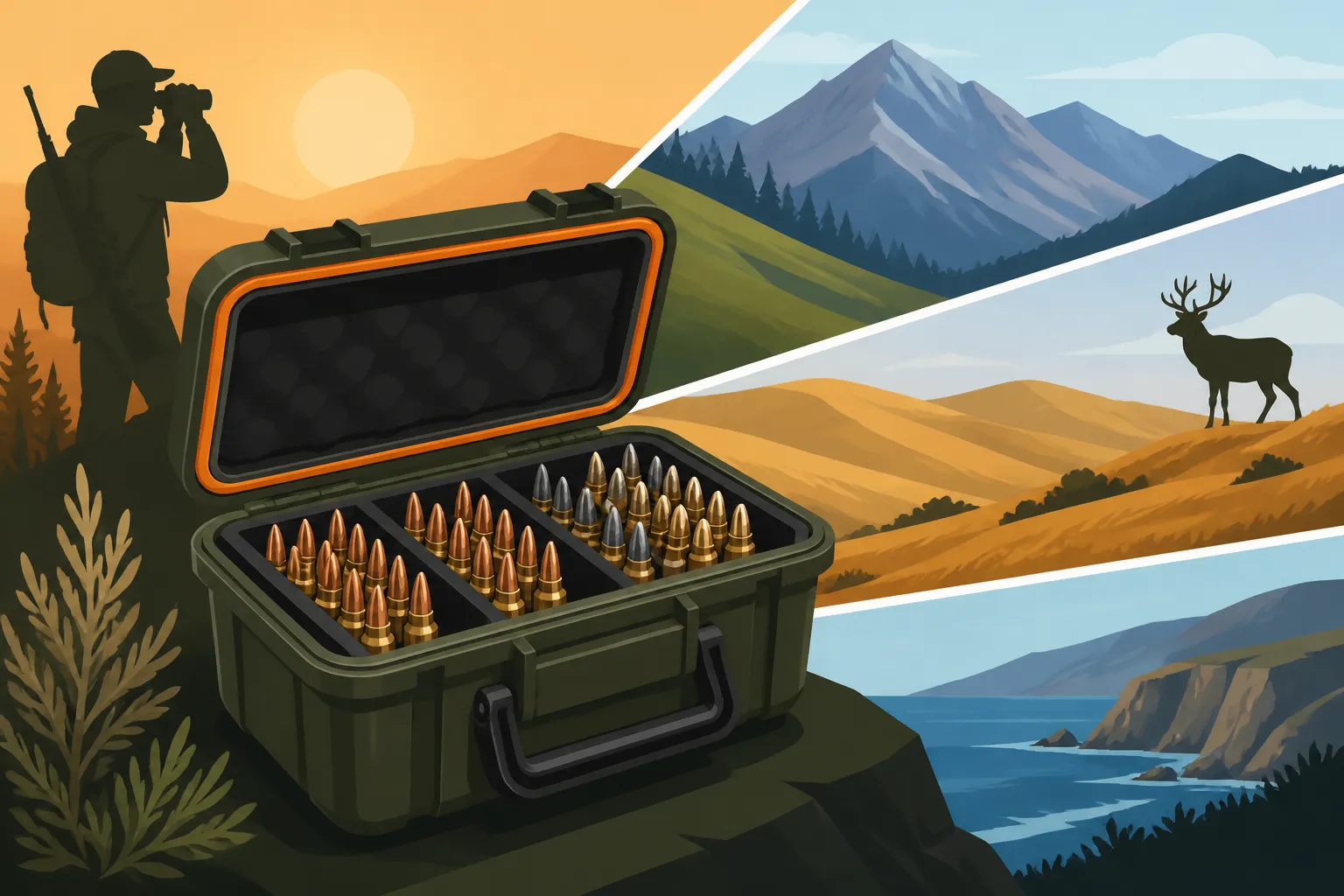
A superior ammo case will feature customizable foam inserts, individual cartridge trays, or multiple partitioned compartments. These allow you to cradle each round securely, preventing them from rattling around and potentially damaging bullet tips or primers. More importantly, they enable clear segregation of different calibers, bullet weights, and non-lead types. Some cases even come with pre-cut foam to fit specific ammunition boxes, offering an extra layer of protection and organization. This level of internal structure ensures you can quickly identify and access the correct ammunition without any guesswork, a crucial benefit when time is short and attention to detail matters, especially when using a tool like GoHunt to plan your precise movements.
Portability and Security for Peace of Mind
While protection and organization are key, an ammo case still needs to be practical for transport. For multi-zone hunting, you'll be moving your gear frequently, whether it's from your vehicle to camp, or from your truck to a blind. Look for cases that strike a balance between robust construction and manageable weight. Ergonomic handles that are comfortable to grip, even with gloves on, are a small but significant detail. Some larger cases even include wheels, which can be a godsend when you're moving a substantial amount of weight over relatively flat ground.
Security is another critical consideration, especially when transporting firearms and ammunition. Many quality cases feature reinforced padlock points, allowing you to secure your ammunition from unauthorized access. This isn't just about theft prevention; it's about responsible firearm ownership and adherence to transport laws. When you're traveling across different counties or leaving your vehicle unattended, knowing your ammunition is securely locked away provides essential peace of mind. A good case will offer this security without being overly cumbersome, ensuring your focus remains on the hunt, not on managing your gear's vulnerabilities.
Types of Ammo Cases and Their Best Uses for California Hunters
When you’re preparing for a hunt across California’s varied landscapes and diverse game populations, you’ll quickly realize that not all ammo cases are created equal. The “best” case often depends on the specific scenario, the amount of ammunition you need, and how you plan to transport it. Let’s break down the main types you’ll encounter and where they shine for a multi-zone hunter.
Hard Cases for Long-Distance Travel and Maximum Protection
For hunters making long hauls across the state, perhaps from the Central Valley up to Hunting California's High-Country X-Zones or down to the Mojave Desert, a robust hard case is an absolute must. These cases are typically constructed from heavy-duty polymer or aluminum, featuring thick walls, strong latches, and sometimes even pressure-equalization valves for air travel. Their primary benefit is unparalleled protection.
Hard cases are designed to withstand extreme impacts, crushing forces, and severe weather. If you’re flying to a remote hunt, using an ATV on rough backcountry trails, or simply want the ultimate safeguard for your valuable non-lead ammunition, a hard case is the way to go. Many come with pluck-and-fit foam interiors that allow you to customize compartments perfectly for different calibers, magazines, or even small accessories. While heavier and bulkier than other options, their peace-of-mind factor, especially when transporting a significant quantity of diverse ammunition types for various species, makes them invaluable. Just be mindful of their weight when packing for a solo trip into difficult terrain.
Soft Cases and Pouches for Field Carry and Quick Access
Once you’ve arrived at your general hunting area, a heavy hard case might be overkill or impractical for carrying into the field. This is where soft cases and smaller pouches become essential. These are designed for mobility and quick access to a limited number of rounds that you’ll need for a specific day’s hunt. They are usually made from durable nylon or canvas, often padded, and feature belt loops or MOLLE attachments for easy integration with your hunting pack or vest.
Think of these as your "active" ammo carriers. You might have a small, padded pouch holding 10-20 rounds of your primary deer rifle ammunition, easily accessible on your hip or pack strap as you're Still-Hunting California's Sierra Nevada Timber. Another pouch could hold a handful of shotgun shells for upland birds if you're doing a combo hunt. Their lightweight nature and flexibility make them perfect for stalking, climbing, or navigating thick brush. While they don't offer the same level of impact or weather protection as hard cases, they are perfectly suited for carrying the day's immediate needs, keeping them secure yet ready for action. Tools from GoHunt often recommend streamlined gear for quick field access, and these pouches fit that philosophy perfectly.
Dedicated Range Boxes for Load Development and Practice
While not strictly for "hunting" in the field, a dedicated range box plays a crucial role in preparing for a multi-zone hunt. California's lead-free mandate often means hunters are experimenting with new bullet types and loads, requiring extensive range time to ensure accuracy and consistent performance. A range box is designed to hold not just ammunition but also tools, cleaning supplies, spotting scopes, and other essentials for a productive session at the shooting range.
These boxes typically have multiple compartments, often with cantilevered trays, allowing you to organize different test loads, cleaning kits, and targets. You might bring several hundred rounds of various non-lead bullet weights for your .270 to find the optimal load for Best Non-Lead Bullets for California Deer-Sized Game. A good range box keeps everything tidy, prevents mix-ups during load testing, and makes transportation to and from the range much easier. By thoroughly vetting your ammunition performance before the season, you ensure confidence in your chosen rounds when the pressure is on during your actual hunt.
| Case Type | Primary Use | Protection Level | Portability | Capacity (Typical) | Best For |
|---|---|---|---|---|---|
| Hard Case | Long-distance travel, storage | Excellent | Low | High | Air travel, harsh conditions, bulk transport |
| Soft Case/Pouch | Field carry, quick access | Moderate | High | Low | Stalking, day hunts, active shooting |
| Range Box | Shooting range, load development | Good | Medium | Medium | Organized practice, testing loads |
Organizing and Maintaining Your Ammunition for Multi-Zone Hunts
Having the right ammo cases is only half the battle. To truly maximize their effectiveness for multi-zone California hunting, you need a system for organization and maintenance. This proactive approach will save you headaches, ensure compliance, and keep your ammunition performing at its peak.
Labeling and Inventory for Compliance and Efficiency
The varied regulations across California's hunting zones and specific public lands make meticulous labeling an absolute necessity. Don't rely on memory! Every compartment or individual container within your ammo case should be clearly labeled with at least the caliber, bullet weight, bullet type (e.g., "Non-Lead Copper Solid"), and its intended use (e.g., "Deer Zone D10"). If you're carrying specific loads for different game, make sure that's noted too. Imagine a game warden checking your ammo—a clearly labeled system demonstrates your diligence and understanding of California's Non-Lead Ammunition Requirement.
Keeping a simple inventory list can also be incredibly helpful, especially if you're carrying a large quantity or multiple types of ammunition. This list, perhaps stored in a waterproof pouch inside your main ammo case, allows you to quickly see what you have, how much, and for what purpose. It also helps with replenishment planning, so you're not caught short when Ordering Non-Lead Ammo Online for California before your next hunt. This attention to detail isn't just about avoiding trouble; it's about being a responsible, prepared hunter.
Temperature and Moisture Considerations for Long-Term Storage
Ammunition, particularly the primers and powder, is sensitive to extreme temperature fluctuations and high humidity. While a good case will offer protection in the field, your long-term storage solutions also matter. When you’re not actively hunting, store your ammo cases in a cool, dry place away from direct sunlight or extreme heat sources like attics or garages that can bake in the summer. A consistent, moderate temperature is ideal.
If you live in a particularly humid area of California, consider adding desiccant packs to your ammo cases, especially for long-term storage. These small packets absorb moisture and can significantly extend the shelf life of your ammunition. Periodically check these packs and replace them as needed. Proper storage prevents degradation of components, ensuring that your ammunition remains reliable year after year, ready for whatever California zone you decide to hunt next. This careful approach helps maintain the integrity of your rounds, crucial for accurate shots, whether you're deer hunting or chasing Wild Pig Hunting California Year-Round.
Pre-Hunt Checks and Replenishment Strategies
Before every multi-zone hunt, make it a ritual to conduct a thorough pre-hunt check of your ammunition. Open your cases, inspect your rounds for any signs of corrosion, damage, or loose bullets. Ensure that each round is seated correctly and that there are no cracks in the cartridge cases. This is also the time to verify that the ammunition you've packed matches the specific requirements for your target zone and game. Using a good hunting app from GoHunt can help cross-reference these regulations quickly.
Based on your inventory, make a list of what needs to be replenished. Perhaps you used more .223 rounds than anticipated on a predator hunt, or you're planning a new elk hunt that requires a different caliber. Factor in enough time for Sighting In Before Switching to Non-Lead if you're trying a new load. Don't wait until the last minute before season opener to realize you're short on non-lead ammunition. A consistent cycle of checking, labeling, and replenishing ensures you’re always prepared, minimizing stress and maximizing your time enjoying the diverse hunting opportunities California has to offer.
Disclaimer
This article is for general informational purposes only and does not constitute professional advice. Laws, prices and regulations vary by location and change over time. Consult a qualified professional for guidance on your specific situation.