Hunting California’s Sequoia National Forest
California's vast landscape offers incredible hunting opportunities, but for many, the sheer scale and ruggedness of places like the Sequoia National Forest can feel utterly overwhelming. You've looked at maps, you've seen the elevation changes, and maybe you've even driven through, wondering where on earth you'd even begin to tackle such a massive area for deer, bear, or pigs. This guide is here to break down the complexities of hunting the Sequoia National Forest, offering practical advice and strategies to help you navigate its diverse terrain and regulations, and hopefully, put some wild game in your freezer.
Exploring Sequoia's Diverse Hunting Opportunities
The Sequoia National Forest isn't just a place; it's an ecosystem, a sprawling mosaic of high-altitude granite peaks, dense conifer forests, oak woodlands, and chaparral-covered foothills. It’s this immense diversity that makes it so challenging yet so rewarding for hunters. You could spend a lifetime exploring its drainages and still feel like you’re just scratching the surface. But with a solid understanding of its layout and what game lives where, you can start to carve out a plan.
Major Game Species in Sequoia
When we talk about hunting in Sequoia, deer are often the first thing that comes to mind, and for good reason. The forest hosts both Columbia Blacktail deer, particularly in the lower, western fringes, and California Mule Deer as you climb into the higher elevations and eastern slopes. Finding where these two species overlap can be really interesting, often in the transitional zones of the Sierra foothills. Beyond deer, the Sequoia National Forest is home to a healthy population of black bears, which thrive in the dense timber and brushy canyons, especially where acorn crops or berry patches are abundant. And let's not forget the ever-present wild pigs, which, while not as widespread in the very highest elevations, certainly make their presence known in the oak-studded lower sections and canyons, especially around water sources. Small game, like quail and rabbits, are also scattered throughout, offering additional opportunities.
Imagine glassing a vast canyon at dawn, hoping to pick out a mule deer buck moving through the scattered timber, or perhaps still-hunting through a dense patch of manzanita, keeping an eye out for a black bear foraging for berries. Each species presents its own unique challenge and requires different tactics, which is part of what makes hunting Sequoia such a rich experience. It's not just about what you're hunting, but where and how you adapt to their specific habitats within this grand forest.
The Vastness and Varied Terrain
The sheer scale of Sequoia National Forest, encompassing over 1.1 million acres, is both its greatest asset and its biggest hurdle. You're not just dealing with a few rolling hills; you're looking at a vertical climb from around 1,000 feet in the foothills up to over 12,000 feet in the High Sierra. This dramatic elevation change means drastically different habitats and conditions, sometimes within a few miles. You'll encounter everything from dry, rocky chaparral to moist, shady pine forests, to barren alpine scree fields.
This varied terrain dictates everything from how game moves to what gear you need. A hunt in the lower oak woodlands in early fall might involve warm temperatures and thick brush, requiring lightweight layers and tough briar pants. Just a few thousand feet higher, you could be facing freezing temperatures and even snow, demanding insulated clothing and robust backcountry gear. Understanding these micro-climates and elevation-specific challenges is crucial. It means you can't just pick a spot on the map; you have to consider the lay of the land, the access roads (or lack thereof), and what conditions your body and gear will be up against.
Navigating Sequoia National Forest Regulations
Hunting in California, especially on public land, comes with its fair share of rules and regulations. The Sequoia National Forest, being a massive public resource, falls under these state-mandated requirements. Getting a handle on these before you even set foot in the woods is paramount, not just for legal compliance but for a successful and ethical hunt. Overlooking a small detail can quickly turn a hopeful trip into a frustrating one.
Understanding Deer Zone Overlaps
The Sequoia National Forest spans across several of California's designated deer zones, primarily D6 and D7. This is where things can get a little tricky, as each zone has its own specific season dates and tag allocations. For example, the D6 zone typically covers much of the higher elevation central Sierra Nevada, while D7 often encompasses the transitional areas and lower western slopes of the southern Sierra. You might find yourself hunting a drainage that starts in D7 and climbs into D6, making it critical to know exactly where you are on the map and which tag you're holding.
Knowing Which Zone Covers Your California County is just the start; you need to pinpoint the specific zone boundaries within the forest you plan to hunt. This means scrutinizing your maps – digital tools like onX Hunt or GoHunt are invaluable here – and understanding the specific geographic descriptions for each zone. Holding a D7 tag and inadvertently crossing into D6 on opening day could lead to a serious violation. Always double-check your location and cross-reference it with the current year's regulations booklet.
| Deer Zone | General Location in Sequoia NF | Typical Habitat | Primary Deer Species | General Season Dates (Rifle) |
|---|---|---|---|---|
| D6 | Higher elevations, Central Sierra | Mixed conifer forest, alpine | California Mule Deer | Late September – Mid October |
| D7 | Lower to mid-elevations, Western Sierra | Oak woodlands, chaparral, conifer | Columbia Blacktail, Mule Deer | Late September – Late October |
Non-Lead Ammunition Compliance
One of the most significant regulations for hunting in California is the statewide requirement for non-lead ammunition for all species, everywhere. This is not just a suggestion; it's the law. If you're planning a trip to Sequoia National Forest, your rifle, shotgun, or muzzleloader must be loaded with certified non-lead projectiles. This rule applies to deer, bear, pigs, and even small game if you're using a firearm. This mandate is crucial for protecting wildlife, particularly the California condor, from lead poisoning. For a deeper dive into this, check out California's Non-Lead Ammunition Requirement.
This isn't just about grabbing any box of ammo off the shelf. You need to ensure the ammunition you buy is specifically designed and certified as non-lead. Many hunters have found that their rifles might shoot differently with non-lead rounds compared to traditional lead projectiles. This means it's absolutely essential to sight in your rifle with your chosen non-lead ammunition well before your hunt. Don't wait until the week before opening day; do it months in advance to ensure accuracy and confidence in your shot. Different bullet weights and designs can impact your point of aim, and you want to be intimately familiar with how your setup performs.
Specific Seasons for Bear and Pigs
Beyond deer, if you're hoping to chase black bears or wild pigs in Sequoia, you'll need to pay close attention to their unique season dates and regulations. Black bear hunting in California operates under a statewide quota, meaning the season can close early if a certain number of bears are harvested. You absolutely need to stay on top of the California Department of Fish and Wildlife (CDFW) website or phone hotlines to check if the quota has been met, especially as the season progresses. For detailed season dates, refer to resources like California Bear General Season Opening Day or California Bear Archery Season Dates.
Wild pigs, on the other hand, offer a much more flexible hunting opportunity in California, largely because they are considered an invasive species. They have a year-round open season and no bag limit, though you still need a valid California Wild Pig Tag Costs for each pig harvested. While pigs aren't found throughout the entirety of Sequoia National Forest, they can be plentiful in the lower elevations and particularly in oak woodlands where acorns are a reliable food source, especially near water. Hunting pigs often means focusing on different terrain than deer or bear, looking for rooting sign, wallows, and trails leading to water.
Strategic Scouting and E-Scouting in Sequoia
Hunting Sequoia National Forest isn't a "show up and shoot" kind of deal. This isn't a small private parcel where you know every deer trail. This is vast, unforgiving country that demands meticulous planning and effective scouting. You need a strategy to break down this enormous area into manageable pieces, and that starts long before you ever step foot in the woods. Modern technology has revolutionized this process, making it more efficient than ever before.
Leveraging Digital Mapping Tools
In a place as expansive and rugged as Sequoia, digital mapping tools are no longer a luxury; they're an absolute necessity. Services like onX Hunt or GoHunt provide an incredible advantage by layering public and private land boundaries, topographical maps, satellite imagery, and even historical burn scar data right at your fingertips. Instead of blindly hiking miles, you can spend hours at home e-scouting, looking for promising features. This is critical for Scouting California Public Land Before Season.
Imagine zooming in on a specific ridge line, identifying a saddle that might act as a natural funnel for deer moving between bedding and feeding areas. You can mark potential water sources, old logging roads that offer access, or even areas of dense cover where a bear might bed. With onX Hunt, you can overlay property lines to ensure you're always on legal hunting ground, avoiding any accidental trespass issues. This kind of pre-hunt homework allows you to narrow down vast tracts of land into a few high-percentage areas, saving you countless miles and precious time in the field. When planning out your approach, consider how to use these maps to identify Entry Routes Through a Sierra Foothill Meadow or analyze Scrape Lines Along a Forest Service Road from satellite imagery.
Identifying Key Habitat Features
Digital maps help you spot these crucial habitat features from afar. Look for transition zones – where dense timber meets open meadows, or where chaparral gives way to oak trees. These are often high-traffic areas for deer and bear seeking food, cover, and water. Water sources, especially in the drier parts of the forest, are absolute magnets for all game. Springs, seeps, and creeks will draw animals in, particularly during warmer early season hunts. You can often spot these on topo maps by looking for converging contour lines or "green" areas on satellite imagery during dry periods.
Old burn scars are another prime feature to seek out. While initially devastating, these areas often regrow with lush forage in the years following a fire, creating excellent food sources for deer and bear. These areas also tend to open up the canopy, making glassing more effective. Conversely, dense, old-growth timber, while offering cover, can be incredibly difficult to navigate and hunt effectively without a specific strategy like still-hunting. Pay attention to how the terrain affects Wind and Thermals in Steep Sierra Country, as these invisible forces will dictate how animals move and how you should approach them.
On-the-Ground Reconnaissance
As valuable as e-scouting is, there's simply no substitute for putting boots on the ground. A scouting trip a month or two before the season, or even the spring prior, can provide invaluable real-world confirmation of what your maps showed you. During these trips, you're looking for fresh sign: tracks, scat, rubs, and active trails. A virtual funnel might look great on the map, but a physical visit might reveal it's overgrown with impenetrable brush or has been heavily used by hikers.
Consider deploying trail cameras in promising areas, especially near water sources, saddles, or rub lines you've identified. While rules vary on public land, many areas within Sequoia National Forest allow trail cameras. They can confirm the presence of game, give you an idea of their preferred travel times, and even help you identify specific bucks or bears. Just remember to check your local regulations carefully regarding Trail Camera Rules on California Public Land to ensure compliance. A good camera strategy can drastically improve your chances by showing you exactly when and where animals are active.
Effective Hunting Tactics for Sequoia's Terrain
Once you've done your homework and found a promising area in Sequoia, it's time to adapt your hunting style to the specific terrain you'll encounter. This isn't a one-size-fits-all kind of forest; what works in the dense conifer stands might be useless on a wide-open ridge. Successful hunting here means being versatile and understanding how to capitalize on the environment.
Still-Hunting the Dense Timber
Many parts of Sequoia National Forest are blanketed in dense, towering timber. This kind of country can feel overwhelming, limiting visibility and making long-range shots impossible. This is where still-hunting truly shines. It’s a slow, deliberate method of moving through the woods, taking one or two steps, then stopping to scan and listen for several minutes. You're moving at the pace of the forest, not your own. For a deep dive, consider Still-Hunting California's Sierra Nevada Timber.
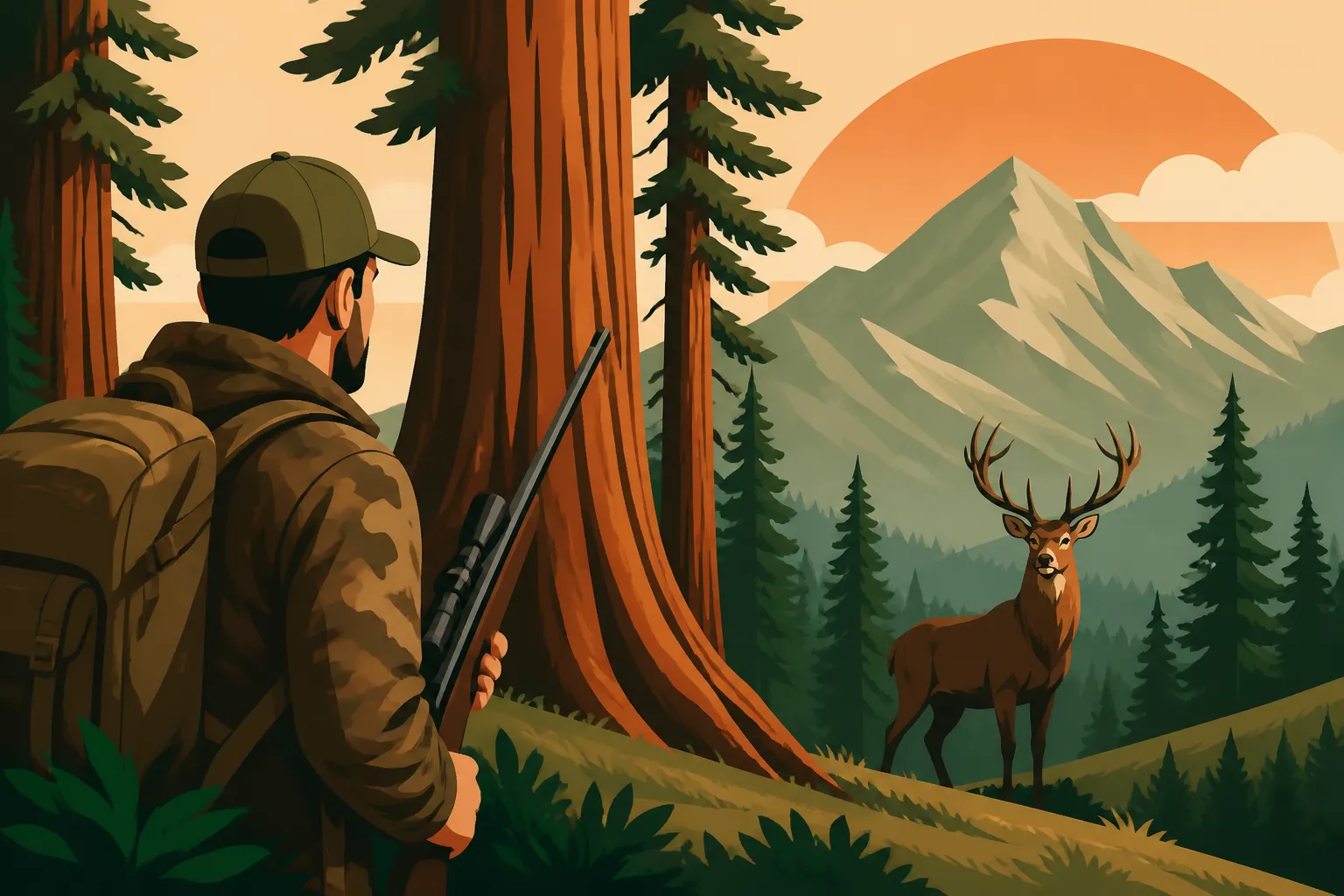
The key to successful still-hunting in timber is patience and stealth. You're looking for the subtle flick of an ear, the horizontal line of a deer's back against the vertical trees, or the dark shape of a bear in the shadows. Pay close attention to the wind, keeping it in your favor, and use thermals to your advantage, especially in the mornings as the air starts to warm and rise, or in the evenings as it cools and falls. In this thick cover, you'll need to be ready for quick, close-range shots, so ensure your rifle is shouldered quietly and your optics are clear. This technique is often most effective in areas with good mast crops (acorns) or berry bushes, where animals are likely to be actively feeding.
Glassing the Open Ridges and Canyons
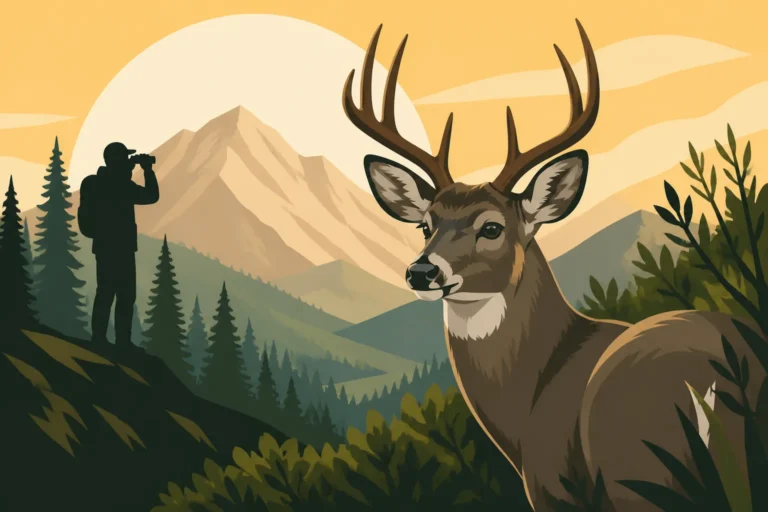
While much of Sequoia is timbered, you'll also find expansive open ridges, clear-cuts, burn scars, and vast canyons that demand a completely different approach: glassing. This technique involves finding a high vantage point and systematically scanning the terrain below with binoculars or a spotting scope. This is particularly effective for Glassing Mule Deer in Open California Country.
Set up where you can see large swaths of terrain, ideally with the sun at your back. Use good quality binoculars (10×42 or 10×50 are popular) on a tripod for stability, or a spotting scope for picking apart distant shadows. Begin by scanning the edges of shadows, rockslides, and any transition zones where animals might be bedded or moving. Pay extra attention during the first and last hours of light when game is most active. Look for anything that looks "out of place" – a patch of hide, the glint of an antler, or a horizontal line in a vertical world. This method is a test of patience, but it can pay off immensely, allowing you to cover vast amounts of ground without expending unnecessary energy.
Focusing on Water and Forage Areas
Regardless of the species you're pursuing in Sequoia, all animals need water and food. Identifying and focusing your efforts on these critical resources can dramatically increase your chances of success, especially during dry periods or late in the season when natural forage might be scarce. Deer, bear, and pigs will all gravitate towards consistent water sources.
In early season or during dry years, sitting a water hole or a seeping spring can be incredibly effective. Animals will often hit water in the mornings or evenings, and a well-concealed ground blind or natural ambush point can put you in a prime position. Similarly, actively feeding areas are crucial. For deer and bear, look for areas with abundant acorn crops, berry bushes (like manzanita or elderberry), or new growth in burn scars. For pigs, areas of fresh rooting in oak woodlands indicate active feeding. Remember to factor in recent weather; a sudden rain might create temporary water sources, dispersing game, while prolonged dry spells will concentrate them around reliable springs. Understanding these patterns is key to Late-Season Food Sources for California Deer and other game.
Essential Gear and Backcountry Preparedness
Hunting in the Sequoia National Forest means being prepared for anything. This isn't a casual stroll; it's a serious backcountry endeavor that requires robust gear, a solid understanding of wilderness navigation, and a strong emphasis on safety. The conditions can change rapidly, and you might be miles from the nearest road or even cell service.
Clothing Systems for Extreme Changes
The weather in Sequoia National Forest, particularly with its wide elevation range, can be incredibly unpredictable. You might start your day in a t-shirt and light jacket in the foothills, only to find yourself facing freezing rain or even snow at higher elevations by afternoon. This demands a well-thought-out layering system. Forget bulky, single-purpose garments; think versatile.
A good layering system typically includes a moisture-wicking base layer (synthetic or merino wool), an insulating mid-layer (fleece or puff jacket), and a waterproof/windproof outer shell. This allows you to add or shed layers as conditions change, regulating your body temperature to prevent both overheating and hypothermia. You'll also need sturdy, broken-in hiking boots with good ankle support, suitable for steep, rocky, and potentially wet terrain. For more on managing variable conditions, consider Layering for a Cold Sierra Morning or Staying Cool During a Hot Zone A Hunt, as the principles apply across seasons and zones.
Backpack Loadout for Multi-Day Hunts
If you're planning on venturing into Sequoia's true backcountry for a multi-day hunt, your pack loadout becomes absolutely critical. Every item needs to serve a purpose, as every ounce counts when you're climbing thousands of feet in elevation. Beyond your rifle or bow, ammunition, and optics, you'll need essentials for survival and comfort.
This includes enough food and water (or a reliable water filter like a Sawyer Squeeze or Katadyn BeFree, as water sources can be unpredictable), a lightweight tent or tarp, a sleeping bag rated for the expected nighttime temperatures, and a sleeping pad for insulation. Navigation tools are paramount: a reliable GPS device or a smartphone with a robust offline mapping app (like onX Hunt or Gaia GPS) combined with a physical compass and paper map are non-negotiable backups. Don't forget headlamps, a first-aid kit, fire starter, knife, cordage, and emergency shelter. For comprehensive advice on what to carry, check out Packs and Gear for a Backcountry Elk Hunt, as much of the advice on wilderness preparedness transfers directly to deer and bear hunts.
Safety, Communication, and First Aid
Being prepared for the unexpected is perhaps the most important aspect of hunting in Sequoia. Accidents happen, people get lost, and weather can turn dangerous. Always tell someone your exact hunting plan – where you're going, your planned route, and when you expect to return. This "float plan" is a simple but life-saving step.
Cell service is virtually non-existent in much of Sequoia's backcountry, so relying on your phone for emergencies is a gamble. Consider carrying a satellite communicator or a personal locator beacon (PLB) like a Garmin inReach or Zoleo device. These allow you to send emergency messages or check in with loved ones even when off-grid. A well-stocked first-aid kit, tailored for wilderness emergencies, is also essential. Know how to treat common injuries like cuts, sprains, blisters, and how to handle more serious situations until help arrives. Understanding basic first aid can be the difference between a minor inconvenience and a life-threatening situation, especially when you might be days from definitive medical care.
Disclaimer
This article is for general informational purposes only and does not constitute professional advice. Laws, prices and regulations vary by location and change over time. Consult a qualified professional for guidance on your specific situation.