Black Bear Hunting California’s Spot-and-Stalk Season
Hunting black bear in California is a completely unique challenge, far removed from the dog or bait hunting traditions you might find elsewhere. Here, it’s all about the spot-and-stalk, often in rugged, unforgiving terrain, and with the added pressure of a statewide quota that can close the season early. If you've been feeling overwhelmed trying to figure out where to even begin, or frustrated by the lack of direct, practical advice for our specific regulations, this comprehensive guide is for you. We'll dive deep into the strategies and details you need to successfully hunt black bear during California's spot-and-stalk season.
Understanding California's Unique Bear Hunting Framework
California's approach to bear hunting is distinct, shaped by conservation efforts, public sentiment, and the unique challenges of managing a robust, yet often misunderstood, bear population. Unlike many other states, traditional methods like baiting and using hounds are strictly prohibited, forcing hunters to embrace a more active, hands-on style of hunting: the spot-and-stalk. This isn't just a preference; it's the law, and it dictates every aspect of how we pursue bears here.
The Statewide Quota and Its Impact
One of the most critical elements of California bear hunting is the statewide quota. The California Department of Fish and Wildlife (CDFW) sets a hard cap on the number of bears that can be harvested each year. For example, for many years, this limit has been 1,700 bears statewide, and once that number is reached, the season closes, regardless of the published end date. This means that a season could technically run for several months, but if hunters are successful early and the quota is met, it could shut down weeks, or even months, ahead of schedule.
This quota system introduces a layer of urgency and unpredictability that doesn't exist in many other hunts. Hunters often feel the pressure to get out early in the season, particularly during the archery or early general seasons, to avoid being caught out if the quota fills quickly. Keeping a close eye on the CDFW's official bear harvest updates is absolutely essential. You can typically find these updates on the CDFW website, and they are usually posted weekly or even more frequently as the season progresses. Ignoring these updates can lead to a hunt ending prematurely or, worse, harvesting a bear after the season has closed, which carries serious penalties. The best practice is to Check Whether the Bear Quota Has Closed every single time you head out or plan a trip.
Non-Lead Ammunition Mandate
Another foundational aspect of California hunting, which directly affects bear hunters, is the statewide requirement for non-lead ammunition. Since July 1, 2019, all hunting of wildlife with firearms in California must be done using non-lead projectiles. This law was primarily enacted to protect the California condor and other scavengers from lead poisoning.
For bear hunters, this means meticulously selecting appropriate non-lead bullets for your rifle. Most common non-lead options are copper or copper-alloy bullets. While these bullets perform exceptionally well, offering excellent weight retention and deep penetration, they can behave differently than traditional lead-core bullets. It's crucial to understand how Choosing Non-Lead Rifle Ammunition in California impacts your ballistics and ensure your rifle is properly sighted in with your chosen non-lead load. This might involve different bullet weights or designs than you're used to, and it's not something you want to discover mid-hunt. Testing your chosen ammunition thoroughly at the range, including at various distances, is non-negotiable for ethical hunting.
The Spot-and-Stalk Mentality and What It Demands
Since baiting and hounds are off the table, California bear hunting is almost exclusively a spot-and-stalk game. This isn't just a hunting method; it's a deep dive into the animal's world, requiring patience, keen observation, and a solid understanding of bear behavior and habitat. It’s a physically demanding and mentally challenging pursuit, but incredibly rewarding when it all comes together.
Patience, Persistence, and Observation
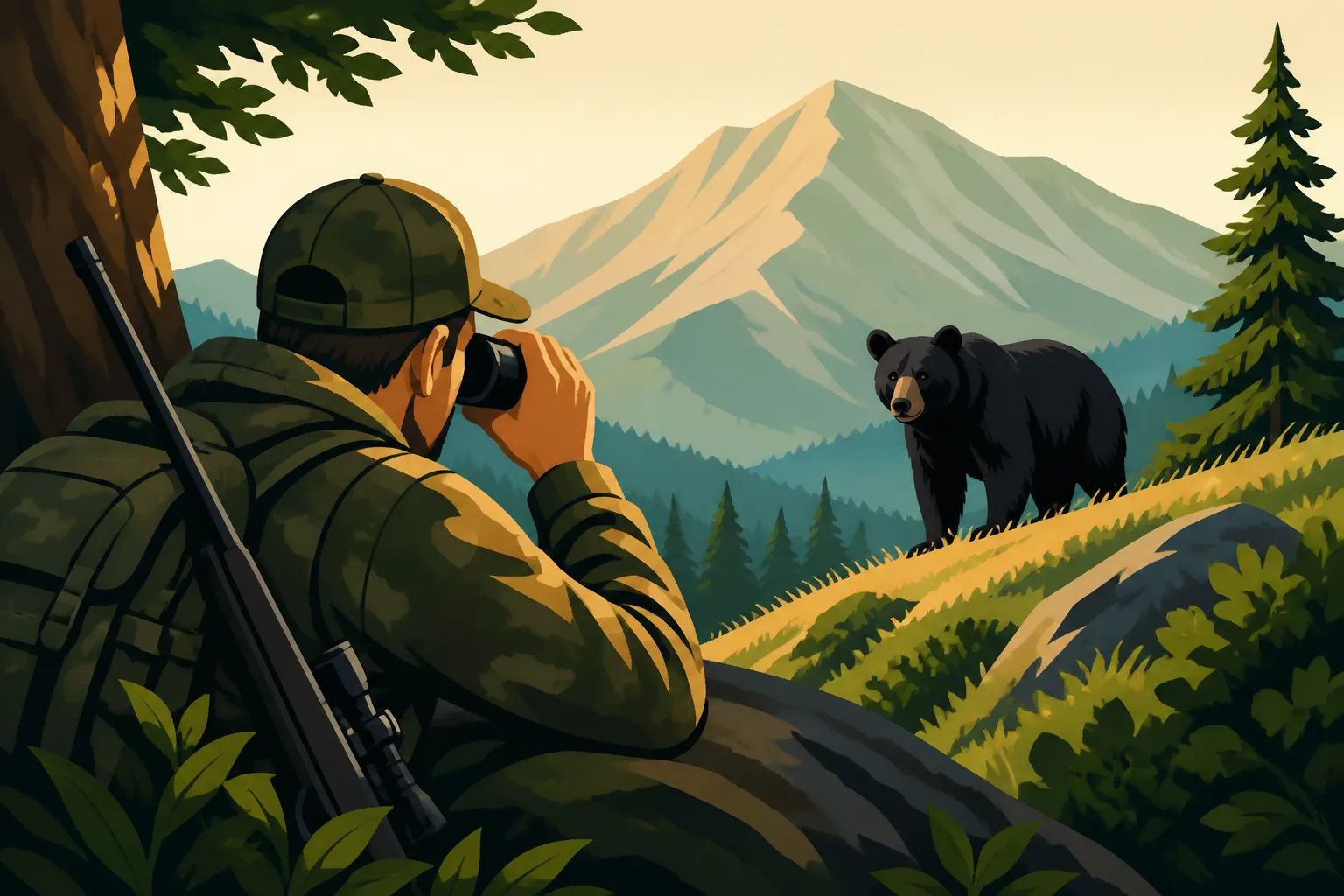
The first thing you need to pack for a California spot-and-stalk bear hunt isn't in your backpack; it's in your head. Patience. You're not waiting for a bear to come to a bait pile; you're actively searching for it, often over vast tracts of country. This means long hours behind binoculars and spotting scopes, systematically dissecting hillsides, canyons, and timber patches for any sign of movement, color variation, or distinct shape that screams "bear."
Persistence is equally vital. There will be days, or even weeks, where you see nothing but squirrels and deer. The key is not to get discouraged. Every hour spent glassing, every mile walked, is adding to your knowledge of the terrain and the animals. You're building a mental map of prime feeding areas, travel corridors, and bedding sites. Observation skills are honed over time, learning to differentiate a dark rock from a bedded bear, or a shadow from a moving animal. It's an immersive experience that forces you to slow down and truly become one with the environment. This is why many hunters consider it the most ethical and engaging way to hunt; it's a true test of woodsmanship.
Physical Fitness and Mental Fortitude
California's bear country is often rugged, steep, and remote. From the dense, brushy coastal ranges to the high-elevation Sierra Nevada, you'll be covering challenging terrain. A successful spot-and-stalk requires significant physical fitness. You'll be hiking miles, often with a heavy pack, gaining and losing elevation, and doing so quietly and carefully to avoid spooking game. Being in good shape isn't just about comfort; it's about safety and effectiveness.
Mental fortitude goes hand-in-hand with physical endurance. Long days without success can wear you down. The heat of the early season can be brutal, and the frustration of a blown stalk or a bear that simply disappears can be disheartening. You need the mental toughness to push through, to maintain focus, and to stay optimistic. This means preparing not just your body, but your mind for the challenge. Understanding that success is never guaranteed, but the experience itself is invaluable, is part of embracing the spot-and-stalk journey. It’s a chess match played across a vast landscape, where the bear holds most of the cards.
Key Habitats and Scouting for Bears
Finding bears in California means understanding where they live, what they eat, and how they move through their environment. California's diverse landscapes offer a range of habitats, from dense timber to chaparral, and knowing what to look for in each is paramount.
Preferred Bear Habitats and Food Sources
California black bears are highly adaptable, but they generally prefer areas with a mix of dense cover for security and abundant food sources. You'll find them in diverse landscapes, including:
- Oak Woodlands: These are classic bear hotspots, particularly in the coastal ranges and Sierra Nevada foothills. Bears absolutely love acorns, which are a critical fall food source. During late summer and early fall, when acorns are dropping, oak woodlands become prime real estate. Look for areas with a good mix of mature oaks providing cover and food. Hunting Coastal Range Oak Woodlands often puts you in prime bear country.
- Chaparral and Brushfields: Dense stands of manzanita, ceanothus, and other brush species provide excellent cover and, at certain times of the year, berries that bears will gorge on. These areas can be incredibly thick and challenging to navigate, but bears use them extensively for bedding and feeding, especially during the spring and summer berry seasons.
- Conifer Forests: Higher elevation pine, fir, and cedar forests offer cooler temperatures, dense cover, and various food items like berries, fungi, and insects. Bears will often move into these areas during the hotter parts of the year or to feed on pine nuts or other mast crops.
- Riparian Corridors: Stream bottoms, river banks, and areas around springs provide water, lush vegetation, and often good travel corridors for bears. These areas are magnets for bears, especially in dry environments or during periods of drought.
Food sources are the ultimate key. Bears are opportunistic omnivores, and their diet shifts with the seasons. In spring, they emerge from dens, often feeding on new green shoots, grasses, and carrion. As summer progresses, berries (manzanita, huckleberry, blackberry, coffeeberry) become crucial. In late summer and fall, acorns, nuts, and other mast crops are vital for putting on fat reserves for winter. Keep an eye on what's ripe and available in your hunting area, as this will dictate where bears are concentrated.
Identifying Bear Sign and Movement Patterns
Scouting is your most powerful tool, especially for a spot-and-stalk hunt. You need to become an expert at reading the landscape for bear sign.
- Tracks: Look for large, five-toed paw prints in soft dirt, mud near water sources, or along game trails. Front prints are wider, hind prints are longer, resembling a human foot. Pay attention to the direction of travel and freshness.
- Scat: Bear droppings vary greatly depending on their diet. In spring, it might be green and grassy. In summer, full of berry seeds. In fall, packed with acorn shells. Fresh scat indicates recent activity.
- Rub Trees: Bears often rub against trees (often pines or cedars) to mark their territory, scratch an itch, or remove shedding fur. Look for patches of rough bark that are worn smooth or even have hair stuck to them, often at shoulder height.
- Rooting and Digging: Bears use their powerful claws to dig for grubs, roots, and bulbs. Look for disturbed earth, overturned rocks, or claw marks on logs where they've torn them apart looking for insects.
- Bedding Areas: Bears will create daybeds in dense cover, under fallen logs, or in thickets. These can be shallow depressions in the vegetation, sometimes with a few broken branches nearby.
- Trails: While bears use deer trails, they also create their own distinct paths, often wider and more direct through thick brush, especially leading to water or food sources.
When scouting, don't just look for where bears are, but how they're using the terrain. Are they crossing a ridge to get from a bedding area to a feeding area? Is there a particular saddle or funnel they're using? What are the prevailing winds in the area, and how might that affect a stalk? Understanding these movement patterns is what will allow you to predict their behavior and set up a successful stalk. Tools like those offered by GoHunt, with detailed satellite imagery and public land overlays, can be incredibly helpful for identifying potential travel corridors and glassing locations before you even set foot in the field.
Essential Gear for the California Bear Hunter
Equipping yourself properly for a California spot-and-stalk bear hunt is crucial for both success and safety. The terrain can be brutal, the weather unpredictable, and the distances long. Investing in quality gear designed for this specific type of hunting will make a significant difference.
High-Quality Optics are Non-Negotiable
If you take one thing from this guide about gear, make it this: invest in the best optics you can possibly afford. Since you can't bait or use dogs, your eyes, enhanced by optics, are your primary scouting tool.
- Binoculars: A good pair of 10×42 or 10×50 binoculars are your workhorse. They should be clear, bright, and durable. Spend hours behind them, systematically picking apart every inch of a hillside. Look for movement, subtle color changes, and distinct shapes that don't belong.
- Spotting Scope: For truly distant bears or for confirming if that dark patch is indeed a bear (and what kind of bear it is), a high-power spotting scope (e.g., 20-60x or 25-75x) is invaluable. Paired with a sturdy tripod, it allows you to literally pick apart mountainsides from miles away. It's especially useful when Glassing Mule Deer in Open California Country, and the same principles apply to bears. Being able to confidently identify a bear before committing to a multi-hour stalk will save you a lot of wasted effort.
- Rangefinder: Ethical shot placement is paramount, especially with non-lead ammunition. A reliable rangefinder will give you precise distances, removing guesswork and increasing your confidence in making a clean shot. Look for one that's fast, accurate, and capable of ranging out to your rifle's effective range.
Remember, clear glass makes all the difference in those critical low-light periods at dawn and dusk when bears are most active.
Appropriate Clothing and Footwear
California's bear season often spans from hot, dry August archery openers to cooler, potentially wet general seasons in fall. Your clothing needs to be adaptable.
- Layering System: A good layering system is key. Start with a moisture-wicking base layer (merino wool or synthetic) to manage sweat in warm weather or insulate in cold. Add mid-layers for warmth (fleece or puffy insulation) and an outer shell that's waterproof and windproof. This allows you to adjust to changing conditions throughout the day and as you gain/lose elevation.
- Camo vs. Earth Tones: While camouflage can be helpful, it's less critical than quiet, scent-controlled movement. Earth-toned greens, browns, and grays blend in well. More important than the pattern is the fabric – choose quiet materials that won't rustle loudly as you move through brush.
- Footwear: Your boots are arguably your most important piece of clothing. You'll be covering miles over uneven, often steep terrain. Invest in comfortable, waterproof, durable hiking boots with good ankle support. Break them in well before your hunt to avoid blisters. Many hunters prefer a sturdy leather boot for durability in abrasive chaparral or rocky areas, while others opt for lighter synthetic boots for long hikes. Make sure they fit perfectly with the socks you plan to wear.
Navigation Tools and Communication Devices
Bear country can be remote, and getting lost is a serious concern.
- GPS Device/Mapping App: A dedicated GPS unit or a reliable mapping app on your phone (like Gaia GPS or the mapping features on GoHunt) is essential. Download offline maps of your hunting area before you leave service. Mark your vehicle, important landmarks, and potential bear sign. Always carry a physical map and compass as a backup, and know how to use them.
- Satellite Communicator: For truly remote areas with no cell service, a satellite communicator (e.g., Garmin inReach or Zoleo) can be a lifesaver. It allows you to send and receive text messages, share your location, and, critically, send an SOS in an emergency. Never venture into the backcountry without a way to communicate.
- First-Aid Kit: A well-stocked first-aid kit is mandatory. Blisters, cuts, scrapes, and sprains are common in rugged terrain. Know how to use everything in your kit.
Having the right Gear for Spot-and-Stalk Bear Hunting isn't about being fancy; it's about being prepared, safe, and effective when that hard-earned opportunity arises.
Executing the Spot-and-Stalk: Techniques and Tactics
Successfully closing the distance on a bear is where the art and science of spot-and-stalk truly come together. It demands meticulous planning, silent movement, and a deep respect for the bear's senses. Every stalk is different, but the core principles remain the same.
Finding and Glassing Potential Bear Country
The hunt often begins by identifying promising habitat. Use topographic maps and aerial imagery, perhaps through platforms like GoHunt, to pinpoint areas with good cover, water sources, and potential feeding areas, especially during the time of year you're hunting. Ridge lines and high vantage points are your best friends. From these elevated positions, you can use your binoculars and spotting scope to systematically glass large expanses of terrain.
- Grid Search: Don't just scan randomly. Start at one end of a visible area and slowly work your way across, like reading a book, from top to bottom, then move your field of view over and repeat. Pay close attention to edges where different habitats meet, shaded areas, and around natural features like rock outcroppings or dense thickets.
- Focus on Movement and Contrast: Bears can be incredibly difficult to spot, often blending seamlessly with their surroundings. Look for any movement, however slight. Sometimes it's not the entire bear you see, but just a flash of a leg, an ear flick, or the distinctive hump of its back. Also, look for contrasts—a dark patch that's too uniform, or a shadow that seems to have depth.
- Timing: Bears are most active during low-light periods—dawn and dusk—especially in warmer weather. This is when they'll often be out feeding in more open areas. Midday, they tend to bed down in dense cover. However, a cool, cloudy day can see them active throughout.
Once you spot a potential bear, observe it for as long as possible. Confirm it's a bear, assess its size, and try to determine its activity pattern. Is it feeding, moving, or bedded down? This information is crucial for planning your approach.
The Art of the Stalk: Wind, Cover, and Terrain
Once you've spotted a bear you want to pursue, the real challenge begins. A successful stalk is a careful dance between you and the animal, with wind, cover, and terrain as your partners.
- Wind is King: Always, always, always keep the wind in your favor. A bear's nose is its most powerful sense, far superior to its eyesight or hearing. If a bear catches your scent, your hunt is over. Plan your approach to keep the wind blowing from the bear towards you, or at least across your path, never from you to the bear. Use a wind checker powder frequently, even on seemingly calm days, as thermals and micro-currents can be unpredictable. In steep Sierra country, understanding Wind and Thermals in Steep Sierra Country is absolutely critical.
- Utilize Cover: Use every bit of terrain and vegetation to your advantage. Stay in ravines, behind ridges, in the shadows of large trees, or within dense brush. Move slowly and deliberately, keeping a low profile. Avoid skylining yourself on ridges. The goal is to remain unseen for the entire approach.
- Navigate Terrain Quietly: Every step matters. Watch where you place your feet, avoiding snapping twigs, crunching dry leaves, or dislodging rocks. If you need to stop, do so in a position where you can still observe the bear without being seen. Sometimes, you'll need to move excruciatingly slowly, taking minutes to cover just a few yards.
- Anticipate Movement: Try to anticipate where the bear might move. If it's feeding, it will likely continue to move in that general area. If it's walking along a game trail, consider where that trail leads and if there's an opportunity to cut it off. Be prepared for the bear to disappear into cover; you might need to patiently wait for it to reappear or adjust your stalk accordingly.
- Final Approach: As you get closer, your movements become even more critical. This is where your ability to remain calm under pressure is tested. When you get within effective shooting range, find a solid rest for your shot. Take your time, confirm your target, and ensure a clear, ethical shot opportunity.
Remember, a successful stalk often takes hours, sometimes covering significant distance. It’s a testament to patience and precision, embodying the true spirit of Spot-and-Stalk California Bear Hunting Before the Quota Closes.
Field Judging and Ethical Shot Placement
Taking an ethical shot is the paramount responsibility of any hunter, and for bears, it requires careful consideration of their anatomy and the behavior of non-lead projectiles. Field judging a bear can also be notoriously difficult, making careful observation even more critical.
The Challenge of Field Judging Bears
Bears are often tricky to field judge. They can look significantly larger or smaller depending on their posture, the terrain, and their coat condition. It's easy to mistake a large sow for a boar, or a young bear for a mature one. While California doesn't have an antler point restriction or gender-specific tags for bears, ethical hunting often means avoiding sows with cubs.
- Head Shape and Ear Size: Larger boars often have broader heads with smaller-appearing ears in proportion to their head size. Sows tend to have more triangular heads with larger, more prominent ears.
- Body Proportions: Mature bears tend to have thicker, more blocky bodies, especially in the shoulders and neck. Younger bears will look lankier, with longer legs relative to their body size.
- Movement and Behavior: Sows with cubs will often exhibit maternal behavior, frequently looking around for their offspring. Cubs will often follow closely behind the sow. If you see cubs, assume it's a sow and pass on the shot.
- Genitals: If the bear is close enough and in a position to clearly see, you might be able to identify male genitalia. However, this is rarely reliable in the field.
The best advice is to take your time. Glass the bear thoroughly, look for any accompanying smaller bears, and if you have any doubt, particularly about it being a sow with cubs, always pass. A black bear sow typically gives birth to 1-3 cubs in late winter, and these cubs will stay with her for 1.5 to 2 years.
Shot Placement for California Black Bears
When the moment of truth arrives, precise shot placement is critical for a quick, humane kill. Bears are incredibly tough animals, and their anatomy, combined with the characteristics of non-lead bullets, requires careful attention.
- Heart-Lung Shot: The most effective and ethical shot for a bear is the heart-lung area, located just behind the shoulder. Aim for the front third of the body, just behind the crease of the shoulder, about one-third of the way up from the belly. This shot targets both lungs and potentially the heart, leading to rapid incapacitation.
- Broadside: This is the ideal presentation. Aim directly into the heart-lung area.
- Quartering Away: A quartering-away shot can be effective, aiming to hit the off-side shoulder. Visualize the bullet path through the vitals. Avoid extreme quartering-away shots where the bullet might not penetrate far enough or might only hit gut.
- Frontal: A frontal shot is risky and generally not recommended. The sternum and heavy bone structure can deflect a bullet, and the vitals are a smaller target from this angle. Only attempt this if absolutely necessary and with extreme confidence in your shot placement and ammunition.
- Non-Lead Bullet Performance: Non-lead bullets, primarily copper, are designed for high weight retention and deep penetration. They often create smaller wound channels than fragmenting lead-core bullets, making precise placement even more crucial. Ensure your bullet has sufficient energy and diameter for the Average Weight of a California Black Bear, which can range from 150 to over 400 pounds. Larger calibers with heavy-for-caliber non-lead bullets are often preferred for their reliable penetration.
After the shot, watch the bear's reaction carefully. Bears often run a short distance, even with a fatal shot. Mark the exact location where the bear was standing and the direction it ran. Wait a minimum of 30 minutes, or longer if the shot placement was questionable, before beginning your blood trail. If the bear is quartered or in thick cover, approach with caution.
Post-Harvest Care and Reporting
The work isn't over once the shot is fired. Proper post-harvest care is crucial for meat preservation and respecting the animal, and California has strict reporting requirements that must be followed.
Field Dressing and Meat Care
California's bear hunting season often takes place in warm weather, especially during the August archery window or early general season. This means prompt and thorough field dressing is paramount to prevent meat spoilage.
- Quick Action: As soon as you confirm the bear is down, get to work. Field dress the animal quickly, removing all entrails to allow the carcass to cool. Bears have a thick layer of fat that acts as an insulator, so cooling is critical.
- Skinning and Quartering: For optimal cooling and easier transport, consider skinning and quartering the bear in the field, especially if you have a long pack out. The hide also insulates heat, so removing it as soon as possible will help cool the meat. Use game bags to protect the meat from dirt, flies, and debris.
- Cooling: If temperatures are warm, prop the carcass open, or separate the quarters to maximize airflow. Never pile the meat in a truck bed or leave it in direct sunlight. If possible, get the meat to a cooler with ice as quickly as you can. A well-prepared hunter will have large coolers ready at camp or in the vehicle for transport.
- Fat Rendering: Bear fat is excellent for rendering into lard, which can be used for cooking or baking. However, it requires careful processing to remove any "gamey" flavor.
Mandatory Reporting Requirements
California law requires all bear harvests to be reported. This is a crucial step for wildlife management, helping CDFW track harvest numbers and manage the statewide quota.
- Bear Tag Validation: Immediately after taking a bear, you must punch or cut out the date of kill on your bear tag.
- Online Reporting: Within 24 hours of harvesting a bear, you must report the kill to the CDFW via their Automated License Data System (ALDS) website or mobile app. This online report is critical for tracking the statewide quota.
- Physical Tag Presentation and Skull/Hide Tagging: The skull and hide of a harvested bear must be presented to a CDFW representative for validation and tagging. This typically needs to be done within 10 days of the kill. This process allows CDFW to collect biological data, such as age and sex, which is vital for population management. Be sure to contact your local CDFW office to schedule this, as requirements can vary slightly by region. They will physically attach a tag to the skull and hide.
- Retention: You must retain the skull and hide until it is tagged by CDFW.
Failing to properly report your bear harvest can result in significant penalties, including fines and loss of hunting privileges. Always ensure you are familiar with the most current regulations, as these can be updated by CDFW.
Navigating the Bear Quota and Season Closures
The statewide quota is a defining characteristic of California bear hunting, adding a unique layer of strategy and urgency. Understanding how it works and staying informed is critical to a successful and legal hunt.
Why the Quota Matters So Much
California sets a statewide quota of 1,700 bears, or a maximum of 1,100 females, whichever comes first. This quota is designed to manage the bear population sustainably. What it means for hunters is that the season isn't guaranteed to run its full length, from the California Bear Archery Season Opening Day through the California Bear General Season Dates. It can, and often does, close early if hunters are successful quickly.
This early closure potential creates pressure, especially during popular seasons like the August archery opener or early September rifle season. Many hunters try to get out during these windows, hoping to capitalize on higher bear activity and beat the rush before the quota is met. If you're planning a trip later in the general season, you always run the risk that the season may have already closed.
Staying Informed About Season Status
The responsibility to know if the season is open or closed falls entirely on the hunter. Ignorance of the closure is not a valid defense if you harvest a bear after the quota has been met.
- CDFW Website: The most authoritative source for quota updates is the California Department of Fish and Wildlife's official website. They typically have a dedicated page for bear harvest data, often updated weekly or more frequently as the numbers get closer to the quota. You can find this information under their "Hunting" section, usually linked to bear hunting regulations.
- CDFW News Releases: Pay attention to CDFW news releases, which will announce the official closure of the season. Sign up for their email alerts if available.
- Hunter Forums and Social Media (with caution): While online forums and social media groups can be good for general discussion, never rely solely on unofficial sources for season closure information. Always cross-reference with the official CDFW channels.
- Planning Ahead: If you're traveling a long distance for a hunt, or have limited time off, it's wise to plan your trip for earlier in the season if possible. If you must hunt later, build flexibility into your plans in case the season has closed.
Imagine the frustration: you’ve scouted for months, invested in Optics for California's Open-Country Deer Hunting and other gear, packed your non-lead ammo, and driven hours into the backcountry, only to realize the season closed the day before. This scenario is unfortunately common, which is why regularly Checking Whether the Bear Quota Has Closed is a non-negotiable part of your pre-hunt and during-hunt routine.
By understanding these regulations and remaining vigilant about the quota, you can ensure your California black bear hunting experience is both successful and fully compliant with the state's unique requirements.
Disclaimer
Hunting is an inherently dangerous activity. This guide provides general information and best practices for black bear hunting in California. Regulations and laws can change, and it is the hunter's sole responsibility to consult the current California Department of Fish and Wildlife (CDFW) hunting regulations for the most up-to-date and accurate information before engaging in any hunting activities. Always prioritize safety, ethical hunting practices, and compliance with all applicable local, state, and federal laws.