Best Non-Lead Bullets for Elk-Sized Game
For any California hunter chasing the dream of a majestic bull elk, the non-lead ammunition requirement isn't just a suggestion—it's the law. This can feel like a real hurdle, especially if you're used to traditional lead rounds and now find yourself navigating a new landscape of bullet design and performance for an animal as substantial as an elk. This guide is here to demystify the process, helping you understand the best non-lead bullet options specifically designed for elk-sized game, ensuring you’re both legal and effective in the field.
Understanding California's Non-Lead Mandate for Elk Hunting
California's journey to a statewide lead ammunition ban has been a long one, rooted deeply in wildlife conservation. For elk hunters, this means every shot taken at an elk, whether it's a Tule, Roosevelt, or Rocky Mountain elk, must be with non-lead ammunition. It’s not just about what you shoot, but how that bullet performs on such a large, resilient animal.
The Why Behind the Law
The primary driver behind California's non-lead mandate is the protection of scavenging wildlife, particularly the California Condor. These magnificent birds, often found in parts of California where elk also roam, can inadvertently ingest lead bullet fragments from animal carcasses or gut piles left in the field. Even tiny fragments can lead to lead poisoning, a serious and often fatal condition for condors and other scavengers like eagles, hawks, and even bears. While it might feel like an added layer of complexity for us as hunters, the intent is to ensure the long-term health of our state's incredible wildlife populations. The law has certainly shifted how we prepare for a hunt, requiring a new focus on ammunition choices. It’s part of a larger conversation about conservation that hunters are an integral part of.
Defining "Elk-Sized Game" for Ammunition Choice
When we talk about "elk-sized game," we're not just thinking about the sheer weight of an animal, which can easily exceed 600-700 pounds for a bull, but also their robust bone structure and vital organ placement. This means you need a bullet that can penetrate deeply through muscle and bone, maintain its integrity, and deliver maximum energy to ensure a quick, ethical harvest. A bullet designed for smaller deer might expand too rapidly or fragment too much on an elk, failing to reach those critical organs.
For California elk hunting, you'll encounter three distinct subspecies: the smaller Tule elk, the majestic Roosevelt elk, and the larger Rocky Mountain elk. While Tule elk are generally smaller than their Rocky Mountain cousins, they are still substantial animals, requiring a bullet capable of handling a significant amount of resistance. Your ammunition choice needs to be robust enough for any of these animals you might encounter, regardless of their specific size within the "elk-sized" category. This isn't the time to skimp or assume a lighter bullet will do the trick because you're targeting a Tule bull.
The Evolution of California's Lead Ban
The statewide ban on lead ammunition for all hunting in California went into full effect on July 1, 2019. However, the requirement for non-lead for big game in certain zones, particularly those within the California Condor range, preceded this date. This phased approach meant that many elk hunters, especially those pursuing Tule elk in areas like the Central Valley or Roosevelt elk in coastal ranges, were already familiar with the non-lead requirement well before it became universal.
This phased implementation gave manufacturers time to develop and refine non-lead options, but it also meant hunters had to adapt. Gone are the days of grabbing any box of ammo off the shelf. Now, careful consideration, research, and often, diligent searching for specific brands and bullet weights are part of the pre-hunt ritual. Understanding this history helps explain why the options have evolved and why some designs are more prevalent than others in the non-lead market. Resources like California's Condor-Driven Ammunition Law delve deeper into the origins and impacts of this critical regulation.
Key Characteristics of Effective Non-Lead Elk Bullets
Choosing a non-lead bullet for elk isn't just about finding something copper or lead-free. It's about selecting a projectile that delivers the same (or better) terminal performance as the lead-core bullets we relied on for generations. Elk are incredibly tough animals, and your bullet needs to be up to the task.
Terminal Performance: Expansion and Weight Retention
When an elk bullet strikes its target, two critical factors determine its effectiveness: how it expands and how much weight it retains.
- Expansion: A bullet needs to expand upon impact to create a larger wound channel, maximizing tissue damage and energy transfer. With non-lead, especially solid copper, this expansion is typically achieved through pre-cut petals or a hollow point design that peels back. You want controlled expansion, not fragmentation. Excessive fragmentation might seem destructive, but it can lead to superficial wounds or a failure to penetrate deeply enough to reach vital organs, especially after hitting heavy bone.
- Weight Retention: For elk, weight retention is paramount. A bullet that loses a significant portion of its mass upon impact loses kinetic energy and penetration potential. Solid copper monolithic bullets, by their very nature, retain almost 100% of their original weight, driving deep and often providing complete pass-throughs. This means two holes: an entry and an exit, which is crucial for blood trails, especially if the animal doesn't drop immediately. When you hear hunters talk about performance on platforms like GoHunt, weight retention is often a hot topic for large game.
Imagine hitting the shoulder blade of a big bull elk with a bullet that fragments prematurely. You might break the bone, but the bullet could stop short of the lungs or heart, leaving you with a wounded animal and a difficult, if not impossible, tracking job. Conversely, a robust non-lead bullet that plows through that bone, expands perfectly, and then continues through the vitals provides the best chance for a quick, humane kill.
Ballistic Coefficient and Accuracy at Range
Elk hunting often involves shots at varying distances, from close-quarters timber encounters to open-country stretches where 300-400 yard shots are common. This is where ballistic coefficient (BC) and inherent accuracy become important.
- Ballistic Coefficient (BC): This is a measure of a bullet's ability to overcome air resistance. A higher BC means the bullet maintains its velocity and energy better downrange, resulting in a flatter trajectory and less wind drift. Many early non-lead designs sometimes suffered from lower BCs due to their lighter-for-caliber construction (copper is lighter than lead). However, manufacturers have made huge strides, designing sleeker, longer non-lead bullets that rival lead-core options for BC. This translates directly to better accuracy at extended ranges and less holdover or wind correction needed, which can make all the difference on a windy ridge in the Sierra Nevada.
- Accuracy: Ultimately, the best bullet is the one that shoots accurately from your rifle. Non-lead bullets, particularly monolithic copper, can sometimes behave differently than lead-core bullets. Some rifles love them; others might need a bit of experimentation to find the right load. It's not uncommon for a rifle to have a slightly different point of impact with non-lead vs. lead, even if the bullet weight is the same. This makes Zeroing a Rifle for Non-Lead Loads an absolutely critical step before heading into the field. Never assume your non-lead will shoot exactly like your old lead rounds.
Material Composition and Construction
The non-lead market offers a few primary material compositions, each with its own advantages:
- Solid Copper Monolithic: These are machined entirely from a single piece of copper or copper alloy. They are known for their exceptional weight retention (often 95-100%), deep penetration, and consistent expansion. Brands like Barnes TTSX, Hornady GMX, and Federal Terminal Ascent (which features a polymer tip for improved ballistics) are prime examples. Their predictability is a huge asset for elk.
- Bonded Non-Lead Core: While less common for the "core" itself to be entirely non-lead in the same way as monolithic copper, some manufacturers offer bullets with a jacket and a non-lead (e.g., tin or bismuth) core that are bonded together. The bonding process prevents core-jacket separation, which helps with weight retention and penetration, similar to lead-core bonded bullets. However, for elk-sized game, the deep penetration offered by monolithic copper is often preferred.
- Frangible Non-Lead: These bullets are designed to fragment extensively upon impact, often made from compressed powdered metal. While effective for varmints or certain tactical applications, they are generally not suitable for elk-sized game. Their rapid fragmentation means they lack the deep penetration required to reach vital organs through thick hide and bone. Always verify the bullet's intended use and construction before considering it for big game.
The choice of material directly impacts the bullet's performance downrange and upon impact. For elk, the reliability of a solid copper monolithic bullet is hard to beat for deep penetration and controlled expansion.
Top Non-Lead Bullet Designs for Elk-Sized Game
When you're staring down an elk tag, you want confidence in your ammunition. Thankfully, the market has matured, and there are several excellent non-lead bullet designs that have proven their worth on elk.
Solid Copper Monolithic Bullets
These are arguably the gold standard for non-lead elk hunting due to their phenomenal penetration and weight retention.
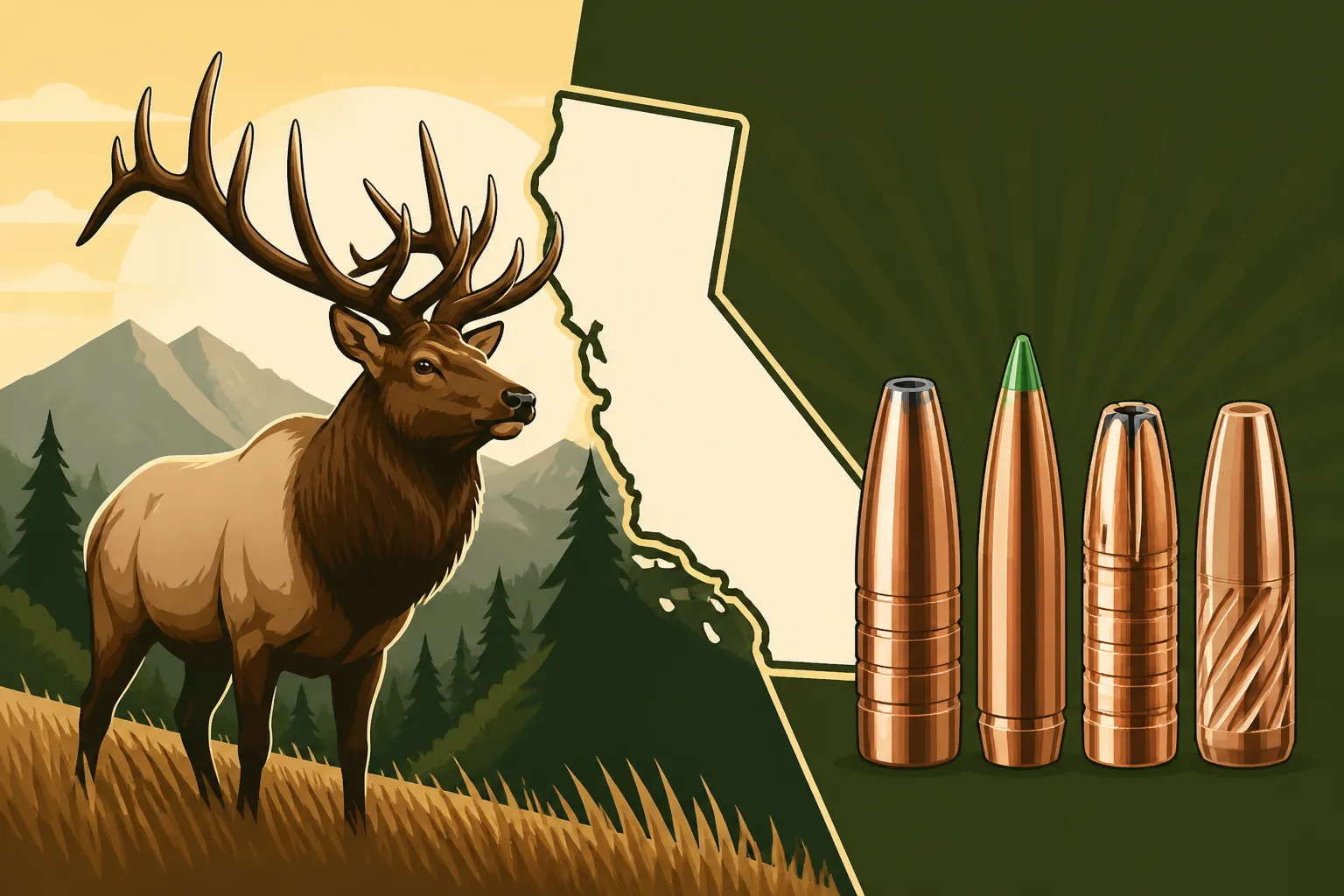
- Barnes TTSX (Tipped Triple-Shock X): This bullet is a perennial favorite among elk hunters, and for good reason. It's a solid copper bullet with a polymer tip that aids in ballistic coefficient and initiates rapid expansion upon impact. The four sharp petals peel back consistently, creating a wide wound channel, while the monolithic body drives deep through bone and tissue. Many hunters swear by the TTSX for its reliable performance, often achieving pass-throughs on even the largest bulls. They come in a wide range of calibers and weights, making them a versatile choice.
- Hornady GMX/CX (Gilding Metal eXpanding / Copper eXpanding): Hornady's GMX (now updated to CX) is another excellent monolithic copper option. Like the Barnes TTSX, it features a polymer tip to improve ballistics and initiate expansion. These bullets are known for their accuracy and consistent performance. The "gilding metal" (a copper alloy) construction ensures toughness and reduces fouling in the barrel. Hunters have seen great success with GMX/CX on elk, appreciating their ability to hold together and penetrate.
- Federal Terminal Ascent: This is a more recent offering that combines a bonded lead-core design (though with a lead-free binder, hence "non-lead" in principle for the core's performance characteristics, usually) with a streamlined, high-BC profile and a Slipstream polymer tip. While often described as "bonded," Federal has also expanded to include monolithic copper versions under the Terminal Ascent name, making it crucial to verify the exact construction. The monolithic copper versions offer the deep penetration of a solid copper bullet with excellent long-range ballistics, a great choice for hunters who might be taking longer shots across open country.
- Nosler E-Tip: Nosler's answer to the non-lead monolithic market, the E-Tip, is a solid copper alloy bullet with a green polymer tip. It's designed for controlled expansion and deep penetration, much like its competitors. Nosler has a strong reputation for accuracy, and the E-Tip maintains that tradition, offering reliable performance on elk and other large game.
When selecting any of these, consider your rifle's twist rate and what bullet weights it stabilizes best. Also, it’s worth noting that monolithic copper bullets can sometimes be slightly longer than lead-core bullets of the same weight due to copper's lower density, which might impact magazine length or chambering in some firearms.
Bonded Core Non-Lead Options
While solid copper monoliths tend to dominate the non-lead market for elk due to their inherent weight retention, there are some bonded core options where the core material itself is non-lead or where the bonding technology is specifically designed for superior performance with non-lead principles.
- Federal Edge TLR (Terminal Long Range): Similar to the Terminal Ascent, the Edge TLR uses a bonded core design, but it’s still considered non-lead due to its construction methods. It focuses heavily on long-range performance, with a high BC and a robust construction that resists separation. For elk, the Edge TLR offers controlled expansion and good weight retention. While not purely monolithic copper, its design for deep penetration and consistency makes it a viable option for those looking for bonded performance in a lead-free format.
- Swift Scirocco II Bonded: While primarily a lead-core bonded bullet, Swift has made strides in offering versions that comply with non-lead requirements in certain jurisdictions. The Scirocco II is known for its heavy jacket and bonded core, providing excellent weight retention and deep penetration. If you find a non-lead compliant version for elk, it would likely perform admirably, as the design is inherently robust.
The key with bonded options is ensuring that the "non-lead" designation applies to the entire projectile's core and not just the jacket, especially for California's strict regulations. Always double-check the manufacturer's specifications.
Frangible Non-Lead Designs (Not Recommended for Elk)
It's important to mention frangible non-lead bullets, primarily for clarity, though they are generally not recommended for elk-sized game.
- Raptor Bullets (e.g., Cutting Edge Bullets Raptors): These are often machined copper bullets designed with sharp, chisel-like petals that are intended to break off and create secondary wound channels while the main body continues to penetrate. While fascinating in design and effective for some game, the idea of fragmentation, even controlled, is typically less desirable for elk than the deep, unwavering penetration of a solid monolithic bullet. For elk, consistency and penetration through heavy bone are paramount, and the potential for premature fragmentation or insufficient core penetration could lead to a less ethical kill.
The main takeaway here is: for elk, stick with robust, deep-penetrating non-lead options. The consequences of an underperforming bullet on such a large animal can be severe.
Caliber and Bullet Weight Considerations for Elk
Choosing the right non-lead bullet also means pairing it correctly with your rifle's caliber and twist rate. What works perfectly for deer might not be ideal for a tough elk, especially with the unique characteristics of non-lead projectiles.
Matching Bullet Weight to Caliber and Twist Rate
Non-lead bullets, particularly monolithic copper, are generally lighter than lead-core bullets of the same physical size due to copper's lower density. This means a 165-grain copper bullet might be physically as long as a 180-grain lead-core bullet. This length is crucial for rifle stability.
- Twist Rate: Your rifle's barrel has a "twist rate" – how many inches of barrel length it takes for the rifling to complete one full rotation. This twist rate is designed to stabilize bullets of a certain length. Longer bullets, even if lighter in grain weight, require a faster twist rate to stabilize properly. If your rifle has a slower twist rate, it might struggle to stabilize longer, lighter non-lead bullets, leading to poor accuracy. Before buying a box of non-lead ammo, check your rifle's twist rate and consult the ammunition manufacturer's recommendations or online forums (like those on GoHunt) to see what bullet weights and designs other hunters with similar rifles are having success with.
- Balance: The goal is to find a non-lead bullet that is heavy enough to carry sufficient energy for elk, yet can be properly stabilized by your rifle. For example, in a .30-06 Springfield, where you might traditionally use a 180-grain lead bullet for elk, you might find a 165-grain solid copper non-lead bullet is the ideal choice, as it will be similar in length and perform equally well, if not better, in terms of penetration.
Velocity and Energy for Elk Hunting
Elk are large, powerful animals, and you need sufficient velocity and kinetic energy to ensure proper bullet performance and an ethical kill.
- Energy Transfer: A bullet needs to carry enough energy to cause hydrostatic shock and massive tissue damage. While raw energy numbers are useful, it's how that energy is transferred by the bullet's expansion and penetration that truly matters. Non-lead monolithic bullets are excellent at this, as they shed very little weight and dump their energy deep inside the animal.
- Minimum Velocity for Expansion: Most expanding non-lead bullets, especially solid copper designs, have a minimum velocity threshold at which they are designed to expand reliably. If your bullet drops below this velocity at longer ranges, it might not expand as intended, leading to pencil-through wounds. This is another reason why a higher ballistic coefficient and matching bullet to caliber are important – to ensure enough velocity is retained out to your maximum ethical shooting distance. For most elk calibers and non-lead bullets, this threshold is generally around 1800-2000 fps. Always check the manufacturer's data for your specific bullet and cartridge.
This table provides a general idea of how non-lead bullets compare to traditional lead for elk hunting:
| Feature | Monolithic Copper (Non-Lead) | Bonded Lead-Core (Traditional) |
|---|---|---|
| Weight Retention | Excellent (95-100%) | Very Good (80-95%) |
| Penetration | Excellent (deep and straight) | Very Good (deep and controlled) |
| Expansion | Consistent, controlled (petals) | Consistent, controlled (mushroom) |
| Wound Channel | Clean, deep | Wider, often more hydrostatic shock |
| Bone Performance | Excels, breaks through | Excels, maintains integrity |
| Lead Contamination | None | Potential fragments in meat/gut pile |
| Ballistic Coefficient | Improved in modern designs | Often higher for heavier bullets |
| Cost | Generally higher | Generally lower |
| Minimum Expansion Vel. | Critical, usually 1800-2000 fps+ | Varies, often lower |
Popular Elk Calibers and Non-Lead Pairing
Many common hunting calibers are perfectly capable of taking elk with the right non-lead bullet. Here are a few examples and considerations:
- .270 Winchester / .270 WSM: These are capable elk cartridges, and you'll find excellent non-lead options in the 130-140 grain range. Look for bullets like the Barnes TTSX or Hornady CX. They offer plenty of velocity and energy for ethical shots.
- .308 Winchester / .30-06 Springfield: Both iconic and highly effective. For .308, 150-165 grain non-lead bullets (like the TTSX or GMX/CX) are excellent. For the .30-06, 165-180 grain non-lead projectiles will perform beautifully, offering a fantastic balance of velocity, energy, and penetration. Choosing a Non-Lead Round for a 30-06 Rifle is a great resource if this is your chosen cartridge.
- 6.5 Creedmoor / 6.5 PRC: While the 6.5 Creedmoor can be debated for elk, with proper non-lead bullet selection (like 120-140 grain heavy-for-caliber options), it can be effective with precise shot placement. The 6.5 PRC offers more horsepower and is a fantastic choice with 130-143 grain non-lead bullets.
- .300 Winchester Magnum / .300 WSM / .30 Nosler: These magnum cartridges truly shine on elk. Paired with 180-200 grain non-lead bullets, they deliver exceptional long-range performance and knockdown power. The added velocity ensures reliable expansion even at extended distances.
- 7mm Rem Mag / 7mm PRC: Another excellent magnum choice. 150-175 grain non-lead bullets in these cartridges are devastating on elk.
No matter your caliber, the key is to select a non-lead bullet that is robust, retains its weight, and expands consistently within your expected range. The higher the caliber, the more forgiving the bullet choice might be, but ethical shot placement remains paramount.
Testing and Sighting In Your Non-Lead Elk Loads
You wouldn't head into an elk hunt with an untested rifle, and the same goes for your ammunition. Testing your non-lead loads is perhaps even more critical, given their unique characteristics.
The Importance of Range Time
Range time isn't just a suggestion; it's a fundamental requirement, especially when switching to new ammunition, and particularly so for non-lead.
- Familiarity and Confidence: Every bullet behaves a little differently in every rifle. You need to understand how your chosen non-lead load performs in your rifle. This includes group size, point of impact, and consistent cycling. There’s nothing worse than having doubts about your gear when a trophy bull steps out.
- Recoil Management: Heavier calibers often mean more recoil. Practicing with your elk loads helps you manage recoil, maintain a consistent shooting form, and recover quickly for follow-up shots if needed.
- Shooting Positions: Elk hunting rarely presents perfect bench rest scenarios. Practice from various field positions – prone, kneeling, off shooting sticks, or against a pack – to simulate real-world conditions. This builds muscle memory and confidence.
- Cold Bore Shots: Pay attention to your first shot from a cold barrel. This is often the most important shot in hunting, and some rifles can have a different point of impact on a cold bore versus subsequent shots from a warm barrel.
Commit to several range sessions well before your hunt. It's an investment in your success and, more importantly, in an ethical harvest. Sighting In Before Switching to Non-Lead is a fantastic resource to guide you through this process.
Checking Point of Impact Differences
As mentioned earlier, non-lead bullets, even if they match the grain weight of your old lead-core rounds, can have a different point of impact. This is due to factors like bullet length, bearing surface, and how the bullet interacts with your barrel's rifling.
- Initial Zero: Start by getting your rifle reliably on paper at 100 yards. Don't assume your old zero will carry over. It might be close, but even an inch or two difference at 100 yards translates to significant misses at 300-400 yards.
- Stepping Out to Distance: Once you're consistently grouping at 100 yards, stretch your shots out to 200, 300, and even 400 yards if your range allows. This is crucial for understanding your bullet's trajectory. You might find that while the point of impact is similar at 100 yards, it diverges significantly at longer distances.
- Using Ballistic Calculators: Once you have real-world data from your range sessions (muzzle velocity, bullet drop at various distances), plug that information into a ballistic calculator or your hunting app (like those offered by GoHunt). This will give you accurate come-ups and windage adjustments for different ranges, which you can then verify again at the range. Tools like a good rangefinder are indispensable for confirming distances in the field and applying your ballistic data.
Practice Ethical Shot Placement with New Ammo
Understanding your ammunition's trajectory is only half the battle. You also need to consistently place your shots ethically.
- Vitals, Vitals, Vitals: For elk, the goal is always the lung/heart cavity. This means aiming for the "boiler room" – just behind the shoulder, in the lower third of the body. Practice visualizing this target on an elk silhouette or a 3D target.
- Angle Considerations: Elk rarely stand perfectly broadside. Practice aiming for the vitals from various angles – quartering away, quartering towards – understanding how the bullet will travel through the animal. A deep-penetrating non-lead bullet is a huge advantage when dealing with quartering shots, as it's more likely to reach the vitals even after encountering bone.
- Shot Limits: Know your ethical maximum range. Just because your rifle can hit a target at 500 yards doesn't mean you should attempt a 500-yard shot on a living animal, especially if factors like wind, animal movement, or your own heart rate aren't ideal. Practice extending your comfort zone, but always respect your limits in the field. This is where those hours at the range truly pay off, building the confidence to make the shot count when it matters most.
Sourcing Non-Lead Ammunition
One of the biggest frustrations for California hunters has been the availability and cost of non-lead ammunition. While the situation has improved, planning ahead is still crucial.
Availability Challenges and Planning Ahead
When the non-lead mandate first rolled out, finding specific non-lead loads for various calibers, especially for magnum rifles, could be a real treasure hunt. The market has since caught up, but certain calibers or bullet weights can still be harder to find or experience temporary shortages.
- Start Early: Do not wait until a week before your California Bear General Season Opening Day or California Spring Turkey Season Opening Day to look for ammo. Begin your search months in advance.
- Check Local Shops: Your local sporting goods store or gun shop might have a good selection, especially if they cater to hunters. Building a relationship with your local shop can also help, as they might be able to order specific loads for you.
- Online Retailers: Many online ammunition retailers carry a wide array of non-lead options. This often provides the best selection and competitive pricing, though you’ll need to factor in shipping costs and potentially hazmat fees for live ammunition. Just be aware of state and local laws regarding shipping ammunition directly to your home. Often, it must be shipped to a licensed FFL.
- Manufacturer Websites: Check the websites of major manufacturers like Barnes, Hornady, Federal, and Nosler. They often list where their non-lead products can be found.
Being proactive is the best defense against not finding the right ammunition for your elk hunt.
Online Retailers and Local Shops
Let's dive a little deeper into where you might find your elk-specific non-lead ammo.
- Dedicated Online Ammo Stores: Websites specializing in ammunition sales typically have the widest selection. You can often filter by caliber, bullet type (e.g., "monolithic copper"), and even specific bullet designs like "Barnes TTSX." Keep an eye out for bulk discounts if you plan to stock up for practice and hunting.
- Large Outdoor Retailers: Many big-box outdoor stores have an online presence that allows you to check inventory at local stores or order for delivery. While their brick-and-mortar selection might be limited, their online options are often extensive.
- Independent Gun Shops: Don't underestimate the power of your local, independent gun shop. They often have access to different distributors and can sometimes get their hands on harder-to-find loads. Plus, the personalized advice and local knowledge can be invaluable.
- Swap Meets/Gun Shows (with caution): While you might find ammunition at gun shows, always exercise caution. Verify the legitimacy of the seller and ensure the ammunition is factory-new and correctly labeled as non-lead compliant for California. Avoid reloads unless you trust the source implicitly.
Remember, prices can fluctuate significantly, so comparing options from various sources is a smart move.
Reloading Non-Lead for Elk
For many experienced hunters, reloading is a passion that allows for custom-tuned ammunition. Reloading non-lead bullets for elk is absolutely an option, and it comes with several advantages.
- Customization and Precision: Reloading allows you to fine-tune your loads for optimal accuracy in your specific rifle. You can experiment with different powders, charge weights, and seating depths to achieve the tightest groups and best performance. This level of precision can be a game-changer for elk hunting, especially if you're pursuing an elusive bull in challenging conditions or in high-draw zones like those you might apply for in the California Big Game Drawing Explained.
- Cost Savings (Long-Term): While the initial investment in reloading equipment can be substantial, reloading can save you money in the long run, especially with the higher cost of factory non-lead ammunition. The more you shoot and hunt, the more economical reloading becomes.
- Availability: If a particular factory load is scarce, you can often find components (non-lead bullets, primers, powder) more readily available, allowing you to create your own supply. This is particularly useful if you are targeting specific bullet designs that may not be offered in a wide array of factory loadings.
- Powder Selection: Non-lead monolithic bullets can behave differently than lead-core bullets regarding pressure and velocity curves. Reloading allows you to select powders specifically suited to these bullet types, ensuring safe pressures and optimal velocity for reliable expansion on elk.
If you're considering reloading, start with reputable reloading manuals that include data for non-lead bullets. Companies like Barnes and Hornady often provide specific reloading data for their non-lead projectiles. Always follow safe reloading practices, and begin with starting loads, working your way up cautiously to find the sweet spot for your rifle.
Disclaimer
This article is for general informational purposes only and does not constitute professional advice. Laws, prices and regulations vary by location and change over time. Consult a qualified professional for guidance on your specific situation.