Best Water Filter for a Backcountry Elk Camp
There’s nothing quite like the immense challenge and pure reward of a backcountry elk hunt in California. You’re pushing your physical limits, covering miles of rugged terrain, often carrying a heavy pack, and focusing intensely on the hunt. The last thing you want to worry about is whether your drinking water is safe, or if you're going to get sick miles from the nearest road. This guide is all about helping you choose the best water filter for your backcountry elk camp, ensuring you stay hydrated and healthy, allowing you to focus on the magnificent animals you’re pursuing.
The Absolute Necessity of Reliable Water Filtration on an Elk Hunt
When you're planning a multi-day backcountry elk hunt, especially in the vast, wild areas of California's national forests or remote wilderness, a reliable water filter isn't just a convenience – it's an essential piece of survival gear. I've heard countless stories, and experienced a few myself, where a dodgy water source or a failed filter turned a promising hunt into a miserable struggle against dehydration or, worse, a nasty giardia infection. Out there, far from any amenities, your body is burning through calories and fluids at an incredible rate. You're sweating, breathing hard, and every muscle is working overtime. This isn't your average day hike where a few bottles suffice.
Think about the sheer amount of water you'll need. You'll drink a lot just hiking in, then even more during the day while actively hunting. You'll need water for cooking, rehydrating freeze-dried meals, and maybe even a quick rinse of hands or dishes. Carrying all that water in is simply not feasible; it's just too heavy and bulky. A gallon of water weighs over eight pounds, and on a long pack-in, every ounce counts. That's why being able to replenish your supply from a stream, spring, or even a melted snow patch is critical. Without a solid filtration system, you're not just risking illness, you're risking performance. Your muscles won't recover as well, your focus will wane, and your hunt will suffer. It's a non-negotiable item, truly.
Why You Can't Trust Untreated Water in the Backcountry
It's tempting sometimes, especially when you're parched and a pristine-looking mountain stream gurgles by, to just dip your bottle in and drink. But that's a gamble you absolutely do not want to take. Even the clearest, coldest stream can harbor microscopic nasties that will ruin your hunt faster than a missed shot. We're talking about things like Giardia lamblia, Cryptosporidium parvum, and various bacteria that can cause severe gastrointestinal distress. I’ve had friends who made this mistake, and the subsequent days were filled with cramps, nausea, and debilitating diarrhea – not exactly ideal when you’re miles deep in the wilderness trying to chase Rocky Mountain Elk in Northeast California or Roosevelt Elk in Northwest California.
Wildlife, from deer and elk to smaller critters, frequent these water sources. They drink, they wade, and yes, they defecate. Their waste can introduce parasites and bacteria into the water, even far upstream from where you're drawing it. Even seemingly untouched snowmelt can pass over contaminated ground or be affected by airborne pathogens. A thorough water treatment system is your only real defense. Trust me, spending a few extra minutes filtering water is a small price to pay for your health and the success of your hunting trip. It’s part of your backcountry hygiene, just like having a good First Aid Kit for a Remote Hunt.
Weight Savings and Logistics: The Unsung Heroes of Filtration
Beyond safety, the sheer practicality of a water filter shines when you’re considering your overall pack weight. Imagine having to carry all the water you’d need for even a three-day hunt. It would be a nightmare. By carrying an effective filter, you're freeing up crucial pack space and shaving off many pounds that would otherwise be dedicated to carrying water bottles. This allows you to carry more essential gear, like your Packs and Gear for a Backcountry Elk Hunt or extra food, or simply lighten your load for easier travel over rugged terrain.
When you're far from civilization, mapping out potential water sources, perhaps using the detailed overlays available on platforms like GoHunt, is a key first step. Knowing where you can reliably refill means you only need to carry enough water to get you between known sources. This strategy drastically reduces your starting pack weight and conserves your energy. For example, if you know there's a spring at your intended elk camp, you might only carry a liter or two for the hike in, confident that you can filter more upon arrival. It's a game-changer for extended trips, enabling you to stay out longer and penetrate deeper into prime elk habitat.
Choosing the Right Water Filter for Your Elk Camp
Navigating the world of water filters can feel a bit overwhelming with so many options out there. But for a backcountry elk camp, we can narrow it down to a few primary types, each with its own set of advantages and disadvantages. Your choice will largely depend on factors like group size, how much water you need daily, how clear your water sources are, and how critical weight and speed are to your setup. There's no one-size-fits-all answer, but understanding the options will help you make an informed decision for your Hunting California's Sierra Nevada Backcountry adventure.
Pump Filters: Reliable, Durable, but Manual Effort Required
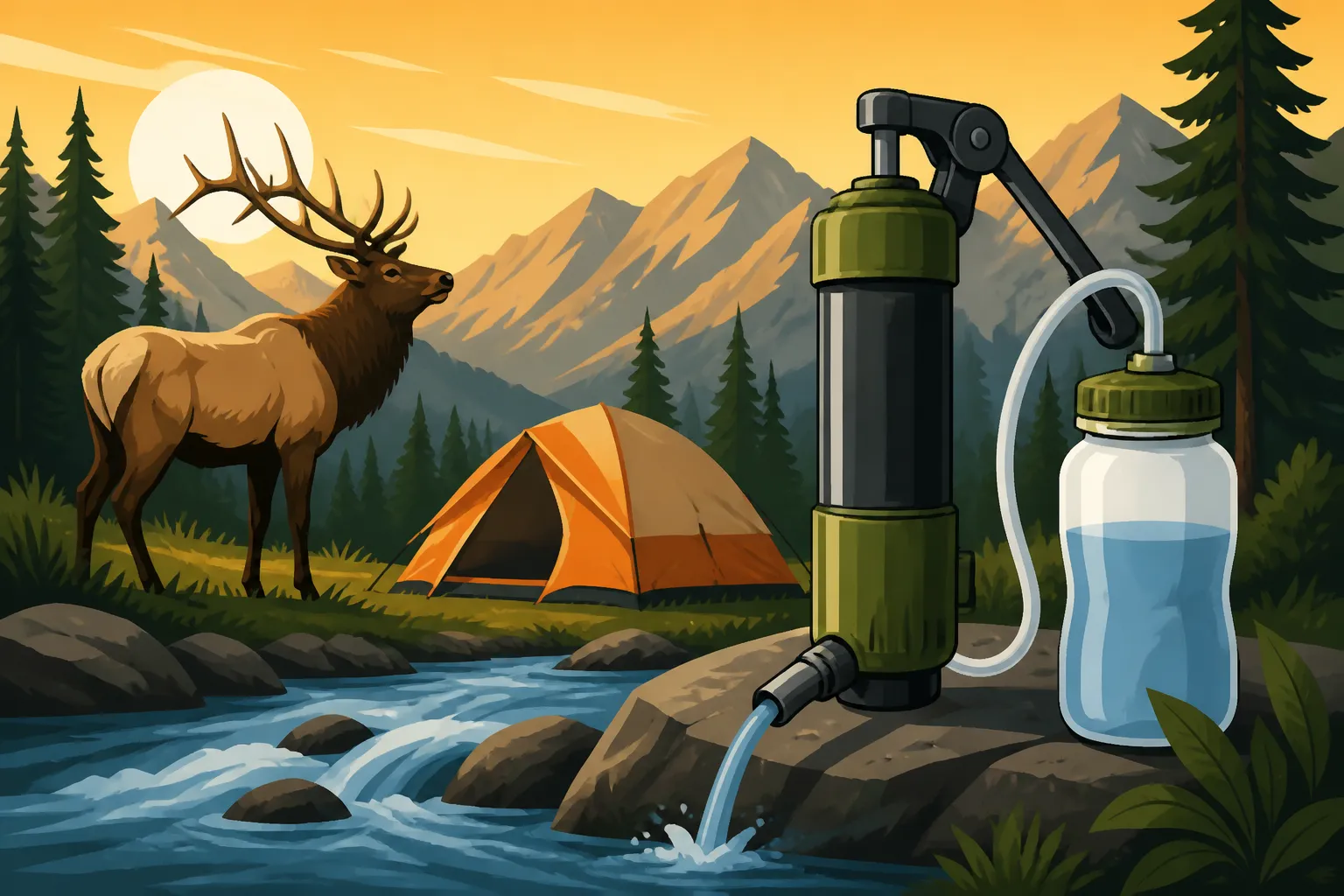
Pump filters have been a backcountry staple for decades, and for good reason. They are generally robust, handle murky water fairly well with pre-filters, and allow you to fill multiple bottles or a hydration reservoir efficiently. You submerge an intake hose in your water source, and then manually pump water through the filter element into your container. Brands like Katadyn and MSR have excellent pump options that are proven performers.
The primary advantage here is reliability and the ability to process silty water. Many come with ceramic or glass fiber elements that can be cleaned in the field, extending their life. However, they do require a fair bit of manual effort, which can be tiresome after a long day of hunting. They also tend to be heavier and bulkier than some other modern options. For a solo hunter who might only need a liter or two at a time, the pumping effort can feel like a chore. But for a small group or if you anticipate very silty water sources, a pump filter can be a workhorse. It's a durable option for those who prioritize ruggedness and field maintainability.
Squeeze Filters: Lightweight, Fast, but Can Clog with Dirty Water
Squeeze filters, like those from Sawyer or Platypus, have revolutionized lightweight backcountry travel. They consist of a small filter element that screws onto a soft-sided pouch or a standard water bottle. You simply fill the pouch with raw water, screw on the filter, and squeeze the clean water into your mouth or another container. They are incredibly light, compact, and often have a decent flow rate, especially when new.
Their main draw is their minimalist design and portability, making them popular for solo hunters or those counting every ounce. They’re great for quick hydration stops on the trail. The downside is that they can clog fairly easily with very turbid water, significantly reducing flow rate and requiring frequent backflushing – a cleaning process that pushes clean water back through the filter to clear out sediment. Carrying extra dirty water bags and the need to backflush in the field are things to consider. However, for relatively clear water sources, a squeeze filter is hard to beat for speed and weight. Researching different filter models on platforms that offer detailed gear reviews, like those often found alongside GoHunt's scouting tools, is a smart move before committing.
Gravity Filters: Hands-Free Convenience for Camp Life
Gravity filters are fantastic for camp use, especially if you’re setting up a more established base camp for a few days, perhaps while chasing Tule Elk in the Central Valley. These systems typically involve two bags: a larger "dirty" bag that you fill with untreated water and hang from a tree, and a "clean" bag or hose that collects the filtered water as gravity pulls it through the filter element. Brands like Platypus and Sawyer also make excellent gravity systems.
The biggest perk here is the hands-free operation. You fill the dirty bag, hang it, and go about other camp tasks like cooking or glassing. By the time you're done, you've got several liters of clean water ready to go. This is ideal for groups or if you need a lot of water for cooking and hygiene. They can be a bit bulkier than squeeze filters and require a good hanging spot, but the convenience often outweighs these minor drawbacks for a true camp filter. Just make sure your dirty bag is robust, as a puncture can quickly ruin your water supply.
Chemical Treatment: Backup or Ultra-Light Option
While not strictly filters, chemical treatments (like iodine tablets or chlorine dioxide drops) are worth mentioning as a backup or for the absolute lightest possible setup. They kill bacteria and viruses (though some don't effectively kill Cryptosporidium, which is a major concern), but they don't remove sediment or improve taste. They also require a waiting period, typically 30 minutes to a few hours, before the water is safe to drink.
For a primary water source during an elk hunt, I generally don't recommend relying solely on chemical treatments. The taste can be off-putting, and the waiting time is a major inconvenience when you're thirsty. Plus, cloudy water can reduce their effectiveness. However, a small bottle of purification tablets is an excellent emergency backup to throw in your Packs and Gear for a Backcountry Elk Hunt in case your primary filter fails or is lost. It's cheap, light, and could save your hunt in a pinch.
Key Features to Consider for Elk Hunting Water Filters
Once you understand the different types of filters, it’s time to drill down into the specific features that truly matter when you’re selecting one for an elk hunt. This isn't just about filtering water; it's about filtering water efficiently and reliably in challenging conditions. You need something that can keep up with your hydration needs, withstand the rigors of the backcountry, and not add unnecessary bulk or weight to your pack. A solid water filter is just as crucial as having accurate digital maps, which many of us rely on with services such as GoHunt.
Flow Rate: How Quickly Can You Get Water?
The flow rate of a water filter refers to how quickly it can produce clean water. This is measured in liters per minute (LPM) or liters per hour. On an elk hunt, where you might be stopping briefly at a spring or stream during a long stalk, a fast flow rate is incredibly beneficial. You don't want to spend precious hunting time standing by a creek, patiently waiting for a few sips of water.
For personal use, a filter that can produce at least 1-2 liters per minute is ideal. For gravity systems used in camp, a higher flow rate, allowing you to fill multiple bottles or cook pots quickly, is a huge convenience. Keep in mind that flow rates can decrease over time as filters get used and accumulate sediment, so it's wise to choose one with a good initial flow rate. The clarity of the water source will also heavily impact this; cleaner water always filters faster.
Weight and Packability: Every Ounce Counts
On an elk hunt, especially if you're venturing into remote, high-elevation zones, every single ounce in your pack feels like a pound after a few miles. This is not a leisurely stroll; you're likely carrying a rifle (like one suited for Choosing a Caliber for California Elk), optics, food, a tent (perhaps the Best Tent for a Multi-Day Public Land Hunt), and maybe even a Best Backpack Frame for Quartered Elk for the eventual pack-out. So, the weight and packability of your water filter are paramount.
Squeeze filters and chemical treatments will be the lightest options, often weighing just a few ounces. Pump filters and gravity systems will add more bulk and weight, sometimes upwards of a pound. Consider how much space it takes up in your pack as well. Can it be easily tucked into an exterior pocket, or will it monopolize valuable internal real estate? A lighter, more compact filter means less fatigue and more energy dedicated to the hunt itself.
Durability and Maintenance: Surviving the Backcountry
The backcountry is not kind to gear. Your water filter needs to be able to withstand being dropped, jostled, and exposed to varying temperatures. Look for filters made from robust materials. Ceramic elements in pump filters are tough, but they can crack if dropped hard on a rock. Hollow fiber membranes in squeeze filters are generally durable but can be damaged if frozen (more on that below).
Maintenance is also a key factor. Can you easily clean the filter in the field? Many filters come with a backflushing syringe or a brush for cleaning. This is crucial for maintaining flow rate and extending the filter's life. Some elements are replaceable, which means you don't have to buy a whole new unit if one part fails. A filter that requires complex disassembly or specialized tools for cleaning isn't practical when you're deep in the wilderness. Consider how easy it is to keep functioning when you're miles from anywhere, and whether it can handle the grit and grime of a real elk hunt.
Filtration Standards and Lifespan: What Are You Actually Removing?
Not all filters are created equal when it comes to what they remove from the water. For backcountry use, you absolutely need a filter that removes bacteria and protozoa (like Giardia and Cryptosporidium). Many filters achieve this with a pore size of 0.1 to 0.2 microns. Viruses are much smaller, and most standard backcountry filters do not remove them; for virus removal, you generally need a chemical treatment or a more advanced purifier (which are often heavier and more expensive). In North America, viruses in backcountry water sources are less of a concern than bacteria and protozoa, but it's good to be aware of the distinction.
The filter's lifespan, often measured in liters, tells you how much water it can process before it needs to be replaced. Some filters boast lifespans of hundreds or even thousands of liters. While you might not hit that limit on a single elk hunt, a longer lifespan indicates better value and reliability over many seasons. A filter with a shorter lifespan might require you to carry spare cartridges on longer trips, adding weight and cost.
| Filter Type | Typical Weight (approx.) | Flow Rate Potential | Durability | Best Use Case for Elk Camp |
|---|---|---|---|---|
| Pump Filter | Moderate (8-16 oz) | Moderate | High | Reliable workhorse for silty water, good for small groups, durable. |
| Squeeze Filter | Very Light (2-5 oz) | Fast (when clean) | Moderate | Solo hunter, fast on-the-go hydration, clear water sources. |
| Gravity Filter | Moderate (10-20 oz) | High | Moderate | Basecamp, groups, hands-free convenience, large volume. |
| Chemical Treatment | Ultra-Light (1-2 oz) | Slow (needs wait) | High | Emergency backup, ultra-minimalist, taste can be an issue. |
Maintenance and Best Practices for Filter Longevity
Bringing a water filter into the backcountry is only half the battle; knowing how to care for it properly will ensure it performs when you need it most and lasts for many seasons to come. Neglecting maintenance can lead to a drastically reduced flow rate, potential filter failure, or even damage that renders it useless. And trust me, having a filter fail midway through an elk hunt in the Los Padres National Forest is a situation you definitely want to avoid.
Regular Cleaning and Backflushing
Most modern water filters, especially those with hollow fiber membranes, benefit immensely from regular backflushing. This process involves forcing clean water backwards through the filter element, dislodging accumulated sediment and particulate matter that has built up on the intake side. Manufacturers usually provide a syringe or other tool for this. The cleaner your filter stays, the faster it will flow and the longer it will last.
I make it a habit to backflush my squeeze filter every evening in camp, or at least every other day, depending on the clarity of the water I've been filtering. If you're using exceptionally silty water, you might even need to do it more frequently. It takes mere seconds and makes a huge difference in performance. For pump filters, the ceramic or glass fiber elements often need to be scrubbed with a brush (usually included) to remove the outer layer of gunk. Follow your specific filter's instructions carefully, as improper cleaning can damage the element.
Preventing Freezing in Cold Conditions
This is a critical point for any filter that uses hollow fiber membranes (which is most squeeze and gravity filters). If water freezes inside these tiny fibers, it can expand and break the membrane, creating microscopic holes that will compromise the filter's ability to remove pathogens. Once frozen, these filters are no longer safe to use, even if they appear undamaged.
On an elk hunt, especially in the higher elevations or later in the season, freezing temperatures are a real possibility overnight. My rule of thumb is to always keep my filter in my sleeping bag or a pocket close to my body when temperatures drop below freezing. If you're out hunting all day and it's cold, keep it in an inner jacket pocket. Don't leave it in your pack outside the tent. This small habit can prevent a catastrophic filter failure. Some pump filters with ceramic elements are more tolerant of freezing, but it's always best practice to protect any water-containing gear from freezing if possible.
Proper Storage and End-of-Season Care
When your elk season is done, proper storage of your filter is essential for its longevity. First, give it a thorough cleaning. Backflush it extensively or scrub the ceramic element until it's as clean as you can get it. Then, and this is important, allow it to dry completely. Many manufacturers recommend purging the filter with an air syringe or simply leaving it open to air dry for several days. Storing a filter while it's still damp can lead to mold and mildew growth, which isn't just gross, but can also damage the filter element.
Once thoroughly dry, store it in a cool, dry place away from direct sunlight. Some filters might benefit from being stored in a slightly open bag to allow for any residual moisture to escape. Check the manufacturer's recommendations for any specific storage tips, like replacing certain parts annually. Taking these few extra steps at the end of the season ensures your filter is ready to go when you start planning for next year's Hunting the Draw-Only Premium Zones or even a Wild Pig Hunting California Year-Round trip. An investment in a good filter is an investment in many years of safe, enjoyable backcountry hunting.
Disclaimer
This article is for general informational purposes only and does not constitute professional advice. Laws, prices and regulations vary by location and change over time. Consult a qualified professional for guidance on your specific situation.