Tracking a Deer in Fresh Sierra Snow
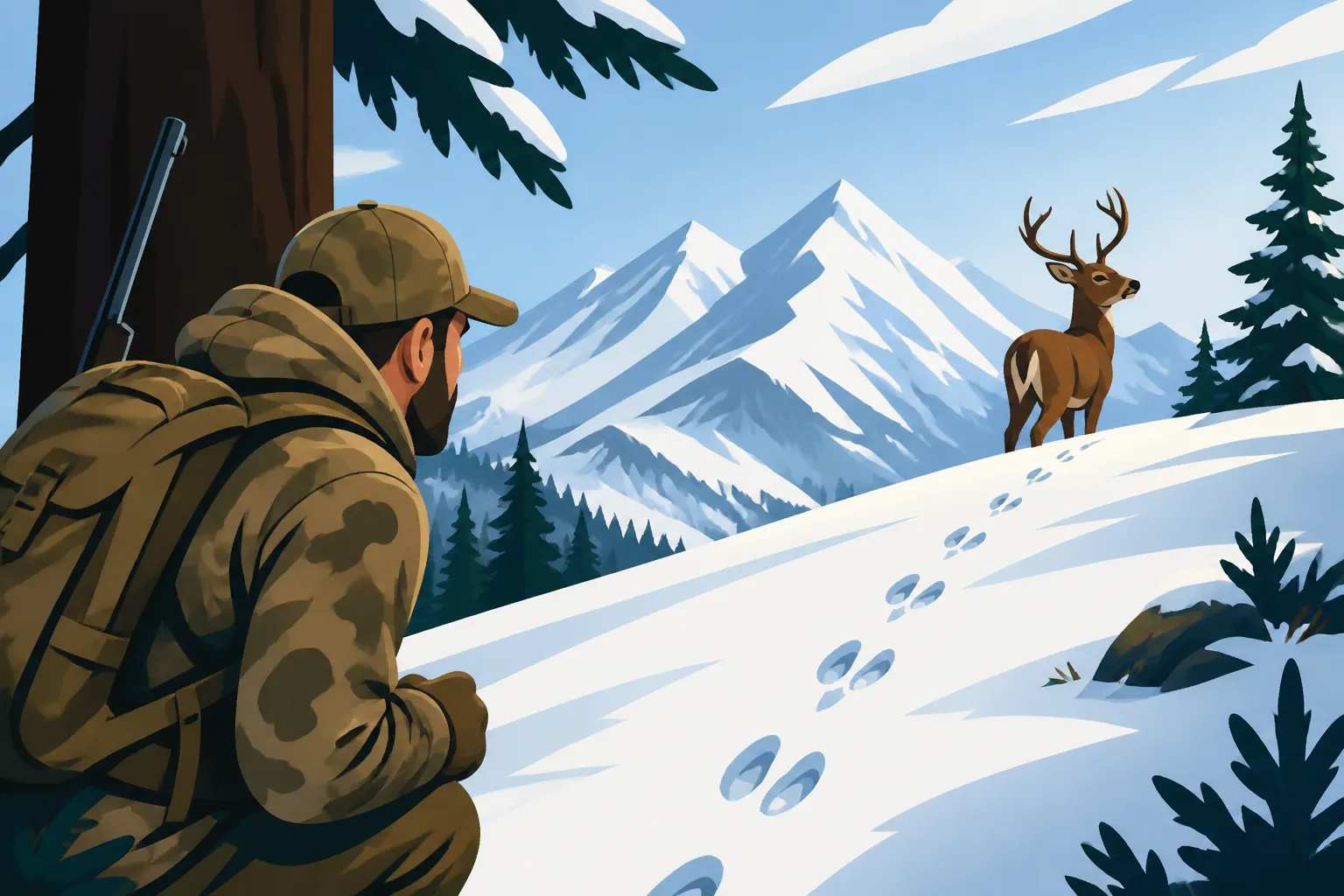
There's nothing quite like a fresh blanket of snow in California's Sierra Nevada – it transforms the landscape into a pristine, often intimidating, wilderness. But for a hunter, that fresh snow can be a double-edged sword: it either provides crystal-clear tracking opportunities or completely changes the game, making finding that elusive buck even harder. This guide is all about equipping you with the knowledge and tactics to confidently track deer in the unique, challenging conditions of the Sierra winter.
Understanding Sierra Snow Conditions for Tracking
When a fresh snowfall hits the Sierra, it doesn't just look pretty; it fundamentally changes the hunting landscape. For a tracker, understanding the nuances of different snow conditions is paramount. The type of snow, how long it's been there, and what the weather is doing to it can tell you an incredible amount about deer movement and the age of a track.
Types of Snow and Their Impact on Tracks
Not all snow is created equal, especially when you're trying to decipher a deer's path. Each type presents its own set of challenges and opportunities for the tracker.
- Powder Snow: This is often the first type of snow you'll encounter after a fresh fall, particularly in colder, higher elevations. It's light, fluffy, and dry. While it can make for breathtaking scenery, it also presents a unique tracking challenge. Deep powder can obscure the finer details of a track, making it look more like a trough than a distinct hoof print. Deer will sink deeper into powder, expending more energy, which might influence their travel patterns. However, if the powder is truly fresh, any disturbance is glaringly obvious, making the overall path easy to follow, even if individual prints are less defined. Wind can quickly fill these tracks, especially in open areas, so time is of the essence.
- Wet Snow: This is often a tracker's best friend. Wet, heavy snow, common during warmer spells or lower elevations, packs down easily. When a deer steps in it, the tracks are incredibly sharp and well-defined, capturing every detail of the hoof. You can often see the distinct outline, the dewclaws, and even the texture of the snow displaced. These tracks tend to hold their shape longer than powder tracks, giving you more time to work. The downside is that wet snow can quickly turn to crusted or icy snow if temperatures drop, leading to completely different tracking dynamics.
- Crusted Snow: Imagine snow with a hard, icy layer on top, strong enough to support light animals but not a deer's weight. When a deer walks on crusted snow, it often breaks through the surface with each step, creating a very distinctive sound and leaving a clear, broken edge around the print. While this makes the track easy to identify and follow, it also means the deer is making a lot of noise, which can make still-hunting or getting close more difficult. As a tracker, you also need to be mindful of the noise you're making on crusted snow; every step can echo through the quiet Sierra woods.
- Icy Snow: This is perhaps the most challenging for tracking. Icy snow offers very little purchase and even less impression. Unless there's a thin dusting of fresh powder on top, a deer might leave only a faint scuff mark or nothing at all. Deer tend to move very cautiously on ice, often choosing routes that offer more traction, such as through dense timber or along rocky edges. If you're tracking on icy snow, you'll need to rely heavily on other signs, not just the print itself.
- Melting Snow: This happens when temperatures rise, turning the snow into a slushy, soft mess. Tracks in melting snow can be distorted and appear larger or less defined than they actually are. They can also appear older than they are as the sun and ambient temperature gradually "grow" the print. The key here is to look for other subtle indicators, like fresh moisture in the print, disturbed vegetation beneath the snow, or where the deer might have dug for browse.
Reading the Environment Beyond the Track
A true Sierra tracker doesn't just stare at the ground; they read the entire environment. The tracks themselves are just one piece of a much larger story.
Always be aware of the prevailing wind direction, especially in steep Sierra country. Wind can quickly fill in tracks, making them disappear even if they're only a few hours old. If the wind picks up or snow starts drifting, you know your window for clear tracking is closing fast. Additionally, consider how the sun affects the snow. South-facing slopes will melt faster, potentially distorting or erasing tracks, while north-facing slopes and shaded timber will preserve tracks much longer. You can often estimate the age of a track by noting how much it has melted or refrozen given the sun exposure.
Look for more than just hoof prints. Disturbed snow could indicate a deer bedded down for a while, perhaps leaving a tell-tale impression in the snow. Scat will tell you if the deer has recently fed and passed waste, giving you a strong clue about its proximity. Fresh browse marks on saplings or shrubs, where the snow has been pushed aside, are direct evidence of feeding. Even subtle signs like a broken twig or a few hairs caught on a bush can be crucial, especially when you are trying to follow a deer that is injured. This comprehensive approach, often aided by advanced mapping tools like those found on GoHunt, helps you piece together the deer's recent history and predict its next move, even if the tracks become intermittent.
Essential Gear and Preparation for Snow Tracking
Successfully tracking a deer in fresh Sierra snow isn't just about sharp eyes; it's about being prepared for the demanding conditions. The right gear and a thoughtful approach to preparation can be the difference between a successful recovery and a cold, frustrating end to your hunt.
Clothing and Footwear for Winter Tracking
The Sierra winter can be unpredictable, with temperatures swinging wildly from frosty mornings to relatively mild afternoons, only to plummet again after sunset. Proper layering is your best defense against the elements.
Start with a moisture-wicking base layer made of synthetic material or merino wool. This is critical for drawing sweat away from your skin, preventing that dangerous chill when you stop moving. Over that, wear an insulating layer, like a fleece jacket or a puffy vest. Your outer layer should be a waterproof and windproof shell – a good quality hunting jacket and pants will protect you from snow, rain, and biting winds. Remember, you'll be alternating between periods of strenuous activity (climbing, pushing through brush) and periods of stationary observation (glassing, slowly following a track). Adjusting your layers will prevent overheating and subsequent chilling.
Footwear is perhaps the most critical piece of equipment for snow tracking. Insulated, waterproof boots are non-negotiable. Look for boots designed for cold weather and rugged terrain, with good ankle support and aggressive tread for traction on slippery surfaces. Leather or synthetic options are both viable, but ensure they are truly waterproof and have sufficient insulation for the expected temperatures. Consider bringing chemical foot warmers for colder days. Beyond the boots, a pair of quality snow gaiters will keep snow out of your boots and prevent your pant legs from getting soaked, a small detail that can make a huge difference in comfort and safety over a long day. Don't forget warm, moisture-wicking socks, and always pack an extra pair in your pack. When you are looking for the Best Boots for Steep Wet-Season Sierra Trails, remember that traction and warmth are key.
Navigation and Recovery Tools
Being able to navigate effectively and safely recover your game is paramount, especially when working in potentially remote and rugged Sierra terrain.
A reliable GPS device or a comprehensive mapping application on your smartphone, such as OnX Hunt or the detailed layers available through GoHunt, is absolutely essential. Before you even head out, mark your vehicle, key landmarks, and potential escape routes. During the track, use your GPS to mark the location of the first track, the shot site (if applicable), and any spot where you momentarily lose the track. This creates a digital breadcrumb trail, allowing you to backtrack if necessary and ensures you don't get disoriented in unfamiliar terrain or during changing conditions. Make sure your phone is fully charged and consider carrying a portable power bank, as cold weather can rapidly drain batteries. For those times you're Hunting Sierra Nevada High Country, a satellite communicator is also a smart investment for emergency situations where cell service is non-existent.
Never head into the snowy backcountry without a headlamp or two. Even if you start tracking at dawn, the recovery process can easily extend into dusk or beyond. A powerful headlamp with fresh batteries (and spares) is crucial for navigating, field dressing, and hiking out safely in the dark. Beyond that, a basic but comprehensive first-aid kit, a fire starter, and an emergency shelter (like a space blanket or lightweight tarp) should always be in your pack. Finally, once you find your deer, you'll need the right tools for field dressing and packing out. Sharp knives, game bags to keep meat clean, and a sturdy pack frame are vital. In certain conditions, especially on flatter terrain with consistent snow, a compact game sled could even assist in dragging out an animal, alleviating some of the strain involved in Recovering a Deer From a Steep Canyon.
The Art of Following a Deer Track in the Sierra
Tracking a deer in fresh Sierra snow is less about brute force and more about patience, observation, and a deep understanding of deer behavior. It's a skill honed over many hours in the field, but there are fundamental principles that can guide even a novice.
Deciphering Fresh Tracks from Old Sign
The first and most critical step in successful tracking is distinguishing a fresh track from an old one. This is where your observational skills truly come into play.
A truly fresh track will have sharp, crisp edges. There will be no snow, ice, or debris inside the print itself, and the displacement of snow around the print will be clear and undisturbed. You might even see tiny ice crystals kicked up by the deer's hoof still shimmering around the edge. As tracks age, the sun, wind, and ambient temperature will begin to affect them. Edges will soften and round out, snow may blow into the print, or a thin layer of ice might form inside. If temperatures rise and then drop below freezing, older tracks can appear frozen solid, while very fresh ones will still be soft and pliable. Beyond the track, look for other fresh signs: disturbed pine needles that have sprung back only slightly, fresh scat that is still soft and warm (yes, you can check!), urine stains that haven't frozen solid, or recent browse marks where saplings are still bent from being nipped. Paying attention to details like When the California Rut Peaks by Zone can also give you clues about the intensity of recent deer movement in the area.
Slow and Steady: The Tracking Pace
This cannot be stressed enough: tracking is not a sprint, it's a marathon of meticulous observation. Your pace should be slow, deliberate, and controlled. Don't simply put your head down and follow the visible tracks. Instead, walk slowly with your head up, scanning ahead for any sign of the deer itself, but also for the next track, or subtle disturbances further down the path.
A common and effective strategy is to have two people if possible. One person stays on the last clear track, while the other walks ahead, perhaps 20-30 yards, looking for the next discernible sign. When the lead person finds it, they signal, and the "anchor" person moves up. This method keeps you from losing the track if it becomes faint and allows you to cover ground more efficiently while maintaining vigilance. If you're alone, you'll need to develop your own rhythm of tracking and scanning. When the track becomes difficult or disappears briefly, don't panic. Mark your last unquestionable track (using your GPS or a flagging ribbon) and then circle out from that point in expanding loops. Deer rarely vanish into thin air; they might just be navigating a difficult patch of ground, crossing a rocky outcrop, or entering dense cover. Focus on finding any new sign that indicates their direction of travel.
Anticipating Deer Movement in Snow
One of the most valuable skills a tracker can develop is the ability to anticipate where a deer might go. Deer aren't random; their movements are dictated by survival instincts: food, water, cover, and prevailing weather conditions.
In snowy Sierra conditions, deer will often take paths of least resistance. This means old game trails, benches on hillsides, or even existing human trails. They'll seek thermal cover from cold winds and heavy snow, often bedding down on south-facing slopes, which get more sun exposure, and in thick timber or dense chaparral that blocks the wind. Understanding how Wind and Thermals in Steep Sierra Country influence their movement is also crucial. Deer typically move into the wind or crosswind to detect predators, so consider the wind direction as you track. If you're tracking a wounded deer, it will almost certainly seek the densest, nastiest cover it can find to hide and bed down. Use GoHunt's detailed satellite and topographic maps to identify these areas ahead of time. Look for thickets, steep draws, or deep canyons where a deer would naturally seek refuge. By thinking like the deer, you can often cut off loops or predict where they'll emerge, significantly increasing your chances of success.
Overcoming Challenges and Ensuring a Safe Recovery
Tracking a deer in fresh Sierra snow can be an exhilarating experience, but it's also fraught with challenges. The unforgiving nature of the mountains, coupled with the difficulty of tracking, means you'll inevitably face hurdles. Knowing how to overcome them safely and ethically is a mark of a responsible hunter.
When You Lose the Track: Recalibrating Your Search
It's going to happen. You're following a clear line of prints, focused, and then suddenly… nothing. The tracks just disappear. This is where most hunters get frustrated, but it's also where methodical thinking pays off.
First, take a deep breath. Go back to the very last unquestionable track you saw. Mark it clearly. Don't assume anything from this point. From that last known point, begin to fan out in concentric circles, or if the terrain allows, in a grid pattern. Walk slowly, scanning not just for hoof prints but for any other disturbance: a broken twig, a scuff mark, a patch of disturbed snow that isn't a clear print. Deer don't just dematerialize. They might have crossed a patch of icy rock, jumped over a fallen log, or entered an area where the snow is too shallow to show a clear print.
If you're still coming up empty, expand your search outwards and also upwards. Deer often use elevation changes to their advantage. They might have moved uphill to a ridge line to gain a vantage point, or dropped into a steep canyon for cover. Think about escape routes and natural funnels in the landscape using your mapping app. Sometimes, if conditions are changing rapidly (e.g., heavy snow falling, or a complete freeze-up), you might have to make the tough decision to back out and return at first light. This is especially true if you are Blood Trailing After Dark in California where visibility quickly deteriorates. It's always better to live to hunt another day and recover your game safely.
Ethical Recovery in Harsh Winter Conditions
Your ultimate responsibility as a hunter is a swift, humane, and ethical recovery of any animal you harvest. This becomes even more critical in the harsh conditions of a Sierra winter.
If you've shot a deer and are tracking it in snow, assume it's hit. Your job isn't done until you've put your hands on it. If the blood trail is sparse or the tracks are difficult, persistent, methodical tracking is essential. Sometimes, if you're hunting with a group and the deer has gone into extremely dense cover, a small-scale, careful deer drive might be an option to push the animal into a more open area, as discussed in techniques like Deer Drives With Three or Four Hunters. However, this should only be done with careful planning and communication to ensure safety.
Once you find the deer, field dress it immediately. The cold weather works in your favor for cooling the meat, but your hands will suffer. Have good, sharp knives and know how to use them efficiently. Pack game bags to keep the meat clean and free from snow and debris. Packing out a deer in deep snow, especially from a remote or steep location, can be one of the most physically demanding parts of the hunt. Quartering the animal is almost always necessary in these conditions. A sturdy external frame pack, designed for hauling heavy loads, is invaluable. Planning for logistical challenges like Packing Meat Out of a Steep Canyon is crucial. Hydrate, take breaks, and prioritize your safety. Don't attempt to drag a whole deer alone for miles through deep snow; it's a recipe for injury. If you have to make multiple trips or cache some meat to retrieve later (covered and protected from scavengers), so be it. The ethical hunter ensures their harvest is recovered, no matter the effort required.
| Snow Type | Characteristics | Impact on Tracks | Tracking Difficulty | Tips |
|---|---|---|---|---|
| Powder | Light, fluffy, fresh, low moisture | Deep, indistinct edges; can fill quickly | Moderate to High | Look for displaced snow, depth of prints; tracks vanish fast with wind. |
| Wet Snow | Heavy, sticky, high moisture | Very clear, defined edges; holds shape well | Low | Ideal for tracking; watch for crusting after refreeze. |
| Crusted Snow | Hard, icy layer on top | Broken edges; noisy for deer (and tracker) | Low to Moderate | Distinctive breaks make tracks easy to spot; pay attention to noise you make. |
| Icy Snow | Hard, slick, frozen | Very faint or no impression; deer avoid it | High | Extremely difficult; look for scuff marks or areas where a thin layer of new snow provides contrast. |
| Melting Snow | Soft, slushy, often refreezing at night | Distorted, rounded edges; can look older than it is | Moderate | Tracks "grow" with melt; focus on fresh signs like disturbed ground beneath the snow. |
Disclaimer
Hunting involves inherent risks, including those associated with extreme weather, rugged terrain, and wildlife encounters. Always prioritize safety, understand and follow all California hunting regulations, and be prepared for emergencies. The information provided here is for educational purposes and should not replace professional guidance or personal experience.