Quail Hunting Behind Pointing Dogs
Hunting California's elusive quail can be one of the most rewarding experiences afield, but trying to find these fast-moving, brush-hugging birds without a good dog can feel like searching for a needle in a haystack. Many hunters get frustrated watching coveys explode from cover they just walked past, or worse, never finding a single bird. This guide is all about giving you the edge, detailing how to effectively hunt California quail behind trained pointing dogs, turning those frustrating missed opportunities into memorable flushes and successful harvests.
Understanding California Quail Behavior and Habitat
Before you even step foot in the field with your canine companion, you’ve got to get inside the heads of California’s quail. These aren't just any game birds; they have specific habits and preferred stomping grounds that make them truly unique, and understanding them is crucial for your dog's success and yours.
The Elusive Valley Quail
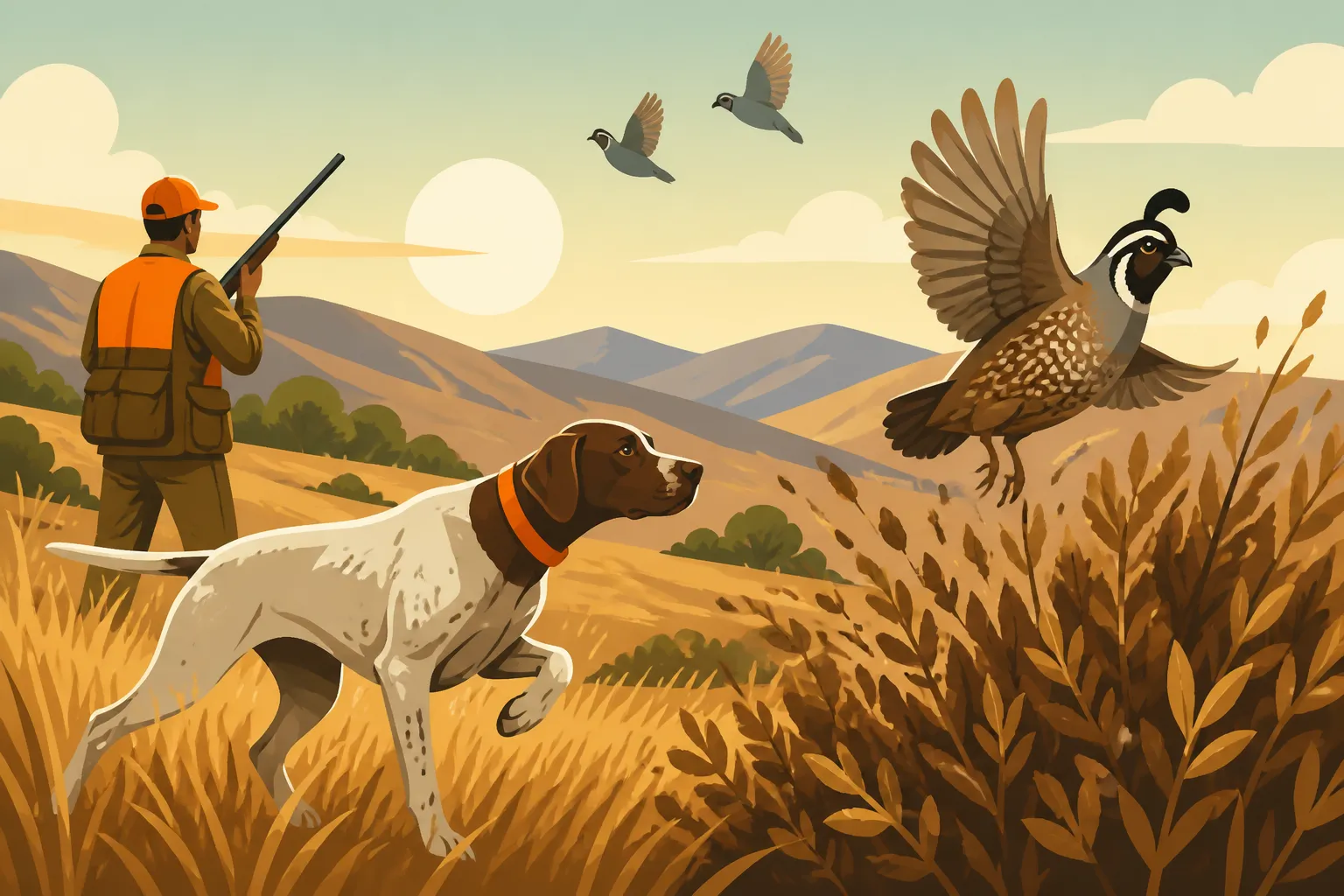
The California Valley Quail is iconic, instantly recognizable with its distinctive topknot. These birds are found across much of the state, from the coastal ranges to the Sierra Nevada foothills, often in areas dominated by chaparral, oak woodlands, and riparian corridors. Their primary defense mechanism isn't necessarily flight; it's an incredible ability to run and hide. You'll often hear stories of hunters watching a covey run uphill faster than they can pursue, disappearing into thick cover without ever taking to the air. This "runny" nature is exactly what makes a well-trained pointing dog invaluable. Without a dog to pinpoint their location and hold them, these birds would simply outmaneuver you every time. They thrive near water sources, especially during dry periods, and you'll find them feeding on seeds, berries, and insects. Look for them in areas with a mosaic of heavy cover for protection and open ground for feeding. Knowing these preferences helps you narrow down your search, even before your dog starts sniffing.
The Challenging Mountain Quail
While Valley Quail are the superstars, don't forget their high-country cousins, the Mountain Quail. These are generally larger, darker, and even more reclusive. They inhabit higher elevations, often in dense, coniferous forests or brushy canyons, and are less prone to large coveys than Valley Quail. Mountain Quail tend to be found in much thicker cover, making a dog's keen nose absolutely essential. They also hold tighter than Valley Quail, which can be a double-edged sword: a tight-holding bird is great for a dog’s point, but it also means you might walk right past them if your dog isn't covering ground thoroughly. The terrain where Mountain Quail live is typically steeper and more rugged, demanding a physically fit dog and handler. When you're Hunting California's Sierra Nevada Backcountry, particularly in the late season, be prepared for colder temperatures and more challenging conditions that require different strategies for both you and your dog.
| Quail Species | Primary Habitat | Running Tendency | Covey Size | Typical Elevation | Dog Work Implications |
|---|---|---|---|---|---|
| Valley Quail | Chaparral, oak woodlands, riparian, foothills | High | Medium to Large | Low to Mid | Dogs must be trained for runners, relocation, and covering ground efficiently. |
| Mountain Quail | Dense coniferous forests, brushy canyons | Medium | Small | Mid to High | Dogs need to work dense cover thoroughly, tight points are common, often in rugged terrain. |
Training Your Pointing Dog for California Quail
Successfully hunting California quail with a pointing dog isn't just about having any dog; it's about having a trained dog. California quail present unique challenges that require specific training adaptations beyond typical bird dog basics.
Building Foundational Skills and Addressing "Runners"
Every good pointing dog starts with solid obedience. Commands like "whoa" (to stop and hold a point), "heel" (to stay by your side), and "come" (for recall) are non-negotiable. With California quail, the "whoa" command becomes even more critical because these birds are notorious for running. A dog that busts a covey every time is counterproductive. You want a dog that can lock up on scent, even if the birds are moving, and hold that point until you're in position.
A key challenge for training in California is teaching your dog how to handle "runners." Many quail, especially Valley Quail, will try to escape on foot before flying. Your dog needs to learn to honor the initial scent, but also to adjust if the birds are moving. This might involve a subtle "creep" on point, or a trained "relocate" command where the dog carefully follows the moving scent while staying on point. Some dogs naturally adapt to this, but many need specific drills where you simulate running birds with remote-controlled launchers or by using clipped-wing quail that can't fly far. It’s about building confidence in their nose, while also reinforcing steady on point until you arrive. For a deeper dive into dog training specific to running birds, you might look into techniques for Running Pointing Dogs on California Valley Quail.
Scent Work, Conditioning, and Safety
Developing a dog's nose for California quail involves consistent exposure to bird scent in varied conditions. Start in light cover, then move to denser chaparral and oak brush. California's dry, hot climate can make scenting difficult, so train your dog to work into the wind and understand how thermals affect scent distribution, much like a hunter learns about Wind and Thermals in Steep Sierra Country for deer. Consistent conditioning is paramount. These birds live in tough, often steep, brushy terrain. Your dog needs to be in peak physical shape to cover ground all day, navigate dense cover, and handle potential heat stress. Gradually increase their exercise intensity and duration in the weeks leading up to the season.
Safety for your dog is also a huge concern. California is rattlesnake country. Invest in rattlesnake avoidance training from a reputable trainer. Additionally, protective vests, like those made by brands such as Tuffskins or Dan’s Hunting Gear, can shield your dog from thorns, burrs, and abrasive brush. Always carry plenty of water for your dog and offer it frequently. Overheating is a real danger. A small dog first-aid kit, including paw balm for cracked pads and tools for removing thorns, is also a must-have.
Effective Hunting Strategies for California Quail
Once your dog is trained and conditioned, it's time to put those skills to the test in the field. Hunting California quail behind pointing dogs is a dynamic dance between handler and dog, requiring keen observation, quick reflexes, and strategic movement.
Scouting and Locating Birds
Successful quail hunting starts long before opening day. Scouting is king. Look for areas that offer a combination of dense escape cover, open feeding areas, and most importantly, water. In California's often arid landscape, water sources like springs, seepages, stock tanks, or even just green browse from recent rains can be quail magnets. Use topographic maps and aerial imagery, perhaps even tools like GoHunt, to identify promising creek bottoms, brushy draws, and oak flats. Look for signs of quail, like dusting bowls, droppings, and tracks, or listen for their distinctive "chi-ca-go" call at dawn and dusk. Understanding the nuances of habitat, such as Hunting Coastal Range Oak Woodlands, will give you a significant advantage. Remember, even though your dog has an incredible nose, you still need to put them in the right zip code.
Working the Cover with Your Dog
When you're actually hunting, pay close attention to how your dog works the cover. They should be quartering into the wind, systematically searching prime habitat. If your dog gets birdy, slow down. Watch their tail, their head, and their body language for those subtle cues that they're on scent. When they lock up on point, move in quickly but quietly. California quail are notoriously "footy," meaning they'll often run a short distance before flushing. Position yourself to have a clear shot when the covey bursts into the air. If the birds are running, encourage your dog to relocate cautiously, keeping the pressure on until they either hold tight or flush. Remember to always know your shooting lanes and what's beyond them.
A common tactic, especially with runners, is to hunt small pockets of cover or linear features like fencerows or creek bottoms. This can funnel the birds and make them more likely to hold or flush predictably. Consider hunting "funnels" where different types of cover meet or narrow, as described in Hunting a Funnel Between Two Oak Ridges. These natural corridors can concentrate birds, giving your dog a better chance to pin them. When the covey flushes, try to mark where the singles go down. Your dog can then be sent to retrieve the fallen birds and later to find the scattered singles, which often hold tighter than the original covey.
Shot Placement and Retrieval
When a covey explodes, it can be chaotic, but quick, accurate shooting is key. You'll often have only a second or two for a shot. Use an open choke (like improved cylinder or skeet) for the close-range shots typical of quail hunting in dense cover. California law requires the use of non-lead ammunition for all upland bird hunting. Make sure you're using appropriate Non-Lead Shotgun Loads for Upland Birds, such as bismuth or steel, and that your shotgun is patterned correctly with your chosen load. Many hunters overlook checking their patterns with non-lead shot, but it's crucial for clean kills.
After the shot, direct your dog to retrieve. A good retriever is just as important as a good pointer, especially in thick California brush where downed birds can disappear instantly. Encourage a "soft mouth" so the bird isn't damaged. If your dog is struggling, consider using a whistle or hand signals to guide them. Some coveys will split up and fly into different directions, giving you opportunities to hunt singles. These individual birds often hold much tighter for a point, offering more deliberate shooting chances.
Essential Gear for California Quail Hunting with Dogs
Having the right gear makes all the difference for both you and your canine hunting partner, especially in California's diverse and often challenging environments.
Firearms and Ammunition Compliance
For quail, a lightweight 20-gauge or 12-gauge shotgun is typically preferred. The faster swing and lighter weight of a 20-gauge can be a real advantage when you're navigating dense cover and making quick shots on flushing birds. As mentioned, California has a statewide non-lead ammunition requirement for all hunting, including upland game birds. This means you must use non-toxic shot like steel, bismuth, or tungsten alloys. It's not just a suggestion; it's the law, and game wardens will check. Make sure you've purchased your ammunition well in advance, as certain non-lead loads can sometimes be harder to find or more expensive than traditional lead shot. When preparing for the season, remember to account for potential ballistic differences and consider Sighting In Before Switching to Non-Lead.
Dog Tracking and Safety Equipment
A GPS collar is practically mandatory for hunting with pointing dogs in California's often dense and expansive cover. Brands like Garmin (Alpha series) or SportDOG offer reliable units that allow you to track your dog's location, speed, and direction, even when they're out of sight in thick chaparral. This is invaluable for finding a dog on point that's out of earshot or for quickly locating a dog that has gone off course.
Beyond the GPS, protective gear for your dog is vital. A durable dog vest made from Cordura or similar material can prevent cuts and scrapes from thorns and brush. In cooler weather, a dog coat might be necessary, especially for shorter-haired breeds. A small, well-stocked dog first aid kit, including things like antiseptic wipes, veterinary wrap, and paw protection, should always be in your pack. And, as always, carry ample water for your dog, even on cooler days, and offer it frequently.
Hunter Clothing and Navigation Tools
For yourself, comfort and durability are key. Good upland boots with ankle support are essential for navigating rocky, uneven terrain. Consider brands like Schnee's or Kenetrek, known for their ruggedness. Clothing should be layered to adapt to California's often fluctuating temperatures – cool mornings can turn into hot afternoons quickly. Brush pants or chaps are a lifesaver against thorns and burrs, especially when Hunting Southern California's Chaparral Foothills. Blaze orange is a crucial safety item; check California Blaze Orange Requirements to ensure you're compliant. A good GPS unit or a reliable mapping app on your phone (like onX Hunt, which uses GoHunt data) is indispensable for navigating public lands and knowing property boundaries. Always carry a physical map and compass as a backup, especially in areas with spotty cell service. A good pack to carry water, snacks, extra layers, and your harvested birds will complete your setup.
Disclaimer
Please remember that hunting regulations, seasons, and licensing requirements can change. Always consult the latest California Department of Fish and Wildlife (CDFW) regulations before planning any hunting trip. This guide is for informational purposes only and does not supersede state laws.