Hunting Standing Cover Left After Harvest
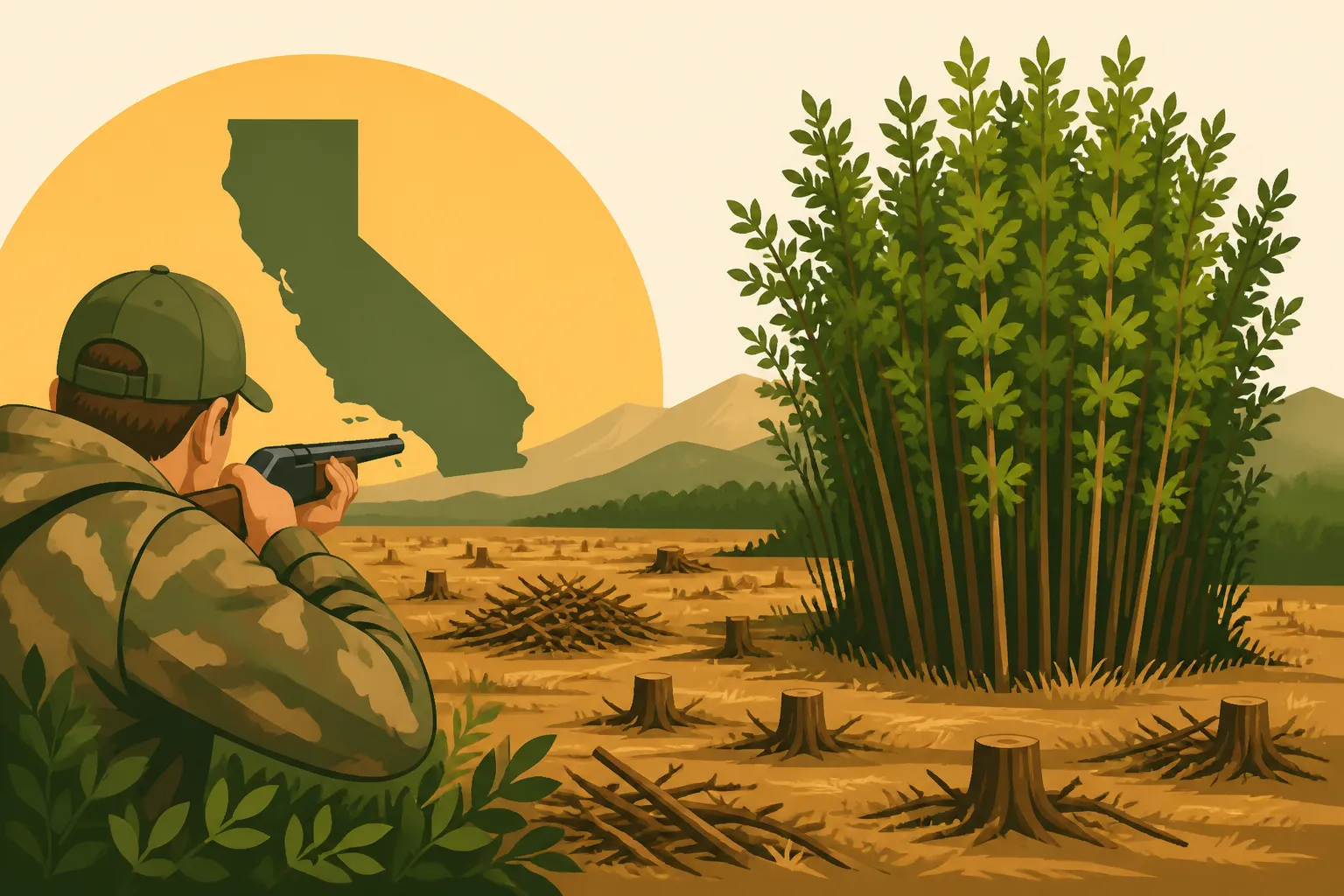
The combines have rolled through, the fields are bare, and the deer, pigs and birds you watched all summer seem to have vanished. Then you notice a corner of standing corn the harvester skipped, a weedy ditch bank, or a strip of sorghum left for wildlife, and every track in the county leads into it. This guide explains how to hunt the standing cover left after harvest in California farm country.
Why Leftover Cover Becomes a Magnet
When a farm goes from tall crops to bare dirt or stubble in a matter of days, every animal that was living in those crops has to go somewhere. The pieces of cover that remain suddenly hold far more wildlife than their size would suggest.
What Counts as Standing Cover
Standing cover is anything tall enough to hide an animal that is left on the landscape after harvest. In California’s farm country, that can include:
- Corners and edges of corn, sorghum or sunflower fields that the harvester missed or left on purpose
- Strips of crops planted or left for wildlife
- Weedy ditch banks and canal edges
- Fencerows grown up with blackberry, willow or brush
- Tule and cattail patches along drains and sloughs
- Overgrown field borders next to orchards and vineyards
- Unharvested or abandoned fields that have grown up in weeds
In the Sacramento Valley, the Delta and the northern San Joaquin Valley, many of these pockets sit among rice, corn, tomatoes, safflower and orchards. In the foothills and coastal valleys, leftover cover is more likely to be brushy fencerows, creek bottoms and grain hay field edges next to oak woodland.
Which Animals Use It
The species you find in standing cover depends on where you are and what time of year it is.
Deer use leftover cover near farms, especially in the foothills and along river bottoms, where they can feed in fields at night and bed in cover during the day. As fall moves on and natural food runs out, agricultural edges become even more important. See Late-Season Food Sources for California Deer for more on what deer eat later in the year.
Wild pigs are notorious for using standing crops and thick cover near farms. A corner of standing corn or a tule-choked drain can hold a sounder that raids nearby fields at night. Pigs can be hunted year-round in California, though you still need the pig-specific tag or validation the state requires. That paperwork has changed over the years, so check what applies before you go. Their year-round status makes them a common target in this kind of cover.
Upland birds such as pheasants and California quail use standing cover heavily after harvest. Pheasants in particular are tied to the rice and grain country of the Sacramento Valley, and the late-fall pheasant season often coincides with the time when cover is most concentrated. Quail use brushy edges and fencerows in foothill and valley farm country.
How Harvest Changes Animal Behavior
Harvest is a big disruption. Machinery, people and noise push animals out of fields, and the loss of cover leaves them exposed. In the days after harvest, animals often move into the nearest remaining cover and stay there, venturing out mostly at night.
Over time, they adjust. Some return to the stubble to feed on waste grain at night or in low light. Others move to more distant cover. Paying attention to where animals go after harvest, and how quickly they settle in, is key to hunting this cover effectively.
Scouting and Gaining Access to Farm Cover
Most of the standing cover worth hunting in California’s farm country is on private land. Scouting and access go hand in hand.
Finding the Pockets Worth Hunting
Start by driving farm roads and looking for leftover cover in the weeks after harvest. Look for corners of standing crops, overgrown ditches and fencerows, and patches of tules. Satellite imagery can help, but it is often out of date by the time you look at it, so in-person scouting is essential.
Look for sign: tracks entering and leaving the cover, trails worn through stubble, rooting from pigs, droppings, and feathers. Glass fields at dawn and dusk to see animals moving between cover and feeding areas.
Mapping tools are useful for organizing what you find. Apps such as GoHunt let you mark pockets of cover, note land ownership, and plan how to approach each spot, which is especially helpful when you are working multiple farms over a season.
Asking Farmers for Permission
Most of this cover is on private land, and you need permission to hunt it. Many farmers are willing to allow hunting, especially for pigs that damage crops or deer that eat orchards and gardens. The key is to ask respectfully and make it easy for them to say yes.
Approach farmers at a time that is convenient for them, not during harvest when they are busiest. Be clear about what you want to hunt, when, and how. Offer to help with chores or share meat. Respect their decision if they say no. Our guides Asking a California Landowner for Permission and Knocking on Doors in California Ranch Country offer practical tips.
Once you have permission, be the hunter they want to invite back. Follow their rules, close gates, stay off wet fields, and do not hunt near buildings, livestock or workers.
Small Tracts and Edges
Some of the best standing cover is on small tracts that other hunters overlook. A few acres of brushy ground next to a big farm can hold a surprising number of animals. If you have access to small tracts, focus on the cover that connects to larger areas. See Hunting Small Private Tracts in California for more on making the most of limited ground.
Be extra careful about safety and setback rules on small tracts. California law restricts the discharge of firearms within 150 yards of an occupied dwelling without permission, and many farm tracts have homes, barns and roads close by.
| Type of Cover | Most Likely Game | Best Time to Hunt | Key Consideration |
|---|---|---|---|
| Standing corn or sorghum corner | Pigs, deer, pheasants | Dawn, dusk or a midday push | Animals may hold tight |
| Weedy ditch bank | Pheasants, quail | Morning and late afternoon | Narrow cover, easy to push |
| Brushy fencerow | Quail, deer | Early and late in the day | Connects cover to feed |
| Tule patch along a drain | Pigs, pheasants | Midday when animals bed | Wet, dense, hard to hunt |
| Orchard or vineyard edge | Deer, pigs | Dawn and dusk | Watch for workers and buildings |
Tactics for Hunting Leftover Cover
How you hunt standing cover depends on the size of the cover, the game you are after, and how many hunters are with you.
Sitting the Edges at Dawn and Dusk
For deer and pigs, sitting the edges of standing cover at dawn and dusk is often the most effective approach. Animals leave cover in the evening to feed in nearby fields and return in the morning. Find the trails they use, and set up downwind with a clear view of the edge.
A ground blind or natural cover at the edge of a field can help you stay hidden. Be patient. Animals may not move until the last few minutes of legal light, especially if they have been pressured.
Pigs in particular often move after dark. If you are hunting pigs in standing cover, check the current rules on night hunting and on the use of lights. Our guide Night Hunting Rules for California Hogs explains what is allowed.
Pushing Cover With a Small Group
For bigger patches of cover or when animals are holding tight, a small push can be effective. One or two hunters walk slowly through the cover while others wait at the far end or along the edges where animals are likely to exit.
Safety is critical. Everyone must know exactly where everyone else is. Shooting lanes must be agreed upon in advance, and no one should shoot toward the cover or toward other hunters. Blaze orange makes everyone more visible. Our guide Deer Drives With Three or Four Hunters covers the safety rules and coordination.
Pushes work well for pheasants and pigs. For pheasants, walkers move through the cover toward blockers at the end, and birds often flush as they reach the end of the cover. For pigs, pushers move slowly through thick cover, and standers wait at likely exits.
Hunting With Dogs
Dogs are a huge asset in standing cover, especially for birds. Flushing dogs and pointing dogs can find birds that would otherwise sit tight and let you walk past. Retrievers help recover downed birds in thick cover.
For pheasants, a good flushing dog working a ditch bank or a corner of standing corn can produce shot after shot. For quail, a pointing dog can locate coveys in brushy fencerows. See Running Pointing Dogs on California Valley Quail for more on working dogs.
Keep dogs safe. Farm country can have hazards such as canals, roads, machinery and livestock. Rattlesnakes are a concern in warmer weather. Know where your dogs are at all times.
Still-Hunting Through Narrow Cover
Narrow strips of cover, such as ditch banks and fencerows, can be still-hunted. Move slowly and quietly along the edge, stopping often to look and listen. This works well for deer in brushy fencerows and for pigs in narrow drains.
Pay attention to the wind. Move with the wind in your face or quartering to you, so animals ahead of you do not smell you. Our guide Working a Fencerow for Late-Season Deer explains how to work this kind of cover.
Putting It Together on a Valley Farm
Picture a farm in the Sacramento Valley a few weeks after harvest. The rice has been cut, the corn field next door has been chopped, and the only cover left is a fifteen-acre corner of standing corn the farmer left near an irrigation drain, plus a quarter mile of tule-lined ditch running away from it.
On the first morning, two hunters glass the corner from the farm road at daylight and watch three pigs trot out of the stubble and disappear into the standing corn. Fresh rooting along the ditch tells the same story. The farmer has asked them to deal with the pigs, which have been tearing up a levee, so they plan around that.
They come back at midday, when the pigs should be bedded. One hunter takes a stand at the corner where a worn trail leaves the corn toward the drain, with a clear shooting lane across the stubble and the farm buildings well off to the side. The other walks slowly into the corn from the downwind side, pausing often. Twenty minutes later, the pigs slip out exactly where the trail suggested and cross the stubble in front of the stander.
Later in the season, after the pig problem is handled, the same corner and ditch become a pheasant hunt with a flushing dog, worked from the far end toward the corn with a blocker waiting. Same cover, different game, and the same basic lesson: learn how animals enter and leave the pocket, then hunt that movement.
Gear, Safety and Practical Tips
Hunting standing cover in farm country comes with its own gear needs and safety considerations.
Gear for Farm Cover
For deer and pigs, a rifle or shotgun with non-lead ammunition is standard. California requires non-lead ammunition for all hunting. In thick cover, shots are often close and fast, so a rifle with a low-power scope or a shotgun with slugs may be ideal. For birds, use non-lead shot appropriate for the species.
Clothing should be tough enough to handle brush, briars and wet ground. Brush pants or chaps protect your legs. Waterproof boots are essential in wet areas. Blaze orange is a smart choice in farm country, where other hunters, workers and landowners need to see you.
Bring a way to retrieve game. In thick cover, dragging a deer or pig out can be difficult. A rope, a cart or a partner helps.
Safety Around Farms
Farms are workplaces. There may be workers, machinery, livestock and buildings close to where you hunt. Always know what is beyond your target, and never shoot toward buildings, roads, workers or livestock.
Communicate with the landowner about when and where you will hunt. Let them know when you arrive and when you leave. Respect any areas they ask you to avoid.
Setback rules come up constantly in farm country, where houses, shops and labor camps are scattered across the landscape. The exact distances and exceptions are covered in California Firearms Discharge Setback Rules, and it is worth reading before your first hunt on a new farm.
Keeping Records Over the Season
Standing cover changes over the season. As crops are harvested, cover is removed, and animals shift. Keep notes on where you see animals, which pockets of cover hold game, and how animals respond to pressure. A mapping app like GoHunt can help you keep track of this information alongside land ownership and access notes.
Over time, you will learn which farms and which pockets of cover hold game year after year. That knowledge is invaluable, and it builds the kind of relationship with landowners that keeps you welcome.
Disclaimer
This article is for general informational purposes only and does not constitute professional advice. Laws, prices and regulations vary by location and change over time. Consult a qualified professional for guidance on your specific situation.