California’s Year-Round Wild Pig Tag
Many hunters in California face the yearly scramble for tags, navigating complex draw systems and often short seasons, leaving them longing for more time afield. But there's one exciting exception that offers a continuous opportunity: wild pig hunting. Unlike most other big game, California’s wild pig tag opens up year-round possibilities, providing an accessible and rewarding pursuit for both seasoned hunters and newcomers eager to put delicious wild pork on the table. This guide will walk you through everything you need to know to pursue these intelligent and elusive animals across the Golden State.
Understanding the Unique Status of Wild Pigs in California
Wild pigs in California are a fascinating, and often contentious, subject. They offer an incredible hunting opportunity, but their classification and impact set them apart from virtually every other game animal you might pursue here. It’s crucial to understand this unique standing to truly appreciate the hunting experience.
Why Wild Pigs Are Different from Other Game Animals
First off, let's talk about the legal side of things. Most of California's big game animals – deer, elk, bear, turkey – are native species with established populations that the California Department of Fish and Wildlife (CDFW) meticulously manages through quotas, draw systems, and often restricted seasons. Wild pigs, however, are a different story entirely. They are considered an introduced, non-native species. Their lineage traces back to domestic swine brought to California by Spanish settlers in the 1700s, which then escaped and interbred with European wild boars introduced in the 1920s. This mixed heritage means they are not "native wildlife" in the traditional sense.
Because of this non-native status, wild pigs are not managed with the same conservation-focused approach as, say, a blacktail deer. There's no bag limit, no closed season (with the purchase of the appropriate tag), and fewer restrictions on methods, especially on private land. This is a huge deviation from the highly regulated nature of California's Multi-Zone Deer Season System or Black Bear Hunting California's Spot-and-Stalk Season. For hunters, this translates to unparalleled flexibility. Imagine being able to scout and hunt any day of the year, adapting to pig movements and your own schedule without being beholden to strict season dates. It's a freedom that's almost unheard of in modern big game hunting, making the wild pig a truly unique quarry in California.
The Ecological Impact and Management Challenges
While the year-round hunting opportunity is fantastic for us, it stems from a serious ecological problem. Wild pigs are incredibly destructive. Their rooting behavior, where they use their powerful snouts to dig for food, can decimate natural habitats, agricultural fields, and even historical sites. They rip up sensitive plant communities, destroy oak regeneration by eating acorns, and contaminate water sources. They compete directly with native wildlife, including species like deer, for food resources. Farmers and ranchers across the state face significant economic losses due to their depredation, which includes destroying crops, pastures, and irrigation systems.
The CDFW, and land managers across private and public lands, view wild pigs as a significant challenge. Their prolific breeding rates mean populations can explode quickly, making control difficult. A sow can have multiple litters in a single year, with many piglets in each litter, rapidly replenishing numbers even with consistent hunting pressure. This is why the state encourages hunting and doesn't impose quotas or strict seasons – it’s a form of population management. Understanding this ecological context adds another layer to the hunt; when you take a wild pig, you’re not just filling your freezer, you’re actively participating in efforts to mitigate damage to California’s natural and agricultural landscapes. It’s a hunt that carries a strong sense of purpose beyond personal gain.
Common Misconceptions About California Wild Pig Hunting
There are a few myths floating around about wild pig hunting in California that we should clear up right away. One common misconception is that pigs are "easy" to hunt because there's no season or bag limit. While their numbers can be high in certain areas, pigs are incredibly intelligent and adaptable animals. They learn quickly, especially under hunting pressure, and can become entirely nocturnal, vanish into dense cover, or move miles overnight. Hunting a truly wild, free-ranging pig is a challenge that demands skill, patience, and often, a lot of legwork. They have excellent senses of smell and hearing, and their eyesight, while not their strongest suit, is certainly good enough to spot a clumsy hunter.
Another myth is that you can just shoot any pig you see, anywhere. This is absolutely not true. While there's no statewide closed season or bag limit with a tag, you still need the proper license and tag, and you must hunt on land where hunting is permitted. Trespassing is illegal, and public land regulations still apply. Always respect private property boundaries and understand the rules of any public land you hunt. Furthermore, while the general perception is that pigs are pests, they are still considered a game animal, not vermin, under California law when it comes to hunting. This means you must adhere to fair chase principles and use legal hunting methods. You can’t, for instance, just set out poison. It’s still hunting, with all the ethics and regulations that come with it.
Navigating California's Year-Round Wild Pig Tag Requirements
So, you're ready to hit the field and pursue some wild pork? Fantastic! But before you even think about loading up your truck, you need to make sure you've got all your ducks in a row when it comes to licenses and tags. California has specific requirements, and getting them right is the first step to a successful and legal hunt.
Purchasing Your California Wild Pig Tag
The good news is that acquiring a California wild pig tag is relatively straightforward compared to the complicated draw systems for other species. There’s no lottery, no preference points, just a direct purchase. You can buy your wild pig tag online through the CDFW’s Automated License Data System (ALDS) portal, at any authorized license agent (like many sporting goods stores), or at a CDFW license sales office. This convenience means you can often decide to go pig hunting on relatively short notice, as long as you have your base hunting license sorted out.
When you purchase a wild pig tag, it's valid for the entire license year, which typically runs from July 1st to June 30th of the following year. This is what makes it a "year-round" tag in practice. You can buy multiple tags throughout the year if you fill your first one, or if you simply want more opportunities. There’s no limit to the number of tags you can purchase within a license year. This is a stark contrast to deer tags, where most hunters are limited to one per season. The cost for a California Wild Pig Tag Cost for Residents is quite reasonable, and non-residents will find their tag costs a bit higher, but still very accessible for a year-round opportunity. Always double-check the current fee schedule on the CDFW website before you head out, as prices can change.
Understanding License and Endorsement Needs
Before you can even think about buying a pig tag, you need a valid California hunting license. This is your foundational permit that allows you to hunt any legal game species in the state. For California residents, this means purchasing an annual resident hunting license. Non-residents will need to purchase a California Nonresident Base License Cost. If you're new to hunting in California or haven't held a license before, you’ll also need to complete an approved hunter education course. This is a mandatory requirement designed to ensure all hunters understand safety, regulations, and ethical practices. The good news is that Taking California Hunter Education Online is an option, making it easier than ever to get certified.
Beyond the basic hunting license, there aren't any special endorsements specifically required for wild pigs like there are for migratory birds (HIP certification and federal duck stamp). However, you must adhere to California's non-lead ammunition requirement. Since July 1, 2019, it has been illegal to use any lead ammunition for hunting any game animal anywhere in California. This is a critical rule to remember and impacts your gear choices significantly. Always ensure your rifle, shotgun (if using slugs), or handgun is loaded with certified non-lead projectiles. Failing to comply can result in fines and loss of hunting privileges.
Specific Rules for Public vs. Private Land Hunts
While the general rules for pig tags are state-wide, the where you hunt dictates further regulations, particularly regarding access and methods.
Private Land:
Hunting on private land in California is often the most productive and least restricted option for wild pigs. If you have permission from a landowner, you have more flexibility. On private land, you can use certain methods that are restricted on public land, such as night hunting for wild pigs. Night Hunting Rules for California Hogs allow for the use of artificial lights and night vision devices on private property, which can be incredibly effective given pigs' nocturnal habits, especially in pressured areas. You can also use methods like trapping on private land, which we’ll discuss more later. Always ensure you have clear, written permission from the landowner, and understand any specific rules they might have for their property. Remember, even with permission, the non-lead ammo requirement still applies, and you still need a valid hunting license and pig tag.
Public Land:
Hunting pigs on public land, such as National Forests or Bureau of Land Management (BLM) land, offers incredible access for those who put in the effort. However, these areas come with more restrictions. Night hunting is generally not allowed on public lands; hunting hours are typically restricted to one-half hour before sunrise to one-half hour after sunset. Additionally, other regulations common to public lands, such as vehicle access rules, camping restrictions, and potentially specific area closures, will apply. It's vital to research the specific regulations for the particular National Forest, BLM unit, or California Wildlife Areas and Ecological Reserves you plan to hunt. Websites like GoHunt and the CDFW provide excellent resources and mapping tools that can help you identify public access points, read aerial photos, and understand specific unit regulations. These tools are invaluable for Scouting California Public Land Before Season and ensuring you're compliant. Always carry a physical map and a reliable GPS or mapping app like onX, as cell service is often nonexistent in these remote areas.
Where to Find Wild Pigs in California's Diverse Landscapes
California's varied terrain means wild pigs can be found in a wide range of habitats, from dense coastal chaparral to rolling oak woodlands and even desert fringes. Knowing where to focus your efforts is key to increasing your chances of success.
Prime Pig Habitat: Oak Woodlands and Agricultural Zones
If there's one habitat type synonymous with California wild pigs, it's the oak woodlands. These areas, particularly those dominated by various species of oak (like blue oak, black oak, valley oak, and live oak), provide everything a pig needs: abundant food, dense cover, and reliable water sources. Acorns are a primary food source for pigs, especially during the fall and winter, providing a high-energy, protein-rich diet. Pigs will often concentrate in areas with heavy acorn crops. Look for areas with a mix of dense brush for bedding and open oak savannas for foraging. Creeks, springs, and small ponds are also magnets for pigs, as they need water daily and love to wallow to cool off and remove parasites.
Beyond the natural woodlands, agricultural zones are absolute hotspots, especially those bordering natural cover. Wild pigs are opportunistic feeders and will readily venture into vineyards, grain fields (like Hunting a Standing Alfalfa Field or corn), nut orchards, and irrigated pastures to feed. Ranchers and farmers often struggle with pig depredation, making these areas prime for hunting if you can secure private land access. Pigs will bed in nearby dense riparian corridors, brushy hillsides, or patches of tall grass and then move into fields under the cover of darkness to feed. The challenge here is often gaining permission to hunt these private lands, but the rewards can be substantial.
Regional Hotspots Across California
Wild pigs are widespread across California, but certain regions consistently hold higher densities.
- Central Coast: Areas like Monterey, San Luis Obispo, and Santa Barbara counties are renowned for their abundant wild pig populations. The rolling hills, extensive oak woodlands, and scattered agriculture along the Hunting Pigs on Central Coast Oak Ranges provide ideal habitat. This region is often considered the epicenter of California pig hunting.
- Northern California Foothills: From the Mendocino and Lake County regions down into the Sierra Nevada foothills (e.g., Tehama, Shasta, Butte, Glenn, and Colusa counties), you’ll find significant pig activity. These areas feature similar oak woodland environments, particularly around river drainages and private ranch lands.
- Interior Mountain Ranges: While less dense than the Central Coast, parts of the Coast Range and even some lower elevations of the Sierra Nevada hold pigs. Look for pockets of oak and chaparral within these larger mountain systems.
- Southern California: Even in drier, more arid parts of Southern California, particularly in areas like parts of San Diego, Riverside, and San Bernardino counties, pigs can be found, often concentrating around water sources and agricultural fields.
According to recent estimates, How Many Wild Pigs Roam California suggests a population well over 400,000, and potentially much higher in certain areas. Which California Counties Have the Most Pigs often correlates with those Central Coast and Northern California foothill regions mentioned, due to optimal habitat. The key is to concentrate your efforts in areas where these prime habitats converge with historical pig presence.
Scouting and Locating Active Pig Areas
Effective scouting is paramount for wild pig hunting. You can't just drive around and expect to stumble upon them (though it sometimes happens!). Pigs leave plenty of sign that tells you where they've been and, more importantly, where they might be going.
- Rooting: This is the most obvious sign. Freshly turned-up earth indicates recent feeding activity. Pay attention to the age of the rooting – fresh, moist dirt means they’ve been there recently; dry, crusty dirt means they might have moved on.
- Tracks: Pig tracks are distinctive, often leaving a clearer imprint than deer, especially in soft soil. Look for them around water sources, trails, and field edges.
- Wallows: Muddy depressions where pigs have rolled to cool off and remove parasites. If a wallow is wet and fresh, pigs are likely in the vicinity.
- Scat: Pig droppings are typically cylindrical and can vary greatly depending on their diet. Fresh scat is always a good indicator.
- Rub Marks: Pigs will rub on trees, posts, or rocks, especially boars, to mark their territory and remove mud. Look for mud or hair left behind.
Utilizing modern scouting tools like mapping apps (GoHunt's layers can be incredibly helpful for identifying oak stands, water sources, and public/private land boundaries), trail cameras, and even drones (where legal and ethical) can significantly enhance your scouting efforts. Always remember to check for Where to Hang a Camera on a Forest Road and ensure adherence to local regulations. Early morning or late evening glassing sessions from a high vantage point can also reveal pigs moving from bedding to feeding areas. Don't be afraid to put boots on the ground, cover miles, and piece together the puzzle of pig movement.
Effective Hunting Methods for California Wild Pigs
The year-round nature of California’s wild pig tag means you can adapt your hunting strategy to the season, weather, and terrain. Pigs are adaptable, and so should you be.
Spot-and-Stalk Hunting in Open Country
Spot-and-stalk is arguably one of the most exciting and rewarding ways to hunt wild pigs, especially in California's more open oak woodlands or on large private ranches. This method relies heavily on good optics and patience. You'll want to find a high vantage point with a wide view of potential feeding or travel areas. Use your binoculars and Best Spotting Scope for a Blacktail Buck to systematically scan hillsides, saddles, and feeding areas for any signs of movement or dark shapes. Companies like Vortex Optics and Maven make excellent glass that can help you pick apart distant hillsides.
Once you spot pigs, the real work begins. You need to meticulously plan your approach, using terrain features, drainages, and cover to remain undetected. Always pay close attention to the wind – pigs have an incredible sense of smell, and a single whiff of your scent will send them scattering. You’ll need to move slowly, deliberately, and often make large circles to get into a favorable position. This is where lightweight, quiet clothing and durable boots come into play, especially when navigating Hunting Coastal Range Oak Woodlands or steep canyons. The goal is to get within an ethical shooting range, which for rifles often means 100-300 yards depending on your skill and equipment, and often much closer for archery. The thrill of executing a perfect stalk on a wary wild pig is an experience every hunter should seek.
Ambushing Pigs Near Water or Feed
If spot-and-stalk isn't your preference, or if you're hunting in dense cover where visibility is limited, ambushing pigs can be a highly effective strategy. This involves setting up in a location where you anticipate pigs will travel or feed, and waiting for them.
- Water Sources: Pigs need water daily. Setting up near a reliable water source – a spring, pond, or creek – especially during dry periods or in arid regions, can be incredibly productive. Find trails leading to the water, look for fresh tracks and wallows, and set up downwind of where you expect pigs to approach.
- Feed Sites: In agricultural areas, ambushing pigs along the edges of fields they are raiding can be very successful. Identify their entry and exit points from the cover into the field and position yourself accordingly. Similarly, in oak woodlands, find areas with abundant fresh rooting and set up an ambush along common travel corridors into those areas. This can be particularly effective in the fall when acorns are dropping.
- Ground Blinds: Utilizing a ground blind, especially one brushed in well, can provide excellent concealment for ambush hunting. Make sure your blind is set up well in advance of your hunt, if possible, to allow pigs to get used to its presence. For public lands, always check specific regulations regarding Using a Ground Blind on BLM Land or Brushing In a Blind on a Field Edge on wildlife areas.
This method requires patience and an understanding of pig movement patterns. Spend time observing their routines, identify their preferred travel routes, and be ready when they appear.
Trapping and Baiting Rules for California Wild Pigs
Unlike deer or other big game, California allows for the use of trapping and certain forms of baiting for wild pigs, primarily on private land. This is a critical distinction and offers landowners and hunters additional tools for population control.
- Trapping: Trapping a Sounder on Private Land is a highly effective way to remove multiple pigs at once. Large panel traps or corral traps, often baited with fermented corn or other attractants, are commonly used. Trapping requires diligent monitoring, proper trap construction to prevent escape, and humane dispatch of captured animals. It's often used by landowners or professional depredation services to significantly reduce populations causing damage.
- Baiting: California's regulations regarding baiting for wild pigs are more nuanced than for other game. While Baiting Hogs Legally in California is permitted, it's generally understood to be within the context of trapping or depredation permits on private land, rather than simply setting out bait and hunting over it from a stand as you might for deer in other states. The intent is typically for removal and population control, not merely attracting pigs for a recreational hunt. Always clarify the specific regulations with CDFW or a local warden if you plan to use bait outside of a trapping scenario, particularly on public land where it is usually prohibited. The core principle is that public land rules are much stricter, and private land offers more flexibility under specific conditions.
Ethical Harvest and Reporting Your California Wild Pig
Successfully finding and hunting a wild pig is only part of the journey. Ensuring an ethical harvest and fulfilling your legal obligations by reporting your take are crucial components of responsible hunting.
Shot Placement and Quick Recovery
The most ethical shot is one that results in a quick, humane kill. For wild pigs, this typically means a shot to the vitals: the heart and lungs. The "shoulder shot" is popular because it also often breaks the scapula, anchoring the pig in place, which is particularly useful for preventing a wounded animal from escaping into dense brush. Aiming directly behind the shoulder, about one-third of the way up the body, will generally hit the heart/lung area.
Pigs have surprisingly tough hide and dense bone structure, especially older boars with their thick "shield" over the shoulders. This means bullet choice and caliber are important. Using a well-constructed, non-lead bullet designed for penetration, like a monolithic copper bullet, is essential. Avoid light-for-caliber bullets. For cartridges, consider calibers like .270, .308, 6.5 Creedmoor, or 30-06 for their knockdown power. Even with a good shot, pigs can be tough. Always wait a reasonable amount of time before tracking, unless you saw the animal drop. Give it 15-30 minutes for a good lung shot, or several hours if you suspect a gut shot, to allow the animal to expire.
Field Dressing and Meat Care in Warm Climates
California’s year-round pig season means you might be hunting in very warm or even hot weather, especially in spring, summer, or early fall. This makes immediate and proper field dressing absolutely critical to preserving the quality of your wild pork.
- Act Fast: As soon as the pig is down, get to it and begin field dressing. Remove the entrails as quickly as possible to allow the carcass to cool down internally. This is the most important step in hot weather.
- Elevate and Air Out: If possible, hang the pig or prop it open to allow air circulation. If you can’t hang it, at least spread its legs and prop open the body cavity to maximize airflow.
- Cleanliness: Carry a good knife (like Best Knife for Skinning a Wild Pig), gloves, and wet wipes. Keep the meat as clean as possible, avoiding contact with dirt or stomach contents. If you hit the gut, carefully remove the damaged meat and wash out the cavity with water if available, then dry thoroughly.
- Coolers and Ice: Have a plan for getting the meat into a cooler with ice as soon as possible. Quartering the pig in the field makes it easier to transport and cool. A large cooler packed with ice (not just a few bags) is indispensable. For longer pack-outs, high-quality game bags are essential to protect the meat from flies and dirt. Remember, a pig can spoil quickly in 80-degree weather. Aging Venison in Hot Weather (and wild pork) requires strict temperature control, so get it chilled.
Mandatory Reporting Through ALDS
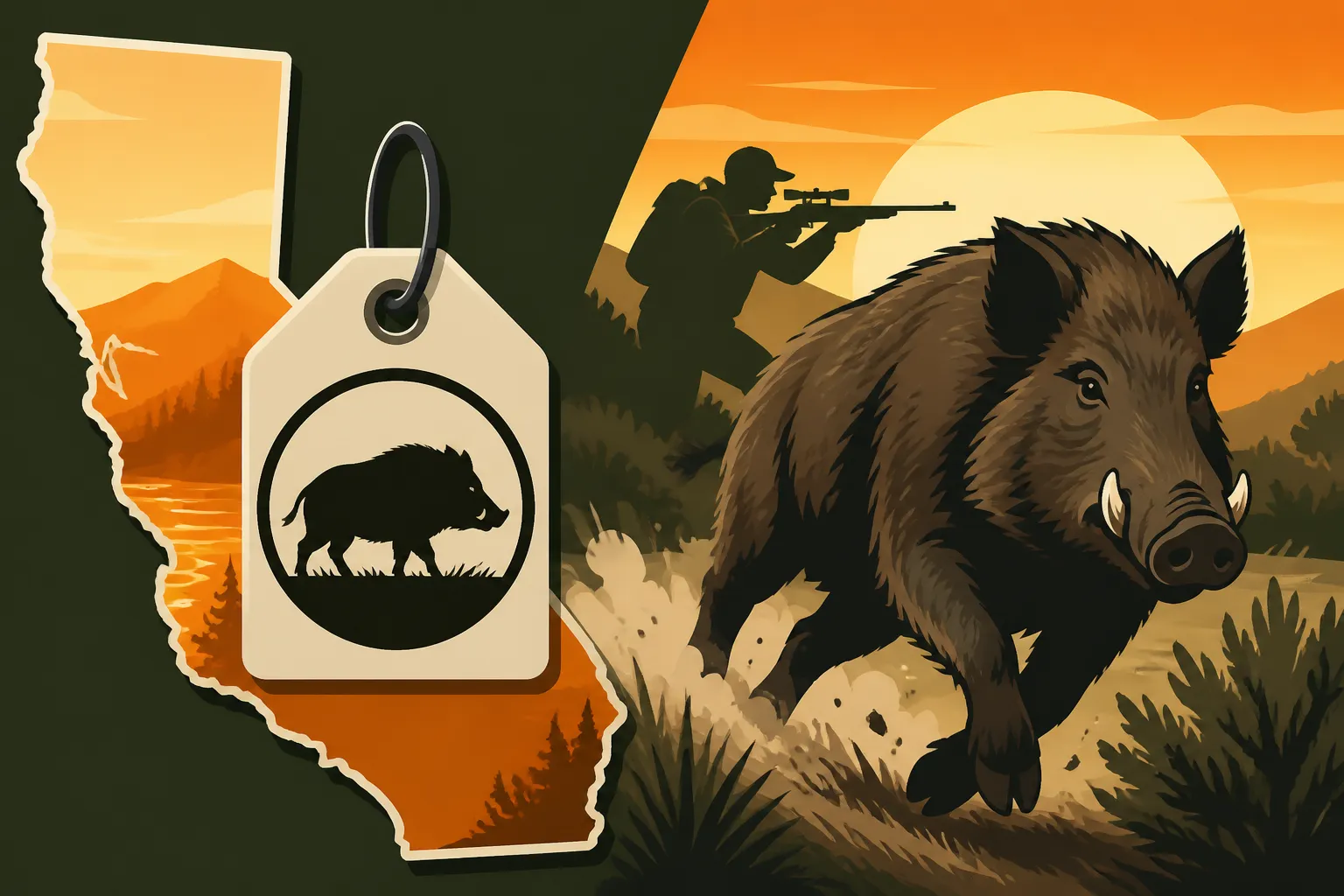
California law requires all hunters to report their pig harvest. This is not optional and is a crucial part of the state’s wildlife management data collection. The good news is, it’s straightforward. When you purchase your wild pig tag, it comes with a validation portion. After you harvest a pig, you must notch the tag immediately, indicating the date of kill.
To report your harvest, you can do so through the CDFW’s Automated License Data System (ALDS) online portal, or by mailing in the harvest report card that comes with your tag. The CDFW uses this data to track harvest numbers and trends, which helps them understand population dynamics and inform future management strategies, even for a non-native species. Ensure you report your pig within the specified timeframe, which is typically 30 days after harvest, or by January 31st of the following year if the tag isn't filled. Always keep your validated tag with the carcass until it reaches your home or a meat processor. Failure to report your harvest can result in fines and impact your ability to purchase future tags. This reporting is exactly what Reporting a Pig Harvest Through ALDS describes.
Gear and Preparation for a Successful California Pig Hunt
Having the right gear can make or break your hunt, especially when chasing tough wild pigs across California's diverse and often challenging terrain. Don't skimp on essentials.
Essential Firearms and Ammunition Choices
For wild pigs, you want a rifle that delivers enough energy and penetration to consistently drop a tough animal.
- Rifles: Common and effective calibers include the .270 Winchester, .308 Winchester, .30-06 Springfield, and even cartridges like the 6.5 Creedmoor. For heavier boars, some hunters prefer larger calibers like .300 Winchester Magnum, but they aren't strictly necessary. The key is shot placement and a good bullet. Lever-action rifles in .30-30 or .45-70 can be excellent for close-quarters hunting in thick brush. Shotguns loaded with slugs can also be effective at closer ranges. Handguns chambered in powerful calibers like .44 Magnum or .454 Casull can be used, particularly for up-close encounters or as a backup.
- Non-Lead Ammunition: As mentioned, California mandates non-lead ammo. For pigs, you want a bullet that retains its weight and penetrates deeply. Monolithic copper bullets, such as those made by Barnes (TSX, TTSX, LRX), Hornady (GMX, CX), Nosler (E-Tip), or Federal (Trophy Copper), are excellent choices. They are designed for superior weight retention and penetration, which is vital for pigs. Always test your chosen non-lead ammunition in your rifle to ensure accuracy, as point of impact can change significantly when switching bullet types. Zeroing a Rifle for Non-Lead Loads is an essential step before heading afield.
- Archery Equipment: For bowhunters, a compound bow with a draw weight of 50-70 pounds, shooting a well-tuned arrow with a sharp, durable broadhead, is ideal. Fixed-blade broadheads are often favored for pigs due to their reliability and deep penetration on tough hide and bone. Make sure your arrow setup has enough kinetic energy to punch through the shoulder shield if that's your target.
Optics and Scouting Tools for Pig Hunting
Good optics are your best friend for spotting pigs, especially in open country, and for navigating the vast public lands.
- Binoculars: A quality pair of 10×42 or 10×50 binoculars is essential for glassing. Brands like Vortex, Leupold, and Maven offer excellent options. For long-range glassing, a spotting scope (15-45x or 20-60x) mounted on a sturdy tripod can be invaluable, especially when trying to discern a pig from a rock on a distant hillside.
- Rangefinder: A laser rangefinder is a critical tool for ethical shot placement. Knowing the exact distance to your target removes guesswork and helps ensure your bullet or arrow lands precisely where you intend.
- Mapping Apps & GPS: A reliable GPS unit or a smartphone with an offline mapping app like onX Hunt or GoHunt is non-negotiable, especially on public land. These tools allow you to pinpoint your location, track your movements, mark signs, identify property boundaries (crucial for avoiding trespass), and find water sources or dense cover. Using an App for California BLM Land Status is a game-changer for public land hunters. Always download maps for offline use before you leave home, as cell service is often nonexistent.
- Trail Cameras: For private land (and sometimes public, check regulations), trail cameras can provide invaluable intelligence on pig activity, movement patterns, and times of day they are most active.
Clothing, Boots, and Safety Gear
California's varied climates mean you need to be prepared for anything from hot, dry desert conditions to cold, wet mountain weather.
- Clothing: Layering is key. Even on a warm day, mornings can be chilly, and evenings can cool off quickly. Moisture-wicking base layers, insulating mid-layers, and a durable, breathable outer layer are essential. Camouflage patterns that blend into California's oak woodlands or chaparral, such as Kuiu Verde or Sitka Optifade Subalpine, are effective. Remember that California does not have a blaze orange requirement for big game hunting, but it's always a good idea to wear it when appropriate for safety, especially if hunting with others.
- Boots: Invest in high-quality, comfortable, and supportive hunting boots. You’ll be covering a lot of ground in potentially steep, rocky, or uneven terrain. Waterproof boots are a must if hunting in the wet season or near muddy wallows. Best Boots for Steep Wet-Season Sierra Trails will feature excellent ankle support and a stiff sole.
- Safety & Essentials: Always carry a well-stocked first-aid kit, enough water (more than you think you’ll need), a headlamp with extra batteries, a knife, fire-starting material, and a whistle. A satellite messenger (like a Garmin inReach or Zoleo) is a smart investment for hunting in remote areas where cell service is unreliable, allowing you to send messages and trigger an SOS if needed. Bear spray is also a wise addition, especially in areas with a healthy bear population, though typically not needed for pigs themselves.
Common Challenges and How to Overcome Them When Hunting California Pigs
Hunting California wild pigs offers immense satisfaction, but it's far from a walk in the park. Hunters frequently face specific hurdles that require persistence and smart strategies.
Dealing with Hunting Pressure and Nocturnal Activity
One of the biggest frustrations for many California hunters, especially on public land or easily accessible private parcels, is hunting pressure. Wild pigs are incredibly intelligent and learn quickly. If an area receives consistent hunting pressure, pigs will quickly adapt their behavior to avoid humans. This often means they become almost entirely nocturnal. What might have been a prime daytime feeding spot will suddenly be empty during legal hunting hours, only to be torn up under the cover of darkness.
To overcome this, you need to be just as adaptable as the pigs.
- Hunt the Edges of Darkness: If legal on your chosen land, hunt the first and last hours of daylight. Pigs are most likely to be moving between bedding and feeding areas during these times.
- Go Deeper: Most hunters stick to easy-access areas. If you're willing to put in the miles and get into the backcountry, you'll likely find less pressured animals. How Far to Walk From a Forest Road can be the difference between seeing other hunters and seeing pigs.
- Find Untouched Pockets: Look for small, overlooked parcels of public land, or areas with difficult access (e.g., steep canyons, dense thorny brush). Pigs will use these areas as sanctuaries.
- Nocturnal Hunting on Private Land: If you have secured private land access where Night Hunting Rules for California Hogs are permitted, this is an excellent strategy to target pressured pigs. Use artificial lights or thermal/night vision optics to capitalize on their nighttime movements.
Navigating Terrain and Property Boundaries
California's terrain is notoriously rugged, from the steep, brushy canyons of the Coast Range to the rocky foothills of the Sierra Nevada. This, combined with a complex checkerboard of public and private land, creates significant challenges.
- Physical Conditioning: Pig hunting often involves steep climbs, long walks, and busting through thick brush. Being in good physical shape will dramatically improve your endurance and enjoyment of the hunt. Start a conditioning program well before your season.
- Mapping & Navigation: As discussed earlier, an advanced mapping app like onX or GoHunt is crucial. You need to know exactly where you are at all times to avoid accidentally trespassing. These apps can display property boundaries, private land ownership, and designated public hunting areas. When you're in the field, constantly reference your map to stay within legal boundaries. California Trespass and Permission Law is serious, and ignorance is no excuse.
- Respect Boundaries: If you encounter "No Trespassing" signs or property lines, respect them. Even if you spot pigs on adjacent private land, you cannot pursue them without explicit permission. Attempting to Retrieving Game From Private Land in California without permission is also illegal and can lead to severe penalties. Build relationships with landowners if possible; knocking on doors can sometimes yield access where you least expect it.
Weather Extremes and Their Impact
California's weather can swing wildly, and pig hunting can expose you to everything from scorching summer heat to cold, pouring rain, or even snow in higher elevations. Each extreme presents unique challenges.
- Hot Weather: Pigs become almost entirely nocturnal in extreme heat. They will bed down in the densest, shadiest cover during the day, often near water, and only move during the coolest parts of the night. Hunting in high heat means you need to prioritize hydration, plan for early morning/late evening hunts, and have an ironclad plan for immediate field dressing and cooling of the meat. Hot-Weather Sitting Strategy in August often involves setting up near water sources well before dawn.
- Cold/Wet Weather: Rain and cooler temperatures can actually be fantastic for pig hunting. Pigs may be more active during daylight hours, and the wet ground makes tracking easier. However, you need to be prepared for the elements with waterproof outer layers and warm clothing. Tracking a wounded pig through cold, wet brush is much more difficult if you're shivering and soaked.
- Wind: Wind is almost always a factor. Pigs have an incredible sense of smell, and the wind will carry your scent far and wide. Always approach pigs from downwind. In steep country, Wind and Thermals in Steep Sierra Country can be unpredictable, often rising in the morning and falling in the evening. Understanding these patterns is crucial for planning your stalk or ambush.
By anticipating these challenges and preparing for them, you'll significantly increase your chances of a successful and enjoyable year-round California wild pig hunt.
Beyond the Hunt: Processing and Enjoying Your Wild Pork
Harvesting a wild pig is a rewarding experience, but the journey doesn't end when the animal is down. Transforming that hard-earned game into delicious meals is the culmination of your efforts.
Home Processing Tips for Wild Pigs
Processing a wild pig at home can be a gratifying experience, giving you complete control over your meat. Pigs are typically easier to process than deer due to their body structure.
- Skinning: Once field dressed and cooled, skinning is the next step. A sharp knife is paramount. Start by circling the legs, then make a cut along the belly, and carefully peel the hide back, working from the back towards the head. The hide can be quite thick and tough, especially on older boars. Take your time.
- Quartering and Deboning: After skinning, you can quarter the pig into manageable sections (front shoulders, hams, backstraps, tenderloins). For the best meat quality, deboning is often preferred. Separate muscle groups, trim off any fat (wild pig fat can often be strong-flavored, so most hunters remove a significant amount), and inspect for any bloodshot areas or parasites.
- Meat Inspection: Always inspect the meat thoroughly. While less common in truly wild, free-ranging pigs, some can carry parasites like Trichinella. Thorough cooking (to at least 160°F or 71°C) eliminates this risk. If you see anything unusual, consult with a veterinarian or discard the affected meat.
- Cleanliness is Key: Maintain a clean workspace, sanitize your tools, and keep the meat cool throughout the process. This prevents bacterial growth and ensures a high-quality product.
For those who prefer not to process at home, many local butchers offer wild game processing services. Call ahead to ensure they accept wild pigs and understand their pricing and turnaround times.
Culinary Delights: Recipes and Preparation
Wild pig meat is incredibly versatile and often leaner than domestic pork, offering a robust, gamey flavor that’s perfect for a wide range of dishes.
- Slow Cooking: The shoulders and hams, which are often tougher cuts, are ideal for slow cooking methods. Think pulled pork for sandwiches, stews, or braises. Low and slow cooking breaks down connective tissues, resulting in tender, flavorful meat.
- Grilling and Roasting: Backstraps and tenderloins are prime cuts for grilling or roasting. Marinating these cuts can enhance their flavor and tenderness. Wild pork chops, when cut from the loin, can also be fantastic when grilled or pan-seared.
- Sausage and Cured Meats: Wild pig makes excellent sausage! You can grind it with a higher fat content (often by adding domestic pork fat or bacon) to create breakfast sausage, Italian sausage, or even bratwurst. For the adventurous, curing hams or making bacon from the belly can be a rewarding, albeit time-consuming, project.
- Specialty Dishes: Consider making traditional carnitas, tacos, or even wild pig chili. The possibilities are truly endless. Experiment with different spices and cooking methods to discover your favorite ways to enjoy your harvest.
Important Note: Always cook wild pig to a safe internal temperature of at least 160°F (71°C) to kill any potential parasites, such as Trichinella. Using a meat thermometer is highly recommended.
Sharing the Harvest and Preserving the Meat
Part of the joy of hunting is sharing the bounty with family and friends. A successful wild pig hunt can provide a significant amount of high-quality protein for your household and beyond.
- Packaging: Properly package your meat for freezing. Vacuum sealers are highly recommended as they remove air, preventing freezer burn and greatly extending the shelf life of your wild pork. Label each package with the cut of meat and the date.
- Freezing: Freeze meat quickly in individual portions. Most wild pork, when properly vacuum-sealed, will last 12-18 months in a deep freezer without significant loss of quality.
- Donating Meat: If you find yourself with more wild pork than you can use, consider donating it. Many local food banks or charitable organizations accept donations of wild game. Always check with the organization beforehand to understand their specific requirements and ensure compliance. This is a wonderful way to give back to the community and ensure none of your hard-earned harvest goes to waste.
Wild pig hunting in California truly offers a unique and accessible experience, unlike any other big game pursuit in the state. With a year-round tag, abundant opportunities, and the satisfaction of harvesting delicious, lean meat while aiding in population control, it's a pursuit that embodies the spirit of self-reliance and connection to the land.
Disclaimer
Please note: The information provided in this guide is for informational purposes only and is not a substitute for official regulations. Hunting laws and regulations in California can change frequently. Always consult the most current California Department of Fish and Wildlife (CDFW) regulations booklet or their official website before heading afield. It is the hunter's responsibility to know and follow all applicable laws and regulations.