California’s Ten-Day CWD Testing Window
It's an unsettling feeling to harvest a beautiful deer or elk, brimming with excitement for the venison and the memories, only to be met with the gnawing uncertainty of Chronic Wasting Disease (CWD). For California hunters, this isn't just a distant problem anymore; it's a real, tangible concern that has led to specific, mandatory testing requirements. This guide is here to walk you through California's crucial ten-day CWD testing window, ensuring you understand your responsibilities and how to navigate these vital new regulations to protect our cherished wild herds.
The Looming Threat of Chronic Wasting Disease in California
For years, CWD felt like something that happened "out there" – in states like Wisconsin, Colorado, or Wyoming. But the reality is, CWD is a persistent and deadly neurological disease affecting cervids (deer, elk, moose, and reindeer), and it has officially made its way into California. As hunters, it’s our responsibility, and frankly, our duty, to understand this disease and actively participate in efforts to contain it.
What CWD Really Means for Our Deer and Elk Herds
Chronic Wasting Disease is caused by abnormal proteins called prions, which slowly damage the brain and nervous system of infected animals. Think of it like a slow, insidious invader. There's no cure, no vaccine, and it's always fatal. Animals infected with CWD might exhibit symptoms like extreme weight loss (wasting), stumbling, listlessness, excessive salivation, and behavioral changes. Unfortunately, these symptoms can take a long time to show up, meaning an animal can be infected and spreading prions into the environment for months, or even years, before it appears sick.
The insidious nature of CWD is what makes it so dangerous. Prions can contaminate soil, plants, and even water, remaining infectious in the environment for years. This means once a hunting area is contaminated, it’s incredibly difficult, if not impossible, to eradicate the disease. The potential impact on our deer and elk populations, including our beloved Columbia Blacktail and Mule Deer in California and even Tule Elk in California's Central Valley, could be devastating, leading to declining herd health and ultimately, a reduction in hunting opportunities for future generations.
Why Proactive Testing is Critical for California Hunters
California's wildlife managers have been watching the spread of CWD across North America with understandable alarm. The recent detection of CWD in California deer in late 2023 and early 2024, particularly in regions bordering states with established CWD, escalated these concerns from theoretical to immediate. This isn't just about finding sick animals; it's about surveillance, understanding the disease's prevalence, and trying to limit its spread before it takes a firm hold.
Hunters are the front line in this battle. You're out in the field, observing animals, and you're the ones bringing game out of the habitat. Your participation in CWD testing isn't just a suggestion; it’s a critical component of the state's long-term wildlife health strategy. By submitting samples, you're providing invaluable data to the California Department of Fish and Wildlife (CDFW) to track the disease, identify high-risk areas, and hopefully, prevent CWD from becoming widespread, which would undoubtedly have a profound impact on California's deer herd size and overall hunting future.
Navigating California's Designated CWD Testing Zones
Given the confirmed cases and the ongoing threat, the CDFW has implemented mandatory CWD testing in specific geographical areas of California. It's crucial for every hunter to know if they're hunting in one of these zones and what responsibilities come with harvesting an animal there. Ignorance of the law is never an excuse, especially when it comes to wildlife health.
Identifying the Mandatory Testing Areas
Currently, portions of four counties have been designated as mandatory CWD testing zones: Inyo, Mono, San Bernardino, and Lassen. These aren't necessarily entire counties, but specific regions within them that have been identified as higher risk due to proximity to confirmed cases, movement corridors, or initial detections. For instance, the detected CWD-positive deer were found in Inyo and San Bernardino counties, prompting immediate action in those areas and surrounding regions.
It's absolutely essential to consult the most up-to-date maps provided by the CDFW before you head into the field. These maps clearly outline the boundaries of the mandatory testing zones. Websites and apps like GoHunt can be incredibly helpful here, as they often integrate these regulatory maps directly into their platforms, allowing you to easily identify if your hunting unit falls within one of these critical areas. Understanding which zones require mandatory CWD testing is your first step in responsible hunting during these challenging times. Always double-check the CDFW website for the absolute latest information, as these zones can be updated based on new findings.
The Ten-Day Window: A Non-Negotiable Deadline
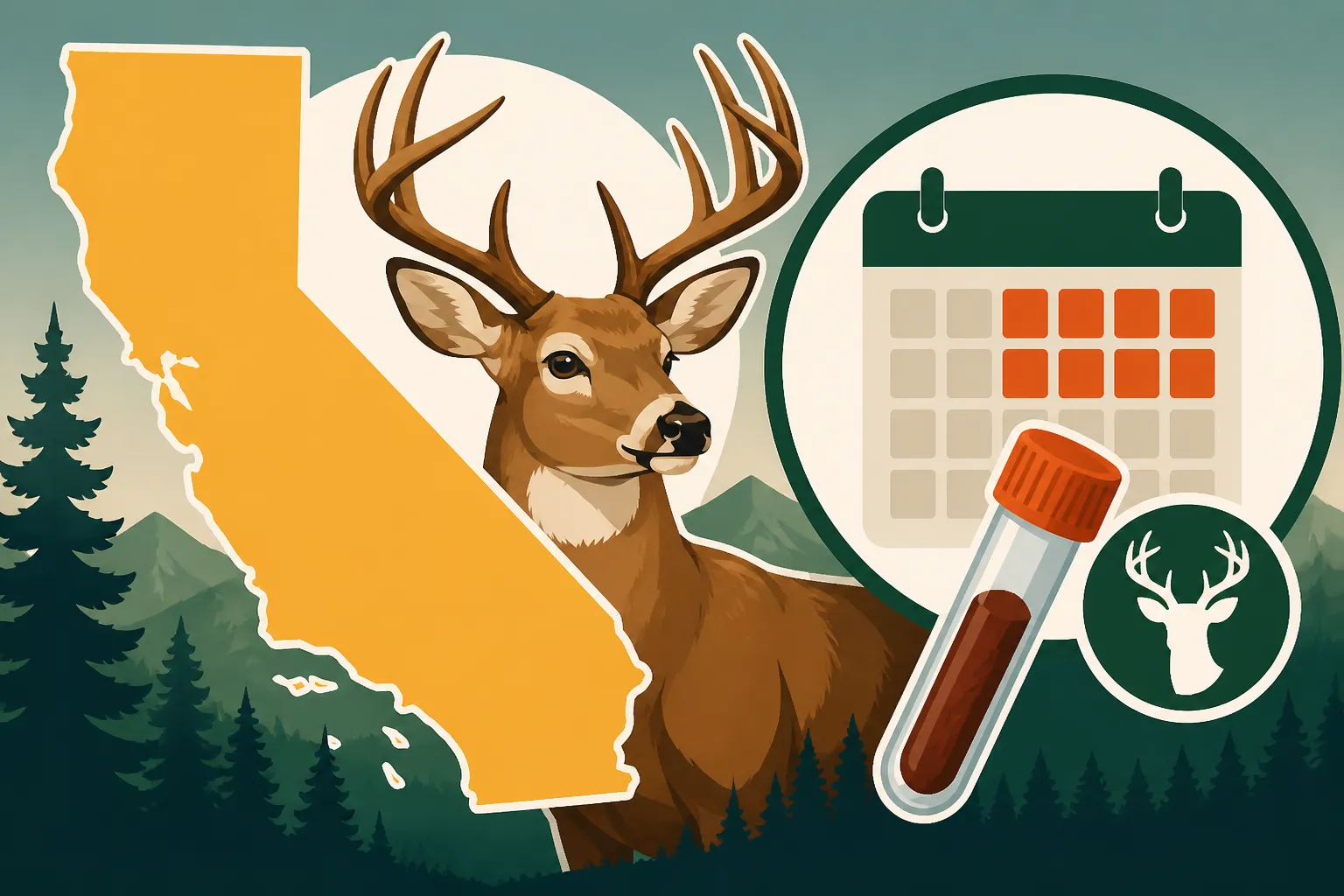
Perhaps the most critical piece of information for hunters in these zones is the strict ten-day CWD testing window. This means that if you harvest a deer or elk in a designated mandatory CWD testing zone, you are legally required to submit specific tissue samples for CWD testing within ten days of the animal's harvest date. This isn't a suggestion; it's a mandatory requirement.
This ten-day deadline is in place for several reasons. Firstly, timely submission ensures the samples are viable for testing. Secondly, it allows the CDFW to gather data quickly and respond to potential CWD spread. Missing this window isn't just a logistical oversight; it could result in penalties and, more importantly, hinder the state's ability to monitor and manage the disease effectively. The clock starts ticking the moment you tag your animal, so planning for sample collection and submission needs to be a part of your pre-hunt strategy, much like checking your rifle zero or packing your first-aid kit.
Here's a quick overview of the key aspects of the testing requirement:
| CWD Testing Zone (Portions) | Affected Species | Mandatory Requirement | Deadline for Submission | Required Samples |
|---|---|---|---|---|
| Inyo County | Deer, Elk | Yes | 10 days post-harvest | Lymph nodes, Obex |
| Mono County | Deer, Elk | Yes | 10 days post-harvest | Lymph nodes, Obex |
| San Bernardino County | Deer, Elk | Yes | 10 days post-harvest | Lymph nodes, Obex |
| Lassen County | Deer, Elk | Yes | 10 days post-harvest | Lymph nodes, Obex |
Note: Always consult the official CDFW website for the most current and detailed map boundaries and specific instructions.
Your Role: Submitting Samples and Transporting Game Responsibly
Complying with the ten-day CWD testing window might seem daunting at first, especially if you’re used to simply tagging and going. However, with a little preparation, it's a manageable and incredibly important part of your hunting experience in a CWD zone.
A Step-by-Step Guide to Sample Collection
The CDFW requires specific tissue samples for CWD testing: the retropharyngeal lymph nodes and a section of the obex (part of the brainstem). While this might sound complicated, the CDFW provides detailed instructions and often videos on how to properly extract these samples in the field.
- Preparation is Key: Before your hunt, ensure you have a clean pair of disposable gloves, a sharp knife, a clean Ziploc bag, and a permanent marker. It's also wise to have a small cooler with ice, especially if you plan to keep the carcass for a few days before processing.
- Field Dressing First: After field dressing your deer or elk, you’ll typically access the lymph nodes located at the back of the jaw, near the throat, and the obex from the brainstem. These are the "high-risk" tissues where prions accumulate earliest.
- Careful Extraction: Follow the CDFW's specific instructions for extracting these tissues. They are relatively small and require careful removal to ensure enough tissue is collected for accurate testing. Don't be afraid to practice on a domestic animal carcass (if you have access and permission) or watch several instructional videos beforehand.
- Proper Packaging: Place the collected samples in a clean Ziploc bag, label it clearly with your name, GO ID, tag number, date of harvest, and the specific location (hunting zone, county, closest landmark). Keep the sample cool, ideally on ice, until you can submit it.
- Submission: The CDFW has designated collection sites, including certain regional offices, drop-off points, or authorized taxidermists and meat processors. You can find detailed information on finding a California CWD sampling location on the CDFW website or through their mobile app. Some apps, like GoHunt, may even help you locate these submission points, making planning your post-harvest logistics much smoother. Ensure you submit the sample within the ten-day window!
Remember, the goal is a clean, uncontaminated sample. Wear gloves, use clean tools, and avoid mixing your sample with anything else. When learning about CWD testing for California hunters, you'll find these instructions reiterated constantly because accuracy is paramount.
Carcass Movement Rules and Field Care Essentials
Beyond submitting samples, transporting your harvested animal out of a CWD testing zone also comes with specific rules designed to prevent the potential spread of prions. The general rule is: do not transport high-risk parts (brain, spinal cord, lymph nodes, spleen, eyes) out of a CWD management zone.
This means that if you harvest an animal in a mandatory testing zone, you must either:
- Completely bone out the meat in the field, leaving the skull plate (for antlers) and hide.
- Leave all high-risk parts at the site of kill.
- Take the entire carcass directly to a CDFW-authorized CWD sampling station or licensed meat processor within the CWD management zone for processing and sample collection.
For many backcountry hunters, this means planning for a full field processing. If you’re hunting in a remote part of the Eastern Sierra or southern California desert, bringing specialized knives, a bone saw, and game bags for quartering and boning out the meat becomes even more crucial. You need to be prepared to handle the entire processing in the field before leaving the designated zone. Understanding moving a deer carcass out of a testing zone is not just about convenience; it's a legal and ethical obligation. Again, GoHunt's mapping overlays can help you identify if you're close to a zone boundary, helping you plan your field dressing strategy accordingly.
Beyond Compliance: Protecting California's Wild Future
While mandatory testing zones demand specific actions, the threat of CWD calls for a broader adoption of responsible hunting practices by all California hunters, regardless of where they chase deer and elk. It's about protecting the long-term health of our wildlife.
Best Practices for Every Hunter, Everywhere
Even if you're not hunting in a mandatory CWD testing zone, there are several general precautions every hunter should adopt:
- Avoid Sick-Looking Animals: If an animal appears lethargic, emaciated, has difficulty walking, or displays unusual neurological symptoms, do not harvest it. Report its location to the CDFW immediately. This is not just a CWD concern; it's a general ethical hunting practice.
- Proper Carcass Disposal: Never discard high-risk parts (brain, spinal cord, etc.) in areas where other cervids might come into contact with them. If you process your animal at home and you're not in a mandatory testing zone, dispose of these parts in a sealed trash bag going to a landfill, or bury them deeply on site if permitted and practical, to prevent potential environmental contamination.
- Clean Your Equipment: Thoroughly clean all knives, tools, and surfaces that come into contact with an animal's carcass, especially if hunting in areas where CWD might be present. Use a 10% bleach solution for disinfection.
- Know the Rules for Handling Venison From a CWD Testing Zone: While CWD is not known to infect humans, health agencies still recommend not consuming meat from CWD-positive animals. If your harvested animal tests positive, you will be notified, and you should follow health department guidelines for disposal.
- Support Research and Monitoring: Encourage and support state wildlife agencies in their CWD surveillance and research efforts. This isn't just their fight; it's our shared responsibility as conservationists.
The Long Game: How Hunter Participation Shapes CWD Management
The fight against CWD is a marathon, not a sprint. The data collected from hunter-submitted samples is invaluable. It helps the CDFW understand the geographic distribution of the disease, its prevalence within specific herds, and whether it's spreading. This information directly informs future management decisions, including potential adjustments to hunting seasons, bag limits, or the expansion of testing zones.
Your willingness to learn, adapt, and comply with these regulations directly influences the future health of California's deer and elk populations. Without hunter participation, wildlife managers are essentially flying blind. By actively taking part in California's ten-day CWD testing window, you're contributing to a larger scientific effort to protect these majestic animals and ensure that the traditions of California hunting can continue for generations to come. Keep an eye on CDFW announcements and resources, and utilize tools like GoHunt that often provide updates on regulation changes and CWD developments, ensuring you're always informed and prepared for your next adventure afield.
Disclaimer
The information provided in this guide is for general informational purposes only and does not constitute legal advice. Hunting regulations, including those related to Chronic Wasting Disease (CWD) testing and carcass transport, are subject to change. Always consult the official California Department of Fish and Wildlife (CDFW) website and current regulations before engaging in any hunting activities. It is the hunter's sole responsibility to understand and comply with all applicable laws and regulations.