California’s Eighteen National Forests
Hunting in California can feel like navigating a labyrinth, especially when you start looking at the sheer acreage of public land available. Many hunters get overwhelmed by the vastness of the state's national forests, unsure where to begin, what regulations apply, or even which species call these diverse landscapes home. This guide aims to demystify hunting in California's eighteen National Forests, breaking down the opportunities, challenges, and essential knowledge you'll need to plan a successful and rewarding hunt on these incredible public lands.
Understanding California's National Forests for Hunters
California is blessed with an astounding amount of public land, and its eighteen National Forests form a significant chunk of that accessible acreage. For many hunters, these forests represent the backbone of their outdoor pursuits, offering everything from challenging backcountry expeditions to more accessible timber hunts. But with great opportunity comes the need for a deep understanding of these complex ecosystems and the rules that govern them.
The Sheer Scale and Diversity of Public Land
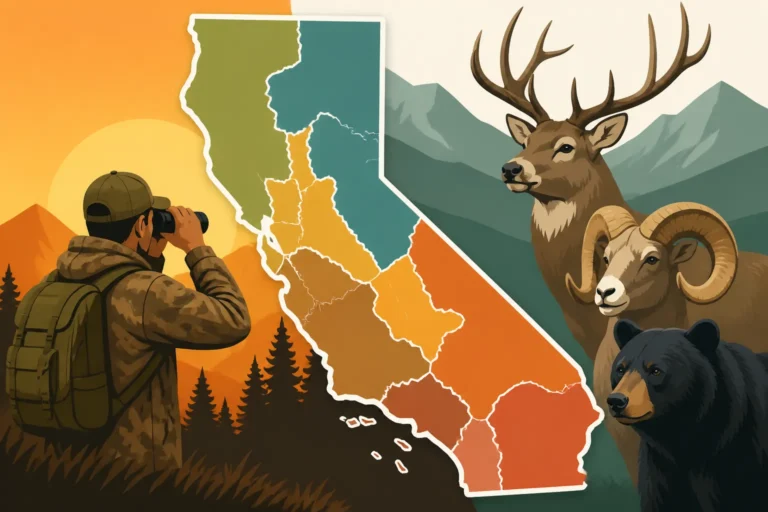
Imagine a landscape stretching from the towering redwoods of the north to the arid mountains of the south, from the rugged peaks of the Sierra Nevada down to the chaparral-covered coastal ranges. That's the scope of California's National Forests. We're talking millions of acres managed by the U.S. Forest Service, providing habitat for an incredible array of game species. This isn't just one type of forest; it encompasses dense conifer forests, sprawling oak woodlands, high alpine meadows, and even desert fringes. Each forest, and often different regions within a single forest, presents unique challenges and opportunities. For instance, hunting deer in the timbered slopes of the Mendocino National Forest will be a vastly different experience than chasing mule deer high in the Inyo National Forest, requiring different strategies, gear, and physical conditioning. The sheer scale means that even on busy weekends, with a bit of effort and a willingness to explore, you can often find solitude and untouched ground.
Key Regulations and Management Overlays
While National Forests are public lands managed by the federal government, hunting within them is primarily governed by state regulations set by the California Department of Fish and Wildlife (CDFW). This means your California hunting license, species tags, and adherence to specific season dates and bag limits are paramount. However, there are additional layers. Certain National Forest areas might have specific closures due to fire, sensitive wildlife habitat, or logging operations. Wilderness areas within National Forests, for example, often have stricter rules regarding mechanized travel, group sizes, and even campfire restrictions, which can impact your hunting plans. It's crucial to consult both the CDFW regulations for your chosen game species and the local National Forest office for any site-specific rules or restrictions before heading out. Overlays like the California's Non-Lead Ammunition Requirement are statewide but deeply impact how you hunt in these areas.
Navigating Access and Road Systems
One of the biggest hurdles for hunters in California's National Forests is simply figuring out how to get to where they want to go. These vast areas are crisscrossed by a network of Forest Service roads, some well-maintained and open to all vehicles, others rough, unmaintained, or seasonally closed. Many roads require high-clearance 4×4 vehicles, and during wet periods, even those can become impassable. Understanding which roads are open, which are gated, and which lead to prime hunting areas is critical. Digital mapping tools, like onX Hunt, become invaluable here, allowing you to identify public land boundaries, road networks, and topographic features, even offline. This kind of detailed mapping can save you countless hours of driving down dead-end roads or inadvertently trespassing. Remember that while roads provide access, the best hunting often requires leaving the beaten path and hiking into areas that see less pressure.
General Hunting Considerations Across National Forests
Hunting in any of California's National Forests requires more than just a tag; it demands careful planning, an understanding of state and federal regulations, and a commitment to responsible outdoor practices. These general considerations apply broadly across the varied landscapes you'll encounter.
California's Non-Lead Ammunition Requirement
It's absolutely critical to remember that California has a statewide ban on lead ammunition for all hunting. This isn't just a suggestion; it's the law, and it applies to every single National Forest, Wildlife Area, and parcel of private land in the state. If you're planning to hunt deer, bear, pigs, or even many upland birds with a shotgun, you must use certified non-lead ammunition. This can be a significant adjustment for hunters accustomed to traditional lead rounds. Non-lead bullets, typically made of copper or copper alloys, often perform differently, requiring hunters to re-zero their rifles and practice extensively to understand their ballistics. Ensuring you have an adequate supply of certified non-lead rounds before season is paramount, as availability can sometimes be inconsistent, especially for less common calibers. Choosing Non-Lead Rifle Ammunition in California is a topic every hunter must thoroughly research.
Blaze Orange and Visibility Expectations
While California doesn't have a statewide blaze orange requirement for all big game hunting, there are specific situations where it is either mandated or highly recommended. For instance, during general deer seasons on federal lands like National Forests, hunters pursuing big game with firearms are often encouraged to wear blaze orange, especially when moving through dense cover or areas with high hunter traffic. Some specific hunts or wildlife areas might even mandate it. Even where not required by law, wearing a blaze orange vest or hat significantly increases your visibility to other hunters, reducing the risk of accidents. When you're still-hunting through thick chaparral or working a ridge line, anything you can do to stand out to another hunter is a good idea. It's about safety first, always.
Camping, Campfires, and Bear Canisters
Multi-day hunts are a cornerstone of the National Forest experience, and that often means camping. Most National Forests offer a mix of developed campgrounds and dispersed camping opportunities. Dispersed camping, where you set up camp outside of a designated site, is often permitted but comes with specific rules, such as distance from water sources or roads. Campfire restrictions are a perennial concern in California, especially during the dry summer and fall months when fire danger is high. Always check the current fire restrictions for the specific National Forest you plan to visit, as these can change rapidly. Carrying a portable stove for cooking might be a necessity. If you're hunting in bear country – and much of California's National Forest land is bear country – proper food storage is critical. Bear canisters or approved bear-resistant containers are often required or strongly recommended in wilderness areas, and at minimum, all food and scented items should be stored in a bear-proof manner, either in a hard-sided vehicle or hung from a tree, away from your tent.
Deer Hunting Opportunities in the National Forests
Deer hunting is arguably the most popular big game pursuit in California's National Forests. With diverse habitats and expansive territories, these lands offer a variety of experiences for chasing both Columbia Blacktail and Rocky Mountain Mule Deer. Understanding the specific zones and the deer they hold is key to success.
Blacktail Deer in Coastal and Northern Forests
Many of California's National Forests are prime territory for Columbia Blacktail deer. These secretive deer thrive in the dense, brushy cover of the coastal ranges and the mixed conifer forests of Northern California. Think of forests like the Mendocino, Six Rivers, Shasta-Trinity, or even portions of the Los Padres National Forest. Hunting blacktails often involves still-hunting slowly through timber, slipping through dense chaparral, or patiently waiting on game trails. Their home ranges are often smaller than mule deer, and they rely heavily on cover. Success usually comes down to meticulous scouting, understanding their movement patterns between bedding and feeding areas, and having the patience to sit for long periods. Early season hunts in these areas can be incredibly warm, meaning you'll need to be prepared for Hot-Weather Sitting Strategy in August and swift field care.
Mule Deer in the Eastern Sierra and Modoc
As you move eastward and into the higher elevations and more open country, the landscape shifts, and so does the deer species. The Inyo, Stanislaus, Eldorado, and Modoc National Forests are classic mule deer country. These deer are often found in more open sagebrush flats, high mountain meadows, and timbered slopes, requiring a different approach. Spot-and-stalk tactics shine here, utilizing binoculars and spotting scopes to pick apart distant hillsides and canyon bottoms for bedded or feeding bucks. This is where quality Optics for California's Open-Country Deer Hunting really pay off. Mule deer are known for their strong migrations, often moving from high summer ranges to lower wintering grounds, which can concentrate deer in specific corridors. Understanding these migration routes and capitalizing on them during the season can be extremely effective.
Understanding Deer Zones Within National Forests
California's deer season is divided into a complex system of deer zones, and nearly all of the National Forests fall within one or more of these designated zones (A, B, C, D, X zones). A single National Forest might even span multiple zones. For example, the Sierra National Forest covers parts of several D-zones. It is absolutely critical to know which zone you are hunting in, as season dates, tag availability (draw versus over-the-counter), and bag limits are entirely zone-dependent. Many of the coveted X-zones, known for their trophy potential, are heavily regulated and only accessible via The California Big Game Drawing Explained. Conversely, many D-zones offer more accessible tags. Always double-check the CDFW regulations specific to your tag and chosen National Forest unit. This table offers a simplified overview:
| National Forest | Primary Deer Zones Covered | Dominant Deer Species | Typical Terrain |
|---|---|---|---|
| Shasta-Trinity NF | B, C, D | Blacktail, Mule Deer | Conifer forests, rugged mountains, timbered canyons |
| Mendocino NF | B | Blacktail | Coastal mountains, oak woodlands, dense chaparral |
| Lassen NF | A, B, C | Blacktail, Mule Deer | Volcanic peaks, pine forests, high plateaus |
| Plumas NF | D | Mule Deer, Blacktail | Sierra Nevada foothills, pine and fir forests |
| Tahoe NF | D | Mule Deer, Blacktail | High Sierra peaks, granite, conifer forests |
| Eldorado NF | D | Mule Deer, Blacktail | Western Sierra slopes, deep canyons, mixed forests |
| Stanislaus NF | D, X | Mule Deer, Blacktail | Central Sierra, canyons, dense timber |
| Sierra NF | D, X | Mule Deer, Blacktail | Southern Sierra, high country, steep terrain |
| Sequoia NF | D, X | Mule Deer | Southern Sierra, giant sequoias, deep canyons |
| Inyo NF | X, D | Mule Deer | Eastern Sierra, high desert, open slopes |
| Los Padres NF | A | Blacktail | Coastal mountains, chaparral, oak woodlands |
| San Bernardino NF | D | Mule Deer | Southern California mountains, desert transitions |
| Cleveland NF | D | Mule Deer | Extreme Southern California, chaparral, limited |
Note: This table is a generalization. Many forests have complex boundaries and can overlap with multiple zones or specific hunt units. Always verify exact boundaries with CDFW maps.
Wild Pig and Bear Hunting in Forested Regions
Beyond deer, California's National Forests offer exciting opportunities for other big game species, particularly wild pigs and black bears. These hunts present their own unique challenges and require specific knowledge of both the animals and the regulations.
Pursuing Wild Pigs in Oak Woodlands
Wild pigs, those elusive and often destructive creatures, thrive in the oak woodlands and chaparral of many California National Forests, especially in the coastal ranges and foothills. Forests like the Los Padres, Mendocino, and the lower elevations of the Sierra Nevada National Forests can hold healthy pig populations. Unlike deer, Wild Pig Hunting California Year-Round means you don't have to wait for a specific season, making them a fantastic option for off-season exploration. However, you still need a valid hunting license and a wild pig tag for each pig harvested. Pig hunting often involves scouting for fresh rooting, wallows, and tracks, then approaching cautiously or setting up ambushes near water sources or feeding areas, particularly at dawn or dusk. They can be incredibly tough, so a well-placed shot with a suitable caliber is essential.
Spot-and-Stalk Bear Hunting in Higher Elevations
California's black bear population has grown significantly, and many of our National Forests provide excellent habitat for them. The higher elevations of the Sierra Nevada, the vast tracts of the Shasta-Trinity, Klamath, and Modoc National Forests are all prime areas for bear. Bear season typically runs concurrent with general deer season in many areas, often opening in August with an archery-only window, followed by a general season that can extend into winter. Spot-and-stalk is the most common and challenging method for Spot-and-Stalk California Bear Hunting Before the Quota Closes. This involves covering ground, often with good optics, to locate bears feeding on berries, acorns, or other forage. Burn scars, which generate new vegetation, can be particularly productive. Remember, baiting bears is illegal in California, so identifying natural food sources is key.
Quota Management and Season Timing for Bears
One crucial aspect of bear hunting in California is the statewide quota. The CDFW sets an annual quota for the number of bears that can be harvested. Once this quota is met, the bear season closes, regardless of the published end date. This means hunters must stay informed throughout the season by checking the CDFW website or calling the bear quota hotline regularly. It's not uncommon for the season to close earlier than anticipated, especially during years with good bear activity. This adds an element of urgency to bear hunting, as you might only have a limited window once the season opens. Properly identifying your target, ensuring it's not a sow with cubs, and being prepared for rapid field care are all part of responsible bear hunting.
Elk and Upland Bird Hunting in Specific Forests
While deer, bear, and pigs might be the most common big game pursuits, California's National Forests also offer limited but exciting opportunities for elk and a variety of upland birds. These hunts often require specialized knowledge and, in the case of elk, significant luck in the draw.
Limited Elk Opportunities in National Forests
California is home to three subspecies of elk: Tule, Roosevelt, and Rocky Mountain. While elk populations are expanding, hunting opportunities are highly limited and typically managed through a draw system. Many of the prime elk habitats, especially for Tule and Roosevelt elk, are on private lands, state wildlife areas, or other specific tracts. However, some National Forests do overlap with elk ranges and offer coveted tags. For instance, the Klamath and Six Rivers National Forests in the northwest might see some Roosevelt elk activity, while certain D-zones of the Sierra Nevada forests could have small, scattered herds of Rocky Mountain elk. Applying for a California Tule Elk Tag in the Big Game Drawing is a lengthy process with tough odds. These tags are exceptionally difficult to draw, making elk hunting a true once-in-a-lifetime endeavor for most. Researching specific hunt units and understanding the extremely low draw odds through resources like GoHunt is essential if you dream of an elk tag.
Turkey and Quail Hunting in Diverse Habitats
California's National Forests are fantastic places to pursue upland birds, particularly wild turkeys and California Valley Quail. Turkeys have been successfully introduced across much of the state, and thriving populations can be found in the oak woodlands of nearly every National Forest, from the Mendocino to the Sierra. Spring turkey season is a popular pursuit, involving calling gobblers off the roost and setting up ambushes. Fall turkey hunting offers different tactics, often focusing on breaking up flocks and calling birds back in. Spring Turkey Hunting in California offers a challenging yet rewarding experience.
Valley Quail are ubiquitous in the brushy draws and chaparral edges of most National Forests. Hunting them often involves walking drainages, working fencelines, or pushing through thick cover to flush coveys. Early season hunts can be very productive, especially around water sources. Many National Forests also hold Mountain Quail in higher elevations and some Chukar in arid, rocky areas, though these pursuits are far more challenging due to the terrain and the birds' elusive nature. For all upland birds, remember to carry a current hunting license and an Upland Game Bird Validation.
Essential Gear and Planning for National Forest Hunts
Successfully navigating and hunting California's National Forests demands the right equipment and meticulous planning. These vast, often rugged areas can be unforgiving, and being prepared is not just about comfort, it's about safety and success.
Mapping and Navigation Tools
In a landscape as expansive and varied as California's National Forests, reliable navigation is non-negotiable. Traditional paper maps (USGS topographic maps and Forest Service maps) are still excellent for overall situational awareness and a crucial backup. However, modern hunters increasingly rely on digital mapping applications. Tools like onX Hunt provide detailed property line information, public/private land overlays, road networks, and topographic features right on your smartphone or GPS device. This is invaluable for Using an App for California BLM Land Status or knowing exactly where you are in relation to a wilderness boundary or a private parcel. Before heading out, always download offline maps for your hunting area, as cell service is often non-existent in remote National Forest lands. A dedicated GPS unit or a satellite communicator for emergency use can provide additional peace of mind.
Preparedness for Remote Conditions
Many of the most productive hunting areas in California's National Forests are remote, requiring a willingness to hike miles from the nearest road. This means being self-sufficient. Your pack needs to include essentials like ample water (or a reliable filter like a Sawyer Squeeze), high-energy food, a robust first-aid kit, fire-starting materials, a headlamp, and emergency shelter. Weather in the mountains can change rapidly, with sunny mornings giving way to afternoon thunderstorms or even snow, even in early fall. Layered clothing, including quality rain gear, is critical. Boots and Clothing for California's Varied Terrain will emphasize durable, comfortable footwear that can handle steep climbs and abrasive brush. Always tell someone your plans, including your exact hunting area and expected return time.
Field Care and Game Retrieval
Harvesting an animal in a remote National Forest unit is only half the battle; getting it out and properly cared for is the other. Depending on the size of the animal and the distance from the nearest access point, quartering an animal in the field is often necessary. Good quality game bags, a sharp field dressing knife, and a lightweight bone saw are essential. For larger animals like deer or elk, a sturdy pack frame designed for hauling heavy loads is invaluable. The terrain can be incredibly steep and difficult, so practice packing heavy loads before your hunt. In warm weather, especially early in the season, rapid field care is crucial to prevent meat spoilage. Cooling the meat quickly is paramount, even if it means hanging quarters overnight in a cool spot or placing them in ice-filled coolers as soon as possible. Butchering a Deer at Camp can be a rewarding, but demanding, part of the experience.
Respecting the Resource and Other Users
Hunting in California's National Forests is a privilege, not a right. As hunters, we have a profound responsibility to not only abide by all laws and regulations but also to uphold the highest ethical standards and show respect for the land and all who use it.
Ethical Hunting Practices and Leave No Trace
Ethical hunting goes beyond legal compliance. It means making quick, humane kills, making every reasonable effort to recover wounded game, and knowing your limits as a shooter. It means understanding the species you're pursuing, their habits, and their habitat. Furthermore, practicing Leave No Trace principles is fundamental. Pack out everything you pack in, including spent shell casings, food wrappers, and any trash. Minimize your impact on the landscape by staying on designated trails or roads where possible and avoiding unnecessary disturbance to vegetation or water sources. Bury human waste properly and avoid building large, unnecessary fires outside of designated fire rings (and only when permitted). Leaving the land better than you found it ensures these precious resources remain available for future generations of hunters and outdoor enthusiasts.
Interacting with Other Forest Users
National Forests are multi-use lands, meaning hunters will share them with hikers, campers, mountain bikers, off-road vehicle enthusiasts, and more. A positive interaction between different user groups helps foster understanding and support for hunting. Be courteous, respectful, and visible (remember that blaze orange!). If you encounter non-hunters, a friendly greeting and a brief explanation of what you're doing (if appropriate and comfortable) can go a long way. Avoid making excessive noise or leaving signs of your presence that might negatively impact someone else's experience. Remember that public perception of hunting is heavily influenced by how individual hunters conduct themselves. Being a good ambassador for hunting helps ensure our access to these public lands continues.
Finding Your Zone and Targeting Species
With eighteen National Forests covering such vast and varied terrain, pinpointing the perfect hunting spot can feel like an impossible task. However, by leveraging available resources and understanding general principles, you can narrow down your options and focus your efforts.
Researching Specific Forest Units
Don't just pick a National Forest off the map and go. Dive deeper. Each National Forest, and often each ranger district within it, has unique characteristics. Start by identifying the CDFW deer zones that overlap with National Forest lands you're interested in. Then, use resources like the CDFW website, Forest Service maps, and detailed hunting apps like onX Hunt or GoHunt. These tools can show you topography, recent burn areas (which can create excellent forage for deer and bears), water sources, and road access. Look for areas with a good mix of cover, food, and water. Identifying natural funnels, ridge-top saddles, or benches along canyon sides can give you an edge. Call or visit the local Forest Service ranger district office; staff there are often a wealth of information regarding current conditions, recent wildlife sightings, and access issues.
Matching Habitat to Your Target Game
Understanding the specific habitat preferences of your target species is paramount. If you're chasing blacktail deer, focus on forests with dense timber and chaparral, especially areas with good oak tree populations that produce acorns. If mule deer are your quarry, look for higher elevation forests with open slopes, sagebrush, and scattered pines, particularly those near historical migration routes. For wild pigs, prioritize oak woodlands and areas with reliable water sources in the foothills. Bear hunters should scout for areas rich in berries, acorns, or other seasonal mast crops, often found in mixed conifer forests or recent burn areas. Finding Sign in a Coastal Oak Woodland for deer or pigs, or Glassing a Canyon for a Bedded Buck for mule deer, are skills tailored to specific habitats. By aligning your chosen forest and specific hunting unit with the ideal habitat for your target, you dramatically increase your chances of success.
Disclaimer
This article is for general informational purposes only and does not constitute professional advice. Laws, prices and regulations vary by location and change over time. Consult a qualified professional for guidance on your specific situation.