California Captive Cervid Oversight
It can be incredibly confusing to navigate the world of deer and elk management, especially when you hear about "game farms" or "high-fence operations" in other states and wonder how that applies to California. Many hunters and landowners are left scratching their heads, not quite sure what the Golden State's rules are regarding keeping deer or elk in captivity. This guide aims to clear up that confusion, explaining California's incredibly strict regulations concerning captive cervids and why these policies are so vital for the health of our wild herds.
The Strict Stance on Captive Cervids in California
California has, for many years, taken a profoundly different approach to captive cervids compared to a lot of other states. If you've ever heard friends or seen shows about hunting huge bucks behind high fences or buying venison from a local deer farm, you might naturally assume that's an option here. However, California's laws are deliberately designed to prevent those kinds of operations, prioritizing the health and wild integrity of our state's deer and elk populations above all else. This isn't just a quirky California thing; it's a deeply ingrained policy based on lessons learned and a commitment to wildlife conservation.
Why California Restricts Cervid Farming
The primary driver behind California's strict stance against deer and elk farming is disease prevention, particularly Chronic Wasting Disease (CWD). CWD is a terrifying neurological disease that affects cervids, including deer, elk, and moose. It's always fatal, highly contagious, and can persist in the environment for years, making eradication incredibly difficult once it takes hold. Many states with captive cervid facilities have struggled with CWD outbreaks, and California is absolutely determined to keep it out of our wild herds. The potential for a CWD outbreak to devastate populations of Columbia Blacktail and Mule Deer in California is a nightmare scenario that state wildlife managers work tirelessly to prevent. Captive cervid operations, especially those that move animals between facilities or states, are seen as significant vectors for disease transmission.
Beyond CWD, there are other crucial concerns. The state is keen to protect the genetic integrity of its native wild cervid populations. Introducing animals from different genetic backgrounds through captive breeding could dilute local gene pools, potentially making wild animals less adapted to their specific environments. There are also ethical considerations; many Californians, including a significant portion of the hunting community, prefer hunting wild, free-ranging animals and view fenced hunting operations or commercial game farms as undermining the spirit of fair chase and wildlife conservation. The long-term health and vitality of California's wildlife are considered a public trust, meaning these resources belong to all citizens, not just private entities for commercial exploitation.
Distinguishing Wild Herds from Captive Operations
It's crucial to understand the fundamental difference in how wild and captive cervids are viewed and managed in California. Wild deer and elk, whether a majestic Tule elk in the Central Valley or a wily blacktail in the coastal mountains, are managed by the California Department of Fish and Wildlife (CDFW) as public trust resources. This means the CDFW regulates hunting seasons, bag limits, and habitat, ensuring sustainable populations for everyone. When you draw a tag, you're pursuing these incredible wild animals, just as generations of hunters have before. California's Multi-Zone Deer Season System outlines how these opportunities are allocated across the state.
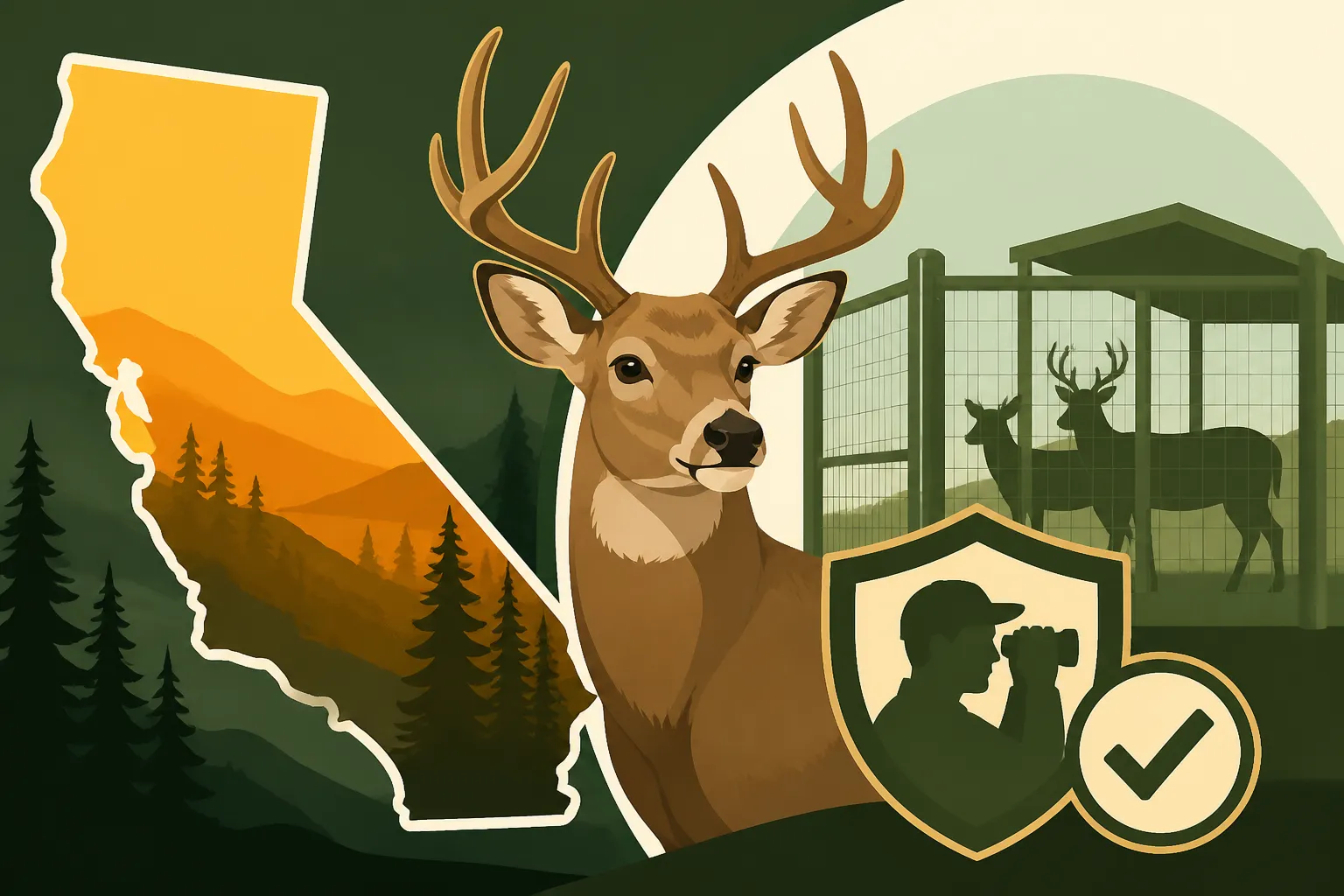
Captive cervids, on the other hand, exist under an entirely different and far more restrictive legal framework. In California, you won't find commercial deer farms selling venison or private estates offering high-fence hunts for penned animals. Any existing captive cervid facilities are under incredibly tight state control, permitted only for very specific purposes like public exhibition (think zoos) or critical scientific research, and they are not for hunting or commercial breeding for sport. This clear distinction is a cornerstone of California's wildlife management philosophy, setting it apart from many other regions where game farming is a more accepted practice.
Regulations Governing Captive Cervid Facilities
The regulations surrounding captive cervids in California are not just strict; they are exceptionally rigorous, designed to create significant barriers to entry and ensure that any permitted facilities operate under maximum biosecurity. It's not a simple process to obtain a permit, and the ongoing oversight is comprehensive. This layered approach is critical to upholding the state's conservation goals and protecting its wild populations from the threats associated with captive wildlife.
Permitting and Oversight by CDFW and CDFA
In California, the oversight of captive cervids falls under a dual authority: both the California Department of Fish and Wildlife (CDFW) and the California Department of Food and Agriculture (CDFA) have a say. The CDFW is primarily concerned with the wildlife conservation aspects, ensuring that any captive animals don't pose a risk to wild populations, while the CDFA focuses on animal health, disease prevention, and agricultural biosecurity. This creates a powerful system of checks and balances.
Obtaining a permit for a captive cervid facility is an arduous process. It's typically reserved for entities with clear public benefit or scientific research goals, such as accredited zoos, educational institutions, or bona fide wildlife rehabilitation centers. The application process is lengthy, requiring detailed plans for enclosures, veterinary care, waste disposal, and escape prevention. If approved, facilities face regular, unannounced inspections from both departments. These inspections verify everything from fencing integrity and animal health records to proper nutrition and adherence to disease testing protocols. For instance, specific types of fencing that prevent contact with wild cervids and robust identification systems for each captive animal are often mandatory. The concept of simply keeping deer as a hobby or for personal venison production is generally not supported under these state guidelines.
Prohibited Activities and Exceptions
Let's be unequivocally clear: California explicitly prohibits deer farming for commercial meat production or for the purpose of creating hunting opportunities. This means there are no "high-fence" hunting operations in the state where you can pay to hunt a deer within an enclosed area. The spirit of hunting in California is deeply tied to free-ranging animals on public lands or large private tracts, not animals raised in controlled environments for the sole purpose of harvest. California Deer Farm Regulations detail these prohibitions extensively.
The limited exceptions primarily exist for public exhibition and scientific research. Accredited zoos, such as the famous San Diego Zoo or the Oakland Zoo, are examples of institutions that may hold cervids, but they operate under strict conditions. These facilities are integral to public education and species conservation efforts, but they are not involved in hunting or commercial breeding in a way that would introduce disease risk or genetic contamination to wild populations. Importing cervids into California is also exceptionally difficult, requiring stringent health certificates from the state of origin and often mandating lengthy quarantine periods to ensure no diseases are introduced. These measures underscore California's commitment to maintaining a healthy and disease-free wild cervid population.
Here's a quick comparison of California's approach versus states with active cervid farming:
| Feature | California Approach (Highly Restricted) | States with Commercial Cervid Farms (Common) |
|---|---|---|
| Primary Goal | Wild population health, genetic integrity, public trust management | Commercial venison, hunting operations, genetic improvement |
| Cervid Farming | Largely Prohibited (no commercial meat/hunting farms) | Common, regulated for commercial purposes |
| High-Fence Hunting | Prohibited | Common, regulated, often requiring special licenses |
| Disease Testing | Strict for permitted facilities, mandatory for wild deer in specific zones | Mandatory for farmed animals, ongoing CWD concerns |
| Oversight Agencies | CDFW (wildlife) & CDFA (animal health) | State Dept. of Agriculture, Game & Fish (often separate) |
| Permit Availability | Extremely limited (zoos, research only) | More accessible for commercial operations |
| Ethical Stance | Prioritizes fair chase and wild, free-ranging game | Varies; often viewed as a legitimate agricultural industry |
The Impact on Hunters and Landowners
Understanding California's firm stance on captive cervids has tangible implications for both hunters and private landowners. It shapes not only how hunting is conducted but also how wildlife is managed on both public and private lands. This framework aims to ensure that the opportunity to pursue game remains consistent with a wild, natural experience, free from the complications and potential threats that arise from commercial captive operations.
Understanding Public Trust Wildlife Management
For hunters, the concept of "public trust" is paramount in California. It means that all wild game species, including deer and elk, are considered a shared resource owned by all citizens of the state. The CDFW acts as a steward of these resources, making management decisions that prioritize the long-term health and sustainability of wildlife populations for future generations. This fundamental principle underpins why hunting licenses and tags are required—they grant the privilege to harvest a wild animal, not a property right to a specific animal or a commercial commodity. When you buy your California Hunting Licenses and What They Cost, you're contributing to this system.
This public trust model also explains why operations that could privatize or commercialize wild game (like deer farms for hunting or venison) are not permitted. It's about maintaining access for all and ensuring that the pursuit of wild game remains an authentic, natural experience. It emphasizes the importance of healthy ecosystems and ethical hunting practices over any commercial incentive that might arise from captive cervid production. This approach means that hunters consistently pursue game in diverse habitats, from the vast expanses of Public Hunting Land in California to accessible private lands, all under the same overarching principles.
Ramifications for Private Landowners
For private landowners in California, the state's captive cervid regulations mean that you cannot simply "farm" deer or elk on your property for personal hunting, commercial sale, or to create a fenced hunting preserve. While you have significant control over your land, the wild animals on it are not considered your property. This can sometimes be a point of confusion for those accustomed to agricultural practices where livestock is owned.
Instead, landowners are encouraged to improve habitat for wild, free-ranging deer and elk, which can enhance hunting opportunities on their land within the existing CDFW seasons and regulations. Activities like planting forage, improving water sources, or creating cover are welcomed as they benefit wild populations. However, fencing in a portion of your property specifically to contain deer for hunting purposes is generally prohibited and would likely fall afoul of captive cervid laws. In some specific cases, landowners facing severe crop damage from wild deer can apply for California Deer Damage Permits for Farmers, but these permits are for managing wild deer causing problems, not for establishing a captive herd. Any attempt to introduce or breed cervids without explicit, rare, and highly regulated permits would be illegal and subject to significant penalties.
CWD Prevention and Hunter Responsibility
The strict oversight of captive cervids is directly tied to California's commitment to preventing Chronic Wasting Disease from entering its wild deer and elk populations. This isn't just a regulatory issue; it's a call to action for every hunter in the state. Hunters are essentially the first line of defense in monitoring the health of our wild herds. Staying informed about CWD is not just a good idea; it's a critical part of being a responsible sportsman or sportswoman.
Currently, California has established California's Two CWD Testing Zones where mandatory testing of harvested deer is required. These zones are strategically chosen based on proximity to the state's first-ever CWD detections in wild deer in 2023. If you hunt in these areas, you are obligated to submit your deer for testing, which helps monitor the spread and prevalence of the disease. Furthermore, strict rules exist regarding Moving a Deer Carcass Out of a Testing Zone or bringing in cervid carcasses from out-of-state, especially from areas known to have CWD. Platforms like GoHunt provide fantastic resources, offering up-to-date information on CWD regulations, helping hunters understand where and how to submit samples, and clarifying restrictions on carcass transport. Their comprehensive tools can be invaluable for staying current on these vital public health and wildlife management issues, ensuring that your hunting practices help keep California's wild deer healthy.
Looking Ahead: Challenges and Evolving Regulations
Wildlife management, especially concerning complex issues like disease and genetic integrity, is never static. California's approach to captive cervids, while strict, is part of an ongoing, adaptive strategy to protect its precious wildlife heritage. As new scientific information emerges and disease threats evolve, so too might the regulations and the need for heightened vigilance.
Ongoing Disease Monitoring and Biosecurity
Even with California's rigorous ban on most captive cervid operations, constant vigilance remains paramount. The CDFW and CDFA are continuously monitoring both the wild cervid populations and any permitted captive facilities (like zoos or rehabilitation centers) for signs of disease. This includes surveillance for CWD, tuberculosis, brucellosis, and other pathogens that could impact cervid health. This proactive approach is a cornerstone of California's Deer and Elk Disease Monitoring program, which relies on a network of wildlife biologists, veterinarians, and yes, even observant hunters.
Biosecurity measures at permitted facilities are regularly reviewed and updated based on the latest scientific understanding. For hunters, this means remaining alert. If you ever harvest an animal that appears sickly, emaciated, or exhibits unusual behavior, it's crucial to report it to the CDFW immediately. This kind of reporting is vital for early detection and rapid response to potential disease threats, further protecting our wild deer and elk.
The Role of Public Awareness and Education
The success of California's captive cervid oversight relies heavily on public understanding and compliance. It's not enough to simply have laws on the books; people need to understand why these laws exist. Educating hunters, landowners, and the general public about the risks associated with captive cervids—particularly concerning disease transmission and genetic pollution—is an ongoing effort. This includes explaining the rationale behind regulations like the mandatory use of non-lead ammunition to protect scavengers from lead poisoning, as well as the CWD testing requirements.
Hunter education courses, which are mandatory for new hunters as outlined in California Hunter Education Requirements, often cover these topics, instilling a sense of responsibility from the outset. Furthermore, hunter advocacy groups and platforms like GoHunt play a critical role in disseminating information, clarifying regulations, and encouraging best practices among the hunting community. By fostering a well-informed and engaged public, California aims to create a collective defense against threats that could jeopardize its wild cervid populations and, by extension, the cherished hunting traditions passed down through generations. These collaborative efforts ensure that the future of hunting in California remains bright, focusing on the healthy, free-ranging game that defines our state's wild character.
Disclaimer
The information provided in this article is for general guidance only and is not a substitute for official legal advice or the current regulations published by the California Department of Fish and Wildlife (CDFW) and the California Department of Food and Agriculture (CDFA). Wildlife laws and regulations can change frequently, so always consult the most recent official state documents and speak with relevant authorities for accurate and up-to-date information before making any decisions related to hunting, wildlife management, or captive animal care.