Lassen County Public Land for Deer
Finding productive deer hunting ground on public land can feel like searching for a needle in a haystack, especially in a vast, diverse county like Lassen. It's easy to get overwhelmed by the sheer size of the landscape and the varying access rules. This guide is designed to cut through that confusion, offering a detailed look at the public lands available for deer hunting in Lassen County, the unique challenges you might face, and practical strategies to help you navigate this rugged, beautiful region and find success on your next hunt.
Understanding Lassen County's Unique Deer Habitat
Lassen County sits at a fascinating intersection of ecosystems in northeastern California, where the Sierra Nevada meets the Modoc Plateau and the Great Basin high desert. This creates a diverse environment, but also a challenging one for deer hunters who need to understand where the deer live and why. It's not like the dense timber of the coast or the agricultural fields of the valley; Lassen offers something entirely different.
Geography and Dominant Ecosystems
Imagine vast expanses of sagebrush flats giving way to rolling hills dotted with juniper, which then climb into towering stands of ponderosa pine and mixed conifer forests. That's Lassen County in a nutshell. On the eastern side, you'll find more of that high desert, characterized by volcanic rock formations, lava flows, and dry, open country. As you move westward, particularly into the Lassen National Forest, the landscape becomes more mountainous and forested, influenced by the northern Sierra Nevada range. The deer here are predominantly mule deer, robust and adapted to this rugged terrain, though in the far western fringes, you might encounter some influence from their blacktail cousins. For a deeper dive into the species, check out Columbia Blacktail and Mule Deer in California. This blend of high desert, volcanic plateau, and timbered mountains means deer habitat varies significantly, demanding different hunting approaches depending on where you are.
The county's hydrology, or lack thereof in many areas, also defines the habitat. While the Susan River and other smaller creeks carve through parts of the landscape, large tracts of public land can be incredibly dry, especially during the early season. This makes reliable water sources absolute magnets for wildlife, a critical factor for any hunter to consider. Knowing where these isolated seeps, springs, or stock ponds are located can be the difference between seeing deer and seeing nothing but dust.
Key Deer Forage and Cover Resources
In a landscape dominated by sagebrush and juniper, these plants aren't just scenery; they're vital deer habitat. Bitterbrush, in particular, is a crucial browse species, especially for wintering deer, providing essential nutrition when other food sources are scarce. Hunters often find deer keying in on areas with healthy bitterbrush stands, sometimes just beyond the timber edge. Sagebrush flats, while seemingly barren, offer both forage and excellent cover for bedded deer, especially during warmer parts of the day.
As you move into the higher elevations and forested areas of Lassen National Forest, timber becomes the primary source of cover and shelter. Deer use these dense stands for thermal regulation, escaping the heat of midday sun or finding refuge from cold winds and snow. North-facing slopes often hold deer longer, offering cooler temperatures and more persistent shade. Old burn scars, while initially devastating, can also be productive. After a few years, these areas often explode with new growth, attracting deer looking for fresh browse. However, the lack of mature cover can also make them challenging to hunt, requiring careful consideration of approach and escape routes. Hunting a National Forest Burn Scar offers more insight into hunting these dynamic environments. It's a constant balance between finding food and finding security, and deer in Lassen County are masters of exploiting both.
Navigating Public Access Points in Lassen County
One of the biggest advantages of hunting Lassen County is the sheer amount of public land available. However, that vastness can also be daunting. Knowing which public land you're on and understanding its specific regulations and access points is paramount. This isn't just one big, homogenous wilderness; it's a patchwork of different managing agencies, each with its own set of rules and nuances.
National Forests and BLM Lands: Your Primary Hunting Grounds
The bulk of Lassen County's public hunting opportunities lie within the Lassen National Forest and various parcels of Bureau of Land Management (BLM) land. The Lassen National Forest is expansive, offering a mix of accessible forest roads and true backcountry wilderness. You'll find everything from timbered ridges and volcanic terrain to high mountain meadows. When hunting the National Forest, understanding the road systems is critical. Some roads are well-maintained, while others are rough, seasonal, or closed to motorized traffic entirely. You'll need to decide if you're looking for areas you can drive closer to, or if you're willing to hike miles into designated wilderness areas for a truly remote experience. Always check current road conditions and closures before heading out.
BLM lands in Lassen County tend to be more characterized by open sagebrush flats, juniper stands, and dramatic lava flows. These areas often feel more remote and less developed than much of the National Forest, providing excellent opportunities for solitude if you're willing to put in the effort. Access to BLM land can sometimes be more challenging, often involving unimproved dirt roads or simply hiking cross-country from a main thoroughfare. This is where modern mapping applications become an absolute game-changer. Tools like onX Hunt are indispensable for clearly identifying land ownership boundaries, showing you exactly where public land begins and ends, as well as marking roads, trails, and potential access points. Without such a tool, navigating the checkerboard of public and private ownership can be a nightmare. Using an App for California BLM Land Status delves deeper into how these tools can transform your hunting strategy. Remember, vehicle rules on California public land can vary, so always be aware of any restrictions before driving off-road.
Wildlife Areas and Ecological Reserves: Niche Opportunities
While the focus for deer hunting in Lassen County typically leans heavily on National Forest and BLM lands, it's always worth checking if any specific California Department of Fish and Wildlife (CDFW) Wildlife Areas or Ecological Reserves within the county offer deer hunting opportunities. These areas are primarily managed for wildlife conservation and often have very specific, sometimes limited, access rules. For deer, hunting in these areas might be managed through special draws or have restricted seasons, but they can occasionally offer unique hunting experiences, especially if they border prime deer habitat and deer are moving in and out of them. Always consult the most current CDFW regulations booklet for any area-specific rules or hunt opportunities before planning a trip to one of these locations. They are often less about vast, open-access deer hunting and more about controlled, specific opportunities.
Modern Tools for Public Land Scouting
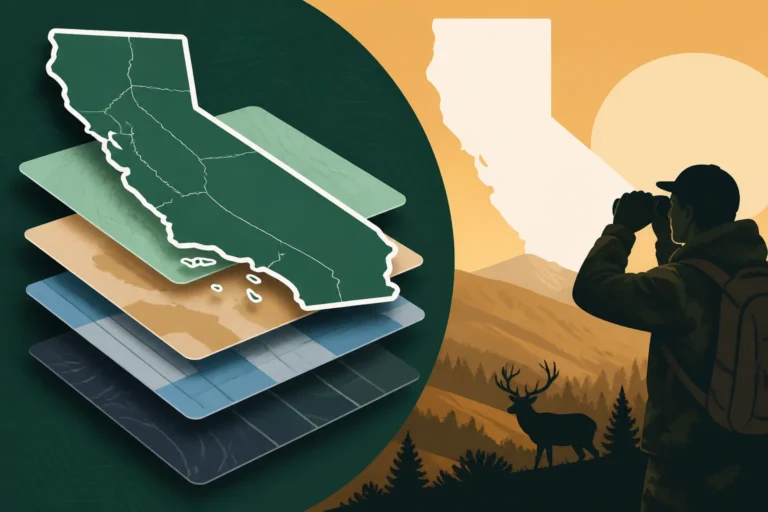
In today's hunting world, digital scouting is as crucial as boots-on-the-ground recon. Using tools like onX Hunt or GoHunt allows you to pour over satellite imagery and topographic maps from your computer or phone, even before you leave the house. You can identify potential bedding areas on north-facing slopes, pinpoint hidden water sources in dry canyons, and trace likely travel corridors connecting feeding and bedding sites. This kind of detailed analysis helps you make informed decisions about where to focus your efforts, saving you precious time and energy in the field. Scouting California Public Land Before Season is a great resource for developing these pre-season strategies.
Think about how you can use these maps to find overlooked areas. Maybe there’s a small pocket of BLM land surrounded by private property, accessible only by a long hike from a forest road. Or perhaps a deep canyon with a seasonal creek that holds deer during the early, hot season. Identifying pinch points, saddles, and transition zones between different habitat types on a topo map can reveal natural funnels where deer are likely to travel. For example, a saddle along a ridge top can be an excellent ambush point, as deer tend to use the path of least resistance when moving between drainages. Hunting a Ridge-Top Saddle at First Light explores this tactic further.
Here’s a quick overview of public land types and their general characteristics in Lassen:
| Public Land Type | Common Habitat | Primary Hunting Style Focus | Key Considerations |
|---|---|---|---|
| Lassen National Forest | Timber, Volcanic Ridges, High Meadows | Still-hunting, Spot-and-stalk | Extensive road systems (check closures), designated wilderness areas, varying elevations |
| BLM Land | Sagebrush Flats, Juniper Stands, Lava Flows | Spot-and-stalk, Remote Access | Water sources are critical, often less developed, digital mapping indispensable |
| CDFW Wildlife Areas | Varies (often riparian/marsh or grassland) | Specific, Controlled Access | Limited deer opportunities, usually permit/draw based, check specific regulations |
Deer Hunting Strategies for Lassen County
Hunting deer in Lassen County demands a versatile approach, blending techniques suited for both open, high desert landscapes and denser timbered regions. The key is understanding the terrain you're in and adapting your tactics accordingly. One strategy won't cover all the diverse habitats Lassen has to offer.
Spot-and-Stalk in Open Country
When you're out in the sagebrush flats or the vast, rolling hills with scattered junipers that characterize much of eastern Lassen, the spot-and-stalk method becomes your bread and butter. This means covering ground with your eyes, not your feet, from a high vantage point. Find a good glassing knob before first light and settle in for some serious observation. Quality optics are non-negotiable here. A good pair of 10x or 12x binoculars, paired with a reliable spotting scope on a tripod, will allow you to pick apart distant hillsides and canyon bottoms, looking for the tell-tale flicker of an ear or the subtle outline of a bedded buck. Optics for California's Open-Country Deer Hunting is a great read if you're looking to upgrade your glass.
Once you spot a deer, the real work begins. Carefully plan your stalk, using the terrain to your advantage to stay out of sight. Pay meticulous attention to the wind – mule deer have an incredible sense of smell, and a shifting breeze can instantly blow your chances. This often means taking a longer, roundabout route to approach from downwind, even if it adds significant distance to your journey. Imagine glassing a bedded buck on an opposite ridge; you'll need to pinpoint his exact location, identify landmarks, and then figure out a route that keeps you concealed and downwind throughout the entire approach. It's a chess match against a highly adapted animal. More tips on effective glassing can be found in Glassing a Canyon for a Bedded Buck.
Still-Hunting Timber and Draws
As you transition into the denser timber of the Lassen National Forest, especially in areas with more mixed conifers, still-hunting becomes a more effective strategy. This involves moving incredibly slowly and deliberately, taking only a few steps at a time, then pausing for several minutes to observe your surroundings. You're not just looking for deer; you're listening, smelling, and feeling for any sign of movement or presence. The idea is to move through the deer's world without them knowing you're there, hopefully catching them off guard.
Focus on areas with good cover, along game trails, or through creek bottoms and drainages. Deer often use these natural corridors for travel, and the cover provides security. Pay close attention to fresh sign like tracks, rubs, and scrapes, which can indicate recent deer activity. Finding Sign in a Coastal Oak Woodland offers excellent advice on deciphering these clues. When still-hunting, always consider the wind and thermals, especially in steep country. Early mornings might see thermals pulling scent downhill, while midday might see them reverse and pull scent uphill. Understanding Wind and Thermals in Steep Sierra Country is crucial for success here. Patience is truly a virtue in this style of hunting; it's about being part of the environment, not just passing through it.
Hunting Water Sources and Travel Corridors
In a county like Lassen, where large areas can be dry, especially during the archery and early general seasons, water sources are undeniable hotspots for deer. Locating isolated springs, seeps, or stock ponds can provide incredible opportunities, particularly during the hotter parts of the season. Deer must drink, and if you can find a reliable water source that isn't heavily pressured, you've found a key piece of the puzzle. Consider setting up in a ground blind or finding natural cover near these water sources during the early morning or late evening hours. Hunting a Water Seep at First Light goes into detail on how to approach these high-value locations.
Beyond water, understanding and utilizing natural travel corridors is fundamental. Deer move between their bedding areas and feeding grounds, and they often use the path of least resistance or areas that offer the most cover. Look for saddles between ridges, narrow draws, benches along steep hillsides, or even natural funnels created by dense brush or rock formations. These are prime ambush points. Scouting these corridors beforehand, either digitally with a mapping app or on foot, will significantly increase your odds. Identifying these subtle topographical features where deer are forced to congregate can make your hunt much more predictable and successful.
Key Challenges and Important Considerations in Lassen County
Hunting in Lassen County offers incredible rewards, but it's not without its challenges. From managing expectations about hunting pressure to adapting to the county's intense weather, a prepared hunter is a successful hunter.
Hunting Pressure and Finding Solitude
Lassen County is vast, but like any accessible public land, certain areas will see more hunting pressure than others. Roads that provide easy access, especially near popular trailheads or known camping spots, will almost certainly have more hunters. This doesn't mean those areas are devoid of deer, but it does mean the deer will be warier and move differently. The most effective strategy for mitigating hunting pressure is often the simplest: walk farther. Get off the beaten path, past where most hunters are willing to go. While it requires more physical effort, the reward of finding unpressured deer in stunning solitude is well worth it.
Mapping applications like onX Hunt can help you identify these less-traveled areas by showing you trail systems and forest roads, allowing you to plan routes that bypass the crowds. Look for areas that require a longer hike, or that are tucked away behind a ridge where most people won't venture. Sometimes, the best spots are those just over the next knob, or in a deep canyon that looks intimidating on the map. The article Finding Ground Others Walk Past offers some excellent insights into how to locate these overlooked gems. It's about being smarter and more determined than the average hunter.
Weather and Terrain: Be Prepared for Anything
Lassen County's weather can be extreme and unpredictable, demanding a robust gear strategy. Early season hunts (archery through early rifle) can be brutally hot, with daytime temperatures soaring. Staying cool, hydrated, and managing your venison effectively in such conditions is critical. Conversely, late-season hunts can bring freezing temperatures, snow, and strong winds. Hunters need to be prepared for both extremes, often within the same week. Layering clothing is essential, allowing you to adapt to changing conditions throughout the day.
The terrain itself presents its own challenges. While there are open flats, much of Lassen County, especially in the National Forest, involves steep, uneven ground, volcanic rock, and dense brush. Quality hiking boots with excellent ankle support are non-negotiable to prevent injury and provide comfort over long miles. Boots and Clothing for California's Varied Terrain can help you select the right gear. Always carry plenty of water, especially in drier areas, and consider a water filter or purification tablets for extended trips. A sprained ankle miles from the road is not a situation you want to be in.
Regulations and Non-Lead Ammunition Mandates
Staying on the right side of California's hunting regulations is paramount. The statewide mandate for non-lead ammunition is a critical one for all hunters in Lassen County. You must use certified non-lead projectiles for any hunting with a firearm. This applies to rifles, shotguns (for slugs), and handguns. If you haven't made the switch yet, or need to stock up, familiarize yourself with California's Non-Lead Ammunition Requirement. It’s not just a recommendation; it’s the law.
Beyond the ammo, understand the specific deer zone regulations for Lassen County. Lassen falls primarily into D zones and some X zones, each with its own specific opening and closing dates, as well as tag quotas. Knowing Which Zone Covers Your California County is the first step. You'll also need to be diligent about reporting your deer harvest, as California has strict California Deer Reporting Requirements. It's your responsibility as a hunter to know and abide by all regulations, including carrying your proof of license on your person at all times, whether it's the physical paper or stored on your phone. Carrying Proof of License on Your Phone outlines your options. A quick double-check of the current year's CDFW regulations booklet before you leave home can save you a lot of headaches in the field.
Disclaimer
This article is for general informational purposes only and does not constitute professional advice. Laws, prices and regulations vary by location and change over time. Consult a qualified professional for guidance on your specific situation.