Imperial County Public Hunting Ground
Hunting in California’s Imperial County can feel like a whole different world compared to the lush forests or rolling oak hills many hunters imagine. The vast, often unforgiving desert landscape presents unique challenges, from blistering heat to scarce water, making finding accessible public hunting ground a real puzzle for many. This guide is here to break down the opportunities available to you in Imperial County, offering practical advice on where to go, what to hunt, and how to prepare for a successful and safe desert adventure.
Understanding Imperial County’s Unique Desert Hunting Landscape
Imperial County sits in California's southeastern corner, bordering Arizona and Mexico, and it’s largely defined by its stark, beautiful desert environment. We're talking about the low desert here, with elevations often at or below sea level in places like the Salton Sea basin. This isn't the Sierra Nevada; this is a place of extremes. Temperatures can easily soar above 100 degrees Fahrenheit for extended periods, especially during early seasons, and water is a precious commodity.
The terrain varies from flat, scrubby plains and dry washes to rugged badlands and rocky mountains. Cover is generally sparse, consisting mostly of creosote bush, ocotillo, and palo verde trees, which means visibility can be excellent but finding concealment for stalking requires a different approach. This distinctive environment shapes everything about hunting here, from the species you’ll encounter to the gear you absolutely need to carry. It's a place that demands respect, careful planning, and a deep understanding of its challenges.
The Impact of Climate and Geography on Hunting
The Imperial Valley's intense heat and arid conditions profoundly influence animal behavior. Deer, for instance, are often most active during the cooler hours of dawn and dusk, or even at night when legal, seeking shade and water during the peak daytime heat. Water sources, whether natural seeps, artificial guzzlers, or even agricultural runoff, become critical focal points for game. Understanding these patterns is key to finding success.
The dry, often sandy or rocky ground means that tracking can be difficult, but fresh tracks around a water source or a rare patch of green vegetation are often clear indicators of recent activity. Winds can pick up, creating dust storms that limit visibility and make scent control a moot point, but they can also offer a hunter an advantage by masking sound. Familiarity with desert thermals, how air moves and shifts in elevation, is also crucial. For example, in a desert wash, cool air sinks at night and begins to rise with the sun, carrying your scent upward. Wind and Thermals in Steep Sierra Country delves into this, and while it focuses on the Sierra, the principles apply to any changing elevation, even subtle desert ones.
Types of Public Land Available
Imperial County offers a mix of public lands for hunting, primarily managed by the Bureau of Land Management (BLM) and the California Department of Fish and Wildlife (CDFW). BLM lands are typically vast and open, often requiring a good understanding of maps and navigation, while CDFW Wildlife Areas are usually more managed, sometimes with specific entry requirements or hunt draw systems.
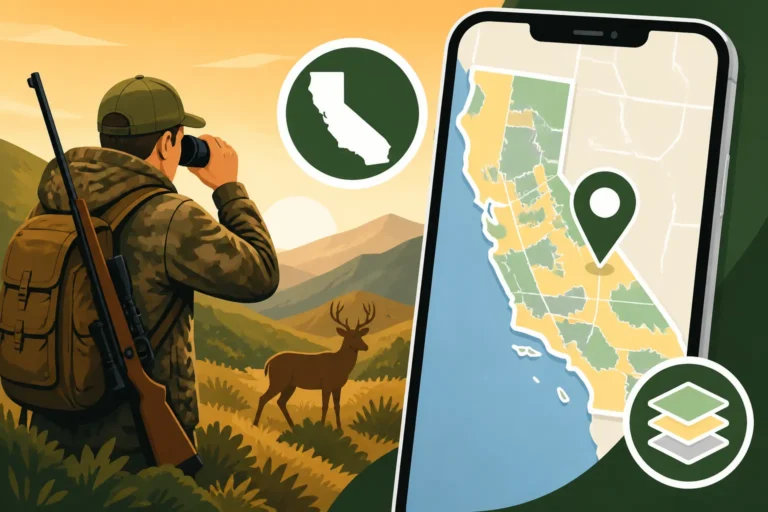
Access to these lands can range from well-maintained dirt roads to rough, unpaved tracks that require high-clearance 4×4 vehicles. Some areas might even necessitate significant hiking into remote canyons or across expansive flats. Always confirm land ownership before you hunt, as checkerboard patterns of public and private land are common. Tools like onX Hunt are invaluable for clearly delineating these boundaries, showing you precisely where public land ends and private property begins. This is essential for avoiding accidental trespass, which can quickly ruin a hunt and land you in legal trouble.
Key Public Hunting Areas in Imperial County
When you're looking to hunt in Imperial County, you'll generally be focusing on broad expanses of BLM land and specific Wildlife Areas managed by the CDFW. Each offers different opportunities and challenges, making it important to research the specific area you plan to visit.
Bureau of Land Management (BLM) Lands
The BLM manages millions of acres across California, and a significant portion of that is in Imperial County. These lands are generally open to hunting, target shooting, and other recreational activities. For the Imperial Valley hunter, BLM lands represent a vast frontier.
Characteristics:
- Vast and Remote: BLM lands are often characterized by their expansive, undeveloped nature. You can find true solitude here, but also face significant challenges in terms of navigation, vehicle access, and self-sufficiency.
- Minimal Facilities: Don't expect restrooms, potable water, or designated campsites on most BLM tracts. You're typically on your own, which means carrying everything in and packing everything out.
- Varied Terrain: From flat, rocky mesas to steep, eroded badlands and sandy washes, the terrain on BLM lands can be incredibly diverse. This diversity often dictates the types of game you’ll find and the tactics you’ll employ. Hunting a California BLM Desert Wash for Deer offers some insight into specific strategies for such terrain.
Specific Areas to Consider:
While there isn't one single "Imperial County BLM" area, you'll find numerous tracts scattered throughout the county, especially north and west of the Salton Sea, and stretching towards the Chocolate Mountains and the Arizona border. These areas are known for populations of desert mule deer (in specific zones), quail, dove, and coyotes. Before heading out, always check the current CDFW hunting regulations for the specific game management unit that covers your intended BLM hunting area. Maps, especially digital ones like those offered by onX Hunt, are absolutely critical for navigating these lands, identifying legal access points, and avoiding private land enclaves.
California Department of Fish and Wildlife (CDFW) Wildlife Areas
CDFW manages several Wildlife Areas (WAs) within Imperial County, which are generally smaller and more intensively managed for wildlife habitat and public recreation, including hunting. These areas often have specific rules, and some require reservations or special passes during certain seasons.
Imperial Wildlife Area (Wister Unit, Finney-Ramer Unit):
This is probably the most well-known and heavily used public hunting area in Imperial County. Located near the Salton Sea, it's a vital wintering ground for millions of migratory waterfowl, making it a prime destination for duck and goose hunting.
- Waterfowl Paradise: The Wister Unit, in particular, is renowned for its waterfowl hunting, attracting hunters from across the state. It consists of managed wetlands, agricultural fields, and open water, providing ideal habitat for ducks like mallards, pintails, green-winged teal, and various geese. Expect competition, especially on opening weekends. You'll likely be Decoying Mallards on Flooded Rice Ground or Pass-Shooting Geese on California's Sacramento Refuges, adapting strategies for the Imperial Valley’s specific habitat.
- Upland Opportunities: Beyond waterfowl, these units also offer opportunities for dove and pheasant during their respective seasons. The edge habitat and agricultural fields can hold good numbers of these birds.
- Reservation System: Many of the popular hunts here, especially for waterfowl, operate on a reservation system or a daily lottery. It's crucial to understand the application process and deadlines well in advance. Check the CDFW website for current regulations and entry procedures.
Other Potential Areas:
Other, smaller Ecological Reserves or specific parcels might offer limited hunting, but they are generally less extensive than the Imperial Wildlife Area or BLM lands. Always double-check specific regulations for any smaller, localized area, as rules can vary greatly.
Here's a quick overview of primary public land types in Imperial County:
| Public Land Type | Primary Game Species | Typical Access & Terrain | Key Considerations |
|---|---|---|---|
| BLM Lands | Desert Mule Deer, Quail, Dove, Coyote | Extensive dirt roads, rough tracks; varied desert terrain, washes, badlands | Self-sufficiency, navigation, water, heat. onX Hunt is essential. |
| Imperial Wildlife Area | Waterfowl (Ducks, Geese), Dove, Pheasant | Paved/gravel roads; managed wetlands, agricultural fields, scrub | Reservation/lottery system for popular hunts, specific unit rules, intense competition. |
Game Species and Seasons to Target in Imperial County
Imperial County, with its unique desert ecosystem, offers a distinct set of hunting opportunities. While you won't find the same big game diversity as the Sierra Nevada, there are exciting hunts for those willing to brave the desert's demands.
Desert Mule Deer
Yes, desert mule deer roam Imperial County, primarily in the eastern D12 deer zone. These aren't the giant-antlered Rocky Mountain muleys you see in magazines, but they are tough, elusive animals perfectly adapted to their harsh environment.
- Season Structure: The season for desert mule deer in Imperial County generally falls under California's D12 zone. This is a general season, but tags are limited and usually require applying through the annual big game drawing. California's Multi-Zone Deer Season System explains how these zones work. Success often hinges on preseason scouting to locate water sources and bedding areas in the vast, open country.
- Hunting Strategy: Spot-and-stalk is the name of the game here. Long-range glassing with quality optics is crucial, often from high points overlooking wide washes or mountain slopes. You'll need patience and excellent marksmanship for those longer desert shots. Look for areas with a mix of cover and access to water. After a successful harvest, Field Dressing a Deer in Hot Weather becomes immediately relevant, as proper meat care in this climate is paramount to avoid spoilage.
Migratory Waterfowl
The Imperial Valley, particularly around the Salton Sea, is a world-class destination for waterfowl hunting. As part of the Pacific Flyway, it hosts an incredible number of ducks and geese each winter.
- Target Species: Expect to find a variety of ducks, including mallards, green-winged teal, pintails, gadwall, and shovelers. Goose species often include specklebellies, snow geese, and Ross's geese.
- Hunting Areas: The Imperial Wildlife Area (Wister and Finney-Ramer Units) is the undisputed king for waterfowl here. Private clubs and leased agricultural fields also offer fantastic hunting.
- Tactics and Equipment: Decoys, blinds (often layout blinds in fields or brushed-in permanent blinds in wetlands), and proficient calling are essential. Early morning shooting over water or pass-shooting geese off roost ponds are common methods. Remember to have your California hunting license, federal duck stamp, and California Migratory Bird Certification in order. Decoying Ducks in California's Central Valley Flooded Rice offers insights that are directly applicable to the flooded fields of Imperial.
Upland Game Birds: Dove and Quail
Imperial County offers fantastic opportunities for both mourning dove and California valley quail.
- Dove Season: The September dove opener is a massive event across California, and Imperial County is no exception. Cut grain fields, especially those near water sources, attract huge numbers of birds. Hunters will often set up along fencerows or field edges, focusing on flight paths between feeding and roosting areas. Don't underestimate the heat; staying hydrated and finding shade are crucial for a successful hunt. Dove Hunting a Cut Grain Field shares strategies that are perfect for the Imperial Valley.
- Quail Hunting: California valley quail thrive in the desert scrub and brushy washes of Imperial County. Hunting these fast-flying birds often involves walking washes, working along the base of hillsides, or employing pointing dogs. Flushes can be explosive, so quick reflexes are a must. Areas with a mix of dense cover for roosting and open areas for feeding are prime. Quail Hunting California Foothill Chaparral offers insights into their behavior in similar arid environments.
Predators and Small Game
Coyotes are abundant throughout Imperial County's desert landscapes, offering a year-round hunting opportunity (check local regulations for specific restrictions). Rabbit species, like cottontails and jackrabbits, are also present.
- Coyote Calling: Predator calling is an effective strategy for coyotes, especially during cooler parts of the day or after dark (where legal). The vast, open terrain allows for long-range calling setups and observation. Coyote Calling at First Light provides a great starting point for tactics.
- Small Game: Rabbits provide a fun and challenging hunt, often found in brushy areas along washes or near agricultural fields. A .22 rifle or small gauge shotgun is ideal.
Essential Gear and Strategies for Imperial County Hunting
Hunting in Imperial County's desert environment demands a specific approach to gear and strategy. The extreme heat, rugged terrain, and limited resources mean careful planning and the right equipment aren't just helpful—they're often critical for safety and success.
Navigating the Desert: Maps and GPS
You absolutely cannot rely solely on cell service out here. It's often non-existent in remote BLM tracts.
- Offline Maps: A reliable GPS device or a smartphone app with downloaded offline maps (like onX Hunt or GoHunt) is non-negotiable. These tools are invaluable for showing property boundaries, identifying water sources, and navigating back to your vehicle. Learning to Use an App for California BLM Land Status is a skill every desert hunter needs.
- Topographic Maps: Carry physical topographic maps as a backup. Knowing how to read contour lines can help you identify potential game trails, bedding areas, and glassing points that might not be obvious from the ground.
- Satellite Communicator: For truly remote excursions, a satellite communicator can be a lifesaver, allowing you to send messages and trigger an SOS even without cell service.
Hydration and Heat Management
This is perhaps the single most critical aspect of desert hunting. Dehydration and heatstroke are serious threats.
- Water, Water, Water: Carry far more water than you think you'll need. A good rule of thumb is at least a gallon per person per day, plus extra for emergencies. Consider a hydration pack for easy access while on the move.
- Electrolytes: Supplement your water intake with electrolyte drinks or tablets to replace salts lost through sweating.
- Appropriate Clothing: Lightweight, breathable, moisture-wicking clothing in light colors is essential. Long sleeves and pants offer protection from the sun and abrasive vegetation. A wide-brimmed hat and sunglasses are also crucial.
- Cooling Towels: Evaporative cooling towels can provide significant relief during peak heat.
- Plan Your Day: During early seasons, hunt during the cooler hours of dawn and dusk, resting or scouting from shaded areas during midday. Hot-Weather Sitting Strategy in August offers valuable insights for managing your hunt in high temperatures.
Footwear and Clothing
Your feet will take a beating in the desert, and your clothing needs to protect you from the elements.
- Durable Boots: Choose lightweight, breathable boots with good ankle support and sturdy soles to handle rocky, uneven terrain. Leather or synthetic materials that resist thorns and abrasions are preferable. Best Boots for Dry Desert Wash Hunting provides specific guidance.
- Gaiters: Gaiters are highly recommended to keep sand, burrs, and cactus spines out of your boots and socks.
- Layering: Even though it's hot during the day, desert nights can get surprisingly cool. Pack layers, especially if you plan to be out before dawn or after dusk.
Non-Lead Ammunition
California mandates the use of non-lead ammunition for all hunting statewide. This is a non-negotiable requirement.
- Compliance: Ensure all your rifle, shotgun, and handgun ammunition for hunting is certified non-lead. California's Non-Lead Ammunition Requirement provides detailed information.
- Ballistics: Non-lead bullets, typically copper, often perform differently than traditional lead-core bullets. It's crucial to Zeroing a Rifle for Non-Lead Loads and practice with your chosen non-lead ammunition to understand its ballistics and point of impact.
- Availability: Plan ahead to find and purchase non-lead ammunition, as it can sometimes be less readily available or more expensive than lead options.
Field Care and Recovery
Successful recovery and preservation of game in the desert heat require prompt action.
- Game Bags: Carry lightweight, breathable game bags to protect meat from flies and dirt.
- Coolers and Ice: Have large coolers filled with ice ready at your vehicle, especially if hunting large game like deer. Getting meat cooled down quickly is paramount.
- Game Cart: For deer, a game cart can be invaluable for moving an animal across relatively flat terrain, saving your back in grueling conditions. Best Game Cart for Steep California Terrain discusses options, and while the desert is not always steep, it can be rugged.
By understanding the unique challenges of Imperial County and equipping yourself appropriately, you can turn a potentially difficult hunt into a rewarding desert adventure.
Disclaimer
This article is for general informational purposes only and does not constitute professional advice. Laws, prices and regulations vary by location and change over time. Consult a qualified professional for guidance on your specific situation.