Best Broadhead for California Blacktail
Choosing the right broadhead for California blacktail deer can feel like a really overwhelming decision, can't it? You've got so many options out there, from classic fixed blades to all sorts of mechanical designs, and it’s tough to cut through the marketing hype to figure out what truly performs when you’re facing a wary blacktail buck in dense chaparral. This guide is here to walk you through the nuances of broadhead selection specifically for our California blacktail, focusing on what works best in the varied and often challenging terrain they call home, so you can make an informed choice that maximizes your ethical hunting success.
Understanding California Blacktail Hunting Conditions
Hunting blacktail in California isn't like hunting whitetails over a food plot in the Midwest, or even mule deer in wide-open Western plains. Blacktail habitat here is famously thick, steep, and often unforgiving. These deer are masters of stealth, navigating dense oak woodlands, brushy canyons, and heavy timber with incredible agility. Your broadhead needs to be able to punch through tough hide and bone, even if your shot angle isn't absolutely perfect due to the tight cover, and hold together when things get gritty. It's about reliability and consistent performance when the moment of truth arrives, often quickly and unexpectedly.
Dense Cover and Shot Angles
Picture this: you've been still-hunting a ridge in the coastal range all morning, slowly picking your way through patches of scrub oak and manzanita. Suddenly, a buck materializes out of nowhere, just forty yards away, slipping through a thicket. You draw, find a small window, and release. In these situations, your arrow often has to contend with a stray twig, or the buck might be slightly quartering away. A broadhead that can maintain its integrity and flight path through minor obstructions is absolutely critical. We're not usually talking about wide-open, long-distance shots where a slight imperfection in flight can be absorbed by air. Here, every inch counts, and that broadhead needs to deliver all its energy to the target, even if the angle isn't textbook perfect due to the tight quarters.
It's a frustrating reality for many archers that the "perfect shot" window simply isn't always available when you're in the blacktail's domain. The dense undergrowth means deer often present a limited target, and they can be moving through cover. A broadhead that opens prematurely or has fragile blades can deflect or fail to penetrate effectively if it clips a branch or encounters resistance before reaching the vitals. The last thing you want is a partial penetration or a deflected shot, which can lead to a long, arduous, and potentially unsuccessful recovery effort. This emphasis on robustness and consistent performance is a recurring theme for blacktail hunters.
Varied Terrain and Animal Size
California blacktail deer, while certainly not the largest deer species, are incredibly resilient animals, especially the mature bucks that have survived multiple hunting seasons. They might not be giant-bodied mule deer or elk, but their physical toughness and quick reflexes, combined with the often-steep and rocky terrain they inhabit, demand a broadhead that creates a devastating wound channel for a quick, humane harvest. A smaller-bodied animal doesn't mean you can skimp on penetration power. In fact, it means you have less margin for error in terms of shot placement, and a broadhead that delivers maximum damage and a quick blood trail becomes even more important.
Consider hunting in the Sierra foothills versus the deep timber of the North Coast. In both scenarios, you might encounter steep climbs, slippery leaf litter, or rocky creek beds. A durable broadhead isn't just about surviving impact with bone; it's also about ensuring the integrity of the cutting edges after a potential ground impact if your arrow passes through. Furthermore, the varying body sizes of blacktail across their range, from smaller coastal deer to slightly larger bucks in some northern zones, means you want a broadhead that performs consistently, regardless of whether you’re shooting a 120-pound doe or a 180-pound mature buck. The ability of your broadhead to hold up and continue cutting after impact is a silent hero in these situations, helping ensure a clear blood trail for recovery. Many experienced hunters use resources like GoHunt to research gear reviews specifically tailored to these varying conditions.
Essential Broadhead Qualities for Blacktail
When you're trying to decide which broadhead to screw onto your arrows for a California blacktail hunt, there are a few non-negotiable qualities you should be looking for. It's not just about what looks cool or what your buddy swears by. It's about physics, performance, and putting venison in the freezer with the utmost respect for the animal. We're talking about broadheads that penetrate deeply, hold up under stress, and fly true from your bow. If a broadhead falls short in any of these areas, it's simply not the best choice for the demanding conditions of blacktail country.
Prioritizing Penetration
Penetration is king. Period. You can have the widest cutting diameter in the world, but if your arrow doesn't reach the vitals, it's all for naught. For blacktail deer, especially through bone or gristle, you need a broadhead that is designed to drive deep. This usually means a keen, sharp edge, a well-engineered tip, and a solid, robust construction that doesn't buckle or deform on impact. Fixed-blade broadheads, with their single-piece design, often excel in this department. They transfer kinetic energy very efficiently into the target, pushing through hide, muscle, and bone without losing energy to blade deployment mechanisms.
When discussing penetration, it's also crucial to consider the overall arrow setup. A heavier arrow with a good front-of-center (FOC) balance will typically penetrate better than a lighter arrow, assuming both are shot from the same bow at the same draw weight. The broadhead's design works in conjunction with your arrow setup. A broadhead with a slim, aerodynamic profile, like many two-blade cut-on-contact designs, minimizes friction as it passes through tissue, further enhancing penetration. This is especially important when chasing a buck that might be standing at a slight quarter-away angle, where you'll need to drive through more muscle and potentially the shoulder blade to reach the vitals. You can dive deeper into arrow specifics by reading articles like Best Arrow Weight for Elk-Sized Game, which explores the principles of penetration that apply across species.
Durability in Tough Conditions
Blacktail country is tough on gear, and broadheads are no exception. You might hit a shoulder blade, a rib, or even a small branch just before impact. A broadhead that shatters, bends, or loses its cutting edge after minimal resistance is going to leave you in a bad spot. You want a broadhead that can withstand the rigors of impact and continue to cut cleanly. This means high-quality steel, strong blade retention, and a ferrule (the body of the broadhead) that can handle significant force without deforming.
Consider the potential for hitting bone. While you always aim for the soft spots, deer rarely cooperate perfectly. If your broadhead strikes the scapula (shoulder blade), a durable fixed blade or a mechanical designed for bone impact will slice through or around it, continuing its path toward the vitals. A less durable broadhead might simply stop, or worse, break apart, leaving you with a wounded animal and a difficult tracking job. This durability also extends to the sharpness of the blades; a broadhead that can maintain a razor edge through tough hide and muscle will create a wider and more consistent wound channel, leading to a better blood trail. This is a critical factor when hunting in areas like Hunting Coastal Range Oak Woodlands where dense vegetation can make blood trailing particularly challenging.
Flight Accuracy and FOC
No matter how sharp or tough a broadhead is, if it doesn't fly accurately from your bow, it's useless. "Field-point accurate" is the holy grail, and while not all broadheads achieve it perfectly, good flight is non-negotiable. Broadhead flight is influenced by many factors, including arrow spine, fletching, bow tuning, and the broadhead's own design and weight. A broadhead that is poorly balanced or has excessive drag will often "plane" or "kite," veering off course, especially at longer distances.
A broadhead that maintains its flight characteristics with your particular arrow setup is paramount. This is where meticulous bow tuning comes into play. You need to ensure your bow is properly paper tuned, or bare-shaft tuned, to achieve consistent flight with your hunting broadheads. Many archers spend considerable time practicing with their chosen broadheads before season opens to confirm accuracy. Paying attention to your arrow's front-of-center (FOC) balance is also important; a higher FOC generally leads to better downrange stability and improved penetration. You can learn more about getting your equipment dialed in by looking into topics like Tuning a Bow for Broadhead Flight to ensure your setup is as accurate as possible.
Fixed-Blade Broadheads: Reliability in the Timber
When you talk about reliable, no-nonsense performance in hunting conditions, fixed-blade broadheads are often the first thing that comes to mind for many seasoned archers, especially when pursuing resilient animals like California blacktail deer. They don't have moving parts, which means there's nothing to fail, nothing to deploy, and their inherent strength is a huge advantage when you're dealing with thick hides and potential bone impacts. For the blacktail hunter navigating dense timber and brush, this simplicity often translates to confidence.
Two-Blade Cut-on-Contact Designs
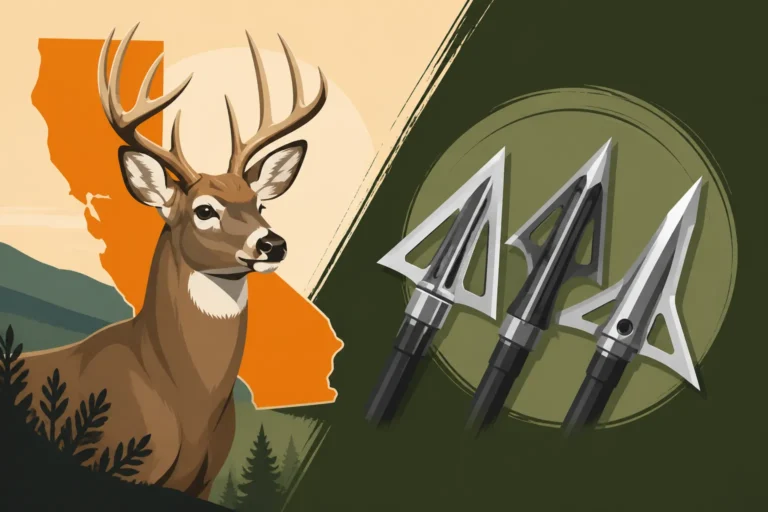
These are the workhorses of the archery world, and for good reason. Broadheads like the GrizzlyStik, Magnus Stinger, or Zwickey Eskimo are celebrated for their incredible penetration. Their design is inherently simple: two razor-sharp blades that start cutting on impact, often combined with a chisel or tanto tip that helps split bone rather than just push against it. This "cut-on-contact" philosophy means that all the kinetic energy of your arrow is immediately put to work, creating a wound channel from the very first moment it touches the animal. This makes them exceptional for animals with tough hides or when a less-than-ideal shot angle might mean encountering a shoulder blade.
In dense blacktail habitat, where shot distances can often be close and the deer are quick to react, a broadhead that begins cutting immediately and penetrates deep is invaluable. A two-blade design often has a slimmer profile, reducing friction as it passes through the animal, contributing further to deep penetration. This can be crucial for achieving pass-through shots, which lead to two wound openings and a much better blood trail—a huge advantage when you're tracking a buck through the heavy brush Where California Blacktail Bucks Bed. For those who prioritize maximum penetration and reliability above all else, especially in the thickest conditions, the two-blade cut-on-contact fixed blade is an incredibly strong contender.
Three- and Four-Blade Fixed Heads
Moving beyond the two-blade, you'll find a wide array of three- and four-blade fixed broadheads, which offer a balance of penetration and increased cutting surface. Brands like Muzzy, G5 Montec, and Slick Trick are popular examples in this category. These broadheads typically have a slightly wider cutting diameter than their two-blade counterparts, creating a larger wound channel, which can lead to faster blood loss and a quicker recovery. The additional blades mean more tissue is severed on entry and exit, often resulting in a more profuse blood trail.
While they might not always penetrate quite as deeply as the most aerodynamic two-blade designs, the increased cutting surface often makes up for it by creating more internal damage. Their fixed nature still provides excellent structural integrity, making them durable enough to handle bone impacts. For a blacktail hunter, choosing between two-, three-, or four-blade fixed heads often comes down to a trade-off between absolute maximum penetration (two-blade) and a larger cutting surface for a potentially better blood trail (three/four-blade). Regardless of the number of blades, ensuring they are razor-sharp out of the package, or sharpened meticulously, is key. Many hunters using popular platforms like GoHunt often share their experiences and tips on sharpening different fixed-blade designs for optimal performance in the field. This attention to detail is paramount for an ethical harvest, particularly during intense hunts like Bowhunting California's Zone A Season.
Mechanical and Hybrid Broadheads: Nuances for Blacktail
Mechanical and hybrid broadheads have revolutionized archery hunting for many, offering wider cutting diameters and often field-point accurate flight that can be incredibly appealing. However, for California blacktail, especially in dense cover, there are some important considerations. Their design, which involves moving parts and blade deployment, introduces potential variables that need to be carefully weighed against the unique challenges of blacktail hunting.
Expanding Mechanicals in the Timber
Mechanical broadheads, sometimes called expandable broadheads, are designed to fly with the aerodynamics of a field point, then deploy their blades upon impact, creating a much larger cutting diameter than most fixed blades. For hunters who prioritize a wide cutting swath and field-point accuracy, they can be very attractive. When they work as intended, they can create massive wound channels that lead to quick and efficient kills. However, in the dense timber and chaparral where blacktail often live, the "when they work as intended" part becomes particularly important.
The concern for blacktail hunters is whether the mechanical blades will deploy reliably after potentially encountering resistance before full penetration, such as a tough hide, gristle, or even a small bone. There's also the energy cost of deployment, which can reduce overall penetration. While many modern mechanical broadheads have become incredibly robust, such as those with stout ferrule designs and rear-deploying blades, the possibility of a non-deployment or partial deployment in dense cover can be a significant drawback. This is a common point of discussion, and you'll find extensive debate on topics like Fixed Versus Mechanical Broadheads in Brush among seasoned archers. For close-range shots in thick stuff, where every bit of penetration and reliability counts, some hunters remain wary of mechanicals.
Potential Drawbacks in Brushy Areas
The primary concern with mechanical broadheads in brushy blacktail country revolves around their moving parts and blade retention before impact. While they fly like field points, their blades are held in place by O-rings, bands, or tension systems. If an arrow clips a branch, even a small one, it's possible for the blades to pre-deploy or become misaligned before reaching the target. A broadhead with partially deployed or damaged blades will not fly true, nor will it penetrate effectively, leading to a potentially wounded animal and a lost opportunity.
Imagine waiting patiently during Hunting California's Zone A July Archery Opener, a prime time when bucks are often moving through heavy feed. You finally get a shot, but your arrow brushes a twig. A fixed blade might power through, but a mechanical could pre-deploy and render the shot ineffective. This isn't to say all mechanicals are bad, but for the specific demands of blacktail hunting in dense cover, the risk associated with these potential failures leads many experienced hunters to lean towards the proven reliability of fixed blades. Always practice extensively with your chosen mechanical broadhead, shoot through a chronolograph to ensure consistent speeds, and ensure your bow is perfectly tuned to minimize any flight issues.
Hybrid Broadheads: A Balance of Worlds
Hybrid broadheads aim to offer the best of both worlds: a fixed-blade component for initial penetration and reliability, combined with mechanical blades that deploy after entry to create a larger wound channel. These designs typically feature smaller fixed blades that are always exposed, ensuring cut-on-contact performance, while larger mechanical blades are tucked away until impact. This concept offers a compelling solution for hunters who want the confidence of a fixed blade but also desire the wider cutting diameter of a mechanical.
For blacktail deer, a hybrid broadhead can provide a reassuring level of redundancy. The fixed blades guarantee that the broadhead begins cutting immediately, helping to punch through hide and tough muscle, while the secondary mechanical blades then expand to maximize tissue damage. This can be particularly advantageous in situations where you might encounter an unexpected angle or heavier bone, ensuring effective penetration while still delivering a substantial wound. As with all mechanical designs, it's crucial to test your chosen hybrid broadheads extensively with your specific bow and arrow setup to confirm their flight accuracy and reliable deployment. Reading reviews and field test results from reputable sources, including user experiences on platforms like GoHunt, can help guide your decision, ensuring you select a hybrid that stands up to the demands of a blacktail hunt.
Ethical Shot Placement and Practice
Ultimately, the best broadhead in the world is only as good as the shot placement. For any hunting, but especially for archery, ethical hunting practices demand that we strive for a quick, humane kill. This means understanding deer anatomy, selecting the right shot, and practicing relentlessly to ensure you can deliver that shot when it counts. Your broadhead is a tool, and like any tool, its effectiveness is maximized when wielded with skill and precision.
Maximizing Ethical Harvest
An ethical harvest begins with understanding your limitations and the capabilities of your equipment. For blacktail deer, the ideal shot is typically broadside or slightly quartering away, aiming for the lung-heart area. This vital zone offers the largest target and, when hit effectively, leads to rapid blood loss and a humane kill. A broadhead that creates a large, two-hole wound (entry and exit) will significantly improve the chances of a quick recovery, leaving a strong blood trail that is often necessary in California's challenging terrain.
The goal isn't just to wound the animal, but to ensure a swift and respectful end. This means passing on questionable shots, whether due to distance, angle, or obstructions. Even with the toughest, most penetrating broadhead, a poor hit can lead to a long, agonizing search. Taking the time to observe the animal, wait for the best possible presentation, and make a clean shot is the hallmark of a responsible hunter. This commitment to ethical harvesting is a core principle of hunting, and it's reflected in the careful consideration given to every piece of gear, especially your broadheads.
Practicing with Your Chosen Setup
This cannot be stressed enough: practice, practice, practice! It's not enough to simply buy a pack of broadheads and hope for the best. You need to shoot your hunting broadheads with your hunting arrows, from your hunting bow, at various distances, including those you expect to encounter in the field. This confirms not only that your bow is tuned for broadheads but also builds your confidence and muscle memory. The goal is to make a clean, ethical shot second nature, even under the adrenaline of a real hunting situation.
Start close, say 20 yards, and work your way back, confirming your broadheads are flying true. Pay attention to how they group compared to your field points. If there's a significant difference, your bow may need further tuning, or your broadheads might not be compatible with your setup. Don't forget to practice from different positions—sitting, kneeling, and even simulating shots through small gaps in brush if possible. This builds confidence for real-world scenarios, ensuring that when you're faced with a blacktail buck in dense cover, you can execute a precise shot with your chosen broadhead. This diligent practice is the final, crucial step in ensuring your broadhead selection translates into successful and ethical hunting experiences, much like preparing for any season like the Archery-Only Fall Turkey Hunting in California.
Here’s a quick comparison of broadhead types for California blacktail deer:
| Broadhead Type | Pros | Cons | Best For | Considerations for Blacktail |
|---|---|---|---|---|
| Fixed Blade | Max penetration, durability, reliability, no moving parts | Can be harder to tune for field-point accuracy, smaller cutting diameter (typically) | Dense cover, bone impacts, steep angles, maximum confidence in reliability | Excellent choice for blacktail due to dense habitat; prioritize sharp, robust models. |
| Mechanical | Field-point accuracy (often), large cutting diameter, excellent blood trails | Potential for pre-deployment, deployment failure, energy loss on deployment, reduced penetration | Open country, higher kinetic energy bows, easy tuning | Riskier in thick brush; choose robust designs with strong blade retention and high penetration scores. |
| Hybrid | Fixed-blade reliability with larger cutting diameter post-impact | More complex than fixed, some energy loss for deployment, can be expensive | Balance of reliability and large wound channel, varied terrain | A good compromise for blacktail if you want larger cutting diameter without sacrificing initial penetration. |
Ultimately, the "best" broadhead is the one you have the most confidence in, that you've practiced with extensively, and that is appropriately matched to your bow setup and the conditions you hunt. For California blacktail, that often means prioritizing penetration and reliability.
Disclaimer
This article is for general informational purposes only and does not constitute professional advice. Laws, prices and regulations vary by location and change over time. Consult a qualified professional for guidance on your specific situation.