When the California Rut Peaks by Zone
For many deer hunters in California, figuring out when the bucks really start chasing in their chosen zone can feel like trying to hit a moving target. It's not just a single date on the calendar; the peak of the rut, when bucks are most vulnerable and active, shifts dramatically depending on where you're hunting in our vast state. This guide is here to untangle the complexities of California's deer rut, breaking down when you can expect peak activity across the diverse hunting zones.
Understanding the Deer Rut: More Than Just Breeding
The "rut" is a term that gets thrown around a lot, but what exactly is happening, and why does it matter so much to us as hunters? It's much more than just the act of breeding; it's a critical period in a deer's annual cycle that profoundly impacts their behavior, making them far more visible and, often, less cautious.
The Biology Behind the Rush
At its core, the deer rut is a biological imperative, driven by hormones and environmental cues. For California deer, primarily blacktail and mule deer, the timing is largely governed by photoperiod – the length of daylight hours. As the days shorten after the summer solstice, a deer's brain triggers hormonal changes. Bucks experience a surge in testosterone, leading to antler hardening, shedding velvet, and a noticeable shift in demeanor. Does, on the other hand, enter estrus, making them receptive to breeding. This whole intricate dance is designed to ensure fawns are born in the spring when forage is abundant and conditions are most favorable for survival. Genetics also play a significant role; deer herds in different geographical regions have evolved distinct rutting patterns over millennia, adapting to their local climate and resources. This is why a blacktail in the humid coastal ranges might rut months before a mule deer high in the eastern Sierra.
Bucks, fueled by this hormonal surge, become highly aggressive. They rub their antlers on saplings and small trees, not just to remove velvet but to mark territory and signal their presence. They create scrapes, pawing at the ground and urinating over their tarsal glands, leaving behind a potent scent signature that communicates their readiness to breed to passing does. These visual and olfactory cues are vital pieces of information for any hunter trying to pattern deer movement during this exciting time.
Pre-Rut, Peak Rut, and Post-Rut Behaviors
Understanding the different phases of the rut is key to knowing what to expect in the field. It’s not a switch that flips overnight; it’s a progression.
The pre-rut phase begins when velvet is shed and bucks become more interested in does, but intense chasing hasn't quite started. Bucks will spar, establish dominance hierarchies, and start making rubs and scrapes. During this time, they are still relatively predictable, often sticking close to food sources and their core territories. They might begin to make scrapes along traditional travel corridors, especially near pinch points or funnels, which can be fantastic spots to set up a stand or still-hunt. Paying attention to these early signs can give you a heads-up that the real action is about to ignite. You might start to see younger bucks testing each other, a prelude to the more serious confrontations to come. Many experienced hunters find the pre-rut to be one of the best times to fill a tag, as bucks are still somewhat patterned to food and cover, but their guard is beginning to drop.
The peak rut is what most hunters dream about. This is when does are actively coming into estrus, and bucks are throwing caution to the wind, sometimes traveling extensively to find receptive does. Chasing, grunting, and fighting become common. Bucks might be seen in areas they would normally avoid during daylight, single-mindedly pursuing a doe or scent-checking a string of scrapes. Their focus is almost entirely on breeding, which can make them less aware of their surroundings. This intense activity means bucks burn a tremendous amount of energy, often foregoing feeding for days. Hunting strategies during this phase often involve covering ground, still-hunting through known doe bedding areas, or using calls like grunts and rattling antlers to mimic rival bucks. If you're out hunting Rattling and Grunting California Blacktail Bucks, this is prime time.
Finally, the post-rut occurs after the majority of does have been bred. Bucks are often exhausted, having lost a significant amount of body weight. Their testosterone levels begin to drop, and they become much more focused on recuperating and finding high-calorie food sources. While some late-cycling does or younger does might still come into estrus, the frenetic activity largely subsides. Hunters during this period often shift their focus back to food sources and thick cover where deer are trying to regain strength. Knowing Late-Season Food Sources for California Deer becomes paramount.
Coastal California Blacktail: Early Action in the Brush
California's coastal zones, primarily home to the Columbian blacktail deer, generally experience the earliest rut in the state. The milder climate and consistent forage can lead to a more drawn-out rut, but peak activity tends to fall within a predictable window.
Zone A and C Rut Activity
In Zone A, which covers much of California's central and north coast, the rut often kicks off in late September and carries through October. While velvet shedding can happen in late August, and bucks start making scrapes in early September, the intense chasing usually peaks around the second and third weeks of October. This timing often aligns perfectly with the general rifle season. Hunters in areas like the Los Padres National Forest or the private oak woodlands of the Central Coast will start seeing bucks actively pursuing does, often during daylight hours. The cooler temperatures of October, especially after any early rain, can really ignite the activity. If you're planning on Hunting California's Zone A Season, keeping an eye on the calendar for this mid-October window is crucial.
Zone C, encompassing parts of the northern Coast Range, sees a similar, if slightly later, schedule. Here, the rut typically peaks from mid-October through early November. The terrain in these zones, often dense with chaparral and oak woodlands, can make spotting a challenge, but the increased movement of bucks looking for does means they'll be on the move more frequently. I've found that using mapping applications like GoHunt can be incredibly helpful for identifying potential funnels or draws in these brushy areas where a buck might push a doe. The earlier archery season in Zone C, often in August and September, can catch the very tail end of velvet shedding and early pre-rut activity, but the full-blown chasing is a later affair. If you're thinking about Hunting the Zone C August-September Archery Window, you're likely targeting pre-rut patterns rather than the peak chasing phase.
D-Zones West of the Sierra Crest
Many of California's D-zones also contain strong blacktail populations, particularly those situated on the western slopes of the Sierra Nevada and the inner Coast Range. Zones D3, D4, and D5, for instance, often see peak rut activity from late October through mid-November. These areas offer a blend of oak woodlands, mixed conifer forests, and chaparral, creating diverse habitats where deer can thrive. The rut here can be highly influenced by localized weather patterns. An early cold snap or a good rain can really get bucks on their feet. When you're out Hunting Coastal Range Oak Woodlands, particularly in the D-zones, understanding that topography and thermal currents can funnel deer movement becomes incredibly important during the rut. Bucks will often push does along ridge tops or through saddles, making these natural travel corridors hotspots for activity.
It’s important to note that within these D-zones, especially those that are geographically diverse, you might find slight variations. Lower elevations, which might stay warmer longer, could see slightly later peaks than higher, cooler areas. This is where scouting and observing local deer behavior year-to-year really pays off. A buck's need to breed often overrides its natural caution, making it possible to catch a glimpse of a mature deer that would otherwise be completely nocturnal.
Sierra Nevada Deer: Chasing the High-Country Frost
Moving inland and eastward into the majestic Sierra Nevada, the rut timing shifts, often driven by elevation, snow, and the unique challenges of mountain living. Here, you'll encounter a mix of Columbian blacktail and California mule deer, with hybridization occurring in some transitional zones.
D-Zones in the Sierra Foothills
For D-zones situated in the Sierra foothills, such as D6 and D7, the rut typically peaks from early to mid-November. These zones often hold a hybrid population, a blend of blacktail and mule deer genetics, leading to interesting variations in antler characteristics and behavior. The terrain here transitions from oak woodlands to pine and fir forests, often with steep, rugged canyons. The November timing means that hunters might experience colder weather, even some early snow, which can trigger significant deer movement as they prepare for winter. Hunting during this time can be physically demanding but incredibly rewarding. When you're dealing with Hunting a Staggered D-Zone Subunit, understanding the specific timing for that unique area is critical.
Bucks in these areas will be actively scent-checking and chasing, and their focus on does can sometimes make them less wary of human presence, especially if they are pushed into less pressured pockets. These deer are often accustomed to navigating steep terrain, so don't expect them to shy away from a difficult climb. Knowing the historical migration routes and how deer use different elevations at various times of the year can give you a significant advantage. If you can anticipate where does will be congregating, you can often find bucks in tow.
X-Zones and High-Country Mule Deer
California's coveted X-zones, typically found in the higher elevations of the Sierra Nevada and northeastern plateaus, often feature a later and more concentrated rut. For these true mule deer populations, the peak rut usually occurs from mid-November through early December. This timing is deeply tied to the onset of colder weather and the snows that push deer down from their summer high-country ranges to wintering grounds. As deer migrate, bucks become increasingly active, breeding does along these traditional corridors. This period is a prime opportunity for hunters fortunate enough to draw these limited tags, but it also presents significant challenges, including harsh weather and difficult access. Hunting California's High-Country X-Zones often means dealing with snow, ice, and extremely cold temperatures, but the reward can be a mature, rutting mule deer buck.
Strategies for hunting X-zones during the rut often involve extensive glassing of open country, particularly south-facing slopes where snow might melt first, or areas along migration routes. Observing deer patterns through powerful optics, like those often discussed in Glassing Mule Deer in Open California Country, is paramount. When bucks are actively seeking does, they can be visible for longer periods as they cover ground, making them susceptible to a well-planned spot-and-stalk approach. Resources like GoHunt can provide crucial data on success rates, draw odds, and even historical weather patterns for these specialized zones, aiding in your application and preparation.
Eastern Sierra and Desert Mule Deer: The Late Winter Drive
The unique and often harsh landscapes of California's Eastern Sierra and desert regions offer a different rutting timeline, typically later than their coastal and western Sierra counterparts. Here, hardy mule deer navigate extreme temperatures and sparse resources.
Desert D-Zones and Eastern Sierra Fringe
For the Eastern Sierra D-zones and the far-reaching desert D-zones, the rut tends to be the latest in the state, often peaking in December and even into early January. These environments, characterized by arid lands, sagebrush flats, and rugged desert mountains, present distinct challenges. The deer here are tough, well-adapted to their environment, and their rutting cycle reflects the need to time fawn births with the brief windows of spring green-up. When temperatures drop significantly in December, and perhaps an infrequent desert rain or snow dusts the higher elevations, activity can really pick up. If you're planning on Hunting a California BLM Desert Wash for Deer, recognizing that the rut could be happening later in the year is critical for success.
Bucks in these desert areas can cover vast amounts of ground in search of does. Their movements might be more subtle than in denser timber, but they are often highly visible against the open backdrop. Hunting strategies typically revolve around glassing large expanses, identifying water sources, and carefully navigating the rugged topography. While the deer density might be lower than in other regions, the opportunity to encounter a mature rutting buck, perhaps with little competition, is a unique draw for many hunters. The solitude of a late-season desert hunt during the rut can be incredibly rewarding.
Factors Beyond the Calendar: Weather and Pressure
While these general timelines provide a solid framework, it's crucial to remember that the deer rut is not a precise, clockwork event. Several factors can influence when the activity truly peaks, even within a specific zone.
Weather patterns are a massive driver. A sudden cold front can instantly get deer on their feet, particularly after a period of warm, stagnant weather. Rain can also have a similar effect, dampening scent trails and making deer move to refresh them, or simply making the woods quieter for movement. Conversely, unusually warm weather during a traditional rut period can make bucks largely nocturnal, conserving energy and waiting for cooler temperatures. Snow, especially in the higher elevations, often forces deer to migrate, and this migration itself can trigger or intensify rutting behavior as bucks and does converge.
Hunting pressure also plays a significant role. In heavily hunted public land areas, intense pressure can cause deer to become more reclusive, pushing rutting activity into the low light hours or into thicker, harder-to-reach cover. Deer will often adapt to pressure by moving primarily at dawn, dusk, or even throughout the night. This means that while the biological peak of the rut might be happening, observable daylight activity could be suppressed. Savvy hunters often use resources like GoHunt to analyze pressure points, scout potential escape routes, and identify areas that might see less human traffic, even during peak season. Understanding Hunting Pressure on California Public Land is crucial, as deer behavior can change quickly.
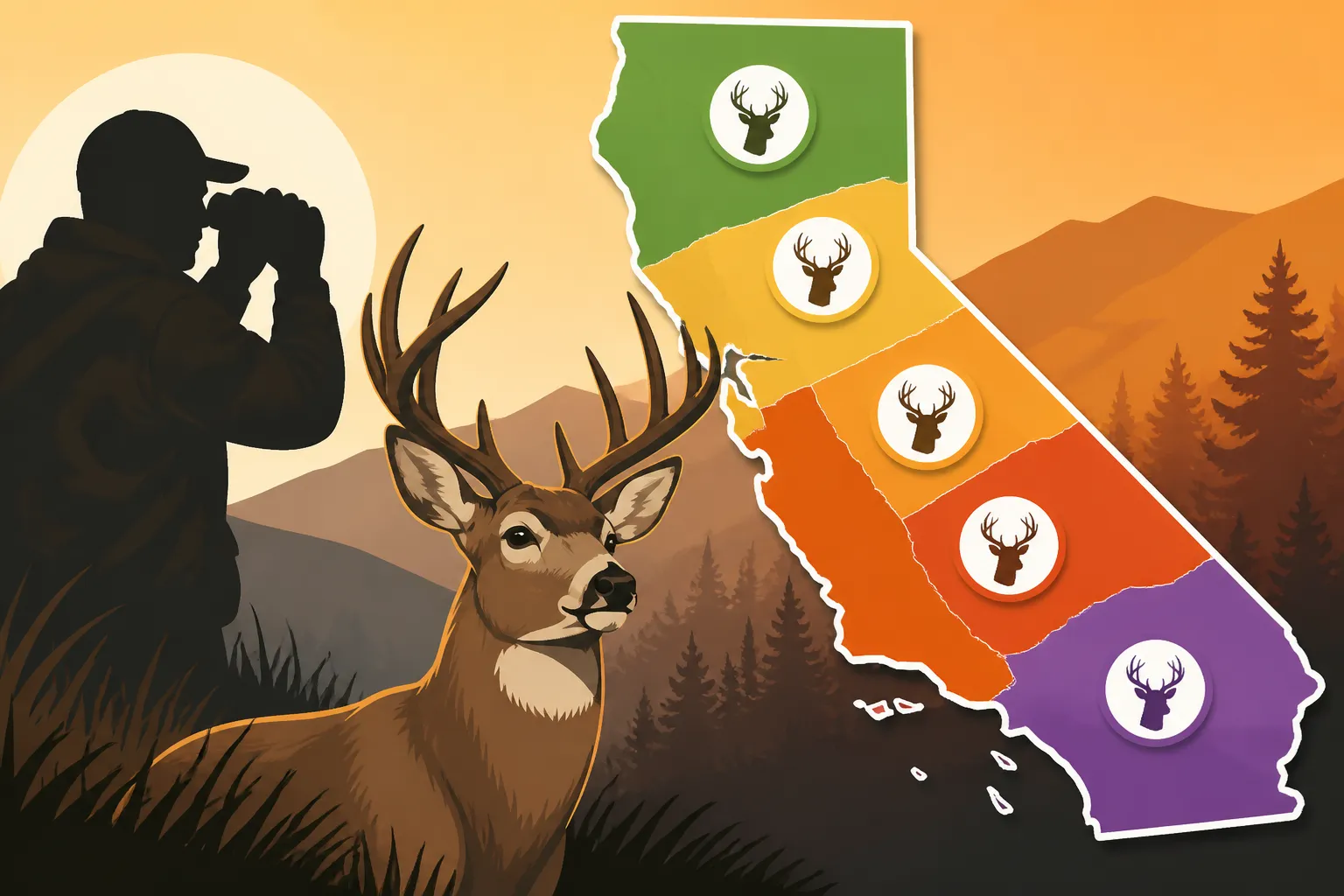
Here’s a simplified breakdown of general rut timing across California's diverse deer zones:
| Deer Zone Type | Primary Species | General Peak Rut Timing | Key Influences | Typical Hunting Method during Rut |
|---|---|---|---|---|
| Coastal Blacktail (Zone A, C) | Columbian Blacktail | Late Sept – Mid-Oct | Photoperiod, early rains, cooler temps | Still-hunting, rattling, stand hunting |
| Inner Coast/W. Sierra D-Zones (D3-D5) | Blacktail/Hybrid Deer | Late Oct – Mid-Nov | Elevation, forage, localized weather | Spot-and-stalk, still-hunting, calling |
| Sierra Foothill D-Zones (D6-D7) | Blacktail/Mule Deer Hybrid | Early Nov – Mid-Nov | Cold fronts, early snow, migration | Spot-and-stalk, still-hunting, glassing |
| High-Country X-Zones | California Mule Deer | Mid-Nov – Early Dec | Heavy snow, migration, extreme cold | Long-range glassing, spot-and-stalk |
| Eastern Sierra/Desert D-Zones | California Mule Deer | Dec – Early Jan | Late cold fronts, limited forage, solitude | Glassing vast areas, waterhole sits |
Ultimately, knowing when the California rut peaks by zone is a massive advantage for any deer hunter. It allows you to tailor your scouting, your hunting dates, and your tactics to align with the deer's most vulnerable and active period. By combining general knowledge with local observations and perhaps even digging into tools like GoHunt for specific unit data, you can significantly increase your odds of success. Remember, every season is different, and the deer will always keep us on our toes, but understanding their fundamental rhythms is the best way to be prepared for those magical days when the rut is truly on. For additional research, consider how California's Multi-Zone Deer Season System plays into these varying timelines, and how you might use Scouting California Public Land Before Season to pinpoint prime rutting areas.
Disclaimer
This article is for general informational purposes only and does not constitute professional advice. Laws, prices and regulations vary by location and change over time. Consult a qualified professional for guidance on your specific situation.