Best California Counties for Turkeys
Many California turkey hunters find themselves frustrated, wondering where the best place to tag a gobbler really is. It’s easy to feel lost in a state as vast and diverse as California, with whispers of good hunting scattered from the Oregon border all the way down to the chaparral country. This guide is designed to cut through the noise, offering you a clear roadmap to the counties in California that consistently produce wild turkeys, along with practical advice to increase your odds of success.
Understanding California's Turkey Landscape
Before we dive into specific counties, it's really important to understand why certain areas hold more turkeys than others. It's not just random; it comes down to a perfect storm of habitat, food sources, and refuge. Wild turkeys, particularly the Rio Grande and Merriam's subspecies that thrive here, have specific needs, and California's diverse landscapes offer plenty of ideal niches.
The Oak Woodland Connection
When you think about prime turkey habitat in California, the first thing that should spring to mind is oak woodlands. These aren't just pretty trees; they are the grocery store, the shelter, and often the roosting site for wild turkeys. Acorns are a critical food source, especially in the fall and winter, providing a high-energy diet that sustains birds through tougher times. But even in spring, turkeys will forage extensively in the understory for insects, seeds, and fresh greens. The open nature of many oak stands allows turkeys to move freely, spot predators, and perform their elaborate courtship rituals. You’ll often find them working ridge tops or feeding on south-facing slopes in these areas. Why Turkeys Thrive in California Oak Woodland is a great read if you want to dive deeper into this specific habitat.
River Corridors and Agricultural Edges
Beyond the majestic oak stands, river and creek bottoms, especially those bordered by mature riparian trees like sycamores and cottonwoods, are also turkey magnets. These areas provide consistent water sources, lush vegetation, and vital roosting trees with strong, high limbs that offer safety from ground predators. Turkeys will often travel these corridors, moving between feeding grounds and roosts. Similarly, agricultural edges, particularly those adjacent to oak woodlands or river systems, can be incredibly attractive. Think about fields of grain, alfalfa, or even cut corn. Turkeys will spend a lot of time gleaning these fields, especially in the mornings and evenings, before retreating to the safety of nearby cover. The transition zones between these cultivated areas and natural habitats are often hotspots for gobbler activity.
Population Growth and Habitat Diversity
California's wild turkey population has been a fantastic success story, largely due to dedicated introduction efforts and the adaptable nature of these birds. From just a handful of birds decades ago, they now thrive in numerous regions. This success means turkeys have expanded beyond the most classic habitats, moving into more diverse landscapes including mixed conifer forests at lower elevations, chaparral-covered foothills, and even some suburban fringes where pockets of suitable habitat exist. However, the highest densities and most consistent hunting opportunities still generally align with the rich oak and riparian zones. Understanding this distribution helps you narrow down your search, whether you're looking at a specific county map or using a digital scouting tool to identify promising terrain.
Prime California Counties for Wild Turkey Hunting
So, which counties truly stand out when it comes to chasing spring or fall gobblers? While turkeys can be found in a surprising number of California counties, some areas consistently offer better opportunities due to a combination of habitat, population density, and access. It’s worth noting that "best" can mean different things to different hunters – some prioritize trophy birds, others high bird numbers, and still others public land access. I'll try to give you a good mix here.
North State Powerhouses
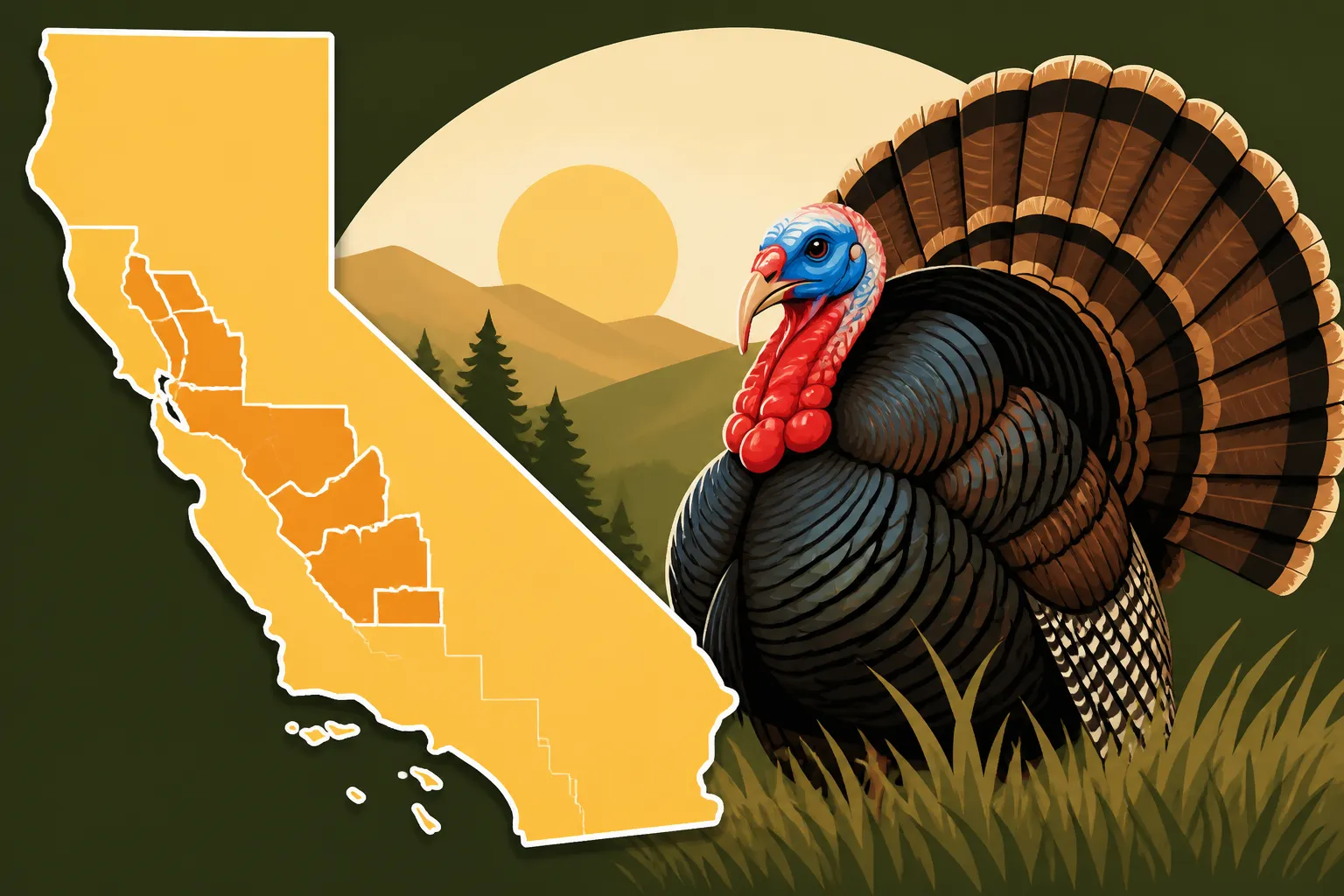
When you talk about turkey hunting in California, the northern part of the state often comes up first, and for good reason. Counties like Shasta, Tehama, and Butte are absolute bastions for wild turkeys. These areas feature extensive tracts of rolling oak woodlands, often dissected by major river systems like the Sacramento River and its tributaries. The combination creates ideal roosting habitat, abundant food sources, and plenty of space for turkeys to thrive.
- Shasta County: Known for its diverse terrain, from the valley floor to the foothills of the Cascades. Expect sprawling oak woodlands, particularly along the eastern and western edges of the Sacramento Valley. The numerous creeks and drainages provide critical water and cover.
- Tehama County: Similar to Shasta, Tehama boasts vast oak-studded ranch lands and public forests. The famous Tehamas are known for their deer, but the turkeys here are equally impressive. It's a county where understanding land access, especially private vs. public, is key.
- Butte County: More into the Sacramento Valley proper, Butte County offers a mix of agricultural fields and oak foothills. The riparian zones along the Feather River and smaller waterways are often bursting with turkeys. Hunting the Archery-Only Fall Turkey Season could be very productive here.
Central Coast and Foothill Havens
Moving south into the central part of the state, you'll find another incredible turkey hunting region. The Central Coast Ranges and the western foothills of the Sierra Nevada offer distinctly different, but equally productive, turkey hunting experiences.
- San Luis Obispo County: This county along the Central Coast is a fantastic place for turkeys. It features rolling hills covered in dense oak woodlands and chaparral, with pockets of agriculture. Public land can be a bit more limited here compared to the northern counties, but there are still opportunities. The mild climate often means an earlier spring green-up, which can influence turkey behavior.
- Monterey County: Adjacent to San Luis Obispo, Monterey also offers excellent turkey hunting in its oak-studded hills and canyons. Similar to SLO, access is a consideration, but diligent scouting and knocking on doors can pay off handsomely.
- Yuba, Nevada, and Placer Counties: These Sierra Nevada foothill counties are classic turkey country. They epitomize the "oak woodland connection" we discussed earlier, with endless rolling hills, deep canyons, and scattered ranches. The terrain can be steeper here than in the valley, requiring good boots and solid lungs, but the rewards can be incredible. Many hunters find success by Calling a Gobbler in Oak Woodland in these areas.
Southern California's Surprising Spots
While not as widely known for turkey hunting as the north and central regions, Southern California does have some viable options for determined hunters. The populations here might not be as dense, but the opportunity to hunt closer to home for many can be a huge draw.
- San Diego County: Believe it or not, parts of San Diego County, particularly in the Cleveland National Forest and some of the more rural eastern sections, hold huntable populations of Merriam's turkeys. These birds are often found in higher elevation pine-oak woodlands, requiring a different approach than the typical Rio Grande hunt.
- Riverside and San Bernardino Counties: In the more mountainous and undeveloped areas of these large counties, especially bordering national forests, small pockets of turkeys exist. Success here often comes down to extreme dedication, extensive scouting, and often covering a lot of ground in rugged terrain.
Here's a quick overview of some top counties and their characteristics:
| County Name | Primary Habitat Type | Key Hunting Considerations |
|---|---|---|
| Shasta County | Oak Woodlands, Riparian, Mixed Conifer | Excellent populations, mix of public/private, varied terrain. |
| Tehama County | Oak Woodlands, Ranch Lands, River Bottoms | Strong populations, significant private land, good public land scouting essential. |
| Butte County | Valley Oaks, Agriculture, Riparian | Healthy populations, good river corridor hunting, public access on wildlife areas. |
| San Luis Obispo Co. | Coastal Oaks, Chaparral, Ranch Land | Good populations, challenging access, mild climate. |
| Monterey County | Coastal Oaks, Canyons, Private Ranches | Solid populations, often requires permission, good scouting pays off. |
| Yuba County | Sierra Foothill Oaks, River Drainages | Abundant turkeys, rolling hills, good blend of public forests and private ranches. |
| Nevada County | Sierra Foothill Oaks, Mixed Conifer | Robust populations, steep terrain in places, beautiful country. |
| Placer County | Sierra Foothill Oaks, Canyons | Excellent turkey numbers, mix of public and private, can be pressured. |
| San Diego County | Pine-Oak Woodlands, High Desert Edges | Smaller, localized populations (Merriam's), very specific habitat, rugged terrain. |
Strategies for Success in Top Turkey Counties
Knowing where the turkeys generally are is just the first step. To consistently fill your tag in these prime California counties, you need to employ smart strategies both before and during your hunt.
Pre-Season Scouting and Digital Reconnaissance
Modern hunting really begins long before you set foot in the woods. Pre-season scouting, especially digital reconnaissance, is absolutely vital. Using satellite imagery and topographic maps, you can identify promising areas based on the habitat types we've discussed. Look for concentrations of oak trees, especially on south-facing slopes, and identify major drainages or river systems. Pay close attention to transition zones where oak woodlands meet open fields, or where riparian corridors intersect with agricultural land. Tools like GoHunt or similar mapping apps allow you to mark potential roosting sites, travel corridors, and feeding areas, giving you a huge advantage.
When you do get boots on the ground, even if it's weeks before the season, look for physical sign: droppings, dusting bowls, shed feathers, and strut marks. Listen for gobblers at dawn and dusk. Turkeys are creatures of habit, and often use the same roosting areas year after year. Identifying these can be a game-changer. Many hunters overlook the simple act of listening at first light, but a gobbler on the roost can be heard for a long distance and gives you a perfect starting point for the day. Scouting California Public Land Before Season offers more general advice that applies perfectly to turkeys.
Calling and Decoying Tactics by Terrain
Once you’re in a promising area, your calling and decoying tactics need to match the terrain and the bird's mood. In the dense oak woodlands of Shasta or Tehama counties, where visibility might be limited, aggressive calling can sometimes work, but often a more subtle approach is better. Soft yelps, clucks, and purrs can entice a curious gobbler without giving away your exact location too soon. In more open country, like agricultural edges or wider foothill clearings, decoys become incredibly effective. A single hen decoy, or a jake and a hen, can provide the visual confirmation a wary gobbler needs to commit to your setup.
Remember, turkeys are constantly assessing their surroundings. If they can’t see what they hear, they’ll often hang up just out of range. That's why Decoy Placement for Pressured California Birds is so crucial. Always position your decoys where a gobbler has a clear path to them, and ensure your setup provides ample cover for yourself. Understanding the subtle nuances of calling – when to be aggressive, when to be quiet, and when to let the woods do the talking – comes with experience and observation. Sometimes the best call is no call at all, just waiting patiently.
Navigating Public and Private Access
California offers a mix of public and private land hunting opportunities, and this is especially true for turkey hunting in the prime counties. National Forests, BLM lands, and State Wildlife Areas can provide excellent public access. However, these areas can also see significant hunting pressure, especially on opening weekend. Researching specific regulations for each public land type is non-negotiable. Some wildlife areas have specific entry rules or sign-in requirements. Using a mapping application that clearly shows property boundaries is critical for staying legal and avoiding trespass.
Many of the very best turkey hunting spots in California are on private ranch lands. Gaining access to these properties often requires advanced planning, a polite approach, and respecting landowner wishes. Start by Getting Private Land Permission in California well in advance of the season. Offer to help with chores, share some of your harvest, or even offer a small lease fee. Building a relationship with a landowner can open up incredible hunting opportunities that are far less pressured. Sometimes, simply driving around and spotting turkeys from public roads on private land, then finding out who owns that property, is a good first step.
Beyond the "Best": Finding Your Own Turkey Gold
While focusing on the "best" counties gives you a great starting point, the truth is that turkeys are incredibly adaptable, and with enough persistence, you can find success in unexpected places. Don't be discouraged if the top counties are too far or too crowded for your liking.
The Importance of Localized Knowledge
Every ridge, every creek bottom, and every oak flat has its own unique character, and turkeys within those areas will behave slightly differently based on local conditions. A bad acorn crop one year might push birds to agricultural fields, while heavy rains might concentrate them near higher ground. Developing localized knowledge means spending time in the woods, observing turkey patterns, understanding food sources specific to your area, and noting how pressure affects the birds. This kind of nuanced understanding often trumps general advice, even from the "best" counties. It's about knowing your chosen hunting area like the back of your hand, understanding the intricacies of Wind and Thermals in Steep Sierra Country if you're in the foothills, or the specific feeding habits of birds along a particular river corridor.
Persistence and Adaptability
Turkey hunting, like all hunting, is rarely a guarantee. There will be slow mornings, quiet afternoons, and gobblers that simply refuse to cooperate. The most successful turkey hunters are almost always the most persistent and adaptable. If your initial setup isn't working, be willing to move. If the birds are henned up, try different calls or change your decoy strategy. If public land is getting too much pressure, try to find harder-to-reach spots or adjust your hunting times. The more time you spend in the field, even on unsuccessful days, the more you learn. Each experience adds another piece to your puzzle, making you a more effective and knowledgeable hunter in the long run.
Ultimately, California offers incredible turkey hunting opportunities across a wide swath of its diverse landscape. By understanding turkey habitat, focusing your efforts on proven counties, and employing smart hunting strategies, you can greatly increase your chances of bringing home a gobbler. Good luck out there!
Disclaimer
This article is for general informational purposes only and does not constitute professional advice. Laws, prices and regulations vary by location and change over time. Consult a qualified professional for guidance on your specific situation.