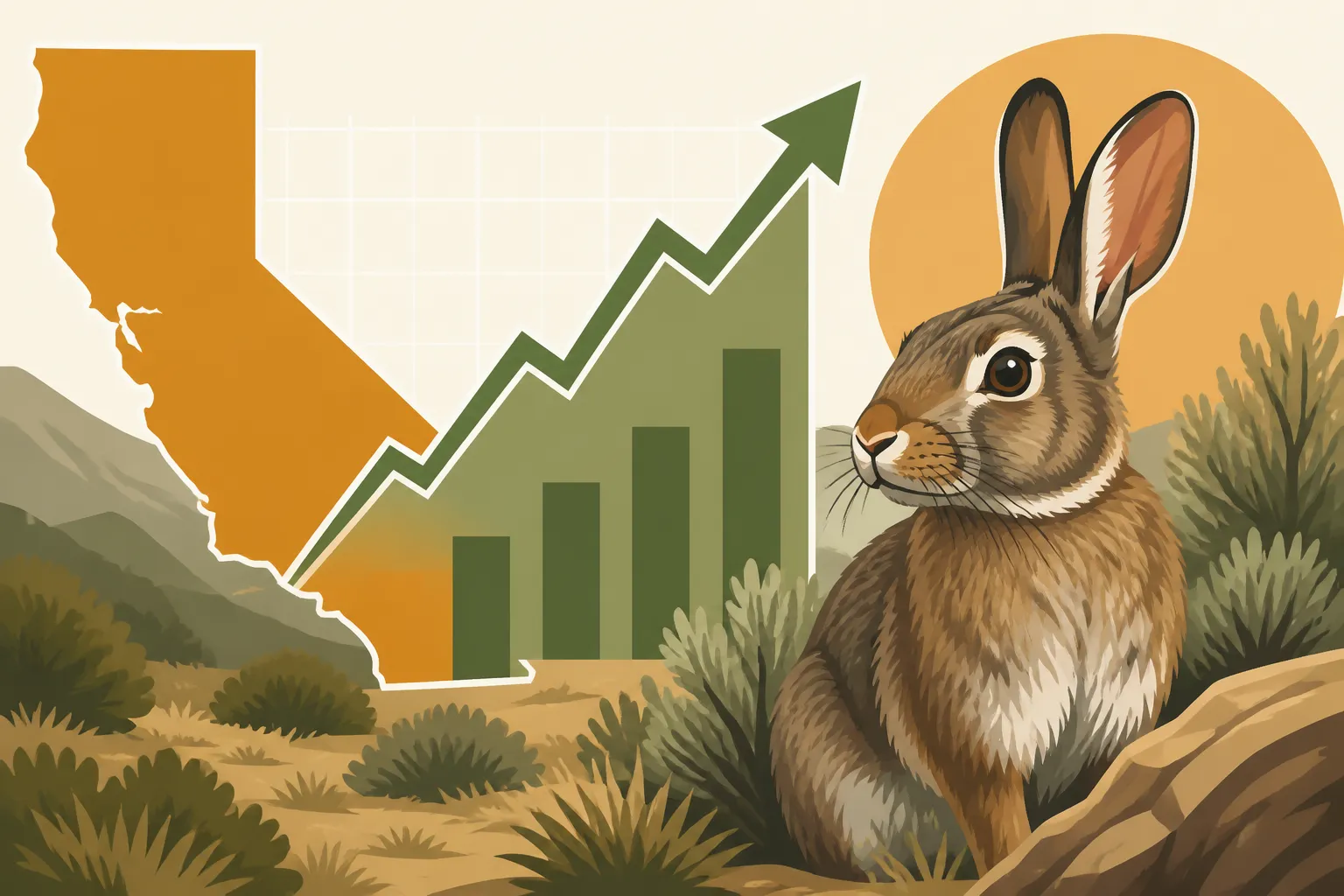
California Cottontail Population Trend
It's incredibly frustrating when you head out to a familiar hunting spot, brimming with optimism for a good cottontail hunt, only to find the brush feels eerily quiet or the tracks are few and far between. We've all been there, wondering if the rabbits simply moved, if the population crashed, or if we're just hitting the wrong spot. This comprehensive guide will dive deep into the fascinating world of California's cottontail population trends, exploring what drives their numbers up and down, and how hunters can understand and adapt to these natural fluctuations.
Understanding California's Cottontail Species and Their Habitat
California is home to a couple of distinct cottontail species, each with their own preferences for habitat that largely dictate where you'll find them and how their local populations might fluctuate. Knowing the difference between them, and understanding their typical stomping grounds, is the first step in decoding those elusive population trends we often observe in the field. These aren't just generic bunnies; they're resilient creatures perfectly adapted to their specific niches within our diverse state.
When we talk about "cottontails" in California, we're primarily referring to two main types: the Desert Cottontail and the Brush Rabbit. While both are small, unassuming game animals that offer fantastic hunting opportunities, they inhabit different environmental niches. The Desert Cottontail, as its name suggests, thrives in more arid environments, whereas the Brush Rabbit prefers denser, often wetter, brushy cover. Both are prolific breeders under ideal conditions, which can lead to significant population surges that seem to appear out of nowhere, offering excellent hunting for a season or two before nature inevitably rebalances. Their widespread distribution, from the high desert to the coastal chaparral, means they're accessible to many hunters, but their localized numbers can vary wildly based on a myriad of factors we'll explore.
The Desert Cottontail's Range and Preferred Environment
The Desert Cottontail (Sylvilagus audubonii) is what most people picture when they think of a classic cottontail. These rabbits are quite common throughout the drier, eastern portions of California, extending into the vast desert regions and many of the arid inland valleys. You'll find them in places characterized by sparse vegetation, including sagebrush flats, creosote bush communities, and along the sandy washes and rocky outcroppings of the Mojave and Colorado deserts. They're incredibly adapted to these harsh, dry conditions, often relying on the limited shade offered by a mesquite tree or the burrows of other animals for refuge from the scorching sun.
Their diet largely consists of native grasses, forbs, and the tender shoots of desert shrubs, making them highly dependent on the availability of new growth, especially after seasonal rains. When those rains hit just right, you'll see an explosion of vegetation, which directly translates to better feed and cover for the cottontails. This bounty allows for higher survival rates and more successful breeding cycles. Hunters often report seeing more rabbits in the desert after a particularly wet winter and spring, confirming this direct link between precipitation and population health. You might find yourself Hunting a BLM Desert Wash for Mule Deer and discover a surprising number of cottontails darting around, making for an excellent mixed-bag day.
The Brush Rabbit's Coastal and Foothill Strongholds
In contrast to their desert-dwelling cousins, Brush Rabbits (Sylvilagus bachmani) are masters of disguise within the thick, tangled undergrowth found across western California. Their range extends from the humid coastal fog belts, through the oak woodlands of the Coast Ranges, and up into the brushy foothills of the Sierra Nevada. These rabbits are often smaller and darker than Desert Cottontails, and they truly live up to their name by rarely venturing far from the protective embrace of dense chaparral, blackberry brambles, and riparian thickets. They’re built for navigating these dense environments, providing quick bursts of speed through incredibly tight cover.
Their reliance on dense cover means that areas with extensive, undisturbed brush are prime habitat. Think of those areas where the manzanita and ceanothus grow so thick you can barely push through them – that's often where Brush Rabbits thrive. They feed on a variety of plants within this protective cover, including grasses, clover, and the leaves and bark of various shrubs. Due to their preferred habitat, hunting them often involves pushing through very difficult terrain, making for a challenging but rewarding experience. You might encounter them while Hunting Coastal Range Oak Woodlands or in the thickets adjacent to a Quail Hunting California Foothill Chaparral outing, often providing a bonus opportunity for small game.
| Feature | Desert Cottontail | Brush Rabbit |
|---|---|---|
| Primary Habitat | Arid grasslands, desert scrub, washes, sagebrush | Dense chaparral, riparian thickets, oak woodlands |
| Geographic Range | Eastern and inland California deserts/valleys | Western California coast and foothills |
| Size | Generally larger | Generally smaller and stockier |
| Appearance | Lighter fur, more prominent white tail | Darker fur, less conspicuous tail |
| Cover Preference | Burrows, rock crevices, sparse shrubs | Thick, tangled brush, dense vegetation |
| Food Source | Desert grasses, forbs, shrub shoots | Grasses, clover, leaves, bark within brush |
Factors Influencing Cottontail Population Fluctuations
Anyone who spends time chasing cottontails knows that their numbers aren't static. One year you're practically tripping over them, and the next, your favorite spot seems barren. This ebb and flow in population is a natural phenomenon for many small game species, and cottontails are particularly susceptible to a variety of environmental and biological factors that can cause their numbers to swing wildly. Understanding these influences is key to setting realistic expectations and even predicting where and when you might have the best luck.
It's easy to get frustrated when the rabbits just aren't there, but it's rarely due to overhunting in California's vast public lands. More often, it's a complex interplay of natural forces. Cottontails are a classic "boom and bust" species; their high reproductive rate means they can rebound quickly from low numbers if conditions are favorable, but they can also crash just as fast when things turn sour. This dynamic is a fundamental aspect of their ecology and something every seasoned small game hunter learns to recognize. Instead of simply packing up and going home, understanding why the numbers are down can help you adjust your strategy or look for areas where conditions might be better.
Climate, Rainfall, and Vegetation Growth
Perhaps the single biggest driver of cottontail populations in California is climate, particularly the amount and timing of rainfall. Rabbits, like most herbivores, rely entirely on vegetation for both food and cover. A series of dry years, or even a single severe drought, can drastically reduce the amount of nutritious forage available, leading to decreased breeding success, higher mortality rates among young rabbits, and overall population declines. Rabbits simply can't breed effectively if the does aren't getting enough sustenance, and their kits are even more vulnerable without abundant cover to hide in.
Conversely, a wet winter followed by a mild, green spring can trigger an explosion in cottontail numbers. Lush vegetation provides both ample food, allowing does to produce multiple, healthy litters, and dense cover, which protects the young from predators. We often see these "boom" years a season or two after significant rainfall events. Think about those years when the wildflowers are bursting – that's often a good indicator that the rabbits are doing well too. This relationship is particularly pronounced in the drier regions where Desert Cottontails roam; their survival hinges on those critical periods of green-up. When scouting, pay close attention to the recent weather patterns in your target area – it's often the best predictor of rabbit density.
Predation, Disease, and Natural Cycles
While habitat and food are primary, predation and disease play significant roles in regulating cottontail populations, especially when numbers are high. Cottontails are a foundational prey species, meaning a vast array of predators relies on them for food. California Coyote Range and Density shows just how widespread predators like coyotes are, but also bobcats, raptors (hawks, eagles, owls), and even snakes regularly hunt rabbits. When cottontail populations boom, so too can their predator populations, creating a natural feedback loop. This intense predation pressure can keep rabbit numbers in check, even in good habitat.
Diseases like tularemia (rabbit fever) and myxomatosis can also sweep through populations, particularly when rabbits are numerous and in close contact, leading to localized die-offs. These diseases are naturally occurring and are part of the ecosystem's way of preventing overpopulation and ensuring the health of the remaining animals. Hunters are often the first to notice these disease outbreaks when they find deceased animals or observe rabbits acting lethargic. It's a sobering reminder that nature always finds a way to balance things. These factors, combined with fluctuations in available resources, create the natural "cycles" we observe, where populations rise, peak, and then decline before starting the cycle anew.
Habitat Loss and Human Development
While the natural ebb and flow of climate and predation are powerful forces, human activities, especially habitat loss and fragmentation, present a long-term challenge to cottontail populations in many areas. As California's population grows, wild spaces are increasingly converted for housing, agriculture, and infrastructure. This directly shrinks the available acreage of chaparral, scrubland, and riparian corridors that cottontails depend on for survival. Even if a specific area isn't completely paved over, simply breaking up large blocks of habitat into smaller, disconnected patches can make it harder for rabbits to disperse, find mates, and escape predation.
Agricultural practices can also impact cottontails. While some agricultural lands, particularly those with brushy edges or cover crops, can provide excellent rabbit habitat, intensive farming often eliminates the critical cover that these animals need. Pesticides and herbicides can also indirectly affect rabbit health by reducing their food sources. On the flip side, some managed lands and wildlife-friendly developments are starting to incorporate habitat features like brush piles and native plant corridors that can benefit cottontail populations. However, for the most part, development pressure continues to be a factor that limits where and how robustly cottontails can thrive, pushing them further into more remote or marginal areas.
Monitoring and Assessing Cottontail Trends for Hunters
Since cottontails aren't typically managed with the same detailed harvest quotas or population studies as big game like deer or elk, as hunters, it's largely up to us to become keen observers and assess local population trends. This isn't just about finding rabbits for the upcoming season; it's about understanding the health of the small game ecosystem and becoming a more informed conservationist. Relying solely on past successes without actively scouting or engaging with current information can lead to disappointing outings.
For small game, the best data often comes from your own boots on the ground, combined with shared knowledge and a bit of environmental awareness. Unlike applying for a California Big Game Drawing Application Window where you pore over draw odds, cottontail hunting is more about reading the landscape and interpreting the signs nature leaves behind. This self-assessment allows you to quickly adapt your plans, whether it means shifting locations, changing your tactics, or simply enjoying the outdoors even if the rabbits aren't as plentiful as you'd hoped. Becoming adept at this kind of field-based monitoring makes you a better hunter overall.
Signs and Scouting for Healthy Populations
The most reliable way to assess cottontail numbers in a specific area is through dedicated scouting. This means getting out into potential habitat well before the season opens, or even in the off-season, and looking for concrete signs of rabbit activity. What are you looking for? Start with fresh droppings – small, round pellets indicate recent presence. Look for clipped vegetation, especially tender green shoots or bark gnawing on small shrubs, which are clear feeding signs. Well-worn trails or "rabbit runs" through dense brush are another excellent indicator, often leading between feeding areas and escape cover.
Actual sightings, of course, are the gold standard. Even seeing a few rabbits darting across a road at dawn or dusk during your scouting trips can give you a good sense of the local density. Pay attention to the quality and quantity of suitable cover – are there plenty of thickets, brush piles, or rocky areas for them to hide in? And is there ample food nearby? Using mapping applications like GoHunt can be invaluable here. You can identify promising habitat features, such as dense riparian zones, chaparral, or areas with specific vegetation types, and then use the app's layers to confirm public land access. This allows you to plan your scouting routes efficiently, focusing on areas with the highest potential for rabbit activity based on the terrain. For example, knowing Reading California Mud for Fresh Deer Movement can also apply to rabbits, as their tracks are distinct and often visible in soft soil after a rain.
Hunter Observation and Local Reports
Beyond your own scouting, the collective knowledge of the hunting community can be a powerful tool for tracking cottontail trends. Talk to other hunters who frequent the areas you're interested in. Local sporting goods stores, online hunting forums, or even casual conversations at a local diner can often yield valuable insights into how rabbit populations are doing. Have people been seeing a lot of rabbits during other seasons, like while Hunting a D-Zone That Opens in August for deer, or just driving around the foothills? Sharing information can save you a lot of time and effort by directing you to areas that are currently experiencing higher numbers or warning you away from spots that are quiet.
Historical knowledge of an area is also important. If you've hunted a particular patch of public land for years, you'll develop a sense of what "normal" rabbit numbers look like there. Any significant deviation, either up or down, will become noticeable. Remember, small game hunting often has a strong social component, and sharing experiences not only builds camaraderie but also helps everyone piece together a clearer picture of the broader wildlife trends. It's not about giving up your secret spot entirely, but rather contributing to the overall understanding of local conditions.
Interpreting CDFW Data
While the California Department of Fish and Wildlife (CDFW) conducts extensive surveys for big game and waterfowl, specific, detailed population estimates for cottontails are generally less common or publicly available. Their primary focus for small game tends to be on monitoring habitat health and overall ecosystem indicators. However, CDFW does track harvest data from hunter reports, and these can sometimes offer a broad, retrospective look at general trends. For example, if statewide small game harvests for rabbits show a significant dip or increase over several seasons, it might indicate broader population shifts.
More importantly, CDFW's management of wildlife areas, which often include excellent cottontail habitat, can provide clues. When CDFW manages habitat for species like quail or other upland birds, those efforts, such as California Rabbit Habitat Restoration Efforts, often benefit cottontails as well by improving cover and food sources. If you're hunting a particular Wildlife Area, checking for their annual reports or general land management plans might give you some insight into the health of the habitat and, by extension, the rabbits that live there. Remember, these are usually general indicators, and local conditions can always vary. For the most precise information, your own diligent scouting remains paramount.
Strategies for Hunting Cottontails in Varying Conditions
Once you've done your homework and have a sense of the cottontail population trend in your chosen area, the next step is to adjust your hunting strategies accordingly. There's no single "best" way to hunt rabbits, as success often hinges on adapting to the current conditions, the terrain, and the rabbit's behavior. A flexible approach will consistently put more rabbits in your bag, regardless of whether it's a boom year or a tougher one.
The beauty of cottontail hunting is its accessibility and the sheer variety of ways you can pursue them. It’s a fantastic way to sharpen your tracking, stalking, and shooting skills, and it teaches you to really read the land. Don't be discouraged by lower numbers; instead, view it as a challenge to refine your craft. Every hunt is a learning experience, and adapting to varying populations simply adds another layer to that learning. It's about being resourceful and understanding the habits of these surprisingly cunning little animals.
Adapting Tactics to Population Density
If you've scouted and found that cottontail populations are high in your area, you can afford to be more expansive in your approach. This might mean covering larger areas, moving at a steady pace through promising habitat, and being ready for multiple flushes. When numbers are good, rabbits tend to be less pressured and might run shorter distances before holing up, or they might be less wary overall. Jump-shooting becomes incredibly effective in these conditions, as you can simply walk through brushy areas, flushing rabbits as you go. Consider a tactic similar to that used in Small Game and Predator Hunting in California where you’re constantly moving and scanning.
However, if populations are low, you'll need to slow down and become much more methodical. Instead of trying to cover a lot of ground, focus your efforts on the absolute prime pockets of habitat – the densest thickets, the most productive feeding areas, the brush where you found the most sign during scouting. Still-hunting, moving very slowly and pausing frequently to scan for movement or listen for rustling, becomes crucial. You'll need to hunt harder for each rabbit, thoroughly working every piece of cover. This is where patience truly pays off, and being willing to re-work promising spots can yield surprising results.
Utilizing Cover and Terrain Effectively
Cottontails are masters of using cover for concealment and escape. Understanding how they use different types of terrain and vegetation is fundamental to hunting them effectively. In dense chaparral or thickets, rabbits will often sit tight, relying on their camouflage until you're nearly on top of them before exploding out. Here, pushing through the thickest stuff, perhaps with a partner to cover different angles, can be productive. Knowing Hunting a Funnel Between Two Oak Ridges or how game uses natural travel corridors can also be beneficial, even for small game.
For Desert Cottontails in more open country, they'll often be found near the edges of washes, rocky outcroppings, or sparse brush where they can quickly dart into cover. When still-hunting, pay close attention to any irregularities in the brush, shadows, or subtle movements that might betray a hidden rabbit. Hunting with a good dog, particularly a flushing breed, can be incredibly effective in both dense and sparse cover, as the dog's nose can locate rabbits that you'd otherwise walk right past. Just be sure you understand the rules around Dog Training on California Public Land if you're taking your canine companion with you. Walking parallel to washes or creek beds, which often provide a linear strip of better vegetation, can also be a very productive strategy.
Timing Your Hunts for Best Success
The timing of your hunt, both seasonally and daily, significantly impacts your chances of success. Cottontails are generally crepuscular, meaning they are most active during dawn and dusk. These are typically the best times to find them out feeding in more open areas. During the middle of the day, especially on sunny or hot days, they'll retreat to dense cover or cool, shady spots. On overcast days, or after a light rain, they might be more active throughout the day, as the cooler temperatures and reduced visibility make them feel safer.
Consider the seasonal variations too. Early season, when vegetation is still lush, can mean rabbits are spread out and have abundant cover. Later in the season, after frosts or during dry spells, vegetation might die back, concentrating rabbits into the remaining pockets of dense cover. This can sometimes make them easier to locate, albeit potentially warier due to increased pressure. Pay attention to temperature; on extremely hot days, focus on the earliest morning hours or hunt near water sources where rabbits might venture out for a drink. Conversely, on colder days, they might seek sunnier, protected spots. Being adaptable to these timing nuances, much like learning to read Wind and Thermals in Steep Sierra Country for deer, will make you a more consistent rabbit hunter.
Disclaimer
This article is for general informational purposes only and does not constitute professional advice. Laws, prices and regulations vary by location and change over time. Consult a qualified professional for guidance on your specific situation.