California Sandhill Crane Migration
If you've ever spent time near California's vast Central Valley wetlands in the cooler months, you might have heard an otherworldly call echoing across the fields, a sound that transports you back to primordial times. This is the voice of the sandhill crane, and for many, their annual migration through our state is one of nature's most spectacular and often overlooked events. This guide aims to pull back the curtain on this incredible journey, helping you understand when and where these magnificent birds visit California, and how you can appreciate them, whether you're a seasoned birder or a hunter curious about the state's diverse game species.
Unraveling the Mystery of California's Sandhill Crane Visitors
California, particularly its Central Valley, plays a critical role in the life cycle of several sandhill crane populations. These aren't just any birds; they are some of the largest, most majestic avian visitors we host. Understanding their presence here is key to appreciating our state's rich natural heritage.
The Two Faces of California's Sandhills
When we talk about sandhill cranes in California, we're generally talking about two subspecies: the Greater Sandhill Crane and the Lesser Sandhill Crane. Both are incredible birds, but they have distinct characteristics and conservation statuses within the state, which is important for anyone observing or hunting in areas they frequent.
The Greater Sandhill Crane is often seen as the more iconic, standing tall at nearly four feet with a wingspan that can approach six or seven feet. These magnificent birds have a stately presence, often seen stalking through shallow wetlands or foraging in open fields. They breed further north, in states like Oregon and Washington, and some even in northeastern California, before migrating south for the winter. Their numbers, while increasing due to conservation efforts, are still carefully managed, and they are generally not hunted in California.
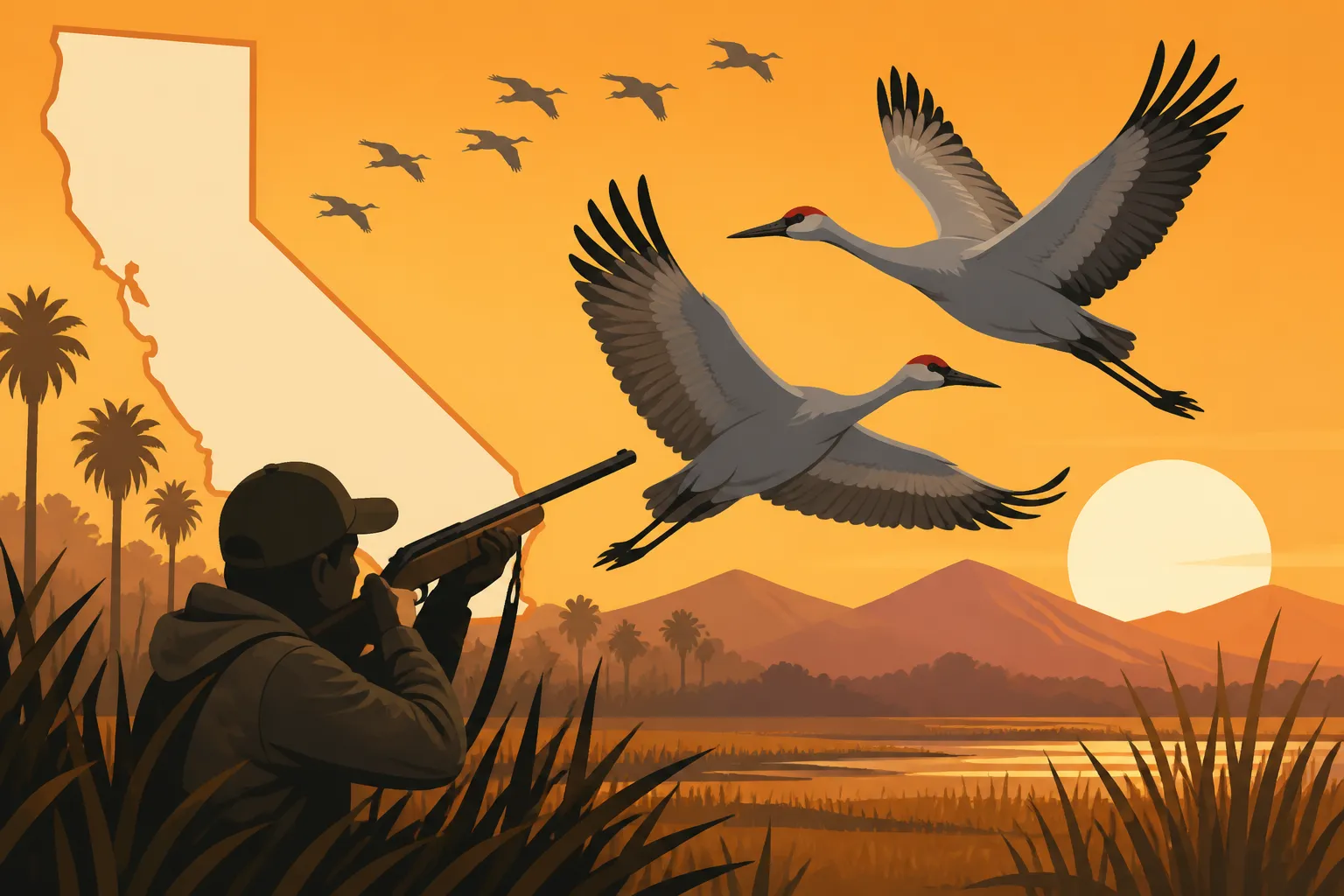
The Lesser Sandhill Crane, while still large and impressive, is, as its name suggests, a bit smaller. They have an even more expansive breeding range, stretching across Alaska, Canada, and the northern plains. These birds migrate in truly enormous flocks, often numbering in the tens of thousands, creating breathtaking aerial displays when they arrive in California. It is primarily the Lesser Sandhill Crane that is subject to a highly regulated, limited hunting season in specific zones of the Central Valley.
| Subspecies | Size (Approx.) | Primary Breeding Range | Primary California Wintering Grounds | Hunting Status in CA |
|---|---|---|---|---|
| Greater Sandhill Crane | Up to 4 ft tall | Pacific Northwest, Northeastern CA | Central Valley (scattered) | Generally Protected |
| Lesser Sandhill Crane | 3-3.5 ft tall | Alaska, Canada, Northern Plains | Central Valley (major concentrations) | Limited, Regulated Season |
Why California is a Wintering Haven
California’s Central Valley, with its vast agricultural lands and managed wetlands, becomes an indispensable wintering ground for these migrating cranes. After long journeys south from their northern breeding grounds, they find respite and sustenance in our mild climate.
The landscape here provides an ideal combination of resources. Wetlands and flooded fields offer safe roosting sites where the cranes can gather in huge numbers, protected from terrestrial predators. These areas, particularly the state and federal wildlife areas, are carefully managed to provide critical habitat, not just for cranes, but for countless species of California Waterfowl on the Pacific Flyway. Beyond the protected roosts, the surrounding agricultural fields, especially those growing corn, rice, and other grains, become their cafeteria. They spend their days foraging, rebuilding fat reserves, and socializing, preparing for the long flight back north in the spring. This symbiotic relationship between agricultural practice and wildlife habitat is a unique and vital aspect of California's ecosystem.
The Annual Journey: When and Where Sandhill Cranes Migrate in California
Understanding the timing and locations of the sandhill crane migration is essential for anyone hoping to witness this spectacle or understand its impact on the local ecosystem. Their arrival and departure are deeply tied to the rhythms of the seasons.
Timing Their Arrival and Departure
The cranes' migration pattern is highly predictable, guided by the onset of colder weather in their northern breeding grounds and the availability of food and suitable habitat in California.
Typically, the first vanguard of sandhill cranes begins to arrive in California's Central Valley around late September to early October. These early birds are often the adults, establishing their territories and scouting out prime feeding and roosting spots. As the fall progresses and winter truly settles in up north, more and more cranes pour into the valley, with their numbers peaking from November through February. During these months, you can truly experience the awe-inspiring sight and sound of tens of thousands of cranes filling the sky and blanketing the fields. By late February and into March, as the days lengthen and temperatures warm, the cranes begin to stage their departure, gradually making their way back north to their breeding grounds. A few stragglers might remain into April, but by then, the bulk of the population has begun its journey home.
This migratory schedule often overlaps with many of California's other birding and hunting seasons, particularly for California duck and goose season dates, meaning hunters and birders often share the same landscapes, necessitating a good understanding of all species present.
Prime California Crane Viewing and Habitat Zones
If you want to experience the sandhill crane migration firsthand, knowing where to go is paramount. Their presence is largely concentrated within the Central Valley, but specific areas stand out.
One of the most renowned locations is the Woodbridge Ecological Reserve near Lodi. This CDFW-managed area is specifically designed to provide roosting habitat for Greater Sandhill Cranes and offers excellent viewing opportunities from designated areas. It's a fantastic spot for birders to witness the cranes up close as they come in to roost at sunset or depart at sunrise. Further north, the Cosumnes River Preserve also near Lodi, is another major hotspot, offering extensive wetlands and oak woodlands where both Greater and Lesser Sandhill Cranes congregate. Both of these sites offer incredible photo opportunities and a chance to truly immerse yourself in their world.
Moving into the larger Central Valley, many of California's federal and state wildlife areas are key wintering grounds. Places like the San Joaquin National Wildlife Refuge in the southern Central Valley, and various refuges in the Sacramento Valley like the Sacramento National Wildlife Refuge, Colusa National Wildlife Refuge, and Delevan National Wildlife Refuge, all host significant crane populations. These areas provide the crucial flooded fields and marsh habitat that cranes, geese, and Mallards and Pintails in the Central Valley all rely on. When planning a visit, consider checking the specific wildlife area's website or calling ahead, as many host special viewing events or have designated observation decks. Tools like GoHunt can be invaluable for understanding the public land boundaries and access points around these refuges, allowing you to plan your visit efficiently.
Observing Sandhill Cranes: A Hunter's and Birder's Perspective
Whether you're carrying binoculars or a shotgun (in designated hunting areas), understanding sandhill cranes within the California landscape is a unique experience. Their powerful presence commands respect, and interacting with them, even from afar, is always memorable.
Ethical Viewing and Photography
For those whose passion lies in observation and photography, encountering sandhill cranes offers unparalleled opportunities. These birds, while majestic, can also be sensitive to disturbance, so ethical viewing practices are crucial.
When you're out in the field, always maintain a respectful distance. Getting too close can stress the birds, forcing them to expend valuable energy taking flight, especially if they are feeding or roosting. Use binoculars or a spotting scope to get those close-up views without intrusion. Many wildlife areas have established viewing platforms or blinds precisely for this purpose. If you're photographing, a good telephoto lens will be your best friend, allowing you to capture stunning images without disrupting their natural behavior. Early morning and late afternoon are generally the best times for viewing, as this is when cranes are most active, flying between roosting and feeding grounds, and the light is often most beautiful for photography. Remember that you’re a visitor in their home, and your presence should have as minimal an impact as possible. Learning to Reading a Wetland for a Morning Flight of waterfowl can give you clues to crane movements as well, as they often utilize similar habitats.
Sandhill Cranes and the California Hunter
For hunters, sandhill cranes present a unique situation. Unlike many other migratory game birds which have broad hunting seasons, sandhill cranes in California are generally protected, with the exception of a very limited and specific season for Lesser Sandhill Cranes.
The California Fish and Wildlife Department carefully manages a highly restrictive hunting season for Lesser Sandhill Cranes in designated areas of the Central Valley. This is not a statewide season, and it has specific California Duck and Goose Bag Limits and dates, often requiring a special permit or validation in addition to your standard California Migratory Bird Certification. Hunters must be absolutely certain of their target identification, as Greater Sandhill Cranes are protected and their hunting is prohibited. Misidentification can lead to serious penalties. Typically, crane hunting, when allowed, is done in harvested grain fields where the birds feed, often using decoys and calls, similar to Decoying Ducks in California's Central Valley Flooded Rice or Layout Blind Hunting a Flooded Field. However, the ethical considerations are even higher due to the sensitive nature of crane populations. Always consult the most current CDFW regulations for specific season dates, zone boundaries, permit requirements, and legal methods. GoHunt and other mapping applications can be extremely helpful here, allowing you to overlay public and private land boundaries with hunting zone maps, ensuring you are always within legal areas and respecting landowner permissions.
Conservation and the Future of California's Sandhill Cranes
The story of sandhill cranes in California is also one of significant conservation effort and ongoing challenges. These magnificent birds face a variety of pressures, and their continued presence here depends on our collective stewardship of the land.
Protecting Their Vital Habitats
The biggest factor in the survival and success of sandhill cranes in California is the preservation and management of their wintering habitats. Without these crucial wetlands and agricultural fields, their long migratory journey would be untenable.
Organizations and government agencies work tirelessly to manage areas like state wildlife areas and national wildlife refuges, ensuring that sufficient water is available to flood fields for roosting, and that appropriate food crops are planted or left unharvested. These efforts are not just about the cranes; they benefit a vast array of migratory birds that use the Pacific Flyway. However, continued development pressures, changes in agricultural practices, and water scarcity issues pose ongoing threats. Protecting these areas means striking a delicate balance between human needs and wildlife conservation. Hunters also play a critical role in conservation, as license and tag fees often directly fund these habitat protection and restoration projects, demonstrating how a passion for the outdoors can translate into tangible benefits for wildlife. Information gathered through programs like California Waterfowl Banding Programs also helps inform these critical conservation strategies.
Challenges and Outlook
Despite considerable successes, sandhill cranes, like many migratory species, face a complex future. Climate change, habitat loss, and even disease outbreaks are constant concerns.
The shifting patterns of precipitation and temperature can impact wetland availability and agricultural cycles, directly affecting the cranes' food sources and roosting sites. The ongoing challenge of balancing urban growth and agricultural demands with the need for natural spaces means that every acre of managed wetland and open field is precious. For hunters, these conservation efforts often mean strict adherence to California Duck Daily Bag Limit and specific regulations, recognizing that sustainable harvest depends entirely on healthy populations and habitats. However, the dedication of conservationists, landowners, and government agencies, combined with public appreciation for these birds, provides a hopeful outlook. With continued effort and mindful management, the haunting call of the sandhill crane should continue to echo across California's winter wetlands for generations to come, a testament to what we can achieve when we prioritize our natural world.
Disclaimer
This article is for general informational purposes only and does not constitute professional advice. Laws, prices and regulations vary by location and change over time. Consult a qualified professional for guidance on your specific situation.