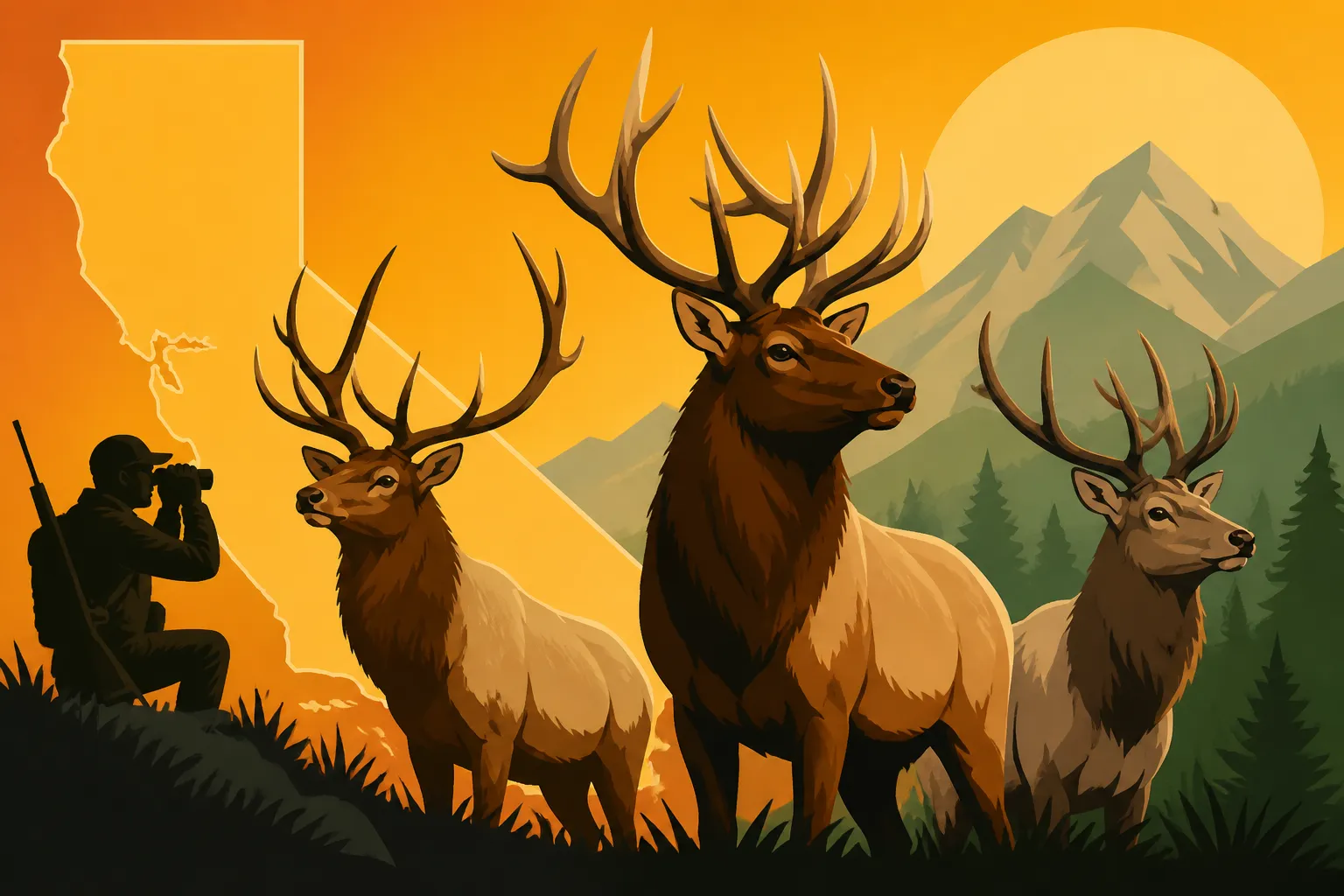
Hunting California’s Three Elk Species
For many California hunters, chasing a majestic elk is the ultimate dream, often feeling like an impossible feat given the notoriously tough draw odds and the elusive nature of these incredible animals. It’s not just about drawing a tag; it’s about understanding the subtle differences between our state’s three distinct elk species, each demanding unique strategies in vastly different terrains. This guide will walk you through everything you need to know to pursue Tule, Roosevelt, and Rocky Mountain elk in the Golden State, from the application process to field care, helping you transform that distant dream into a tangible hunting plan.
Understanding California's Majestic Elk Species
California is a unique hunting state, not just for its diverse landscapes, but for being home to three distinct subspecies of elk. Each has its own story of survival and recovery, and each presents a unique challenge for the hunter. You can't just hunt "elk" here; you have to know which elk you're chasing, where they live, and how they behave.
Tule Elk: The California Native
If you've heard anything about California elk, chances are you've heard of the Tule elk. These are truly special animals, endemic to California, meaning they aren't found anywhere else in the world. Their story is one of dramatic decline and inspiring recovery, a testament to dedicated conservation efforts.
Their History and Resurgence
At one point, Tule elk roamed vast swaths of California in herds numbering in the hundreds of thousands. They were a dominant presence in the state's grasslands and oak woodlands. However, the Gold Rush era and subsequent agricultural development nearly wiped them out. By the 1870s, it's estimated that fewer than ten Tule elk remained, confined to a single private ranch in the San Joaquin Valley. It’s a heartbreaking example of how quickly wildlife populations can vanish without protection. Thankfully, visionary landowners and later, state and federal agencies, stepped in. Through careful management, reintroductions, and habitat protection, Tule elk populations have slowly but steadily recovered. Today, there are over 5,700 Tule elk spread across 22 herds, a remarkable turnaround from the brink of extinction. This recovery is why drawing a Tule elk tag, while still incredibly difficult, offers a chance to participate in a true conservation success story.
Key Habitats and Behaviors
Tule elk are primarily animals of open grasslands, oak savannas, and wetlands. You’ll find them in places like the Carrizo Plain National Monument, Cache Creek Wildlife Area, and various refuges and private ranches within the Central Valley and coastal foothills. Their habitat selection is largely driven by access to forage and water, and they are incredibly adaptable to arid conditions compared to their larger cousins. In summer, they'll graze on green grasses and forbs, often retreating to dense cover or shaded river bottoms during the heat of the day. As seasons change, they might shift to browse on shrubs or graze on agricultural fields if available. Understanding these seasonal movements and their preference for specific types of cover is crucial for successful scouting. They often graze in the mornings and evenings, bedding down in thicker brush or tall grass during midday. Keep an eye out for wallows, where bulls will roll in mud to cool down and cover themselves in scent, and rubs on smaller trees and shrubs, indicating their presence.
Distinguishing Features and Size
Tule elk are the smallest of North American elk subspecies, often weighing between 400-500 pounds for a bull and 300-400 pounds for a cow. While "small" for an elk, they are still substantial animals! Their coats are typically a lighter, tawny brown, often appearing almost creamy on their flanks, with a distinctive dark brown neck and legs. Their antlers are typically compact compared to Rocky Mountain elk, often with less mass but still exhibiting impressive spread and multiple points. They also tend to have a shorter face and a less pronounced "roar" during the rut compared to other elk, though it's still an incredible sound to hear in the field. Judging a Tule bull, especially a mature one, requires understanding these nuances of their physical appearance.
Roosevelt Elk: The Coastal Giants
Moving north along California's rugged coast, we encounter the magnificent Roosevelt elk. These are the bruisers of the coastal rainforests, a completely different beast from the Tule elk, both in size and temperament.
Where They Roam in the Northwest
Roosevelt elk are found primarily in the dense, temperate rainforests of California's northwestern counties, particularly Humboldt and Del Norte. Their range extends into the iconic Redwood National and State Parks and surrounding national forests like Six Rivers. This is a land of towering redwoods, dense underbrush, perpetual fog, and significant rainfall – a stark contrast to the Tule elk's open grasslands. Hunting Roosevelt elk means embracing thick cover, wet conditions, and often steep, unforgiving terrain. Their populations are robust in these areas, and while tags are still limited, the opportunity to hunt them in their ancient, primeval habitat is truly a bucket-list experience.
Their Forested Environment and Diet
Unlike Tule elk, Roosevelt elk are primarily forest dwellers. They thrive in the lush, green environments provided by the coastal redwood and mixed-conifer forests. Their diet consists of a wide variety of grasses, forbs, ferns, and browse from shrubs and young trees. They often utilize clear-cuts and forest edges for feeding, where sunlight penetrates the canopy and encourages new growth. You'll find them moving through incredibly thick brush, which they navigate with surprising grace despite their large size. Wallows are also common in these damp environments, and you'll often encounter fresh tracks and scat along old logging roads and game trails. Their movements are often dictated by the availability of quality forage and bedding cover, and they can be incredibly difficult to spot in the dense vegetation.
Recognizing Roosevelt Characteristics
Roosevelt elk are the largest subspecies of elk in North America, with bulls often exceeding 800-1000 pounds and standing significantly taller at the shoulder than other elk. Their coats are generally darker brown, almost chocolate-colored, with a lighter rump patch. Their antlers are also massive, characterized by heavy beams and long, sweeping tines, often forming a "crown" or "club" at the end. These antlers are perfectly adapted for pushing through dense brush and asserting dominance within their forest habitat. Hearing a Roosevelt bull bugle echo through a redwood canyon is an unforgettable experience, a deep, resonant sound that conveys their immense power. Field judging these giants requires looking for overall body size, neck mass, and the impressive configuration of their antlers.
Rocky Mountain Elk: The Eastern Sierra Behemoths
Finally, we turn our attention to the Rocky Mountain elk, found in California's northeastern corner, bordering Oregon and Nevada. These are the classic elk of the West, familiar to many, but with their own unique California twist.
Their Range and Introduction History
Rocky Mountain elk are not native to California but were introduced from other western states, primarily Wyoming, in the early to mid-20th century. They primarily inhabit the Modoc Plateau, Warner Mountains, and parts of the High Sierra on the eastern side, often in areas dominated by sagebrush, pine forests, and high-elevation meadows. These regions offer a mix of open country for grazing and timbered slopes for cover and bedding. Their presence adds another layer of incredible big game hunting to California, offering an experience closer to what many envision as a "western elk hunt." Populations here are healthy, benefiting from good habitat and careful management.
Life in the High Desert and Mountain Transitions
Hunting Rocky Mountain elk in California means navigating diverse and often challenging terrain. You’ll find yourself in sagebrush flats, pinyon-juniper woodlands, ponderosa pine forests, and high-alpine meadows. Like their counterparts in other states, these elk are known for their migratory patterns, moving between higher elevations in summer to lower, more protected areas for winter. Their diet is varied, including grasses, forbs, and browse from shrubs like sagebrush. Water sources are critical in these arid environments, especially during the warmer months, and often dictate elk movement. Understanding these transition zones and migration corridors is key to finding success. The landscape offers expansive glassing opportunities but also vast distances to cover, demanding physical fitness and meticulous scouting.
Identifying Rocky Mountain Elk Traits
Rocky Mountain elk are large, impressive animals, with bulls typically weighing between 600-900 pounds. Their coats are usually a medium brown, with a distinctly yellowish or cream-colored rump patch and a dark brown mane on their neck. Their antlers are iconic, long, slender, and symmetrical, often reaching impressive lengths with multiple, well-defined points, including the distinct "royal" tines. They are known for their powerful bugles during the rut, a multi-faceted vocalization that signals their presence across vast distances. When you're Calling a Bull Elk in September in these areas, you'll hear that unmistakable bugle carry for miles. Recognizing a mature bull involves assessing antler length, mass, and overall symmetry, along with body size.
Navigating California's Elk Tag Drawing System
Let's be honest, getting an elk tag in California is tough. It’s a draw-only system, and the odds can be brutal. But don't let that discourage you. With a clear understanding of the process, strategic application, and a dose of patience, it is absolutely possible to draw one of these coveted tags. This is where your dream begins, long before you ever set foot in the field.
The Big Game Drawing: Your First Hurdle
California uses a bonus point system for its big game drawings, including elk. This means every year you apply and don't draw, you earn a bonus point, increasing your odds slightly for the next year. It’s a long game, for sure, but consistency is key.
Understanding the Application Process and Deadlines
The application process is handled through the California Department of Fish and Wildlife's (CDFW) online license sales system. You'll need a valid California hunting license first. Then, you can apply for elk tags, typically with an application window opening in the spring and results announced in June or July. It’s crucial to pay close attention to the specific dates each year, as they can shift slightly. You'll select your preferred elk hunt zones/units, typically listing up to three choices, and specify the elk species (Tule, Roosevelt, or Rocky Mountain). It's a non-refundable application fee, so make sure your choices are well-researched. For a detailed breakdown of the system, check out The California Big Game Drawing Explained.
Preference Points vs. Bonus Points
California operates on a bonus point system, not a preference point system. This is an important distinction. With a preference point system, the person with the most points always draws first. In a bonus point system, your accumulated points give you additional chances in the draw, but it's still a lottery. Each point you have gives you an extra "ticket" in the drawing pool. So, if you have 10 points, you get 11 chances (your current application plus 10 bonus points). This means someone with fewer points can still draw a tag, which can be frustrating but also keeps hope alive for everyone. The long-term strategy, however, is to consistently apply every year to build those points. Even if you don't draw, you're investing in your future elk hunt.
Strategies for Maximizing Your Chances
To maximize your chances, research is paramount. Look at past draw statistics for each elk hunt unit. Some units have significantly better odds than others, often because they are less desirable due to difficult terrain, lower elk density, or specific access challenges. While everyone dreams of a trophy bull unit, applying for units with slightly higher draw odds might get you an elk tag sooner. Consider applying for antlerless tags, which typically have better odds than bull tags, if your primary goal is simply to hunt elk. Also, look at the hunt dates; some early or late season hunts might be less popular. Tools like GoHunt's insider service can be invaluable here, providing detailed draw odds, harvest statistics, and unit breakdowns to help you make informed decisions. They compile all the data so you don't have to wade through endless CDFW reports.
Draw Odds and Realistic Expectations
Let's be real: California elk tags are a golden ticket. Understanding the draw odds means managing your expectations and making smart choices.
California Elk Tag Draw Odds by Species
Generally, Tule elk tags tend to have the lowest draw odds due to the limited number of permits and the popularity of hunting this unique species. Roosevelt elk tags, especially in the more accessible units, can also be very challenging to draw. Rocky Mountain elk tags might offer slightly better odds in some units, but they are still highly sought after. For a comprehensive look at the specific odds for each species and unit, you can review the California Elk Tag Draw Odds by Species data that CDFW publishes annually. This data is your best friend when making your application choices. It's tough, but knowing the numbers helps you plan realistically.
Analyzing Past Draw Statistics
Beyond just looking at current odds, dive into the historical data. Have certain units consistently had better odds? Have the number of tags issued changed over the years? What’s the success rate for each unit? High success rates often mean tough draw odds, but also indicate a good population of elk. GoHunt, for instance, provides fantastic tools to visualize these trends, showing you how many applicants typically apply for each unit and how many bonus points the successful applicants had. This kind of detailed analysis can help you identify units that might be slightly overlooked or where a particular hunt choice has a marginally better chance. Don't just apply blindly; use the data to your advantage.
Strategies for Maximizing Your Chances
Beyond selecting less popular units, consider applying as a party. While this doesn't improve your odds for individual tags, if one person in the party draws, everyone in the party draws. This can be a great way to experience a hunt with friends or family, especially if one person has a significant number of bonus points. Also, always apply for the bonus point only option if you don't want to hunt a specific unit that year but still want to build points. Missing a year means missing a point, setting you back in the long game. Patience, persistence, and strategic choices are the pillars of drawing a California elk tag.
Non-Resident Opportunities and Landowner Tags
If you're an out-of-state hunter or have access to private land, there are other avenues, albeit often more expensive, to pursue elk in California.
California's One-Tag-Per-Nonresident Elk Rule
California has a strict rule for non-residents: only one elk tag statewide is allocated to non-residents each year through the general draw. This makes drawing as a non-resident incredibly difficult, if not virtually impossible, through the standard lottery. For more details on this, see California's One-Tag-Per-Nonresident Elk Rule. It’s a harsh reality, but it’s a policy designed to prioritize resident hunters. However, this doesn't mean non-residents are entirely out of luck.
Exploring Private Land Access and Costs
For non-residents, and even for residents frustrated with the draw, private land opportunities can offer a viable path. Many large ranches in elk country offer guided hunts, and securing one of these packages often means a guaranteed tag. These hunts are considerably more expensive, ranging from several thousand dollars to tens of thousands, depending on the outfitter and the trophy potential. However, they provide an immediate opportunity to hunt without waiting years (or decades) in the draw. It's a significant investment, but for those dedicated to hunting a California elk, it's an option to seriously consider. Building relationships with landowners in elk country can also open doors, though this takes time and effort.
Understanding California Tule Elk Landowner Tag Costs
California also has a limited number of landowner tags available, primarily for Tule elk. These tags are allocated to landowners whose properties support elk populations, usually as a way to manage herd health or address depredation issues. These tags are then typically sold by the landowner, often through outfitters or brokers, and can be quite costly. California Tule Elk Landowner Tag Costs can easily run into the five figures, sometimes even higher for prime units with proven trophy potential. These tags bypass the general draw, offering a guaranteed opportunity. While expensive, they represent a legitimate avenue for hunters with the financial means to pursue a California elk without the lottery uncertainty.
Essential Gear for California Elk Hunting
Hunting California's diverse elk country demands more than just a rifle and some boots. You'll be traversing everything from arid plains to dense rainforests and steep mountainsides, often in rapidly changing weather. Having the right gear isn't just about comfort; it's about safety, efficiency, and ultimately, success. Don't skimp on your gear; it's an investment in your hunt.
Rifles, Ammunition, and Optics
Your primary tools for harvesting an elk are your rifle and ammunition, backed up by quality optics that let you see the game.
Rifles Suited to California's Non-Lead Ballistics
California's statewide non-lead ammunition requirement means your rifle choice, and more importantly, your ammunition, needs careful consideration. Elk are large, tough animals, so you'll want a rifle chambered in a cartridge with sufficient power and kinetic energy to deliver a clean, ethical kill. Common calibers like .30-06 Springfield, .300 Winchester Magnum, 7mm Remington Magnum, and even .270 Winchester are popular and effective for elk, especially with modern non-lead bullets. However, it's not just about the caliber; it's about projectile construction. Ensure your rifle can consistently shoot accurate groups with your chosen non-lead ammunition. For more on this, consult Rifles and Calibers for California Big Game to ensure your setup is adequate and legal.
Choosing Non-Lead Ammunition for Larger Game
This is absolutely critical. California requires the use of non-lead ammunition for all hunting statewide. For elk, you'll want well-constructed, heavy-for-caliber copper monolithic bullets that retain their weight and penetrate deeply. Brands like Barnes TSX or TTSX, Hornady GMX, Federal Trophy Copper, and Nosler E-Tip are excellent choices. Test different bullet weights and brands in your rifle to find what shoots most accurately. You might find that your rifle prefers a different bullet weight with copper than it did with lead. This testing is paramount for confidence in the field. Remember, Choosing Non-Lead Rifle Ammunition in California isn't just a legal requirement; it's an ethical one for humane harvest.
Optics for California's Varied Terrain
High-quality optics are non-negotiable for elk hunting, especially in California's expansive landscapes. You'll need a good pair of binoculars (10×42 or 10×50 are great all-around choices) for general glassing, a spotting scope (15-45x or 20-60x) for evaluating distant animals, and a reliable rangefinder. In the wide-open spaces where you might find Rocky Mountain or Tule elk, the ability to pick apart distant hillsides and judge animals from afar is paramount. For Roosevelt elk in timber, optics are still crucial for discerning movement and identifying animals in shadows. Invest in the best glass you can afford; it will significantly increase your success and enjoyment. Learn more about selecting the right tools with Optics for California's Open-Country Deer Hunting.
Packs, Boots, and Layering Systems
Your body is your most important tool, and what you put on it and carry on your back can make or break your hunt.
Packs for a Multi-Day California Backcountry Elk Hunt
Elk hunting often involves covering significant distances, and if you're lucky enough to harvest an animal, packing out hundreds of pounds of meat and antlers. A comfortable, durable pack with a good external frame (or a robust internal frame capable of handling heavy loads) is essential. Look for packs in the 4,000-7,000 cubic inch range for multi-day trips, with load-hauling capabilities. Mystery Ranch, Kifaru, and Stone Glacier are popular brands known for their robust hunting packs. A good pack should allow you to carry all your essentials for scouting, hunting, and most importantly, get your meat out efficiently. This investment will pay dividends. Dive deeper into pack selection with Packs and Gear for a Backcountry Elk Hunt.
Boots and Clothing for California's Varied Terrain
Your feet are your foundation, so proper boots are crucial. For Roosevelt elk in the wet, steep northwest, you'll want waterproof, supportive boots with excellent ankle support and aggressive traction. For Tule elk in dry, potentially hot conditions, lighter, breathable boots might be preferred. For Rocky Mountain elk in diverse high-country, a sturdy, waterproof, and comfortable hiking boot that can handle rocky terrain and potential snow is ideal. Brands like Kenetrek, Schnee's, and Crispi are favorites among elk hunters. Pair these with quality wool or synthetic socks to prevent blisters. For a general guide on footwear, check out Boots and Clothing for California's Varied Terrain.
Layering for Unpredictable Mountain Weather
California's weather, especially in the mountains, can change dramatically in a single day. A proper layering system allows you to adapt. Start with a moisture-wicking base layer (merino wool or synthetic) to manage sweat. Add an insulating mid-layer (fleece or puff jacket) for warmth. Your outer layer should be windproof and waterproof to protect against rain, snow, or harsh winds. Having both light and heavy insulation layers allows you to adjust to dawn chills, midday heat, and evening freezes. Avoid cotton, as it absorbs moisture and loses its insulating properties when wet.
Calling, GPS, and Safety Equipment
Beyond the essentials, these tools can greatly enhance your hunting experience and keep you safe.
Calling a Bull Elk in September
Elk are vocal animals, especially during the rut, which often peaks in September. Learning to use various elk calls – bugles, cow calls, and calf calls – can be incredibly effective, particularly for Roosevelt and Rocky Mountain elk. A good bugle can challenge a bull to come in, while cow and calf calls can pique curiosity. Practice before the season to master the sounds and understand when to use aggressive versus soft calling. You'll find specific advice on techniques in Calling a Bull Elk in September. Remember, sometimes less is more with calling, especially with pressured elk.
Mapping Apps and GPS for California Public Land
Modern technology has revolutionized navigation. A reliable GPS unit or, more commonly, a robust mapping app on your smartphone (like onX Hunt or Gaia GPS) is indispensable. These apps provide detailed topographical maps, satellite imagery, public/private land boundaries, and the ability to mark waypoints, track your movements, and navigate in real-time. Make sure to download offline maps before heading into areas without cell service, which is common in many elk hunting zones. These tools are crucial for Best GPS App for California Public Land and for staying oriented, especially in vast or dense terrain.
Emergency Gear
Safety first, always. A comprehensive first-aid kit is non-negotiable. Consider a satellite communication device (like a Garmin InReach or Zoleo) for remote areas where cell service is non-existent, allowing you to send emergency messages or check in with loved ones. A headlamp with extra batteries, a fire starter, a small saw or hatchet, and enough food and water for an extra day are also crucial. For those hunting in bear country (which includes Roosevelt and Rocky Mountain elk habitat), bear spray is a wise addition, carried in an accessible holster.
Hunting Strategies for Tule Elk
Hunting Tule elk presents a unique set of challenges and rewards. Unlike their forest-dwelling cousins, Tule elk thrive in more open environments, demanding a keen eye, patience, and a well-executed spot-and-stalk approach.
Scouting and Pre-Season Preparation
Your Tule elk hunt begins long before opening day. Understanding their localized movements and preferred areas is key to success.
Identifying Tule Elk Habitats in the Central Valley
Tule elk herds are scattered across specific regions, primarily in the Central Valley and coastal ranges, often associated with wildlife areas, national monuments, and large private ranches. Areas like the Carrizo Plain National Monument, Cache Creek Wildlife Area, Grizzly Island Wildlife Area, and various units around San Luis Reservoir are prime Tule elk country. Research the specific unit your tag is for, and then delve into maps. Look for expansive grasslands, oak woodlands that provide cover, and crucially, reliable water sources. Even small changes in terrain, like a low ridge or a creek bottom, can concentrate elk. Focus your initial scouting on these areas to narrow down your search.
Reading Sign and Scouting California Public Land Before Season
Early season scouting, often in late spring or early summer, can be incredibly productive. Look for fresh tracks around waterholes, wallows, and trails. Examine rubs on small trees and bushes, and look for fresh scat. Pay attention to how elk use the landscape: where they bed, where they feed, and their travel corridors between the two. Scouting California Public Land Before Season is not just about finding elk, it's about understanding their patterns and identifying key ambush points or glassing knobs. Bring your binoculars and spotting scope, and spend hours observing.
Using Aerial Imagery and Digital Scouting Tools
In today's hunting world, digital scouting is invaluable. Utilize mapping applications like onX Hunt or the GoHunt mapping platform (which often includes detailed unit information and public land layers). These tools allow you to study topography, identify potential bedding and feeding areas, locate water, and pinpoint access points and escape routes from the comfort of your home. You can mark potential glassing locations, plan your approach routes, and identify areas of thicker cover. This digital reconnaissance can save you countless hours of unproductive walking in the field and help you prioritize your in-person scouting efforts.
Spot-and-Stalk in Open Grasslands
The classic Tule elk hunt often revolves around effective spot-and-stalk tactics.
The Art of Glassing
Tule elk country often features wide-open landscapes, making glassing your most powerful tool. Find a high vantage point at first light or last light and systematically pick apart the landscape with your binoculars and spotting scope. Look for subtle movements, a flick of an ear, a patch of off-color hide, or the tell-tale gleam of an antler. Don't just scan; grid the area meticulously, pausing to let your eyes adjust. Patience is key. You might spend hours glassing before you spot an animal, but it’s far more efficient than aimlessly walking. The principles apply similar to Glassing a Canyon for a Bedded Buck, just scale up for elk.
Using Terrain to Your Advantage
Once you've spotted elk, the stalk begins. Use every fold, ridge, and dip in the terrain to conceal your approach. Tule elk have excellent eyesight and hearing, so staying out of sight and minimizing noise is crucial. Plan your route carefully, paying close attention to wind direction. The wind is your ultimate ally or worst enemy; a shift can blow your cover instantly. Often, you'll need to make wide detours to stay hidden and maintain a favorable wind.
Making the Stalk and Ethical Shot Placement
Approach slowly, pausing frequently to re-evaluate the elk's position and behavior. As you get closer, every step matters. Avoid breaking the skyline. When you reach your desired shooting position, take your time to set up for an ethical shot. For elk, aim for the vitals (heart/lungs), a broadside or quartering-away shot is ideal. Practice shooting from various field positions before your hunt so you are confident when the moment of truth arrives. Be prepared for a follow-up shot if necessary.
Water Sources and Food Habits
Tule elk are heavily influenced by the availability of food and water, especially in their often arid environments.
Key Forage Areas and Seasonal Changes
Their diet consists primarily of grasses and forbs. In the spring, they’ll graze on lush new growth. As summer progresses and grasses dry out, they might shift to browsing on shrubs, acorns, or move into areas with greener forage, such as irrigated pastures if available. Understanding these seasonal shifts in forage can help you predict where elk will be feeding. In drought years, the availability of green feed will be even more critical.
Hunting Water Sources, Especially in Dry Years
Water is a magnet for Tule elk, especially during the warmer months and in dry years. Identifying reliable springs, stock ponds, or river bottoms can provide excellent ambush opportunities, particularly in the afternoons. Elk will often come to water during the heat of the day or in the evening. Setting up a ground blind downwind of a water source can be a very effective strategy. Ensure your blind is well-brushed in and set up far enough in advance that the elk habituate to its presence.
Understanding Tule Elk Daily Movements
Tule elk typically follow a routine of feeding in the early morning and late evening, bedding down during the midday heat. They'll travel between these feeding and bedding areas, often along established trails. Learning these patterns through scouting and observation allows you to intercept them. During the rut, however, bulls can be more active throughout the day as they search for cows and challenge other bulls. This is when calling can be most effective.
Hunting Strategies for Roosevelt Elk
Hunting Roosevelt elk is a completely different ballgame from hunting Tule elk. These are forest animals, requiring a stealthy, patient approach through some of California's thickest, wettest, and most unforgiving terrain.
Navigating Dense Redwood and Coastal Forests
The sheer density of the vegetation in Roosevelt elk country can be overwhelming, but understanding how elk move through it is key.
Understanding Roosevelt Elk Movement in Heavy Cover
Roosevelt elk are masters of their forested domain. They move through thick brush, tangles of salal, and dense timber with surprising stealth. They'll often utilize old logging roads, game trails, and natural openings to navigate, but they also aren't afraid to push through seemingly impenetrable cover. Focus on areas where different habitat types meet, such as the edge of a clear-cut and dense timber, or where a riparian corridor cuts through a hillside. These "edge" areas often act as travel corridors and feeding grounds. Look for fresh tracks on soft ground, broken branches, and rubs on larger trees.
Still-Hunting Techniques in Timber
Still-hunting is one of the most effective strategies for Roosevelt elk. This involves moving incredibly slowly, pausing frequently, and using your eyes and ears to detect elk before they detect you. Take one or two steps, then stop and glass, listening intently. The forest can be noisy, so learn to distinguish natural sounds from animal sounds. You're looking for the subtle flick of an ear, the shine of an antler, or a patch of hair. The goal is to cover ground silently and deliberately. This is similar to Still-Hunting California's Sierra Nevada Timber, but with even denser cover and often wetter conditions.
Finding Travel Corridors and Bedding Areas
Roosevelt elk will typically feed in more open areas (clear-cuts, old burns, meadows) and then retreat to dense timber for bedding during the day. Identify these transition zones. Look for benches, saddles, and dense pockets of cover on north-facing slopes, which offer shade and thermal protection. Elk often create distinct trails between feeding and bedding areas. These trails, especially those with fresh sign, are excellent places to set up an ambush during early morning or late evening.
Calling Tactics in Timber
While glassing is challenging, calling can be highly effective in the thick Roosevelt elk woods.
When and How to Use Bugles and Cow Calls
The rut is prime time for calling Roosevelt elk. Bull bugles are deep, guttural, and impressive. Using a bull bugle can challenge an dominant bull or attract a satellite bull. Cow and calf calls, however, are often more effective for drawing in wary animals. A series of soft mews and chirps can pique an elk's curiosity. Be judicious with calling; don't overcall, and always set up in a position where you have good shooting lanes and the wind is in your favor. Knowing when to be aggressive and when to be subtle comes with experience.
Setting Up for Close Encounters
When calling, position yourself strategically. Have a good backdrop to break up your silhouette, and ensure you have clear shooting lanes in the direction you expect the elk to approach. It's often beneficial to have a caller positioned behind you, drawing the elk past your shooting lane, focusing their attention away from you. This is crucial in dense cover where visibility is limited. Be prepared for a close-range shot; Roosevelt elk can appear out of the brush very quickly.
Deciphering Elk Vocalizations
Spend time listening to elk calls online or in the field to understand the different vocalizations. A soft "mew" can be a contact call, while a louder, drawn-out "bawl" might indicate distress or agitation. Understanding what the elk are saying can help you respond appropriately and increase your chances of success. Are they bugling back aggressively? Are they responding with soft cow calls, indicating they might be curious but wary?
Reading the Rainforest Environment
Hunting in a rainforest environment means adapting to unique conditions.
Sign in Wet Conditions
Rain and dampness are constant companions in Roosevelt elk country. This can be a blessing and a curse. Wet ground means excellent tracking conditions; fresh tracks, especially from a heavy bull, are easy to spot. However, rain also washes away older sign, so you're always looking for what's truly fresh. Look for wallows, which are often muddy and heavily used, and fresh droppings. Scat in wet conditions can be a clear indicator of recent elk presence.
Food Sources in the Coastal Range
The lush coastal environment provides abundant forage. Elk will feed on a variety of grasses, ferns, and the tender shoots of shrubs. Areas with recent timber harvest (clear-cuts) are often excellent feeding grounds due to the explosion of new growth. Identify these areas on your maps and scout them for fresh sign. Remember, elk need food, water, and cover, and the coastal range provides all three in abundance, so finding where they concentrate takes effort.
Thermals and Wind in Dense Timber
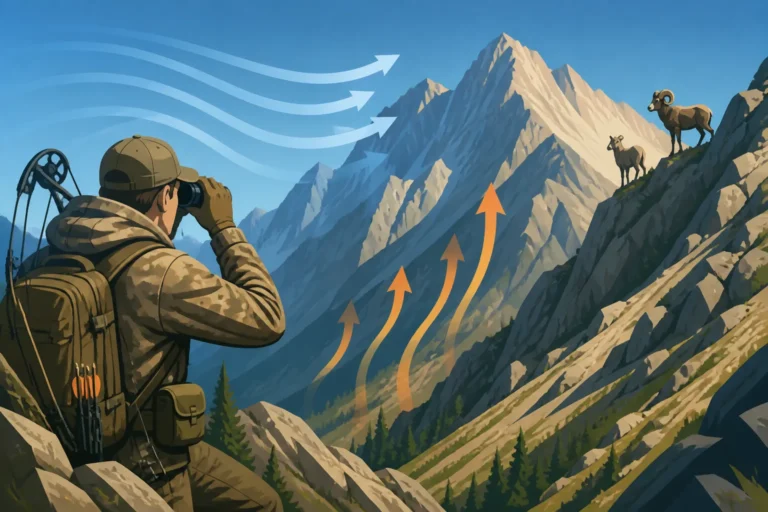
Even in dense timber, wind and thermals play a critical role. In the mornings, thermals generally rise, pulling your scent uphill. In the evenings, they fall, carrying your scent downhill. In dense cover, the wind can be swirling and unpredictable. Always try to position yourself downwind of where you expect the elk to be. Carry a wind indicator (like a small bottle of powder) and use it frequently to monitor air currents, even if there’s no perceptible breeze. This is a skill that takes practice and attention to detail.
Hunting Strategies for Rocky Mountain Elk
Rocky Mountain elk in California offer a hunt experience that often blends vast open country with mountainous timber. It’s physically demanding but incredibly rewarding.
High-Country and Sagebrush Country Approaches
The Modoc Plateau and Eastern Sierra offer diverse terrains, requiring a blend of long-range glassing and patient stalking.
Covering Ground in Expansive Landscapes
Rocky Mountain elk often inhabit vast landscapes, from wide-open sagebrush flats to high-elevation timber. This means you'll need to cover a lot of ground, often on foot, to find them. Be prepared for long hikes, potentially off-trail. Physical fitness is paramount for this type of hunting. Utilize old logging roads, ATV trails (where legal), and ridge tops to access remote areas. Planning your approach to minimize noise and maximize visibility is crucial.
Glassing Distant Basins and Ridges
Similar to Tule elk hunting, glassing is your primary tool for Rocky Mountain elk, but on an even grander scale. Find a high vantage point at dawn or dusk and systematically pick apart distant basins, timber edges, and clearings. Use your spotting scope to confirm if those specks are indeed elk. You're looking for the characteristic shapes, movements, or colors that stand out against the background. Patience is key. This is very similar to Glassing Mule Deer in Open California Country, but with larger game that can cover more ground.
Adapting to Varying Elevations and Vegetation
The elevation changes in Rocky Mountain elk country can be significant. One moment you might be in dry, sagebrush flats, the next in dense pine forest, and then ascending into alpine meadows. Each of these zones demands a slightly different hunting approach. Elk will use different vegetation types for feeding, bedding, and travel, depending on the time of day, season, and weather. Be prepared to adapt your strategy on the fly, focusing on current food sources and areas of security cover.
Migration Patterns and Seasonal Movements
Rocky Mountain elk are often migratory, moving between summer and winter ranges.
Tracking Elk Movements Between Summer and Winter Ranges
Understanding the general migration corridors and seasonal movements of elk in your unit can provide a significant advantage. Elk will typically move to higher elevations during summer to take advantage of lush feed and cooler temperatures, and then descend to lower, more protected winter ranges as snow accumulates. Hunting during the shoulder seasons (early archery or late rifle) might mean intercepting elk in these transition areas. Deep snow can push elk down quickly, concentrating them in lower basins.
Hunting Early Season vs. Late Season
Early season hunts (often archery) usually mean elk are still in their high-country summer ranges. Access can be more challenging due to elevation, but the weather is generally milder. Late-season hunts, particularly rifle seasons, often coincide with colder weather and snow, which can push elk to lower elevations, sometimes making them more accessible but also more concentrated. Each season offers unique opportunities and challenges; research your specific tag dates and expected elk behavior.
Impact of Snow and Weather on Elk Location
Snowfall is a major factor in Rocky Mountain elk hunting. A fresh blanket of snow makes tracking much easier, but heavy snow can limit access and make travel arduous. Elk will seek out areas of less snow or protected timbered slopes during severe weather. Pay close attention to weather forecasts leading up to and during your hunt. A sudden cold front or heavy snowfall can completely change elk locations and behavior, sometimes for the better.
Locating Remote Herds
Finding unpressured elk in public land can be the key to success.
Finding Unpressured Areas on Public Land
With California's hunting pressure, finding areas where elk haven't been constantly harassed is critical. This often means getting off the beaten path. Look at maps for areas that are difficult to access, either due to distance from roads, steep terrain, or dense timber. These "backcountry" areas often hold older, wiser bulls that have learned to avoid human contact. Be willing to hike further and deeper than most other hunters.
Multi-day Backpacking Hunts
For truly remote areas, a multi-day backpacking hunt is often necessary. This allows you to get deep into elk country, set up a spike camp, and hunt far from any vehicle access. This is a demanding style of hunting, requiring careful planning for food, water, and shelter. But the rewards can be immense, as you're likely to encounter less pressured animals and experience true wilderness hunting. Make sure your Packs and Gear for a Backcountry Elk Hunt is up to the task.
Using Technology to Identify Potential Hotspots
Leverage your digital scouting tools like GoHunt, which can show layers of public land, wilderness areas, roads, and even historical burn scars. Burn scars, especially a few years after a fire, can create fantastic elk habitat with abundant new growth. Identifying these potential hotspots before you even leave home can give you a significant advantage in narrowing down your search area. Look for areas with a good mix of dense cover, open feeding areas, and water, far from roads.
Field Care and Post-Harvest Considerations
Congratulations! You've successfully harvested a California elk. The work isn't over yet; in fact, some of the most critical work begins now. Proper field care is essential to ensure your hard-earned venison is of the highest quality.
Field Dressing and Meat Care
This step is critical, especially given California's often warm hunting temperatures.
Quick and Efficient Field Dressing Techniques
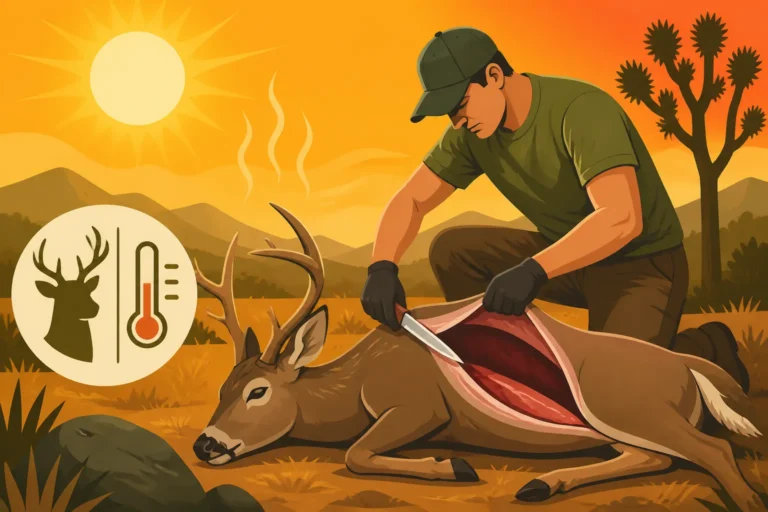
The moment your elk is down, the clock starts ticking, especially if temperatures are mild or hot. Your priority is to get the guts out as quickly as possible to begin cooling the carcass. Make clean, efficient cuts to open the body cavity and remove all internal organs. Wear gloves to maintain hygiene. The goal is to minimize contamination and maximize cooling. Be prepared with a sharp knife, game bags, and possibly a bone saw if you plan to quarter in the field.
Aging Venison in Hot Weather
If you're hunting early season elk, particularly Tule elk, you'll often be dealing with warm weather. Cooling the meat rapidly is paramount. After field dressing, skinning the animal immediately will help facilitate cooling. Hang the quarters in game bags in a shaded, breezy spot. If temperatures are consistently above 40-50°F, you'll need to get the meat on ice in coolers as soon as possible. Never let meat sit in pooling water in a cooler; use frozen water bottles or block ice to keep it cold and dry. For more on this, check out Aging Venison in Hot Weather.
Proper Game Bag Usage and Cooling the Meat
Quality game bags are essential. They protect the meat from flies, dirt, and debris while allowing air circulation to promote cooling. Use large, breathable game bags specifically designed for elk or large game. After skinning and quartering, place each quarter into its own bag. Get the meat off the ground and hung if possible. If you must transport it before fully cooled, pack it loosely in a truck bed, allowing air to circulate around the bags, rather than stacking it tightly.
Packing Out Your Elk
Packing out an elk, especially a Roosevelt or Rocky Mountain bull, is a monumental task. It will test your physical and mental limits.
Strategies for Moving Large Game in Difficult Terrain
An average elk can yield 150-300 pounds of boned-out meat, plus the hide and antlers. This is too much for one person to carry in one trip, especially in steep or rugged terrain. Quartering the animal in the field is almost always necessary. Depending on the terrain and distance, you might bone out the meat to reduce weight. Plan for multiple trips or bring a hunting partner (or two, or three!). A good external frame pack is invaluable here. If you've been working on your fitness, this is where it pays off.
Recovering a Deer From a Steep Canyon
While you're hunting elk, not deer, the principles of Recovering a Deer From a Steep Canyon scale up dramatically. If your elk goes down in a steep canyon, be prepared for an incredibly difficult recovery. Rope, pulleys, and multiple strong individuals can be necessary. Always prioritize safety; don't attempt to recover an animal in a dangerous situation alone. Plan your route carefully, even for the pack out, identifying the path of least resistance.
Utilizing Pack Frames and Game Carts
For packing out, a dedicated external pack frame is the undisputed champion. It allows you to carry heavy, awkward loads more comfortably than an internal frame pack. If you're in relatively flat, open terrain, a game cart can be a lifesaver, allowing you to move heavy quarters more easily. However, carts are useless in steep, rocky, or heavily timbered terrain. Assess your hunting area and plan accordingly. Having a good team makes all the difference for an elk pack out.
Reporting and CWD Testing
Your responsibilities don't end when the meat is packed out.
Mandatory Harvest Reporting
California requires all successful elk hunters to report their harvest to the CDFW. This is typically done online through the Automated License Data System (ALDS) within a specified timeframe, usually immediately after leaving the hunt area or within 30 days. This data is crucial for wildlife managers to monitor herd health, success rates, and set future tag quotas. Failing to report your harvest can result in penalties.
California's Two CWD Testing Zones and Requirements
Chronic Wasting Disease (CWD) is a serious concern for cervids (deer, elk, moose). California has established California's Two CWD Testing Zones where mandatory CWD testing is required for all harvested deer and elk. These zones are currently primarily in eastern California. If you hunt in one of these zones, you are required to submit specific samples (lymph nodes and brainstem) for CWD testing. Be sure to understand these regulations before you hunt.
Handling Venison From a CWD Testing Zone
If you harvest an elk in a CWD testing zone, there are specific regulations regarding the transportation of the carcass out of that zone until test results are available. Typically, only boned-out meat, cleaned skull plates, or taxidermy-ready hides are allowed to leave the zone, to prevent the spread of the prion responsible for CWD. Understand Handling Venison From a CWD Testing Zone fully to avoid any violations and to do your part in preventing the spread of this disease.
Comparing California's Elk Species and Hunt Opportunities
To help you visualize the different opportunities and challenges, here’s a quick comparison of California’s three elk species:
| Feature | Tule Elk | Roosevelt Elk | Rocky Mountain Elk |
|---|---|---|---|
| Native Status | Endemic (Native only to California) | Native | Introduced (from other Western states) |
| Primary Habitat | Open grasslands, oak savannas, wetlands | Dense coastal rainforests, redwood forests | High country, sagebrush, pine forests |
| Typical Bull Weight | 400-500 lbs | 800-1000 lbs | 600-900 lbs |
| Antler Characteristics | Compact, good spread, less mass | Massive, heavy beams, long tines, often crowned | Long, symmetrical beams, distinct "royal" tines |
| Hunt Style | Primarily spot-and-stalk in open country | Still-hunting, calling in dense timber | Glassing vast landscapes, spot-and-stalk, calling |
| Terrain | Rolling hills, plains, riparian corridors | Steep, wet, thick brush, dense timber | Mountains, high desert, varied elevation |
| Draw Odds | Extremely difficult | Very difficult | Difficult |
| Prime Areas | Carrizo Plain, Cache Creek, Grizzly Island | Humboldt, Del Norte counties | Modoc Plateau, Eastern Sierra |
| Physical Demands | Moderate to High (depending on terrain) | Very High (steep, thick, wet) | High (elevation, long distances) |
Disclaimer
Please remember that hunting regulations, season dates, and specific unit information can change annually. Always consult the most current California Department of Fish and Wildlife (CDFW) regulations and hunt proclamations before planning any hunting trip. This guide is for informational purposes only and does not replace official state regulations.