Legal Weapons During California Archery Season
The excitement of California's archery season is truly something special, but it's easy to get tangled up in the specific rules and regulations surrounding what gear you can legally use. With various zones, species, and a constant evolution of hunting technology, knowing your equipment is compliant before you even step foot in the field is paramount. This comprehensive guide will walk you through the legal requirements for bows, arrows, broadheads, and accessories, ensuring you're confidently and ethically prepared for your next California archery adventure.
The Foundation: Understanding California's Basic Archery Equipment Rules
Before you even think about hitting the woods or the high country, you need to be absolutely sure your primary weapon—your bow or crossbow—meets the California Department of Fish and Wildlife (CDFW) standards. These aren't just suggestions; they are the law, designed to ensure humane and ethical harvests. Ignoring them can lead to serious penalties and, more importantly, can compromise your ability to make a clean kill.
General Requirements for Bows and Crossbows
When it comes to the legal specifications for bows and crossbows, California sets clear minimums. For traditional and compound bows, the most critical factor is draw weight. You're required to have a bow with a minimum draw weight of 30 pounds, measured at 28 inches of draw or less. This ensures sufficient kinetic energy to effectively harvest big game animals like deer and bear. Anything less and you risk a superficial wound, which is the last thing any ethical hunter wants. So, before heading out for Bowhunting California's Zone A Season, make sure you've checked that poundage. For instance, if you're pulling a compound bow at 60 pounds, you're well within the legal limits. If you're using a lighter recurve for practice, it might not cut it for game animals.
Crossbows, which have gained popularity for various reasons, also have specific regulations. In California, crossbows are generally allowed during the regular archery season for big game. This is a common point of confusion for many hunters, as some states restrict crossbow use. However, for those using a crossbow, it must have a minimum draw weight of 100 pounds. Additionally, the crossbow must be equipped with a mechanical safety device. This is crucial for safe handling and preventing accidental discharges, especially in rugged terrain. Whether you're considering a new setup or checking your current one, ensuring it meets these specifications is non-negotiable. For a deeper dive into setting up your crossbow correctly, check out our guide on Crossbow Setup for California Archery Rules.
Arrow and Bolt Specifications
Just as important as your bow is the projectile it launches. California also has specific rules governing arrows and bolts, again to promote humane harvesting.
Minimum Arrow/Bolt Length and Weight
When you're out there chasing California big game, the arrow or bolt you're sending downrange needs to meet certain criteria. All arrows and crossbow bolts must be at least 20 inches in length, not including the broadhead. This length ensures stability in flight and provides enough shaft for proper fletching. Imagine trying to shoot a short dart from a powerful bow – it simply wouldn't fly true. Beyond length, there's also a minimum weight requirement. All arrows and bolts must weigh at least six grains per pound of the bow's draw weight. For example, if you're shooting a 60-pound compound bow, your arrow needs to weigh a minimum of 360 grains (60 lbs x 6 grains/lb). This weight ensures adequate momentum and penetration needed to reach vital organs, even after encountering hide and bone. Without sufficient weight, an arrow might not achieve the penetration necessary for a quick, ethical kill. Many modern arrows and bolts easily exceed these minimums, but it's always wise to verify, especially if you're experimenting with lighter shafts. If you're considering Arrow Weight for Elk-Sized Game, you'll definitely want to be on the higher end of these recommendations.
Materials and Construction
Beyond length and weight, the materials and construction of your arrows and bolts are also regulated, though less explicitly. The key here is that they must be constructed of generally accepted archery materials like carbon, aluminum, or wood. What's absolutely forbidden are arrows or bolts that are equipped with an explosive head or any device containing a drug, poison, or tranquilizing compound. This rule is straightforward: your arrow's killing power must come solely from its kinetic energy and the cutting action of the broadhead, not from any chemical or explosive payload. While such items might seem like something out of a movie, the regulations are in place to prevent unethical and inhumane practices. Focus on a well-constructed, straight-flying arrow that matches your bow's performance.
The Business End: Understanding Broadhead Regulations
The broadhead is where the magic happens – or, rather, the ethical harvest. This is the part of your arrow or bolt that actually does the work, and California has specific regulations to ensure it performs its job humanely.
Fixed Blade Broadheads
Fixed blade broadheads are the traditional choice for many archers, known for their reliability and simplicity. However, they are not without specific rules in California.
Requirements for Cutting Diameter and Edges
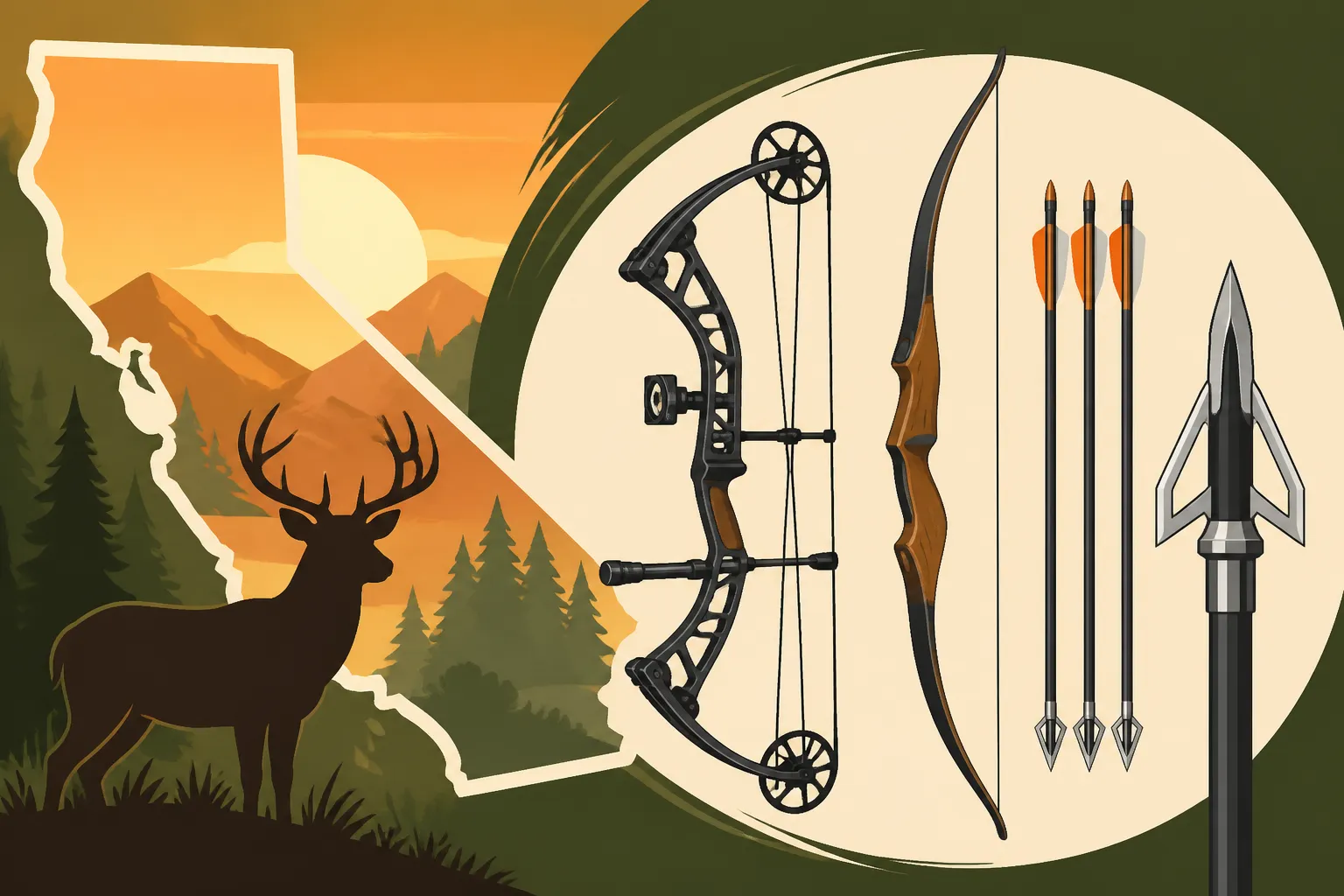
When it comes to fixed blade broadheads, the regulations focus on their effectiveness for clean kills. Your broadhead must have a minimum of two sharp, cutting edges. That means no bullet-point field tips for hunting! These cutting edges must be at least 7/8 inches wide at the widest point, measured perpendicular to the arrow shaft. This minimum cutting diameter ensures that a sufficiently large wound channel is created, leading to rapid blood loss and a quick, ethical harvest. A narrow broadhead might pass through, but without enough cutting surface, the animal could suffer unnecessarily. For instance, a classic three-blade Muzzy broadhead with a 1-3/16 inch cutting diameter easily meets these requirements, providing excellent penetration and cutting action on a broadside deer. Making the right choice here is critical for your success and the animal's welfare, especially when hunting species like the Columbia Blacktail and Mule Deer in California.
Material Restrictions
Similar to arrows, broadheads also have material restrictions. You absolutely cannot use broadheads with any explosive, chemical, or poisonous substance. The intent is clear: the animal must be taken by mechanical damage and blood loss, not by any other means. Furthermore, barbed broadheads are also prohibited. Barbed broadheads have protrusions designed to prevent the arrow from backing out, which causes unnecessary additional injury and makes arrow removal incredibly difficult. Ethical hunting prioritizes a clean, quick kill and minimal suffering, and barbed broadheads go against that principle. Always ensure your broadheads are clean, sharp, and compliant with these strict ethical standards.
Mechanical Broadheads (Expandable)
Mechanical broadheads, also known as expandable broadheads, have become incredibly popular due to their field-point-like flight characteristics and devastating deployed cutting diameters. However, their use in California comes with specific stipulations.
Legal Status and Specific Rules
Mechanical broadheads are indeed legal for big game hunting in California, but with a crucial caveat: they must have a minimum cutting width of at least 7/8 inches when fully expanded. This regulation ensures that even when deployed, the broadhead creates an adequately sized wound channel, consistent with the requirements for fixed blade broadheads. The idea is to prevent the use of mechanicals that might not open fully or provide an insufficient cutting diameter for a humane kill. Many popular mechanical broadheads, such as the Rage Hypodermic or the G5 DeadMeat, feature expanded cutting diameters well over an inch, often 1.5 inches or more, easily meeting this requirement. It's vital to test your mechanical broadheads before the season, not just to ensure they fly true, but also to confirm they deploy correctly and consistently. This is especially important when you’re facing the moment of truth in a place like the rugged terrain of Hunting Coastal Range Oak Woodlands.
Concerns about Reliability and Penetration
While mechanical broadheads offer advantages in flight, some hunters express concerns about their reliability and penetration, particularly on larger, tougher game. The deployment mechanism, while generally robust, can sometimes be affected by impacts with bone or dense hide before full expansion. This means they might not always achieve the same penetration as a stout fixed-blade broadhead. For species like Black Bears in California or the famously tough-skinned Wild Pigs Across California, maximum penetration is absolutely critical. While legal, it’s a personal decision based on your hunting style, target animal, and confidence in your equipment. If you choose mechanicals, select a well-regarded brand with a proven track record, and practice extensively to understand their performance characteristics. Your ethical responsibility is to ensure the most humane harvest possible, and that means being confident in your broadhead choice. For more specific recommendations, our guide on Broadhead Choices for California Blacktail offers excellent insights.
Broadheads to Absolutely Avoid
To reiterate, some broadheads are explicitly illegal and should never be considered for hunting in California.
Barbed and Explosive Broadheads
As mentioned, any broadhead with barbs designed to prevent withdrawal is strictly illegal. These cause undue suffering and complicate game recovery. Similarly, broadheads equipped with explosives, chemicals, or tranquilizers are also prohibited. The philosophy behind these regulations is rooted deeply in ethical hunting practices. The intent is to ensure a humane kill through physical trauma, not through chemical incapacitation or explosive force. Using any of these prohibited broadheads is a serious violation of state law and hunting ethics. Always double-check your gear against the most current CDFW regulations to avoid any missteps.
Legal Archery Accessories and Prohibited Devices
Beyond the bow and broadhead, the tools and gadgets we use can significantly enhance the hunting experience. However, just like the primary weapons, accessories have rules and restrictions in California.
Permitted Archery Accessories
The good news is that most standard archery accessories designed to improve accuracy, comfort, and safety are perfectly legal for use during California's archery season.
Sights, Quivers, and Stabilizers
When you're lining up a shot, having the right sighting system is crucial. Standard pin sights, whether single-pin or multi-pin, are legal. These help you accurately gauge distance and account for arrow drop. Similarly, optical sights that don't project light or use electronics to illuminate the target are also permitted. For example, a quality GoHunt app membership might help you plan your hunt with detailed maps, but your actual bow sight must be compliant. Quivers, whether bow-mounted, hip, or back quivers, are also allowed. They safely hold your arrows, keeping them accessible yet out of the way. Stabilizers, which help balance your bow and reduce vibration, are also legal and widely used by archers seeking tighter groups and a smoother shot. These accessories are all about enhancing the archer's skill and precision, which directly contributes to ethical shot placement.
Release Aids and Rangefinders
Release aids are mechanical devices that help an archer achieve a consistent and clean release of the bowstring, greatly improving accuracy. These are entirely legal and widely used, especially with compound bows. They eliminate finger torque and inconsistencies that can arise from a finger release. Additionally, rangefinders are invaluable tools for archers. Knowing the exact distance to your target is paramount for making an ethical shot, as arrow trajectory changes significantly with distance. Rangefinders, whether handheld or integrated into binoculars, are legal to use to determine distances. However, it's important to clarify that while rangefinders are legal, you cannot use any device that projects a beam of light onto the animal itself, nor can you use sights that are electronically enhanced to illuminate the target while shooting. The goal is fair chase and relying on your skill and natural vision. Using an external rangefinder to confirm yardage before you draw is standard practice and highly encouraged for responsible archery hunting.
Strictly Prohibited Archery Devices
California is quite strict about electronic and technologically advanced devices that could give hunters an unfair advantage or lead to unethical practices.
Electronic Sights and Night Vision Devices
This is where things get really clear: you cannot use any bow sight that contains a computer, battery, or electronic circuitry that projects light onto the target or electronically amplifies ambient light (like night vision) for the purpose of shooting. This means no laser sights, no illuminated reticles that project onto the animal, and no night vision scopes attached to your bow. The intent is to maintain the challenge and fair chase aspect of archery hunting. While you might use a powerful headlamp for Blood Trailing After Dark in California after a shot, actively hunting with illuminated or light-amplifying sights on your weapon is a definite no-go. This includes devices that create an illuminated reticle that appears on the target itself. Similarly, thermal imaging devices and night vision optics are prohibited for hunting at night or to aid in targeting. The hunt should happen during legal shooting hours, relying on natural light and your keen eyesight.
Devices that Aid in Drawing or Launching
Another category of strictly prohibited devices includes anything that assists in drawing the bowstring or launching the arrow without manual effort. For instance, pneumatic or hydraulic devices designed to help draw and hold the bow at full draw, or mechanisms that launch an arrow without a physical pull of the string by the hunter, are illegal. The act of drawing and holding the bow is considered an integral part of the archery challenge. Similarly, crossbows must be manually cocked, though mechanical cocking aids are generally allowed as they still require manual effort from the hunter. The law aims to ensure that the physical skill and effort of the archer remain central to the hunting process.
Species-Specific Archery Considerations
While the basic equipment rules apply across the board for big game, there are nuances and specific considerations depending on what you're pursuing with your bow and arrow in California.
Deer Archery Season (Zones A, C, D, X)
Deer hunting is, for many, the quintessential archery experience. California offers a variety of deer hunting opportunities, each with its own specific season dates and unique challenges, but the weapon rules remain consistent.
General Rules and Ethical Shot Placement
Regardless of whether you're hunting in Hunting California's Zone A July Archery Opener or Hunting the Zone C August-September Archery Window, the equipment rules we've discussed — minimum draw weight, arrow length/weight, and broadhead requirements — apply directly to deer. The emphasis on ethical shot placement cannot be overstated. Deer are not massive animals, but they are incredibly tough. Your goal should always be a broadside or slightly quartering-away shot, aiming for the vitals (lungs and heart). This means avoiding risky shots like head-on or steep quartering-to shots, which have a high chance of wounding. Practice is key; understand your bow's capabilities and your personal limitations. A well-placed arrow from a compliant setup is far more effective than a powerful bow with a poorly aimed shot. Using a platform like GoHunt can help you scout specific zones and understand terrain, which indirectly helps with shot setup.
Hunting Nuances Across Zones
California's deer zones, from Zone A in the coastal ranges to the high-country X-zones, present diverse environments. This means your preparation for Hunting a Staggered D-Zone Subunit will differ from hunting the thick brush of Zone A. While the archery equipment regulations don't change by zone, your choice of gear might. For instance, in open country like some D-Zones or X-Zones, a longer stabilizer might aid in long-range accuracy, and a top-tier rangefinder is essential. In thick brush, a compact bow and fixed-blade broadhead might be preferred for their robustness. Always scout your chosen zone, understand the typical shot distances, and tailor your practice to those conditions.
Bear Archery Season
Hunting black bears with a bow is an incredible challenge, requiring even more precision and power than deer hunting.
Draw Weight Recommendations and Recovery
While the minimum legal draw weight for bears is the same as for deer (30 lbs), most experienced bear archers will tell you that you should aim for significantly more power. Bears are large, dense animals with thick hide, heavy bone structure, and a lot of fat. A higher draw weight (60+ pounds for compounds, 50+ pounds for recurves) and a heavy arrow with a stout, deeply penetrating broadhead are highly recommended. This ensures enough kinetic energy and momentum to push through and reach the vitals. Shot placement is even more critical for bears than for deer, as their vitals are positioned differently and often protected by the shoulder blade. A slightly quartering-away shot that targets the crease behind the shoulder is often ideal.
Bear hunting also necessitates exceptional recovery planning. Bears can travel a considerable distance after a shot, and their dark fur can make blood trailing difficult, especially in low light or dense cover. Consider having a reliable tracking dog (where legal) or a dedicated recovery team. For more information on this exciting pursuit, delve into our guide on Black Bear Hunting California's Spot-and-Stalk Season. Preparation for recovery should begin long before the shot, making sure you have good lighting and understand the animal's behavior after impact.
Wild Pig Archery Hunting
Wild pigs offer a fantastic, year-round archery opportunity in many parts of California, but don't let the lack of a strict season fool you into underestimating them.
Equipment Rules and Broadhead Selection
The standard California archery equipment rules apply to wild pigs. However, like bears, pigs are incredibly tough. Their thick hides, particularly on the shoulder of a big boar, can make penetration challenging. Therefore, a heavier arrow and a durable, sharp broadhead that maximizes penetration are crucial. Fixed-blade broadheads with strong construction are often favored by experienced pig hunters. While mechanical broadheads are legal, choose those known for their robustness and reliable deployment, as they'll need to punch through a lot of hide and often a gristly shield. Our article on Wild Pig Hunting California Year-Round covers all the ins and outs of this exciting pursuit.
Year-Round Hunting and Ethical Considerations
One of the great aspects of wild pig hunting in California is the year-round open season. This flexibility allows archers to pick their preferred time, but it also means dealing with varying conditions, from hot summer days to wet winter mornings. The ethical considerations remain paramount: make sure your equipment is well-maintained, your broadheads are razor-sharp, and you are proficient with your bow. Practicing shots at various angles and distances, especially in conditions that mimic the hunting environment, will greatly increase your chances of a clean, ethical harvest.
| Equipment Type | Minimum Requirement | Notes |
|---|---|---|
| Compound/Recurve Bow | 30 lbs draw weight @ 28" draw | Ensures sufficient kinetic energy for big game. |
| Crossbow | 100 lbs draw weight | Must also have a mechanical safety device. |
| Arrow/Bolt Length | 20 inches (excluding broadhead) | Promotes stable flight and proper fletching. |
| Arrow/Bolt Weight | 6 grains per pound of draw weight | Crucial for momentum and penetration. |
| Fixed Blade Broadhead | 2 sharp cutting edges, 7/8" minimum width | Barbed or explosive broadheads are illegal. |
| Mechanical Broadhead | 7/8" minimum cutting width (when expanded) | Barbed or explosive broadheads are illegal. |
Navigating Lead-Free Ammunition Rules for Archery Hunters (Indirectly)
While broadheads are inherently lead-free, California's statewide lead ammunition ban is a significant regulation that all hunters, including archers, should be aware of. It speaks to a broader conservation ethic that permeates hunting in the state.
The Spirit of the Lead Ban for All Hunters
California implemented a full statewide ban on lead ammunition for all hunting, which went into effect on July 1, 2019. The primary reason behind this sweeping regulation is the protection of wildlife, particularly scavengers like the California condor, which can suffer from lead poisoning by ingesting lead fragments from gut piles or unrecovered game. While archers don't shoot lead projectiles, understanding the spirit of this law is crucial for a complete picture of California hunting ethics. The focus is on minimizing environmental impact and ensuring the health of the ecosystem. It encourages all hunters to think about their footprint and make responsible choices.
Even if you're primarily an archer, being familiar with regulations like Choosing Non-Lead Rifle Ammunition in California is important because you might have friends who rifle hunt, or you might pursue small game with a shotgun where lead shot is also prohibited. This holistic approach to conservation is a cornerstone of modern hunting in the state.
Staying Informed on CDFW Regulations
Hunting regulations are not static; they can and do change. The CDFW is the governing body for all hunting regulations in California, and their official website is the ultimate source for the most current laws.
It's critical for every hunter to review the current year's hunting regulations booklet, available online or at license vendors, before each season. Don't rely on last year's knowledge or hearsay from other hunters. Regulations regarding specific zones, seasons, and even equipment can be updated. Platforms like GoHunt can be invaluable resources for tracking seasons and drawing odds, but always cross-reference any critical legal information with the official CDFW regulations. This due diligence ensures you remain compliant, ethical, and avoid any costly mistakes that could jeopardize your hunting privileges. For information on the overarching requirements, reviewing California Hunter Education Requirements can provide a solid foundation for understanding the legal landscape.
Ethical Archery Practices and Preparation Beyond the Gear
Having legal equipment is just the first step. True success and ethical hunting come from diligent practice, thorough preparation, and a deep respect for the animals you pursue.
Practicing for Ethical Shots
There's a vast difference between simply being able to hit a target and being able to make an ethical kill shot on a live animal under hunting conditions. Consistent practice is paramount.
Broadhead Tuning and Simulating Hunting Conditions
Once you've chosen your broadheads, you absolutely must broadhead tune your bow. This means shooting your hunting broadheads alongside your field points to ensure they hit the same spot. Even a slight difference in flight can lead to a missed or wounded animal. Broadheads, with their cutting surfaces, can behave differently in flight than field points, so don't skip this critical step.
Beyond tuning, practice doesn't just mean standing at 20 yards and shooting from a comfortable stance. You need to simulate real-world hunting conditions. Practice shooting from elevated positions if you plan to use a tree stand. Practice shooting after a brisk walk to get your heart rate up. Shoot at varying, unknown distances, forcing yourself to estimate or quickly use your rangefinder. Practice shooting from kneeling or awkward stances you might encounter in the brush. Knowing your effective range — the maximum distance at which you can consistently place a lethal shot under pressure — is vital. Don't push beyond it. If you can only confidently make a 30-yard shot, then only take 30-yard shots. Your ethical responsibility to the animal demands this level of commitment. This is part of the extensive scouting you might do before the season, perhaps even using knowledge from Scouting California Public Land Before Season.
Field Dressing and Recovery
The hunt doesn't end when the arrow hits the mark. The critical steps of field dressing and recovery are integral to an ethical harvest and ensure the meat is handled properly.
Post-Shot Protocols and Blood Trailing
After taking a shot, patience is your most important tool. Do not immediately rush after the animal. Give it time – typically 30 minutes to an hour for a lung shot, and often 4-6 hours (or even overnight) for a liver shot or marginal hit. This allows the animal to bed down and expire, reducing the chance of bumping it and pushing it further away. Once you begin tracking, look for blood, broken branches, disturbed leaves, and tracks. Mark the last spot you saw blood or sign with flagging tape or a bright marker. If the blood trail becomes sparse, slow down, grid-search the area, and consider calling a friend to help.
Having the right tools for recovery is also key. A good headlamp is essential, especially if tracking into low light or darkness. Specialized blood trailing lights can also help illuminate faint trails. Remember, recovering your animal is your absolute ethical obligation. If you're hunting in hot weather, as often happens during early archery seasons, knowing how to handle your game quickly is crucial. Our guide on Field Dressing a Deer in Hot Weather provides invaluable tips for preserving your meat.
Disclaimer
This article is intended for informational purposes only and does not constitute legal advice. Hunting regulations, including those pertaining to legal weapons and equipment, are subject to change. It is the individual hunter's responsibility to consult the most current California Department of Fish and Wildlife (CDFW) regulations and laws before engaging in any hunting activities. Always prioritize safety and ethical hunting practices.