California Public Land Hunting Hours
It's incredibly frustrating when you're trying to plan a hunt on California's vast public lands, only to find yourself scratching your head over the precise legal hunting hours. The sun is about to peek over the ridgeline, or that evening deer movement is just starting, and you're left wondering if you're actually allowed to be hunting right at that moment. With different rules for various public land designations, it's a genuine puzzle. This guide will clarify the ins and outs of California public land hunting hours, helping you hunt smarter and stay compliant.
Understanding General Hunting Hours in California
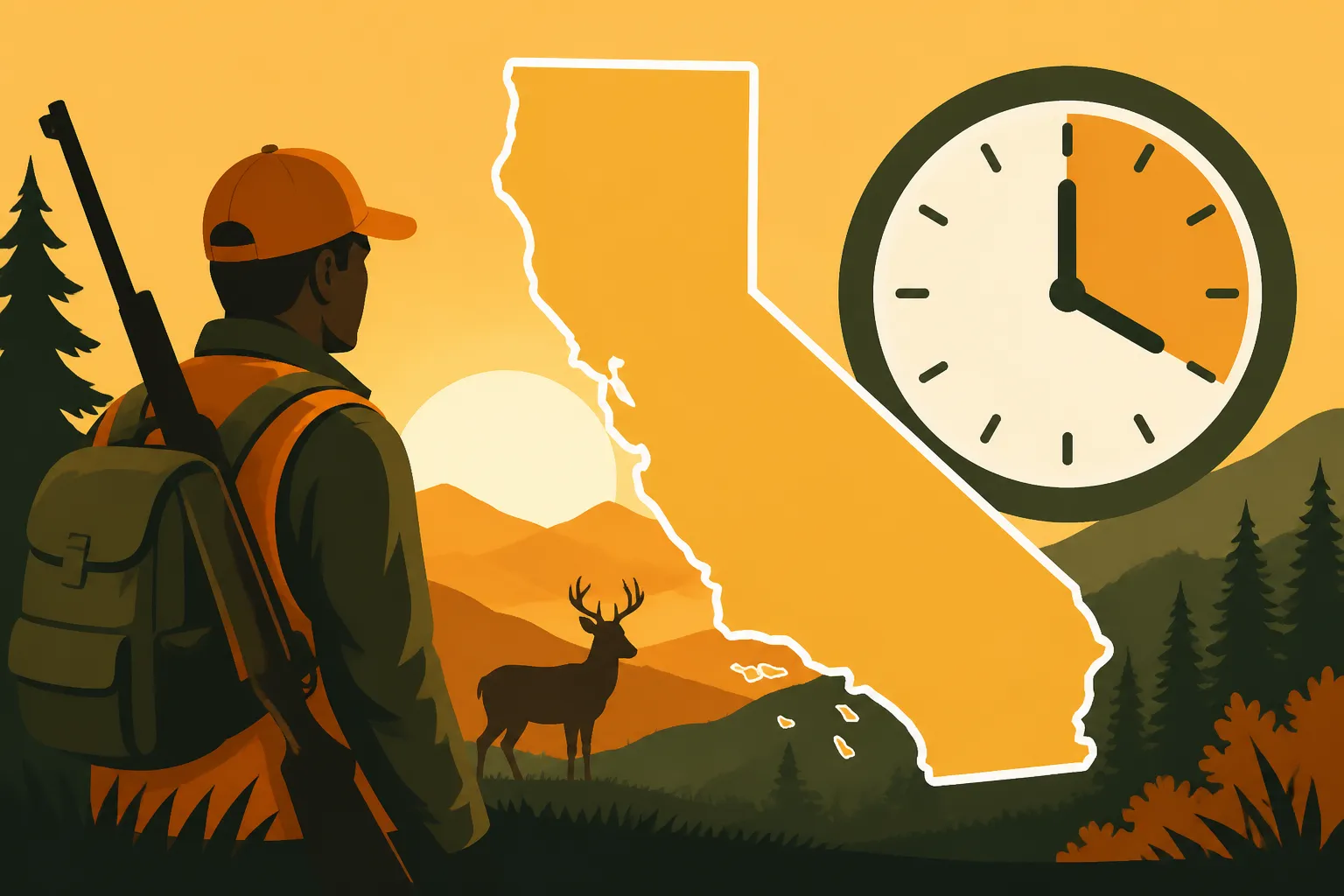
Most of the time, when we talk about legal hunting hours in California, we're referring to a pretty standard window: one half-hour before sunrise to one half-hour after sunset. This is the default rule that applies to the vast majority of game species and general hunting seasons across the state, especially for big game like deer, bear, and elk. It's a fundamental regulation that every hunter needs to know inside and out, as it forms the baseline for almost all your hunting activities.
The Standard Rule of Half-Hour Before/After
This "half-hour" rule isn't just a suggestion; it's codified in California's hunting regulations. For example, if sunrise is officially at 6:00 AM, you can legally begin hunting at 5:30 AM. If sunset is at 7:00 PM, you can continue hunting until 7:30 PM. These times are based on the official sunrise and sunset times for your specific location, which you can usually find through a quick weather app check, a dedicated hunting app, or by consulting a local almanac. It's crucial to check these times daily, as they shift throughout the season. Planning your approach or exit from your hunting spot to coincide with these windows is key, especially during those prime low-light hours when game animals are most active.
Why This Rule Exists and Its Practical Implications
The primary reason for the half-hour rule is rooted in fair chase and safety. Limiting hunting to periods of reasonable visibility helps ensure ethical shots and reduces the risk of misidentification, both of your target animal and other hunters. It also gives game animals a bit of a reprieve during the darkest hours, contributing to sustainable wildlife management.
Practically, this means your pre-dawn hike into a stand or your post-sunset pack-out needs to be done carefully. You can be in the field, walking to your spot, or breaking down your setup outside of these hours, but you cannot legally be engaged in active hunting—meaning no loaded firearms or arrows nocked, and no attempt to take game. Many hunters use the time before the legal shooting light to get into position, glass the landscape as light breaks, or perform calls. Similarly, after legal shooting light, it's a good time to track an animal or pack up your gear. This standard rule is your general guide for most hunting scenarios, from Bowhunting California's Zone A Season to a typical deer hunt in the D-Zones.
Specific Public Land Categories and Their Nuances
While the half-hour rule is the general standard, California's diverse public lands sometimes come with their own layers of regulations regarding hunting hours. It’s vital to understand these distinctions, as failing to do so can quickly turn a successful hunt into a citation. Many hunters, especially those new to the state or venturing into a new area, often get tripped up here. Tools like GoHunt or onX Hunt are incredibly valuable for checking specific property rules.
National Forests and Bureau of Land Management (BLM) Lands
For the most part, hunting hours on National Forests and Bureau of Land Management (BLM) lands in California adhere to the general "half-hour before sunrise to half-hour after sunset" rule. These vast tracts of public land, which make up a significant portion of Public Hunting Land in California, offer incredible opportunities for hunters seeking everything from deer to upland birds. You'll find these lands spanning the state, from the high Sierra Nevada to the Mojave Desert. So, whether you're still-hunting timber in Hunting California's Sierra Nevada High Country or glassing washes in Hunting California's BLM Desert Land, the general timeframes for taking game usually apply.
However, there's a critical caveat: check for specific local closures or special regulations. Occasionally, certain areas within a National Forest or BLM district might have temporary closures due to fire danger, logging operations, or wildlife management activities that could affect your access or permitted hunting times. Always consult the specific National Forest or BLM field office regulations for the area you plan to hunt, in addition to the statewide CDFW regulations. This due diligence can save you a lot of grief. Using an app for California BLM land status, such as GoHunt or onX Hunt, can be extremely helpful here, as they often update with real-time closures and land status, allowing you to quickly verify if the area you're planning to hunt is open and what the current regulations are.
California Department of Fish and Wildlife (CDFW) Wildlife Areas and Ecological Reserves
This is where things can get a bit more complex, and where many hunters run into issues if they don't do their homework. California Department of Fish and Wildlife (CDFW) Wildlife Areas and Ecological Reserves are specifically managed for wildlife and often have very precise rules about when and how hunting can occur. Unlike the broader brushstrokes of National Forests and BLM lands, these areas frequently have much more restrictive hunting hours.
For many CDFW Wildlife Areas, hunting hours are often restricted to sunrise to sunset, meaning that precious half-hour before and after is not allowed. Some areas might even have more specific gates-open and gates-closed times, or even specific hunt periods that are shorter than the typical daylight hours. These restrictions are put in place for a variety of reasons, including intense public use, management of specific sensitive species, or to provide refugia for animals during certain times. For instance, many waterfowl hunting areas in the Central Valley will have very specific entry and exit times that must be adhered to, often through a check station system. Before you even think about setting foot in a California Wildlife Areas and Ecological Reserves, you must consult the CDFW's specific regulations for that particular area. These are usually found on the CDFW website under the specific wildlife area's listing. Ignoring these can easily lead to a hefty fine or loss of hunting privileges.
Other Public Lands (State Parks, Local Preserves)
Beyond National Forests, BLM, and CDFW lands, California has a smattering of other public land types, including State Parks, local county parks, and various land trust preserves. For the most part, hunting is not permitted in California State Parks or most local county parks. There are very rare exceptions, such as specific quota hunts in designated State Park units, but these are few and far between and will have extremely explicit rules and draw systems.
For any land not clearly designated as National Forest, BLM, or a CDFW Wildlife Area, your safest assumption should always be that hunting is not allowed, or that if it is, it will come with highly specialized regulations. Always check with the managing agency for clarity. Never assume that because it's "open space" or "public," hunting is automatically fair game. Trespassing laws in California are strict, and you don't want to find yourself in a bind. This also applies to Getting Private Land Permission in California; always have written permission and clear understanding of boundaries and hours.
Here's a quick overview of general hunting hours on common public land types in California:
| Public Land Type | Standard Hunting Hours | Common Exceptions/Considerations |
|---|---|---|
| National Forests | 1/2 hour before sunrise to 1/2 hour after sunset | Check local forest/district rules for closures or specific area restrictions. |
| Bureau of Land Management (BLM) Lands | 1/2 hour before sunrise to 1/2 hour after sunset | Check local field office rules for temporary closures or special use areas. |
| CDFW Wildlife Areas & Ecological Reserves | Often sunrise to sunset, or even more restricted; check specific area regulations | Many have strict entry/exit times, check station requirements, and specific hunt dates. |
| California State Parks / Local County Parks | Generally NO HUNTING PERMITTED | Very rare exceptions for specific, drawn quota hunts; consult park management directly. |
| Private Land (with permission) | 1/2 hour before sunrise to 1/2 hour after sunset | Unless otherwise agreed upon with landowner; always follow statewide regulations. |
Exceptions, Night Hunting, and Special Considerations
While the general rules cover most scenarios, California, with its diverse ecosystems and game management strategies, does have some notable exceptions to the standard hunting hours. Understanding these can open up new hunting opportunities or prevent serious legal trouble.
Night Hunting Opportunities for Certain Species
One of the most significant exceptions to the standard daylight hunting hours in California is for specific furbearers and non-game animals, particularly coyotes and wild pigs. While the general rule for big game is strictly daylight, California does permit night hunting for certain species under specific conditions.
For coyotes, which are classified as a non-game animal, night hunting is generally permitted, though local ordinances or specific public land rules might still apply. Many predator hunters find that Coyote Calling at First Light or Predator Calling a Desert Wash at Dusk can be incredibly effective when done legally during the twilight hours or into the night. It's crucial to check the most current regulations for any specific equipment restrictions (like artificial lights, night vision, or thermal optics) and ensure you are not hunting in areas where it's prohibited.
Wild pigs also offer unique night hunting opportunities. California considers wild pigs a game mammal with a year-round open season and no bag limit, provided you have a valid California's Year-Round Wild Pig Tag. While rifle hunting for pigs typically follows the half-hour before/after daylight rule, night hunting is allowed for wild pigs under very specific conditions, primarily on private land with written landowner permission, often utilizing artificial lights. This is a complex area of the regulations, and it's imperative to deeply understand the Night Hunting Rules for California Hogs before attempting it. You cannot, for example, typically night hunt pigs on public lands like National Forests or BLM land unless explicitly stated by that land management agency, which is rare. Always confirm the rules for your specific hunting area if you're considering night hunting for pigs.
Seasonal Adjustments and Area-Specific Regulations
It's easy to forget that sunrise and sunset times change dramatically throughout the year. An early August deer hunt in Zone A means much longer days and earlier legal light than a late November hunt in some of the D-Zones. Always recalibrate your planned hunting hours based on the current season and location. Apps like GoHunt are excellent for providing real-time sunrise and sunset data based on your GPS location, eliminating guesswork.
Beyond the shifting sun, some areas or specific hunts might have unique seasonal adjustments. For example, certain waterfowl blinds may have an earlier "shooting time" or later "end of shoot time" specifically defined for that refuge or area, deviating from the general half-hour rule. This is particularly common in areas with managed hunts, like many of the state's popular wildlife areas for Waterfowl Hunting California's Central Valley. Always check the specific regulations for your tag and the public land you intend to hunt. For instance, if you're hunting in a staggered D-zone subunit, the season dates themselves might differ, and with them, the relevant daylight hours.
Using Mapping Tools to Confirm Boundaries and Rules
In today's hunting landscape, technology is your best friend when it comes to understanding public land boundaries and associated rules. Apps like GoHunt and onX Hunt have revolutionized how hunters navigate and comply with regulations. These platforms offer detailed satellite imagery layered with public and private land boundaries, enabling you to clearly see where you are and what type of land you're on.
Beyond just land ownership, many of these apps, including GoHunt, integrate specific hunting regulations for various zones and public areas. You can often tap on a particular piece of public land—be it a National Forest, BLM parcel, or a CDFW Wildlife Area—and pull up its specific rules, including hunting hours, vehicle restrictions, or even whether it's subject to California's Non-Lead Ammunition Requirement. This is invaluable for preventing accidental trespass or unintentional violation of hunting hours, especially when navigating complex areas. Before you head out, make it a habit to check your chosen hunting spot on a reliable mapping app. It provides an extra layer of confidence and ensures you're fully prepared for your day in the field, whether you're scouting for Columbia Blacktail and Mule Deer in California or planning a multi-day backcountry adventure.
Disclaimer
The information provided in this guide is for general informational purposes only and does not constitute legal advice. Hunting regulations in California are complex and subject to change. It is the individual hunter's responsibility to consult the official California Department of Fish and Wildlife (CDFW) regulations, as well as any specific rules for the land management agency (e.g., US Forest Service, BLM, State Parks) where they plan to hunt, before engaging in any hunting activities. Always confirm current laws and regulations to ensure compliance.