Broadhead Choices for California Blacktail
Choosing the right broadhead for your California blacktail hunt can feel like an overwhelming task, especially with the state's unique regulations and the blacktail's often thick, unforgiving habitat. It's frustrating to wade through countless options, wondering which one will fly true from your bow and perform reliably when it matters most. This guide will cut through the confusion, helping you understand the crucial factors in selecting broadheads specifically for California blacktail, ensuring you're well-prepared for your next archery adventure.
Understanding the California Blacktail Deer Challenge
California blacktail deer are wily creatures, often found in dense, brushy terrain where shots can be tight and opportunities fleeting. They might not always be as massive as their Rocky Mountain mule deer cousins, but their resilience and ability to vanish into cover after a less-than-perfect shot make broadhead selection absolutely critical. You're not just hunting an animal; you're hunting a ghost in the chaparral, and your gear needs to be up to the task.
Blacktail Behavior and Habitat Influences
Blacktails thrive in the dense, often steep, and rugged coastal ranges and foothills of California. Think tangled manzanita, oak woodlands, and thick brush that can be impenetrable even for a seasoned hunter. Unlike mule deer that might be glassed from miles away in wide-open country, blacktails prefer to keep to the shadows, moving through natural funnels and bedding in the deepest cover. This means your shots often come at closer ranges, through small windows in the brush, or when they're on the move. The terrain dictates much of the hunt, from how you approach to how a broadhead needs to perform. If you've spent any time Hunting Coastal Range Oak Woodlands, you know exactly what I'm talking about — that close-quarters, cat-and-mouse game requires gear that won't let you down.
Moreover, their behavior can be unpredictable. A blacktail might bound away at the slightest disturbance, even after a well-placed shot. The dense cover means blood trails can be sparse, and tracking can be a nightmare. This puts immense pressure on your broadhead to create a devastating wound channel, maximizing blood loss and ensuring a quick, humane harvest. It's not just about hitting them; it's about hitting them hard and getting maximum impact from that hit. Understanding Columbia Blacktail and Mule Deer in California populations and habits is key to successful hunting.
Shot Placement and Anatomical Considerations
While blacktail deer might be smaller than some other deer species, their vitals are in the same general area, though proportionally smaller and sometimes protected by heavy shoulder bones. The ideal shot is almost always through the lungs, aiming for the "pocket" behind the shoulder. This area provides the largest margin for error and typically results in a double-lung pass-through, leading to a quick, ethical kill. However, a poorly angled shot or one that hits bone can significantly reduce penetration, especially with less robust broadheads.
Their bone structure, particularly the shoulder blade and humerus, can be surprisingly tough. A broadhead needs to be able to cut through hide, muscle, and potentially bone without deflecting or breaking. A deer that's slightly quartering away offers a good angle for a pass-through, but an animal standing broadside might present a challenge if you hit the scapula. Hunters often lament losing deer after seemingly good shots, only to realize their broadhead couldn't handle the unexpected bone contact. This reality forces us to choose broadheads that prioritize robust construction and reliable penetration over mere cutting diameter. You want a broadhead that performs consistently, not just in ideal circumstances.
The Non-Lead Mandate: A Critical Starting Point for Broadheads
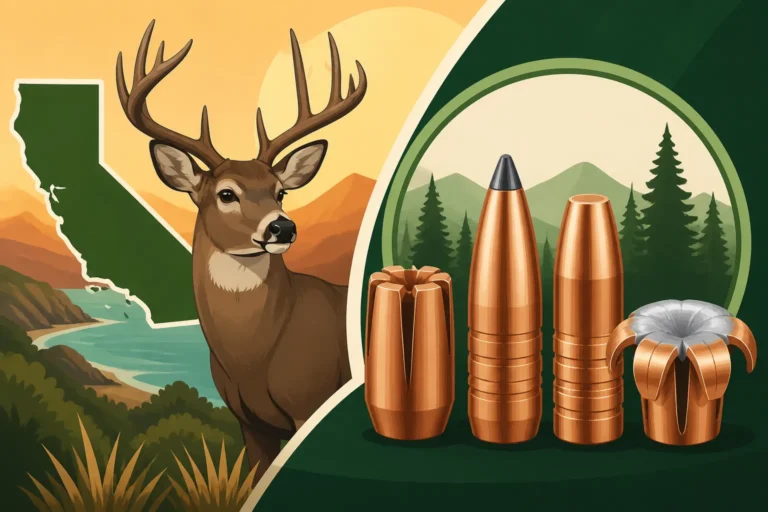
California stands apart with its statewide non-lead ammunition requirement, and this isn't just for rifles; it applies to your archery equipment too. This mandate changes the game for broadhead selection, as many traditional designs feature components that are now off-limits. It's a fundamental consideration you simply cannot ignore, and it adds an extra layer of complexity to an already nuanced decision-making process.
Why Non-Lead is Required in California
The non-lead requirement in California stems primarily from efforts to protect scavenging wildlife, particularly the California condor. Lead fragments, left behind in gut piles or unrecovered game animals, can be ingested by condors and other wildlife, leading to lead poisoning, which can be fatal. This isn't just a suggestion; it's the law across the entire state, on both public and private lands. This means every arrow you send downrange at a blacktail must be tipped with a broadhead that is certified as non-lead. You can find detailed information on Which Non-Lead Bullets California Approves for rifles, but the principle extends to archery too.
This regulation means you need to be diligent in checking the materials of your chosen broadheads. While many manufacturers have adapted, it's not a "one size fits all" situation. Some broadheads might use steel, aluminum, or other alloys that meet the non-lead criteria, but if there's any lead component, however small, it's not legal for hunting in California. This requires an extra step of verification when you're stocking up for the season, a frustration many hunters share when trying to comply with complex rules.
Materials and Designs Meeting Compliance
When it comes to non-lead broadheads, you're primarily looking at steel, stainless steel, and aluminum components. The blades, ferrule, and tips must all be free of lead. Many manufacturers now explicitly state "California compliant" or "non-lead" on their packaging, which is a huge help. This doesn't necessarily limit your performance, but it does narrow your options and can sometimes mean a higher price point, as specialized materials and manufacturing processes are often involved. It’s a small price to pay for conservation, but it’s still something to consider for your wallet.
For fixed-blade broadheads, this is relatively straightforward, as most are already made predominantly from steel. However, for mechanical broadheads, you need to ensure the cutting blades, the ferrule, and any internal components are all lead-free. Some designs use small weights or inserts that could potentially contain lead if not specifically designed for the California market. Always double-check with the manufacturer or retailer to confirm full compliance before heading into the field. GoHunt, a valuable resource for hunters, often features gear reviews that specifically address California's non-lead requirements, making it easier to find compliant options.
Exploring Mechanical Broadheads for Blacktail
Mechanical broadheads, often called "expandable" broadheads, have gained immense popularity for their flight characteristics and massive cutting diameters. For many hunters, the idea of a broadhead that flies like a field tip and then deploys to create a huge wound channel is incredibly appealing. However, they come with their own set of considerations, especially when dealing with the tough conditions of blacktail country.
Advantages: Flight, Cutting Diameter, and Shock
The primary draw of mechanical broadheads is their superior flight characteristics. Because their blades are tucked away during flight, they present a smaller profile, reducing drag and making them much less susceptible to wind drift or planning. This means they often fly much closer to your field points, simplifying bow tuning, which is a huge relief when you're trying to get ready for Hunting California's Zone A July Archery Opener. Many archers find it easier to achieve consistent accuracy with mechanicals, which can be a game-changer when a blacktail buck offers only a brief window of opportunity.
Once they hit the target, mechanicals deploy their blades, often creating a much larger cutting diameter than most fixed-blade broadheads. This larger cut can create a more substantial wound channel and lead to a more prolific blood trail, which is absolutely critical for tracking a deer in dense brush. The immediate shock and tissue damage from this wide cut can also contribute to a faster incapacitation. The visual impact of a large entry wound can be reassuring, but it's the internal damage that truly counts.
Disadvantages: Penetration Concerns and Durability
Despite their advantages, mechanical broadheads do have some notable drawbacks, especially for blacktail hunting. The act of deploying the blades requires kinetic energy, meaning some of your arrow's momentum is sacrificed for expansion. In instances of bone contact—like a shoulder blade or a rib at an awkward angle—this can significantly reduce penetration, sometimes leading to superficial wounds or even deflections. This is a real concern when chasing tough, elusive blacktails that often present less-than-ideal shot opportunities in thick cover. There's nothing worse than hearing that "thwack" of a good hit only to find minimal penetration.
Another common complaint is durability and reliability. While designs have improved, mechanical parts can still fail to deploy correctly or blades can bend or break on impact, especially after hitting bone or hard ground. This isn't a universal issue, but it's a risk factor. Furthermore, some mechanicals are less robust in their construction, meaning they might not withstand the rigors of being carried in a quiver through dense brush without accidentally deploying or dulling. This brings us back to the frustrating reality of choosing gear that has to perform flawlessly every single time. Fixed Versus Mechanical Broadheads in Brush often becomes a hot topic around any campfire, and for good reason.
Key Features to Look For in Mechanicals
If you lean towards mechanical broadheads for your blacktail hunt, look for designs that prioritize robust construction and reliable deployment. Seek out models with a strong ferrule, preferably made from solid steel or high-grade aluminum. Blades should be thick and sharp, designed to withstand impact without bending or breaking. Look for designs with a strong spring mechanism or a reliable collar system that ensures deployment without accidental opening.
Consider models that offer a balance between cutting diameter and penetration. While a massive cutting diameter sounds great, one that sacrifices too much penetration might be detrimental. A 1.5-inch cutting diameter from a strong, reliably deploying broadhead that achieves a pass-through is often more effective than a 2-inch cut that only gets halfway in. Some mechanicals also offer a hybrid design, where the blades are partially open or "spring-loaded" to ensure immediate cutting upon impact, minimizing energy loss. Reviews on platforms like GoHunt can provide real-world insights into which mechanicals perform best in various hunting scenarios.
Deep Dive into Fixed-Blade Broadheads
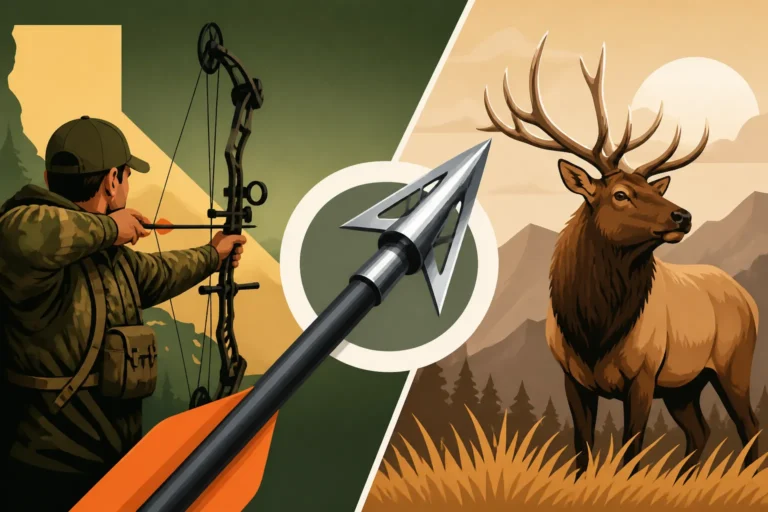
Fixed-blade broadheads are the traditional choice for bowhunters, known for their reliability, penetration, and simplicity. They've been around for ages, and for good reason: they work. In the demanding environment of California blacktail hunting, these broadheads often provide the confidence that many hunters seek, especially when facing potential bone or dense cover.
Penetration Prowess and Edge Retention
The defining characteristic of fixed-blade broadheads is their unparalleled penetration. With no moving parts to deploy, all of your arrow's kinetic energy is directly transferred into pushing the blades through the target. This makes them exceptional at punching through hide, muscle, and bone, significantly increasing the chances of a pass-through, even on less-than-perfect shots. For a resilient animal like the blacktail, a pass-through is invaluable, as it creates both an entry and exit wound, maximizing blood loss and making tracking much easier in the often-dense California undergrowth.
Beyond penetration, good fixed-blade broadheads are designed for edge retention. High-quality steel blades, often sharpened to a razor-edge, hold that sharpness through initial impact and cutting. Some designs feature single-bevel blades which, combined with the arrow's rotation, can create a spiraling wound channel that continues to cut as the animal moves. The simplicity of their design also means fewer points of failure, giving hunters peace of mind that their broadhead will perform exactly as intended every time.
The Importance of FOC and Bow Tuning
Achieving optimal arrow flight with fixed-blade broadheads often requires more diligent bow tuning compared to mechanicals. Because the blades are always exposed, they act like small wings, influencing arrow stability. If your bow isn't perfectly tuned, fixed blades can "plane" or "steer" the arrow, leading to inconsistent accuracy. This is where attention to detail really pays off. Proper arrow rest alignment, nock point tuning, and cam synchronization are all critical to ensure your broadheads fly true and hit where you aim. This process, often called Tuning a Bow for Broadhead Flight, is a skill every serious bowhunter should master.
Another key factor with fixed blades is Front of Center (FOC) weight distribution. A higher FOC means more weight is concentrated towards the front of the arrow. This increased forward weight improves stability in flight and enhances penetration. Many traditional bowhunters prefer a higher FOC for its "driveshaft" effect, helping the arrow maintain its trajectory and punch through obstacles. For blacktail hunting, where shot integrity can be compromised by brush or bone, optimizing your FOC with your fixed blades can be a significant advantage. It might seem like a lot of technical jargon, but these details truly make a difference in the field.
Different Fixed Blade Styles and Their Applications
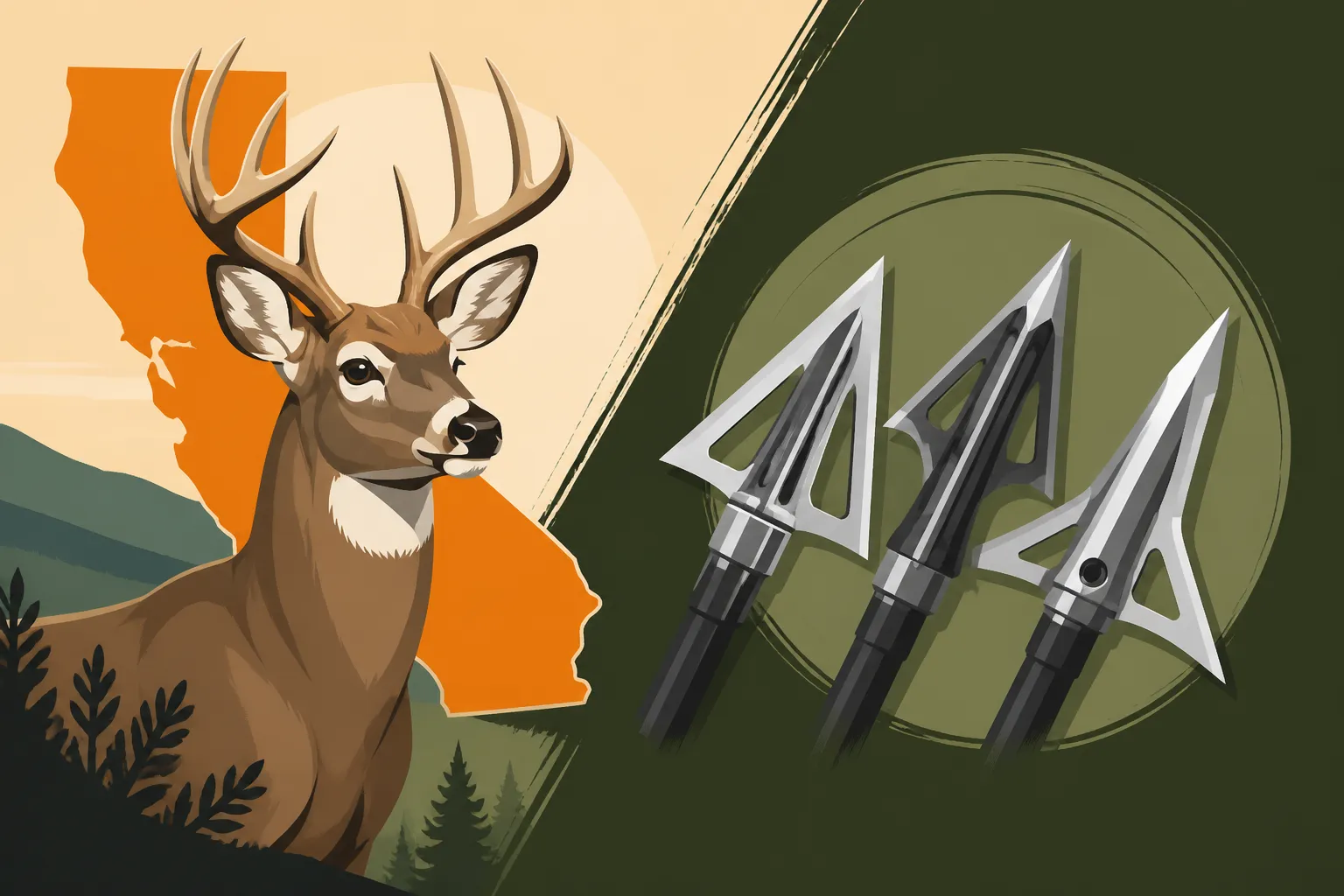
Fixed-blade broadheads come in various styles, each with its own benefits.
| Broadhead Style | Description | Key Advantages | Best for California Blacktail |
|---|---|---|---|
| Two-Blade | Simple, often thicker blades, designed for maximum penetration. | Deep penetration, excellent for bone, extremely durable. | Ideal for heavy cover, quartering shots, and maximizing pass-throughs. |
| Three-Blade | Offers a balance between cutting surface and penetration. | Good wound channel, stable flight, respectable penetration. | Versatile choice for most blacktail scenarios, good blood trails. |
| Four-Blade (Bleeder) | Main blades with smaller "bleeder" blades, increasing cutting surface. | Enhanced wound channel for better blood trails without sacrificing much penetration. | Good compromise for a wider wound while retaining fixed-blade reliability. |
| Cut-on-Contact | Tip and blades designed to start cutting immediately upon impact. | Maximum energy transfer, excellent initial penetration. | Preferred for lower poundage bows, longer shots, or maximum bone-splitting. |
Each style has its champions, and personal preference often plays a role. Two-blade broadheads, particularly those with a strong ferrule and a cut-on-contact tip, are highly favored for their bone-splitting capabilities and deep penetration, which can be crucial when dealing with a shoulder or rib on a blacktail. Three and four-blade designs offer a larger cutting surface, often creating better blood trails, which is a huge benefit in dense brush. The key is to choose a style that complements your bow setup, your hunting style, and the specific challenges of the terrain you hunt.
Hybrid Broadheads: Blending the Best of Both Worlds
In the quest for the ultimate broadhead, some manufacturers have developed hybrid designs, aiming to combine the best attributes of both fixed and mechanical broadheads. These designs attempt to offer the reliable flight of a mechanical with enhanced penetration or the guaranteed cutting of a fixed blade with a wider wound channel. For the discerning California blacktail hunter, these hybrids present an intriguing option.
Design Principles and Performance Claims
Hybrid broadheads typically feature a compact fixed-blade component that is always exposed, providing a guaranteed cutting surface upon impact. This fixed component ensures immediate cutting and initial penetration, similar to a traditional fixed-blade broadhead. In addition to this, they incorporate expandable blades that deploy after the initial impact, usually once the broadhead has entered the animal. The idea is to get the best of both worlds: the consistent flight and initial penetration of a fixed blade, followed by the wider cutting diameter of a mechanical. This promises a reliable blood trail and significant wound trauma.
The claims often center around superior flight, reduced planing compared to pure fixed blades, and a larger wound channel than a pure fixed blade, all while maintaining better penetration than many full mechanicals. This can be particularly appealing for hunters who want the confidence of a guaranteed cut-on-contact tip but also desire the wider wound channel for easier tracking in California's thick vegetation. These designs can offer a potential solution to the trade-offs inherent in choosing between traditional fixed blades and mechanicals.
Evaluating Real-World Effectiveness
While the concept of hybrid broadheads is compelling, their real-world effectiveness can vary. The additional moving parts, even if fewer than a full mechanical, still introduce potential points of failure. Ensuring all blades deploy consistently and reliably, especially after passing through the initial fixed blade section and encountering bone or dense tissue, is crucial. Hunters often worry about whether the expandable blades will truly open as intended, or if the energy used for deployment will still compromise penetration.
It's vital to research specific hybrid models and read reviews from other hunters who have used them on similar game in comparable conditions. Testing these broadheads extensively with your own bow setup, both on targets and perhaps on broadhead-specific test blocks, is paramount. You want to ensure they fly consistently with your field tips and that the expandable blades deploy effectively and reliably. GoHunt and other hunting forums often contain detailed discussions and reviews of hybrid broadheads, with hunters sharing their experiences regarding penetration, blood trails, and overall durability. Ultimately, a hybrid broadhead is only as good as its execution, and thorough testing is the only way to gain confidence in its performance for your blacktail hunt.
Testing, Tuning, and Ethical Considerations
No matter which broadhead type you choose, the work isn't done until you've thoroughly tested and tuned your setup. An un-tuned broadhead, regardless of its design, is an unethical arrow. For California blacktail, where every advantage counts, this preparation phase is just as important as the broadhead selection itself.
Achieving Optimal Broadhead Flight
Getting your broadheads to fly exactly like your field tips is the holy grail of bowhunting accuracy. This often involves a process known as paper tuning. By shooting a fletched arrow through paper at close range (typically 6-10 feet), you can observe the tear in the paper, which indicates how the arrow is leaving your bow. A perfect bullet hole tear means your arrow is flying straight and true. If you see horizontal or vertical tears, it means your arrow rest, nock point, or cam timing needs adjustment. Don't skip this step; it's foundational to accuracy.
After paper tuning, move on to walk-back tuning. This involves shooting at a vertical line on a target at various distances, like 10, 20, and 30 yards, without adjusting your sight. If your arrows consistently group vertically but stray horizontally, further adjustments to your arrow rest (windage) might be needed. For fixed-blade broadheads, you might also need to slightly adjust your rest to compensate for any fletching or blade steering, aiming to get your broadheads to hit exactly with your field tips. Remember, a well-tuned bow and arrow combination, especially with a sharp, reliable broadhead, is your commitment to an ethical harvest. Having a solid Best Arrow Rest for a Hunting Setup and knowing how to adjust it are key to success.
Practice and Preparation for the Hunt
Beyond tuning, consistent practice with your actual hunting broadheads is non-negotiable. Don't just shoot them once or twice to confirm flight. Shoot them regularly, at varying distances, from different positions (standing, kneeling, from a simulated tree stand if you use one), and under different conditions. This builds muscle memory and confidence. Pay attention to how your broadheads impact targets after multiple shots – do they remain sharp? Are they still flying true? This will also allow you to see if any specific broadhead is prone to failure or bending after repeated impacts.
Practicing in gear similar to what you'll wear during the hunt, like the layering you'd use for Layering for Hot-to-Cold Zone A Archery Days, can also make a difference. The more realistic your practice, the better prepared you'll be when that fleeting moment with a blacktail buck finally arrives. This commitment to preparation isn't just about bagging an animal; it's about respecting the game and ensuring a humane outcome. When you've put in the work, from broadhead selection to rigorous practice, you can step into the field with confidence, knowing you've done everything in your power to be ready for your Bowhunting California's Zone A Season or any other blacktail hunt. GoHunt, with its wealth of scouting tools and information on deer movement, can also help you pinpoint prime locations to apply your perfected broadhead skills.
Broadhead Comparison for California Blacktail
To help simplify your decision, here's a quick comparison of the general characteristics of different broadhead types for California blacktail deer hunting. Remember, individual broadhead models within each category can vary greatly in quality and performance.
| Feature / Broadhead Type | Fixed-Blade | Mechanical (Expandable) | Hybrid |
|---|---|---|---|
| Flight Characteristics | Can require more precise tuning; prone to planing if untuned. | Generally flies like field tips; excellent accuracy. | Good flight, often better than fixed, less perfect than mechanical. |
| Penetration | Excellent; maximizes kinetic energy transfer; bone-splitting. | Can be reduced due to energy used for blade deployment; bone can impede. | Generally good; aims to combine fixed blade penetration with wider cut. |
| Wound Channel | Good, clean cuts; consistent size. | Often very large cutting diameter; devastating tissue damage. | Good, wider than fixed; aims for better blood trail than fixed. |
| Reliability | Extremely high; no moving parts to fail. | Can have mechanical failures (blades not deploying, breaking). | Generally good, but still involves moving parts. |
| Durability | Very durable; blades can often be re-sharpened. | Varies greatly by design; some are single-use. | Varies by design; often more robust than pure mechanicals. |
| Blood Trail | Good, but can be less prolific with smaller cutting diameters. | Often excellent due to large cutting diameter. | Good to excellent; aims to maximize blood trail. |
| Tuning Difficulty | Moderate to high. | Low to moderate. | Moderate. |
| Cost | Generally lower per unit; reusable. | Often higher per unit; some designs are single-use. | Typically mid-to-high range per unit. |
Remember, the "best" broadhead is ultimately the one that flies accurately from your bow, performs reliably on impact, and gives you the confidence to make an ethical shot. Take the time to understand the nuances of each type, ensure non-lead compliance, and practice until you're proficient. The blacktail deer of California deserve nothing less. When you're out there Finding Sign in a Coastal Oak Woodland or looking for Where California Blacktail Bucks Bed, knowing your gear will perform is half the battle.
Disclaimer
This article is for general informational purposes only and does not constitute professional advice. Laws, prices and regulations vary by location and change over time. Consult a qualified professional for guidance on your specific situation.