Night Hunting Rules for California Hogs
Hunting wild pigs in California offers a unique challenge and opportunity, but the specific rules, especially when it comes to pursuing them after dark, can feel like navigating a maze blindfolded. Many hunters get understandably confused by the conflicting information or general regulations that don't apply to these incredibly destructive animals. This guide will shine a clear light on California's night hunting rules for wild pigs, helping you understand precisely what’s permitted, what gear you’ll need, and how to stay on the right side of the law.
The Basics of Wild Pig Hunting in California
Before we dive into the intricacies of night hunting, it's essential to understand why wild pigs are treated differently from most other game species in California. This foundational knowledge will make the specific night hunting regulations much clearer and less perplexing.
Why Hogs Are Different
Wild pigs, often referred to as wild boars, feral hogs, or simply pigs, are not native to California. They are an introduced species, and their populations have exploded across the state, particularly in the coastal ranges, central valley foothills, and parts of the Sierra Nevada. Unlike native deer, bear, or elk, these animals are classified as an invasive species, and their presence causes significant ecological and agricultural damage.
These prolific breeders root up sensitive habitats, destroy crops, damage irrigation systems, and can be vectors for diseases that affect both livestock and native wildlife. Farmers and ranchers face immense financial losses due to hog depredation annually. This severe impact is the primary reason why the California Department of Fish and Wildlife (CDFW) has adopted a more liberal approach to their management, including allowing for extended hunting opportunities that aren't typically afforded to other game animals. The goal is damage control and population reduction, rather than strict conservation through limited harvest. This management philosophy underpins many of the regulations, including those surrounding night hunting. You can learn more about specific tactics in our guide, "Wild Pig Hunting California Year-Round".
General Tagging and Reporting Requirements
Despite their invasive status and the open season, hunting wild pigs in California still requires specific licensing and tagging. You can't just head out with a rifle; proper documentation is mandatory. Every hunter, regardless of age or residency, must possess a valid California hunting license and an annual wild pig tag. These tags are specific to pigs and are distinct from deer or bear tags. The beauty of these tags is that they are valid for the entire calendar year and allow for an unlimited number of pigs to be taken, reflecting the state’s desire to control their population. Our article on "California's Year-Round Wild Pig Tag" delves into this further.
Once you harvest a wild pig, the process doesn't end there. All wild pig harvests must be reported to the CDFW through the Automated License Data System (ALDS). This reporting is crucial for the department to gather data on population trends, harvest rates, and geographic distribution, which in turn informs future management strategies. Failing to report a harvest is a violation and can lead to penalties, including fines and the loss of hunting privileges. The reporting window is usually quite generous, giving hunters time to process their animal and submit the information online or through a licensed agent. Understanding "Reporting a Pig Harvest Through ALDS" is critical for every ethical hunter. Remember, purchasing your "California Hunting Licenses and What They Cost" is the first step in responsible hunting.
Understanding California's Night Hunting Regulations
This is where things get particularly interesting and often confusing for hunters. California's general hunting laws are quite strict regarding hunting hours, but wild pigs present a notable exception.
The Statewide Ban on Night Hunting for Most Game
For the vast majority of game animals in California—think deer, black bear, elk, upland birds, and waterfowl—hunting is strictly prohibited during the hours of darkness. Specifically, it is illegal to hunt from one-half hour after sunset to one-half hour before sunrise. This regulation is in place for several crucial reasons, primarily related to fair chase ethics, hunter safety, and the ability to accurately identify species and sex.
Hunting in low light or complete darkness makes it incredibly difficult to confirm your target, ensure a safe backdrop, and avoid mistakenly shooting protected species or non-target animals. The intent is to ensure hunters have sufficient visibility to make ethical and responsible decisions. Violating these rules for species like deer or bear can lead to severe consequences, including substantial fines, seizure of equipment, loss of hunting privileges, and even jail time. It’s a serious offense, and the CDFW enforces it diligently. This widespread prohibition for most species is why the exception for pigs often catches hunters off guard.
Special Provisions for Wild Pigs on Private Land
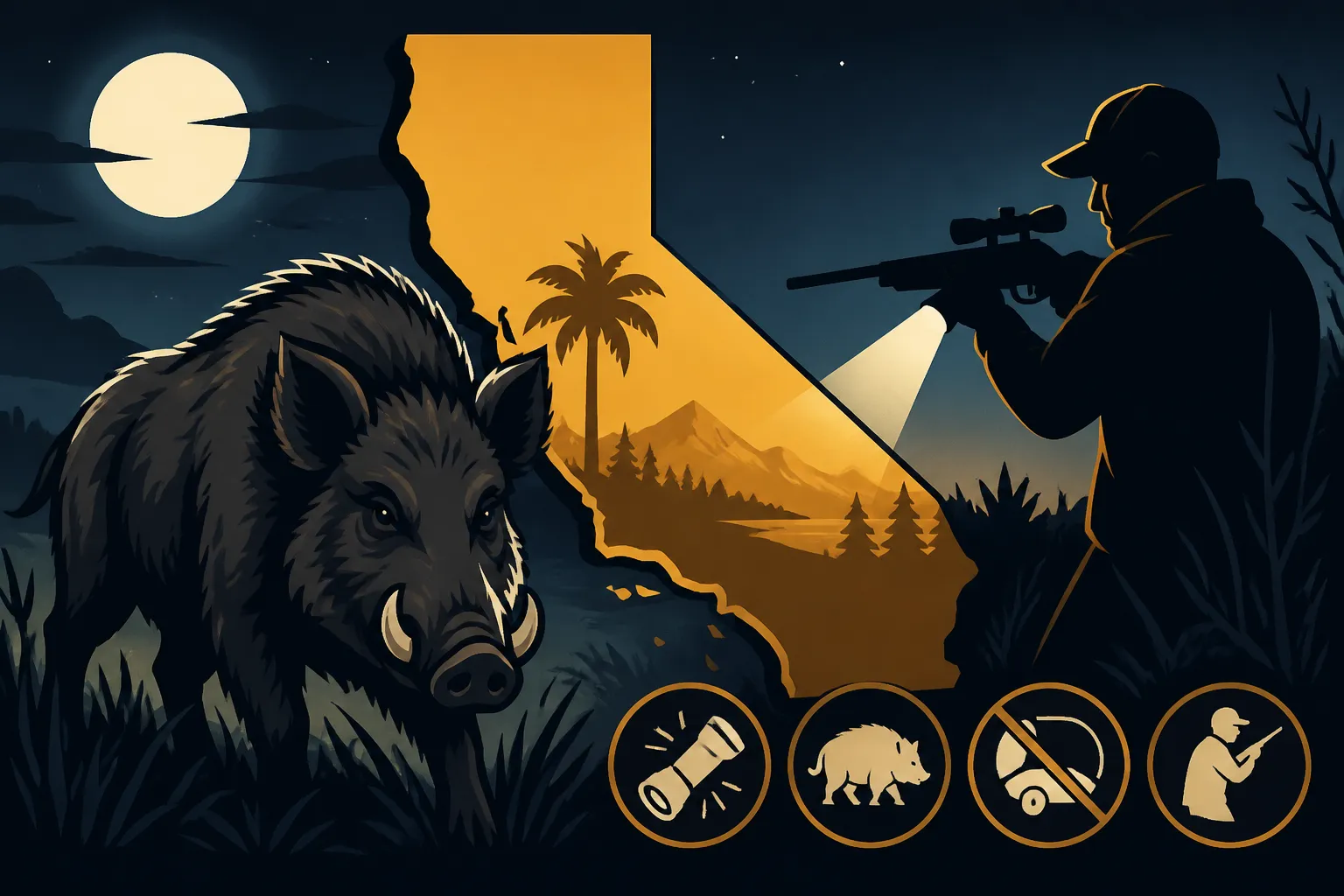
Here's the critical distinction: wild pigs are the only big game species that may be hunted at night in California, and this privilege is exclusively reserved for private land. Let me repeat that: private land only. You cannot, under any circumstances, hunt wild pigs at night on public lands such as National Forests, BLM land, or State Wildlife Areas. This is a crucial point that many hunters misunderstand, and it can lead to serious legal trouble if overlooked.
The allowance for night hunting pigs on private property stems directly from their status as a destructive nuisance animal. Landowners often experience extensive damage to their agricultural crops, rangeland, and infrastructure under the cover of darkness, when pigs are most active. This special provision empowers landowners and their authorized agents to protect their property and livelihoods more effectively. It’s a damage control measure, not a general recreational opportunity. Therefore, any individual hunting pigs at night, even on private land, must still possess a valid California hunting license and a current wild pig tag. This nuance is something that often trips up hunters, even seasoned ones, and it's where understanding the intricate details can save you a lot of grief. For example, while GoHunt excels at providing comprehensive mapping tools for public land exploration, its primary function isn't to interpret these highly specific, often overlooked regulations. Always check the official CDFW regulations before planning any hunt.
Legal Methods and Gear for Night Hunting Hogs
Given the unique allowance for night hunting wild pigs on private land, it's important to understand what types of equipment and methods are legally permissible to assist you in low-light conditions.
Approved Lighting and Night Vision Devices
One of the biggest hurdles for hunting at night is, naturally, visibility. California law specifically permits the use of artificial lights, night vision devices, and thermal imaging equipment when hunting wild pigs on private land. This is a significant departure from rules for other game, where lights used to aid in taking game are generally prohibited. This allowance for pigs recognizes their nocturnal habits and the difficulty of controlling them without these tools.
Artificial lights can include powerful spotlights mounted on a vehicle (if legal for the area and method of take) or handheld lights. Night vision devices amplify ambient light, allowing you to see in near-total darkness, while thermal imaging devices detect heat signatures, making it easy to spot pigs even in dense cover or at considerable distances. Each has its advantages: thermal is excellent for detection, night vision for identification and navigation, and a strong white light is often used for positive identification just prior to taking a shot. When planning your gear, you might consult resources like GoHunt for reviews of various optics, but always cross-reference with CDFW regulations to ensure legality for your specific hunt and land type. Remember, even with these tools, exercising extreme caution and ensuring a clear, safe shot is paramount, especially when operating in the dark. Misidentification or an unsafe shot with an artificial light could lead to severe consequences.
Considerations for Caliber and Ammunition at Night
Regardless of the time of day, all hunting in California, including for wild pigs, is subject to the statewide non-lead ammunition requirement. This means you must use certified non-lead projectiles for any firearm or archery equipment when pursuing pigs, day or night. This regulation is in place to protect wildlife, particularly the endangered California Condor, from lead poisoning. For a deeper dive into this, check out "California's Non-Lead Ammunition Requirement".
When hunting at night, the choice of caliber and bullet performance becomes even more critical due to potentially reduced visibility and the need for absolute certainty in shot placement. Pigs are tough animals, and a clean, ethical kill is always the goal. Popular calibers like .270, .30-06, .308, and 6.5 Creedmoor are all excellent choices, especially when loaded with high-quality, non-lead bullets designed for deep penetration and reliable expansion. The key is to know your rifle and ammunition intimately. Practicing with your chosen setup under low-light conditions, even simulating night-time scenarios at a safe range, is crucial. You want to be confident in your ability to place a shot precisely when visibility is limited, even with the aid of night vision or thermal. Our guide on "Choosing Non-Lead Rifle Ammunition in California" offers in-depth advice on bullet selection, and specific details can be found in "Non-Lead Load Options for .308 Hunters".
Securing Private Land Access for Night Hunts
Since night hunting for wild pigs is exclusively permitted on private land, gaining proper access is arguably the most critical step in planning such a hunt. Without it, you cannot legally participate.
The Importance of Written Permission
This cannot be stressed enough: you must have express, written permission from the landowner to hunt wild pigs at night on their property. Verbal permission, while sometimes accepted for day hunting on certain properties, is a huge risk for night operations due to the increased scrutiny and potential for misunderstandings. A detailed written agreement protects both you and the landowner.
A proper written permission slip should include, at a minimum: the landowner's full name and contact information, your full name and contact information, the specific dates and times you are authorized to hunt, a clear description or map of the property where you are allowed to hunt, specific mention that wild pigs are the target species, and explicit authorization for "night hunting" and the use of artificial lights/night vision devices. Both parties should sign and date the document, and you should carry a copy with you at all times while on the property. Failing to have comprehensive written permission can lead to trespassing charges, seizure of firearms, and loss of hunting privileges. It's not worth the risk. For more guidance on this topic, see "Getting Private Land Permission in California" and "Do You Need Written Permission in California?".
Working with Landowners and Damage Control
Approaching landowners about hunting on their property, especially for a night hunt, requires respect, clear communication, and often, an understanding that you are providing a service. Many landowners, particularly those in agricultural areas, view wild pigs as a significant problem, and your offer to help control them can be mutually beneficial. Frame your request as a solution to their depredation issues, not just a recreational outing for you.
When making initial contact, present yourself professionally, explain your experience, and highlight your commitment to safety and ethical hunting practices. Offer to share some of the harvested meat or, if they don't want the meat, offer to help them with other tasks on their property. Building a relationship of trust is key. Be punctual, follow all their rules (even if they extend beyond CDFW regulations), leave no trace, and keep them informed of your activities and success. This proactive approach can secure you long-term hunting access. This is a situation where careful preparation pays off significantly, and utilizing tools that help identify property boundaries, like the detailed maps you can find on GoHunt, can be a crucial first step in securing that essential private land access. Also, remember that baiting, while sometimes used for pigs, must also adhere to specific rules if you choose that method. Our article, "Baiting Hogs Legally in California", provides details on those regulations.
Night Hunting Wild Pigs: Legal vs. Illegal Summary
To help clarify the core regulations, here's a quick summary of what's generally legal versus illegal when considering night hunting for wild pigs in California:
| Aspect | Legal for Wild Pigs on Private Land | Illegal for Most Game / Public Land (Pigs Included) |
|---|---|---|
| Time of Day | Sunset to Sunrise | Sunset to Sunrise |
| Land Type | Private Land Only | Public Land (National Forests, BLM, WAs), Most Private Land |
| Game Species | Wild Pigs Only | Deer, Bear, Turkey, Waterfowl, etc. |
| Lighting Devices | Artificial Light, Night Vision, Thermal Imaging | Any Artificial Light/Device to Aid in Take |
| Required Permits | CA Hunting License, Wild Pig Tag, Written Landowner Permission | CA Hunting License, Species Tag (if applicable) |
| Ammunition | Non-Lead Only | Non-Lead Only |
Disclaimer
The information provided in this guide is for general informational purposes only and does not constitute legal advice. Hunting regulations can change, and interpretations may vary. It is your responsibility to consult the current California Department of Fish and Wildlife (CDFW) regulations and, if necessary, seek legal counsel to ensure full compliance with all applicable laws before engaging in any hunting activities.