California Coyote Hunting Season Rules
Hunting coyotes in California can feel like navigating a maze of regulations, especially when you're used to the clear-cut seasons and bag limits of deer or turkey. Many folks get understandably frustrated trying to figure out if there's a specific "coyote season" or how many they can harvest. The good news is, coyotes are classified differently, offering year-round opportunities, but it also means there's a unique set of rules to understand. This guide will break down the California coyote hunting season rules, clarify the necessary licenses, legal methods, and important land-use considerations so you can hunt confidently and within the law.
Understanding Coyote Classification in California
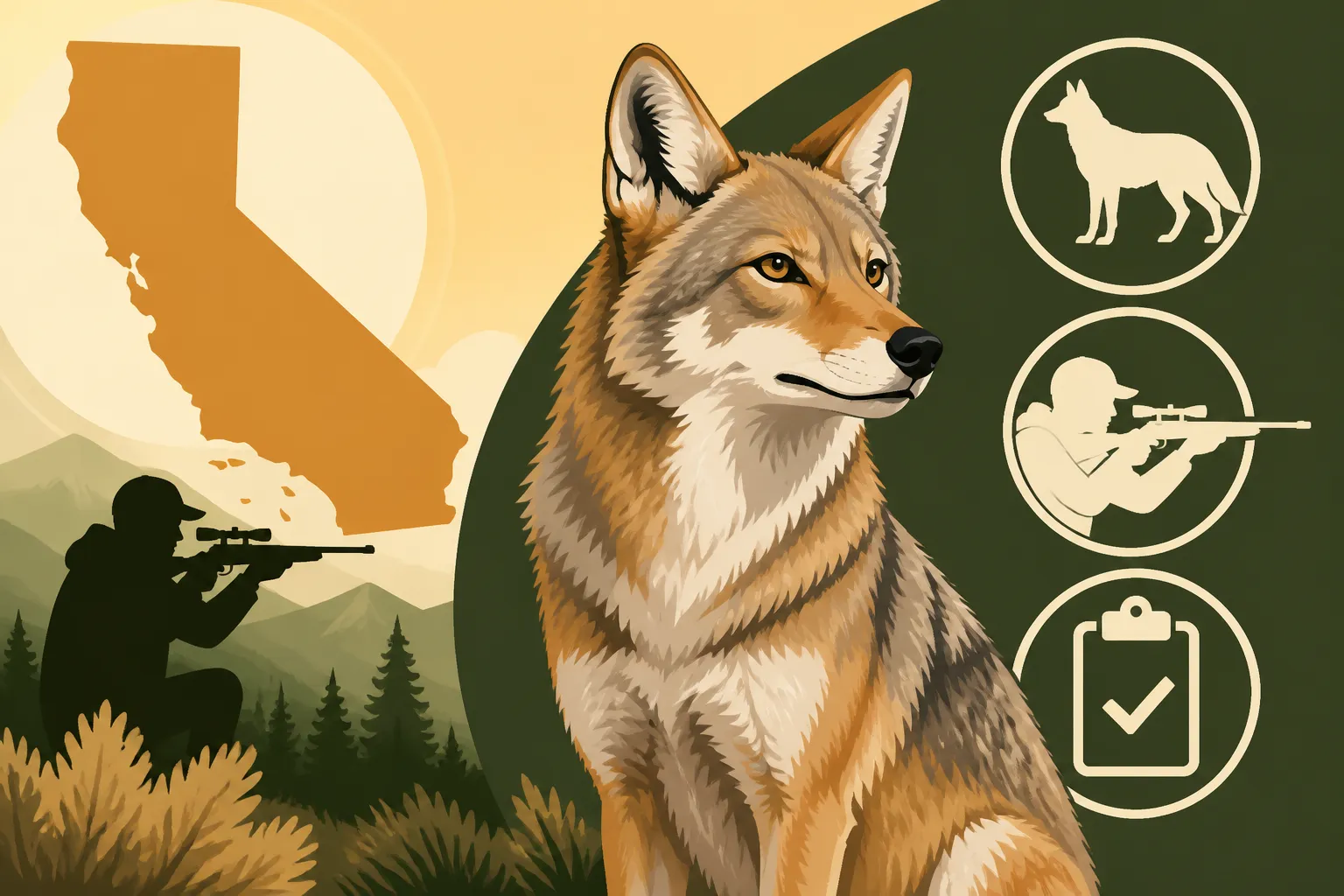
One of the biggest sources of confusion for hunters new to targeting coyotes in California is their classification. Unlike deer, elk, or turkeys, which are designated as "game mammals" or "game birds" with strict seasons, bag limits, and often draw-based tags, coyotes fall into a different category. They are considered "non-game mammals." This distinction is absolutely crucial because it dictates nearly every aspect of coyote hunting in the state.
Coyotes as Non-Game Mammals: What This Means for Hunters
When a species is classified as a non-game mammal by the California Department of Fish and Wildlife (CDFW), it means they are typically not subject to the same kind of management efforts as game species designed to ensure sustainable harvest. Instead, non-game mammals are often managed with a focus on mitigating conflicts with livestock, agriculture, or human safety. For the coyote hunter, this classification brings a lot of freedom but also some critical responsibilities.
First and foremost, as non-game mammals, there is no statewide closed season for coyotes. You can hunt them year-round, which is a fantastic advantage for anyone looking to sharpen their predator calling skills or simply spend more time afield. Secondly, and equally important, there is no statewide bag limit. You won't find yourself counting coyotes or worrying about exceeding a daily or seasonal quota. This open-ended opportunity is often a relief to hunters who are accustomed to strict limits on other species. However, just because there's no official "season" or "bag limit" doesn't mean it's a free-for-all. There are still overarching hunting regulations, license requirements, and local restrictions that you absolutely must abide by. Think of it as hunting within a framework of general hunting laws rather than specific species-centric ones.
Year-Round Opportunity: No Closed Season, No Bag Limits
The year-round, no-bag-limit policy on coyotes is a huge draw for many hunters. It allows for incredible flexibility, letting you pursue them when other seasons are closed, or to complement your big game or bird hunting efforts. This means you can hunt them in the heat of summer, the crisp days of fall, the depths of winter, or the budding growth of spring. This constant availability makes them an ideal species for scouting new areas, honing your shooting skills, or just getting out into nature when other tags are filled or seasons haven't opened yet.
However, don't mistake "year-round" for "anytime, anywhere." Your personal access to land, be it public or private, will always be the primary limiter. Additionally, factors like weather, coyote breeding cycles, and fur quality might influence when you choose to hunt, even if the regulations don't. For instance, while you can hunt them in August, the pelts are usually less desirable than those taken in cooler months, and the heat can make animal recovery and processing challenging. Still, the regulatory freedom is a unique aspect of California coyote hunting that many appreciate.
Why the Distinction Matters: Impact on Methods and Permits
The classification of coyotes as non-game mammals also significantly impacts the types of hunting methods allowed and the permits required. For instance, baiting, which is generally prohibited for deer and bear, has different rules for non-game animals, though you still need to be aware of local ordinances and ethical considerations. More importantly, the lead ammunition ban, a pervasive law for all hunting in California, applies to coyotes too. This means you must use non-lead ammunition when hunting coyotes, just as you would for deer or upland birds. To better understand this critical rule, you can dive into the specifics of California's Non-Lead Ammunition Requirement.
Furthermore, while you don't need a specific coyote tag, you absolutely still need a valid California hunting license. We'll cover this in more detail in the next section, but it's a point of confusion for many. Some assume that because there's no tag, there's no license needed, which is incorrect and can lead to serious legal trouble. The absence of specific "coyote seasons" or "coyote tags" simplifies some aspects, but it shifts the focus to general hunting regulations and local rules that apply broadly to all hunting activities. Knowing this distinction is your first step to legal and responsible coyote hunting in California.
Essential Licenses and Ammunition Regulations
Even though coyotes are non-game mammals with open seasons and no bag limits, you cannot just grab a rifle and head into the woods. California has fundamental requirements that apply to all hunters, regardless of the species pursued. Understanding these is paramount to staying legal and safe.
The Base Hunting License: It's Still Required
This is one of the most common misconceptions about hunting non-game animals in California: many believe if there's no tag, there's no license. This is simply not true. Anyone engaging in hunting activity for any animal in California, including coyotes, squirrels, or rabbits, must possess a valid California hunting license. Think of it as your foundational permission slip to be a hunter in the state. If you're a resident, you'll need a resident license; non-residents will need a non-resident license. You can find out more about the different options and costs in California Hunting Licenses and What They Cost.
In addition to the base hunting license, if you are a new hunter or haven't held a license in California (or another state) previously, you will also need to complete a hunter education course. This is a one-time requirement designed to ensure all hunters are knowledgeable about firearm safety, hunting ethics, and wildlife conservation. For more details on this, check out California Hunter Education Requirements. It's a foundational step that every new hunter must take, and it's for the benefit of everyone in the field.
California's Non-Lead Mandate: A Critical Rule for All Hunting
California stands out with its statewide ban on lead ammunition for all hunting, including coyotes. This is not a suggestion; it is a strict legal requirement. The ban was implemented to protect wildlife, particularly the endangered California condor, from lead poisoning caused by consuming bullet fragments in animal carcasses. This means every single bullet you chamber in your rifle or shotgun, or even arrow you shoot, for coyote hunting must be made of non-lead materials.
This rule can be a significant adjustment for hunters accustomed to traditional lead-core bullets. You'll need to purchase copper, brass, or other approved non-lead projectiles. It's crucial to test these new rounds with your firearm to ensure accuracy and consistent performance. Different non-lead bullets can fly differently than their lead counterparts, so sighting in your rifle specifically with your chosen non-lead load is absolutely essential. For an in-depth look at making the switch, check out Choosing Non-Lead Rifle Ammunition in California. Ignoring this rule is not only unethical but can also result in hefty fines and penalties, and even the loss of your hunting privileges. Always double-check your ammo before heading afield.
Weapon Choices: Rifles, Shotguns, Archery
When it comes to the specific weapons you can use for coyote hunting, California offers a wide array of choices, allowing you to tailor your approach to the terrain, your personal preference, and the hunting situation.
- Rifles: Centerfire rifles are a popular choice for coyote hunting, offering precision at longer ranges. Common calibers like .223 Remington, .22-250 Remington, and .243 Winchester are excellent for coyotes, providing adequate knockdown power while minimizing pelt damage if you plan to salvage the fur. Even larger calibers like .308 are used, though they might be overkill for coyotes alone. Remember, the non-lead ammunition rule applies to all rifle calibers.
- Shotguns: Shotguns are highly effective in thick cover or when coyotes come in close to a call. Loads like 00 buckshot or specialized coyote loads can be very efficient. Ensure your shotgun is legal for hunting (e.g., plug requirements for migratory birds don't apply, but magazine capacity limits for certain firearms may still). Again, all shotgun slugs or shot for coyotes must be non-lead. Steel shot, bismuth, or tungsten-based loads are common non-lead options.
- Archery Equipment: Bowhunting coyotes can be a thrilling challenge, offering an incredibly intimate hunting experience. Traditional bows, compound bows, and crossbows (with specific rules) are all legal. As with firearms, broadheads must be non-lead. The stealth and skill required for archery hunting predators make it a rewarding pursuit for dedicated bowhunters.
Regardless of your weapon choice, familiarizing yourself with its operation, accuracy, and the legal requirements (especially the non-lead mandate) is your responsibility. Always ensure your equipment is safe, well-maintained, and suitable for the conditions you'll encounter.
Legal Hunting Methods and Specific Restrictions
Beyond licenses and ammunition, how you actually pursue coyotes is also subject to specific regulations. While many standard hunting techniques are allowed, there are crucial rules to be aware of, especially concerning night hunting and vehicle use.
Calling and Decoying: Standard and Effective Methods
Calling coyotes is arguably the most popular and effective method for hunting them in California. Whether you use mouth calls (open reed, closed reed, diaphragm) or electronic calls, mimicking the sounds of distressed prey animals (rabbit in distress, fawn in distress, bird in distress) or coyote vocalizations (howls, barks, pup distress) can be incredibly effective. Decoys, such as spinning furry targets or full-body coyote decoys, can also be used in conjunction with calling to draw coyotes in closer and give them something to focus on besides you. This method capitalizes on the coyote's predatory instincts and territorial behaviors.
The use of electronic calls is legal for coyotes in California, which provides hunters with a vast library of sounds and often greater volume and range than mouth calls. This is a significant advantage, especially in open country or windy conditions. You can delve deeper into effective strategies for Coyote Calling California Ranch Land or even Predator Calling California's Mojave Desert Country depending on your hunting grounds. These methods are not only legal but are widely considered the most sporting and challenging ways to hunt coyotes.
Night Hunting: Specific Rules and Limitations
This is a critical area where hunters often get tripped up. While night hunting is permissible for some non-game animals in California, it comes with very specific rules. For coyotes, hunting hours are generally limited to one-half hour before sunrise to one-half hour after sunset. However, a general hunting license allows for night hunting of coyotes (and other non-game mammals) only when they are causing damage to private property and only by the landowner or their agent. This is a very restrictive allowance.
For broader night hunting of non-game mammals on public lands, you would need a depredation permit issued by the CDFW, which is typically for agricultural protection and not general recreational hunting. There's also the option to apply for a specialized Night Hunting Permit from CDFW. These permits are typically issued for specific areas and require stringent safety measures. Without such a permit, hunting coyotes at night is generally not allowed under a standard hunting license on public lands or for recreational purposes. Always verify the most current regulations directly with the CDFW or a local warden before considering any form of night hunting for coyotes. The penalties for illegal night hunting can be severe.
Motorized Vehicle Use: What's Allowed and What's Not
Using motorized vehicles while hunting is another area with strict rules designed to ensure fair chase and safety. In California, it is illegal to pursue, drive, or herd any mammal (including coyotes) with a motorized vehicle. This means you cannot use an ATV, truck, or other vehicle to chase a coyote or actively direct its movement towards hunters.
You can, however, use a vehicle to access hunting areas. Once you reach your hunting spot, you must exit the vehicle and hunt on foot. The vehicle must be stationary, and you generally cannot shoot from, or across, any paved public road. Rules on using off-road vehicles like ATVs on public lands can vary significantly by agency (e.g., National Forest vs. BLM) and specific designations (e.g., designated trails only). Always check the regulations for the specific area you plan to hunt. Using mapping tools like those from GoHunt can be extremely helpful for identifying legal access routes and understanding vehicle restrictions on public land. These tools often show designated routes, wilderness areas where vehicles are prohibited, and private property boundaries.
Navigating Public and Private Land for Coyote Hunting
Knowing where you can legally hunt coyotes is just as important as knowing how to hunt them. California offers a mix of public and private land opportunities, each with its own set of considerations.
Public Land Access: National Forests, BLM, Wildlife Areas
California boasts millions of acres of public land, including National Forests, Bureau of Land Management (BLM) lands, and State Wildlife Areas, where you can pursue coyotes. Each type of public land has its own specific rules and regulations on top of statewide laws.
- National Forests (e.g., Los Padres, Sierra, Mendocino): These lands generally allow hunting, but specific areas might have seasonal closures, fire restrictions, or designated "no shooting" zones, especially near campgrounds or developed areas. You should always check the local Forest Service office or website for any current restrictions before you go. Discharging firearms too close to roads or developed areas is universally prohibited. You can learn more about finding these opportunities in Public Hunting Land in California.
- BLM Lands: Many parts of California's deserts and remote areas are managed by the BLM. These lands often offer vast, open spaces suitable for coyote hunting. Like National Forests, they are generally open to hunting, but specific routes for vehicles and camping regulations apply. Pay close attention to maps that delineate BLM land, as it can often be checkerboarded with private property. Hunting California's BLM Desert Land can be a fantastic experience for coyotes, but requires careful planning.
- State Wildlife Areas and Ecological Reserves: These areas are managed by the CDFW and often have very specific regulations regarding hunting hours, allowed methods, and sometimes even species-specific permits or drawings. While some Wildlife Areas permit coyote hunting, others do not, or they may have very limited seasons or specific access rules. Always consult the individual Wildlife Area's regulations booklet or the CDFW website.
Before heading out, use mapping applications like those from GoHunt. These platforms are incredibly useful for identifying land ownership, showing public land boundaries, and often integrating agency-specific restrictions, giving you peace of mind about where you can hunt legally. Remember, hunting pressure can vary wildly on public land; knowing Hunting Pressure on California Public Land will help you find less-disturbed areas.
Gaining Private Land Access: The Importance of Permission
While public lands offer extensive opportunities, private land can often provide less pressured hunting and potentially higher coyote densities. However, hunting on private land in California requires explicit permission from the landowner. This is not just a courtesy; it's a legal requirement. Trespassing, even accidentally, can lead to serious legal consequences, including fines and potential loss of hunting privileges.
The best approach is to knock on doors, send letters, or otherwise directly contact landowners to request permission. Be polite, offer to help with any coyote problems they might be having (especially if they have livestock), and always be respectful of their property. A written permission slip, while not always legally required, is an excellent idea as it clearly states who you are, what you're hunting, and for how long. It provides peace of mind for both you and the landowner. Consider reading Getting Private Land Permission in California for more tips on how to approach landowners effectively.
Local Ordinances and Restrictions: Always Check
Beyond state and federal regulations, local ordinances imposed by counties or cities can significantly impact where and how you hunt coyotes. These local laws might restrict firearm discharge near residences, define "no hunting" zones close to urban areas, or impose noise restrictions that could affect predator calling.
For example, a county might have an ordinance prohibiting the discharge of a firearm within a certain distance of an occupied dwelling, even if you are on private property with permission. Always check with the local sheriff's department or county clerk's office for any applicable local ordinances in the area you plan to hunt. What's legal in one county might be illegal just across the border. It's your responsibility as a hunter to be aware of all layers of regulation before you pull the trigger.
Here's a quick summary of key California coyote hunting rules:
| Regulation Aspect | Details |
|---|---|
| Classification | Non-game mammal |
| Season | Year-round (no closed season) |
| Bag Limit | None (no daily or seasonal limit) |
| Hunting License | Required (valid California Hunting License) |
| Hunter Education | Required for new hunters |
| Ammunition | Mandatory non-lead for all firearms and broadheads (e.g., copper, bismuth, steel) |
| Legal Weapons | Rifles, shotguns, archery equipment (must comply with general hunting laws) |
| Night Hunting | Generally restricted; requires specific depredation permit or specialized Night Hunting Permit for recreational purposes, or by landowner/agent if causing damage on private property (highly restricted). |
| Calling/Decoys | Legal, including electronic calls. |
| Motorized Vehicles | Illegal to pursue, drive, or herd game. Permitted for access only; hunting must be done on foot. Specific vehicle access rules apply on public lands. |
| Baiting | Generally permitted for non-game mammals, but check local ordinances and ethical considerations. Not allowed for game animals, so avoid mixing. |
| Land Access | Public land generally open (check specific agency rules); Private land requires explicit landowner permission. |
| Local Ordinances | Always check county and city regulations regarding firearm discharge, hunting proximity to dwellings, etc. |
California offers fantastic opportunities for coyote hunting year-round, making it a great way to stay sharp and enjoy the outdoors when other seasons are closed. By understanding the distinction of coyotes as non-game mammals and diligently adhering to the statewide hunting license, non-lead ammunition mandate, and local regulations, you'll be well-prepared for a successful and legal hunt. Always prioritize safety, respect for wildlife, and courtesy to landowners and other outdoor enthusiasts. Happy hunting!
Disclaimer
Please remember that hunting regulations can change. While this guide aims to provide comprehensive and up-to-date information, it is ultimately the hunter's responsibility to review the current California Department of Fish and Wildlife (CDFW) regulations and local ordinances before any hunting activity. Always consult the official CDFW website or regulation booklets for the most current and authoritative information.