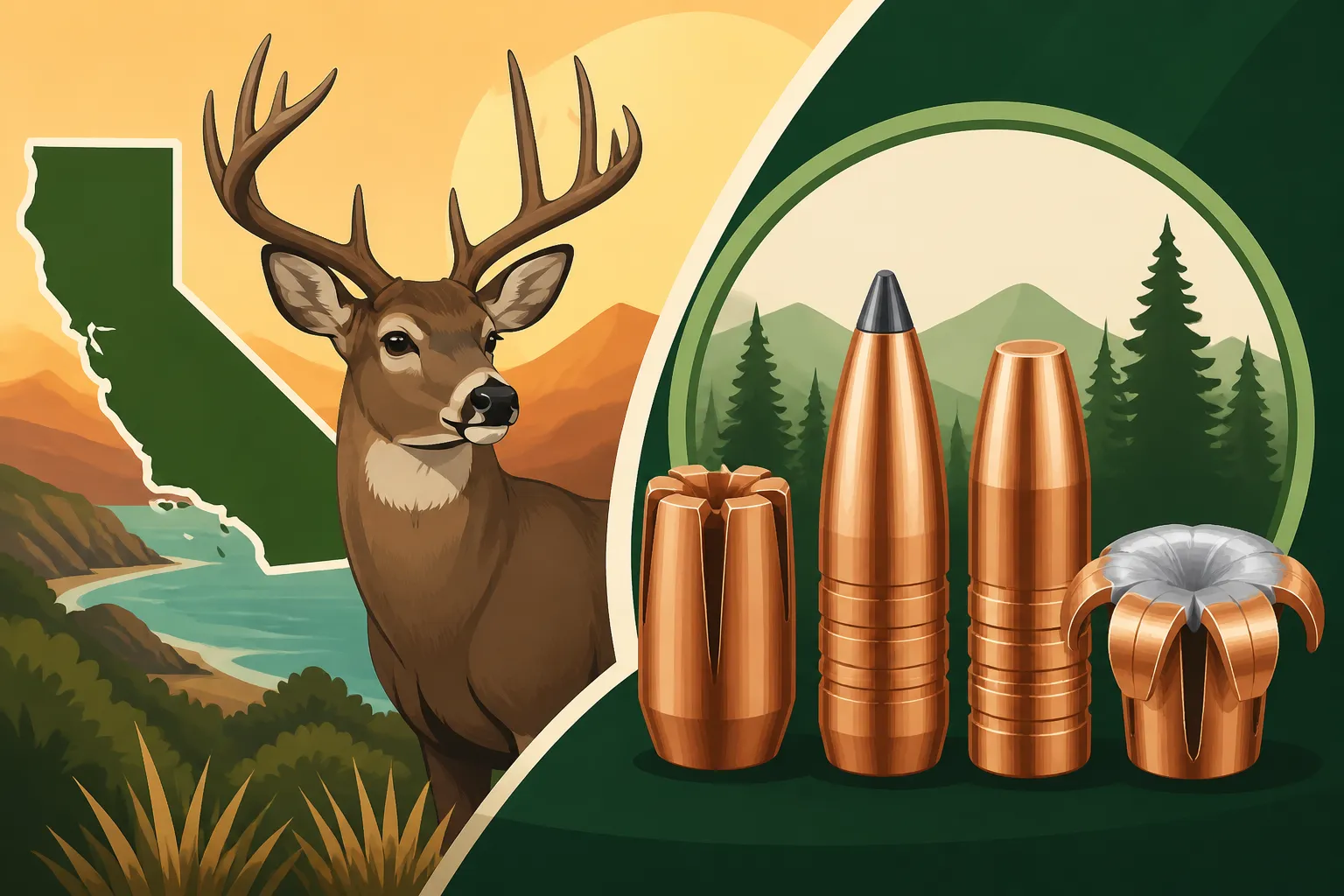
Best Non-Lead Bullets for California Deer-Sized Game
For those of us who cherish the tradition of deer hunting in California, the statewide shift to non-lead ammunition has introduced a whole new layer of questions and, let’s be honest, a good bit of head-scratching. It’s no longer just about finding a bullet that shoots straight; now we’re navigating new materials, different terminal performance characteristics, and ensuring we're compliant with the law. This comprehensive guide is here to demystify the world of non-lead bullets, helping you confidently choose the best options for deer-sized game in California, so you can focus on the hunt itself.
Understanding California's Non-Lead Mandate for Deer
The transition to non-lead ammunition wasn't a sudden whim; it's been a phased process impacting hunters across the state. For many, it felt like yet another hurdle, but understanding the "why" behind it can help put things into perspective.
Why the Switch? The Environmental and Regulatory Landscape
California's journey to a statewide non-lead ammunition requirement began with a strong focus on wildlife conservation, specifically the endangered California condor. These magnificent birds, often scavengers, were found to be ingesting lead fragments from gut piles and unrecovered game animals, leading to lead poisoning. The initial regulations targeted specific condor range areas, but the conservation efforts eventually expanded.
Over time, the scientific evidence accumulated, demonstrating the broader ecological benefits of removing lead from the environment where wildlife interacts with spent ammunition. This led to the passage of Assembly Bill 711 in 2013, mandating a complete statewide phase-out of lead ammunition for all hunting by July 1, 2019. It was a significant change for every hunter, regardless of what or where they hunted. For deer hunters, this meant re-evaluating long-standing ammunition preferences and often, re-learning what works best for their rifle and hunting style. It's a frustrating adjustment for many, particularly those who had relied on specific lead-core loads for decades, but it’s the reality of hunting in California now. You can dive deeper into the specifics of California's Non-Lead Ammunition Requirement to grasp the full scope.
What Qualifies as "Non-Lead" for Hunting Deer?
When we talk about "non-lead" ammunition in California, we're primarily referring to bullets constructed from materials other than lead. The most common and widely available option for rifle hunting, especially for deer, is monolithic copper. These bullets are typically machined from a single piece of copper or a copper alloy, like gilding metal.
Beyond solid copper, you might encounter other approved materials. For instance, some shotgun slugs designed for big game might use bismuth or other non-toxic alloys. The key is that the bullet must not contain any lead. This means traditional lead-core bullets, even those with heavy copper jacketing, do not qualify. The California Department of Fish and Wildlife (CDFW) maintains a regularly updated list of certified non-lead ammunition, which is the definitive resource. It’s always smart to check this list before heading out, especially if you’re trying a new brand or load. Understanding Which Non-Lead Bullets California Approves is crucial for compliance and peace of mind when you’re out in the field.
Key Considerations When Choosing Non-Lead for Deer-Sized Game
Switching to non-lead isn't just about buying a different box of ammo; it involves understanding how these materials perform differently than traditional lead-core bullets. Your approach to shot placement and game recovery might even need slight adjustments.
Terminal Performance: Expansion and Energy Transfer
Monolithic copper bullets, by their very nature, behave differently upon impact compared to lead-core bullets. Lead-core bullets often fragment significantly, creating a wide wound channel through hydrostatic shock and tissue destruction from secondary projectiles (fragments). Copper bullets, especially monolithic designs, are engineered for controlled expansion and exceptional weight retention.
When a copper bullet impacts a deer, it typically peels back into sharp petals, forming a mushroom shape, but it rarely fragments. This means it drives deeper, often providing complete pass-throughs, which is excellent for creating two holes for blood trails. However, because there's less fragmentation and typically less hydrostatic shock compared to a rapidly expanding, fragmenting lead bullet, some hunters report that deer don't always react with the same "thump" or immediate knockdown. This doesn’t mean the bullet isn't effective; it means the energy transfer mechanism is different. It relies more on tissue destruction through the expanded diameter and deep penetration. A well-placed shot is always paramount, but with copper, a clean pass-through creating dual wound channels for blood is a significant advantage. The consistent, straight-line penetration reduces the chance of deflection on bone, ensuring that critical organs are reached.
Accuracy and Ballistics: Adjusting to New Loads
One of the most common concerns when switching ammunition is whether your rifle will shoot the new loads with the same accuracy, and how the ballistics might change. Non-lead bullets, being less dense than lead, often need to be longer than a lead-core bullet of the same weight. This increased length can affect how they stabilize in your barrel, potentially causing a shift in your point of impact.
It’s not uncommon to find that a rifle zeroed for lead-core ammunition will shoot non-lead rounds differently. This means re-zeroing your rifle is absolutely non-negotiable. You can't just swap out a box of cartridges and expect the same results. Furthermore, the ballistic coefficients (BCs) of copper bullets can differ from lead, influencing their flight path, especially at longer ranges. While modern copper bullets are incredibly aerodynamic, their characteristics might require slight adjustments to your ballistic charts or rangefinder settings, particularly if you're accustomed to Copper Bullet Ballistic Coefficient Versus Lead. Many dedicated hunters use tools like those available through GoHunt to calculate and practice their new holdovers. It’s a learning curve, but one that ensures ethical and accurate shots with your new ammunition.
Availability and Cost: The Practical Realities for Hunters
Let's address the elephant in the room: non-lead ammunition often comes with a higher price tag than its lead-core predecessors. This is due to several factors, including the cost of raw materials (copper can be more expensive than lead) and the more intricate manufacturing processes involved in creating monolithic bullets. For many hunters, this increase in cost means fewer practice rounds downrange, which can be a real detriment to confidence.
Beyond the cost, availability can sometimes be an issue, especially during peak hunting seasons. While major ammunition manufacturers like Barnes, Hornady, and Nosler produce excellent non-lead options, demand can sometimes outstrip supply. This is particularly true for less common calibers or specific bullet weights. It’s a wise move to start looking for your preferred non-lead ammunition well in advance of the season. Don't wait until the week before opening day to realize your local shop is out of stock. Planning ahead, and perhaps buying a few boxes when you find them, can save you a lot of stress. It's a reality that Why Copper Bullets Cost More Than Lead is a factor we all have to contend with.
| Bullet Type | Material | Expansion Characteristics | Penetration | Weight Retention | Common Brands |
|---|---|---|---|---|---|
| Monolithic Copper (Tipped) | Copper Alloy | Rapid, controlled | Excellent | Very High | Hornady CX, Barnes TTSX, Nosler E-Tip |
| Monolithic Copper (Open-Tip) | Copper Alloy | Controlled, deep | Excellent | Very High | Barnes TSX, Federal Trophy Copper |
| Frangible/Segmenting | Various non-lead alloys | Designed to fragment | Good (initial) | Low (designed to fragment) | Rarely used for deer-sized game; more for varmints. |
Top Non-Lead Bullet Types and Their Performance on Deer
When it comes to non-lead bullets for deer in California, monolithic copper designs truly dominate the market for good reason. They offer reliable performance, consistent expansion, and deep penetration crucial for ethical harvesting.
Monolithic Copper Bullets: The Dominant Choice
These are the workhorses of the non-lead ammunition world for big game. Manufacturers like Barnes (with their TSX and TTSX lines), Hornady (GMX and CX), and Nosler (E-Tip) have refined the monolithic copper bullet to an art form. These bullets are engineered to expand reliably once they hit tissue, typically peeling back into four sharp petals that create a substantial wound channel. What truly sets them apart, however, is their nearly 100% weight retention.
Unlike lead-core bullets that can shed a significant portion of their mass, monolithic copper bullets retain almost all their original weight. This characteristic, combined with their strong construction, allows them to drive through bone and muscle with impressive authority, often resulting in complete pass-throughs on deer-sized game. A pass-through is a huge advantage for creating two holes, maximizing blood loss, and leaving an exit wound for a clearer blood trail—something you’ll appreciate when tracking a deer in thick chaparral. For a California blacktail, you might find that a lighter-for-caliber option, say a 130-grain .308, performs exceptionally well, balancing velocity with terminal performance. Similarly, for larger mule deer found in the high country, focusing on controlled expansion and penetration is key, where a 150-grain .30-06 copper bullet would shine. Understanding the specific needs for different deer species is important, so research into Best Non-Lead Bullet Weight for Blacktail Deer and Best Non-Lead Bullet Weight for Mule Deer can be incredibly helpful.
Alternative Non-Lead Designs and Their Niches
While monolithic copper rules for deer, it's worth briefly touching on other non-lead designs, mainly to understand why monolithic remains king for deer-sized game. Some manufacturers experiment with different alloys or designs, but for robust, reliable performance on deer, monolithic copper remains the go-to.
For instance, tipped monolithic bullets (like the Barnes TTSX or Hornady CX) incorporate a polymer tip that aids in aerodynamics, initiates expansion more reliably, and protects the hollow point during feeding in a rifle. This can be particularly beneficial for those slightly longer shots or in situations where you want assured expansion even at lower impact velocities. Another less common type might be a frangible non-lead bullet, but these are generally designed for varmint hunting or target practice, where rapid, often violent fragmentation is desired, without over-penetration. They typically lack the deep penetration and controlled expansion needed for ethically harvesting deer. For hunters focused on ethical and efficient kills on deer, sticking with the proven monolithic copper or copper-alloy designs is overwhelmingly the best strategy. The consistency and reliability of these bullets simply haven’t been matched by other non-lead alternatives for this application.
Caliber-Specific Non-Lead Recommendations for Deer-Sized Game
Choosing a non-lead bullet isn't just about the material; it's about matching that bullet to your specific rifle and the game you're pursuing. Deer-sized game includes everything from the smaller coastal blacktail to the larger mule deer found in eastern California, and your bullet choice should reflect that.
Popular Deer Calibers and Their Non-Lead Match-ups
Many popular deer calibers transition beautifully to non-lead ammunition, with manufacturers offering excellent choices across the board. The key is finding a bullet that stabilizes well in your barrel's twist rate and delivers sufficient energy downrange.
- For the venerable .270 Winchester: You'll find superb options in the 130-grain range from Barnes (TTSX) or Hornady (CX). These bullets retain their weight and penetrate deeply, making them fantastic for broadside shots on deer. The relatively flat trajectory of the .270 pairs wonderfully with the aerodynamics of these tipped copper projectiles. When you're in open country glassing for a buck, that flat trajectory really gives you an edge. For more in-depth advice, check out Best Non-Lead Bullet for a .270.
- For the versatile .308 Winchester: The .308 is a favorite for many, and non-lead choices typically fall between 130-165 grains. Barnes offers a 130-grain TTSX that is known for blistering velocity and excellent performance on deer, while Hornady's 150-grain CX provides a good balance of speed and knockdown power. Federal also loads a great 150-grain Trophy Copper option. Hunters often appreciate the reduced recoil of these lighter copper bullets compared to heavier lead loads, which can improve follow-up shots if needed. Dive into Non-Lead Load Options for .308 Hunters for more specifics.
- For the modern 6.5 Creedmoor: This popular cartridge performs exceptionally well with non-lead bullets in the 120-130 grain range. Brands like Hornady with their 120-grain CX or Barnes with their 120-grain TTSX offer fantastic accuracy and terminal performance. The Creedmoor’s inherent precision combined with these aerodynamic copper bullets makes it a formidable deer cartridge, particularly for longer shots that might be common in some open D-zones. To optimize your load, explore Best Non-Lead Bullet for a 6.5 Creedmoor.
- For the classic .30-06 Springfield: The .30-06 still holds its own, and non-lead options are plentiful. Bullets in the 150-168 grain range from Barnes (TTSX) or Nosler (E-Tip) are excellent choices, providing potent energy and deep penetration. These heavier options ensure that even larger mule deer or a difficult quartering shot will be handled effectively. Many hunters appreciate that they can maintain the familiar power of their .30-06 with these modern, compliant loads. For a detailed breakdown, read about Choosing a Non-Lead Round for a 30-06 Rifle.
Remember, while these are common recommendations, every rifle is an individual. What shoots incredibly well in one .308 might only be "okay" in another.
Bullet Weight Selection for Optimal Deer Performance
With non-lead bullets, you might find yourself gravitating towards slightly lighter-for-caliber bullet weights than you used to choose with lead. This isn't a bad thing; in fact, it often works to your advantage. Since copper is less dense than lead, a copper bullet of the same weight will be physically longer. This can sometimes cause stability issues in barrels with slower twist rates. To compensate, manufacturers often produce slightly lighter copper bullets that match the length and, therefore, the stabilization requirements of traditional lead bullets in a given caliber.
The benefit of these lighter copper bullets is often increased velocity. Higher velocity contributes to more reliable expansion, especially at longer ranges where impact velocity naturally drops. It also typically results in a flatter trajectory, which can simplify aiming out in the field. For instance, if you used to shoot 180-grain lead bullets in your .30-06, a 168-grain non-lead copper bullet might be the perfect match, delivering similar or even better terminal performance due to its superior weight retention and reliable expansion. The key is to find that balance between bullet weight, velocity, and accuracy for your specific rifle, ensuring that the bullet impacts with enough energy to expand properly on deer-sized game, typically requiring around 1,800-2,000 feet per second.
Preparing for Your Hunt with Non-Lead Ammunition
The best non-lead bullet in the world is useless if you haven't prepared yourself and your rifle for its unique characteristics. Proper preparation is paramount for confidence and success in the field.
Essential Range Time: Re-Zeroing and Practice
I cannot stress this enough: you must re-zero your rifle with your chosen non-lead ammunition. This isn't a suggestion; it's a requirement. As discussed earlier, the change in bullet material, length, and weight can significantly alter your rifle's point of impact. Even if you're switching between two different brands of non-lead ammo, or different bullet weights within the same brand, always confirm your zero.
Start by shooting at 50 yards to get on paper, then move back to 100 or 200 yards, depending on your preferred zero distance. Shoot multiple groups to ensure consistency. Don't just shoot a single three-shot group and call it good; confirm it. Once your rifle is precisely zeroed, take the time to practice at various distances that you might encounter in the field. If you hunt in areas with longer shots, practice at 300 or even 400 yards to understand your bullet's trajectory and any holdover adjustments. This familiarity will build immense confidence, knowing exactly where your bullet will strike. It’s a worthwhile investment of time and ammunition, ensuring you are fully prepared when that deer steps out. For a detailed guide on this crucial step, check out Sighting In Before Switching to Non-Lead.
Field Care and Game Recovery with Non-Lead
The way non-lead bullets perform on game can sometimes influence how you approach field care and game recovery. Because monolithic copper bullets often achieve complete pass-throughs and retain nearly all their weight, they can sometimes create smaller entrance and exit wounds compared to highly fragmenting lead bullets. This isn’t a flaw; it's just a different characteristic.
While a complete pass-through is excellent for a blood trail, the exit wound might not always be as massive or as immediately apparent as you might expect from a lead bullet that blew a large cavity. This means paying extra close attention to the shot reaction, marking where the deer was standing, and where it ran. Even with a perfect shot, always give the animal time to expire before taking up the track. If the deer makes it into heavy cover, a deliberate and careful tracking effort is crucial. A good quality headlamp and a systematic approach become invaluable, especially as daylight fades. Understanding Blood Trailing After Dark in California can be the difference between recovering your animal and a lost game. Remember, your responsibility as a hunter extends beyond the shot to ensuring a swift and ethical recovery.
Where to Find and Purchase Certified Non-Lead Ammunition
Finding the right non-lead ammunition for your California deer hunt often starts long before the season opener. Knowing where to look and what to look for can save you a lot of hassle.
Online Retailers and Local Gun Shops
When it comes to purchasing non-lead ammunition, you have a couple of primary avenues: online retailers and your local brick-and-mortar gun shops. Both have their advantages and disadvantages. Online retailers often boast a wider selection and competitive pricing, making it easier to find specific bullet weights or brands that might not be stocked locally. However, you'll need to account for shipping times, and some states have restrictions on direct-to-consumer ammunition sales, so make sure to verify the regulations for your specific location. Reputable online stores like MidwayUSA, Brownells, or even directly from manufacturer websites like Federal, Hornady, or Barnes are good places to start. When using sites like GoHunt, you can often find resources that direct you to current availability and best pricing.
Local gun shops, on the other hand, offer the benefit of immediate purchase and the opportunity to talk to knowledgeable staff. They can provide advice specific to your area and often have a finger on the pulse of local demand. Building a relationship with your local FFL (Federal Firearms License) dealer can be incredibly valuable, especially if you need to order something specific or have questions about legal compliance. Remember, due to the statewide non-lead mandate, most California gun shops will primarily stock non-lead options for hunting calibers, but inventory can still fluctuate. It's always a good idea to call ahead or check their online inventory if they have one. For tips on navigating the market, Finding Non-Lead Ammo in Stock Before Season is a great read, and if you prefer the convenience of home delivery, Ordering Non-Lead Ammo Online for California offers more insights.
Understanding the Certified Non-Lead Ammunition List
A critical step in ensuring compliance is to be familiar with California’s official list of certified non-lead ammunition. The California Department of Fish and Wildlife (CDFW) is responsible for maintaining and updating this list. It details specific manufacturers, calibers, bullet types, and weights that have been approved for use. This isn't just a suggestion; it's the law. Using ammunition not on this list, even if you believe it to be non-lead, could result in legal penalties.
Before making any purchase, especially if you're trying a new brand or load, take a moment to cross-reference it with the CDFW's current list. You can usually find this list easily on the CDFW website. Think of it as your final quality check. While most major manufacturers have ensured their hunting ammunition complies and appears on this list, it’s your responsibility as the hunter to verify. This simple step provides peace of mind and ensures that you’re not only hunting ethically but also legally within California’s unique regulatory framework.
Disclaimer
This article is for general informational purposes only and does not constitute professional advice. Laws, prices and regulations vary by location and change over time. Consult a qualified professional for guidance on your specific situation.